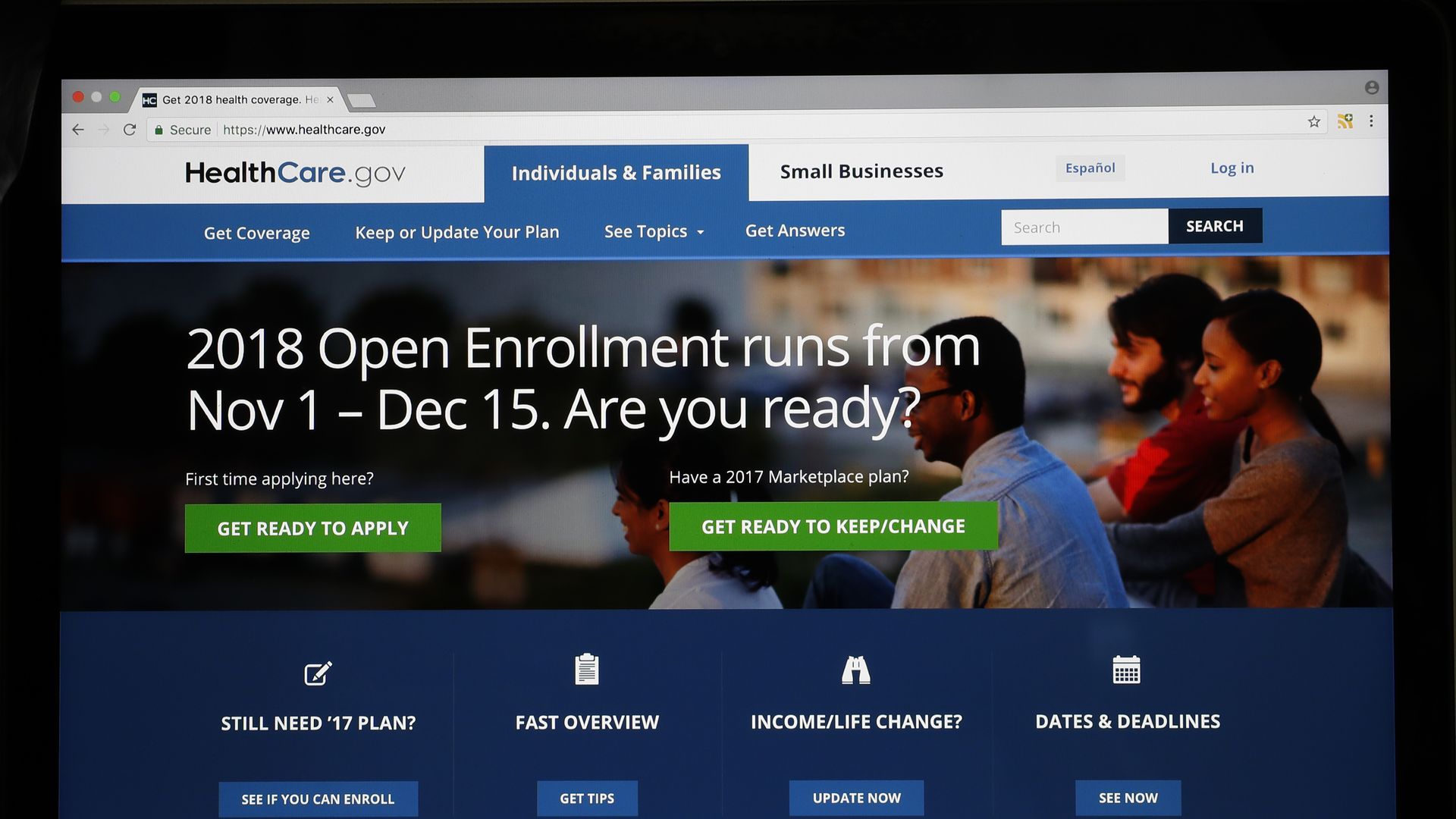
Enrollment through HealthCare.gov is picking up steam as the deadline to get covered gets closer — but not enough steam to match past year's results. More than 1 million people signed up last week, the highest total for any single week so far, pushing total enrolment for the year up to roughly 4.7 million.
The bottom line: The totals are still not on pace to catch up to the 9 million people who signed up through HealthCare.gov during last year’s open enrollment period — which was twice as long and featured a well-funded outreach effort that no longer exists.
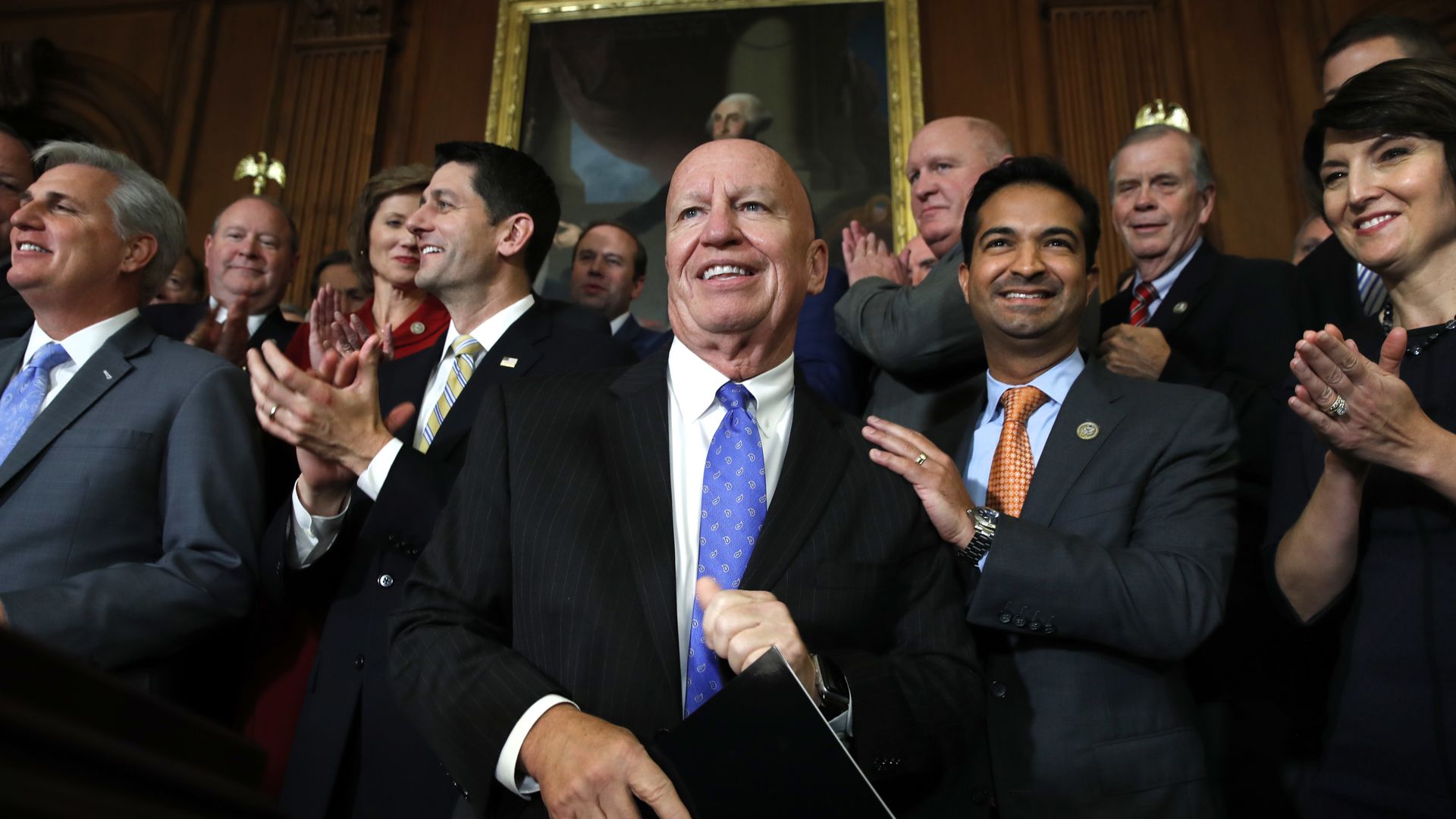
Members of the House Ways and Means Committee, with Chairman Kevin Brady's blessing, introduced a handful of bills today that would delay some of the Affordable Care Act's taxes and temporilty lift the employer mandate.
Why this matters: Insurers and medical device manufacturers have been lobbying hard for Congress to freeze the ACA's taxes on their products. But introducing a bill doesn't mean it will become law, and next steps aren't yet clear.
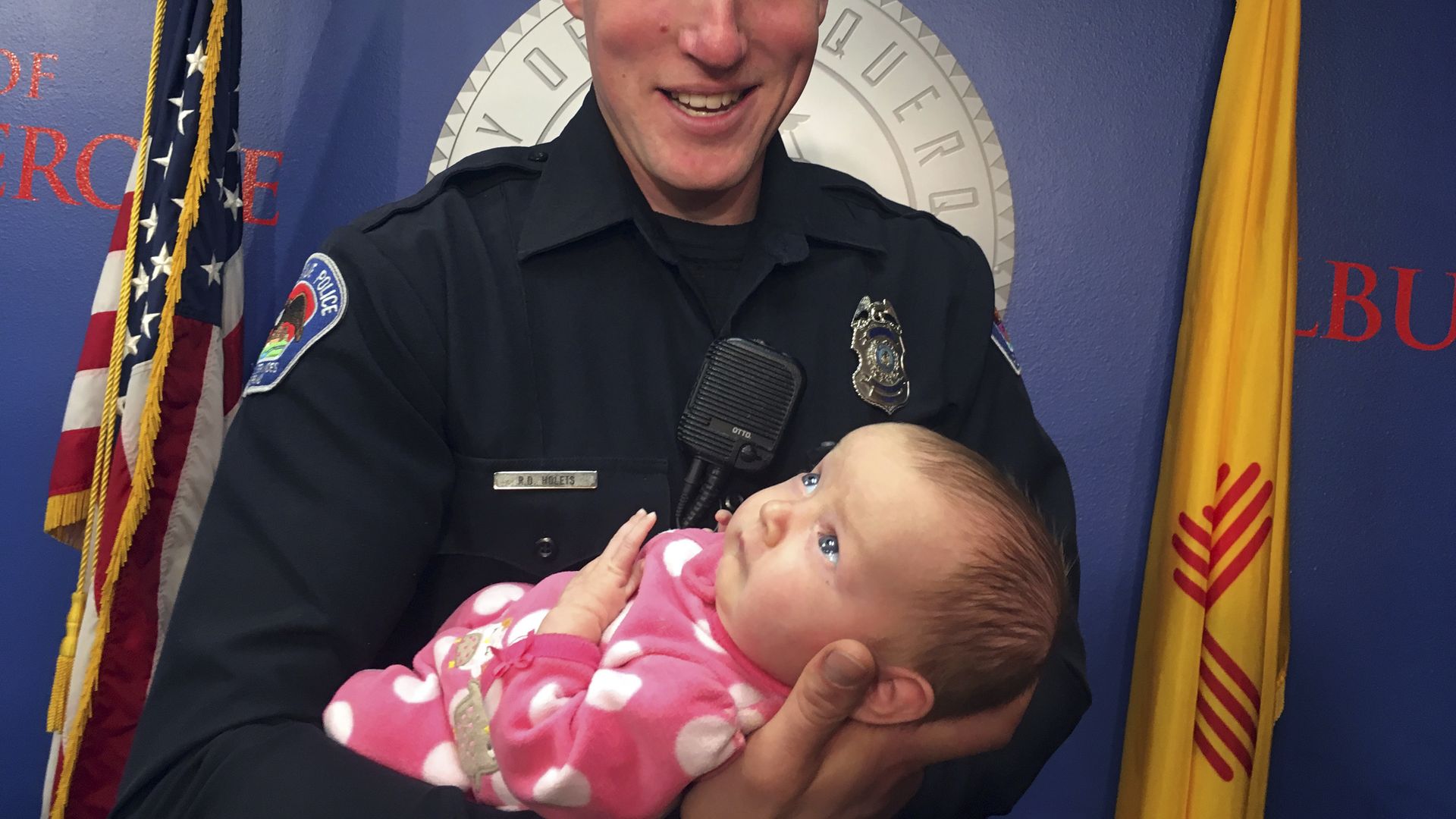
In 2016, 92,000 children entered the foster care system in drug-related cases, AP reports, citing data from the Department of Health and Human Services. That's a 32% jump since 2012 and accounts for a third of total foster care entries in 2016.
The bottom line: The opioid crisis is taking a toll on children. The breadth of the impact ranges from newborn babies who inherit addicitons from their mothers to teens placed in foster care away from parents incapicitated by drug use.
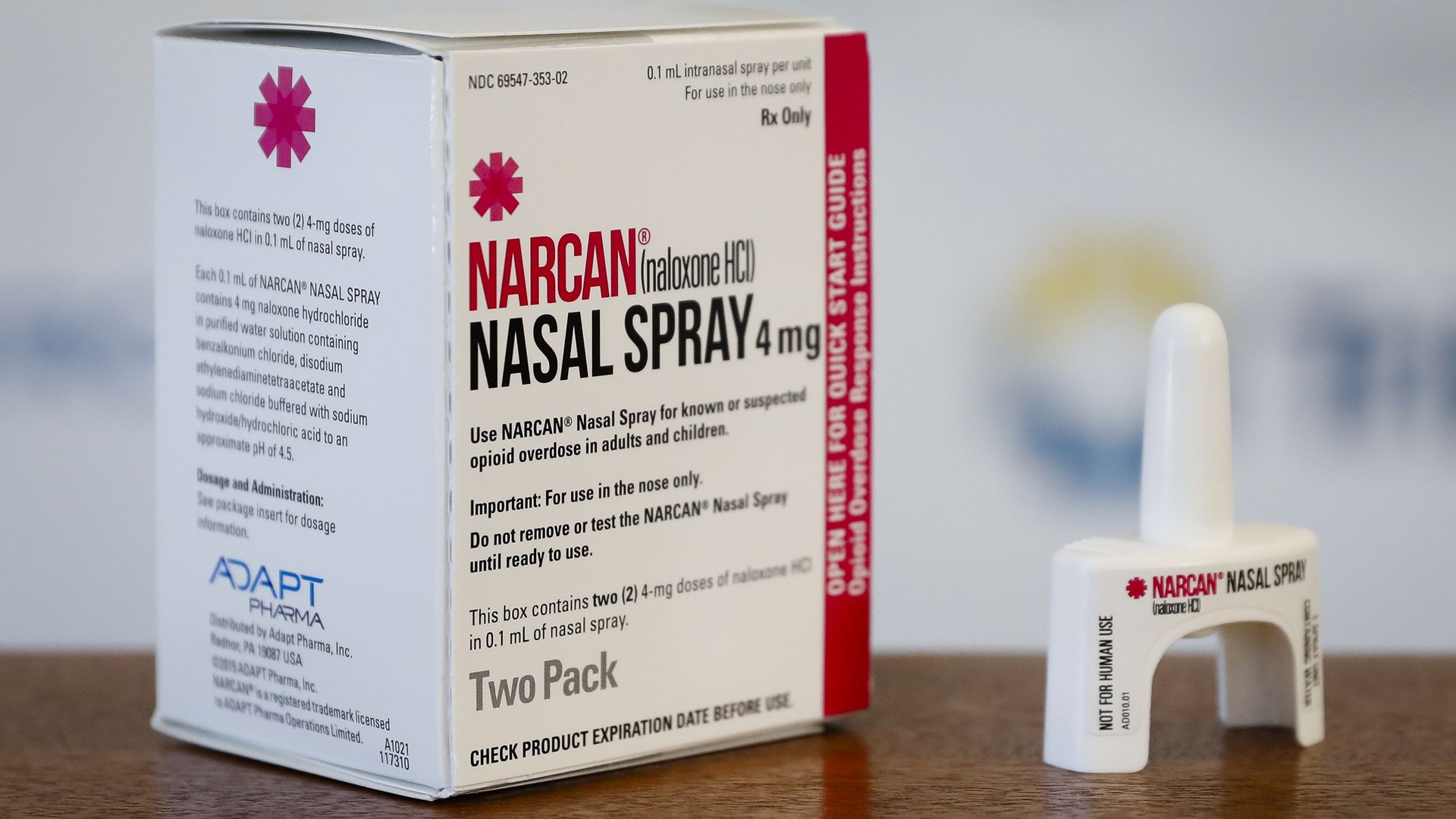
Aetna will waive copays for Narcan, a medication that reverses opioid overdoses, starting Jan. 1. Narcan copays could be as much as $150 for some Aetna enrollees, but the company said $30 to $40 has been a more common range.
Why it matters: Health insurers have been spotlighted as enabling the opioid epidemic and now are focusing on ways to prevent or manage addiction. The other major national health insurers — Anthem, Cigna, Humana and UnitedHealthcare — did not immediately respond when asked whether they would copy Aetna's policy.