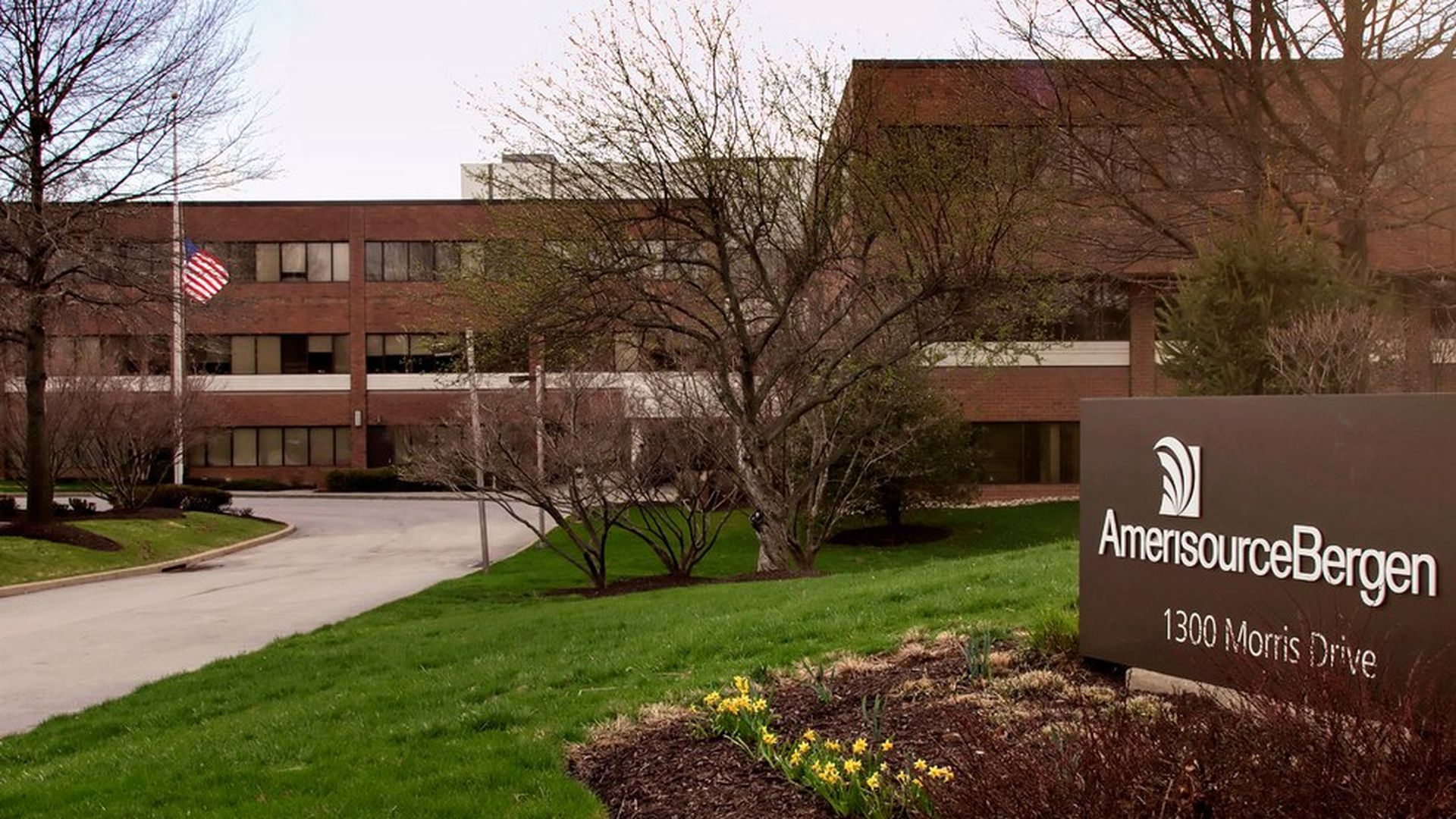
AmerisourceBergen said Monday it will acquire H.D. Smith, a smaller, independent drug wholesaler, for $815 million in cash. It would further consolidate the drug distribution industry, as AmerisourceBergen, McKesson and Cardinal Health control about 85% of the market.
Looking ahead: The Federal Trade Commission might scrutinize the deal closely, considering H.D. Smith is the second-largest drug wholesaler outside of the big three. AmerisourceBergen has struggled to hold a profit due to declining generic drug prices, and several cities and municipalities have accused the company and others of making the opioid epidemic worse by not properly monitoring where painkillers were going.
Global health officials are quietly ratcheting up concern about H7N9 bird flu, per the New York Times. "The number of human infections reported in [this epidemic] is almost as many as were reported during the previous four epidemics combined," notes the CDC of this years' flu season, though they believe this is due to increased spread among birds, not improved human transmission.
The bottom line: This particular lineage of H7N9 has long been "ranked as the influenza virus with the highest potential pandemic risk," according to the CDC. But there isn't yet a pandemic, and there might never be one. H7N9 could continue to be a small, regional problem like another influenza virus known as H5N1 has, or it could spread (comparatively) harmlessly, like H1N1/swine flu. Regardless, those who study the disease are watching it closely.
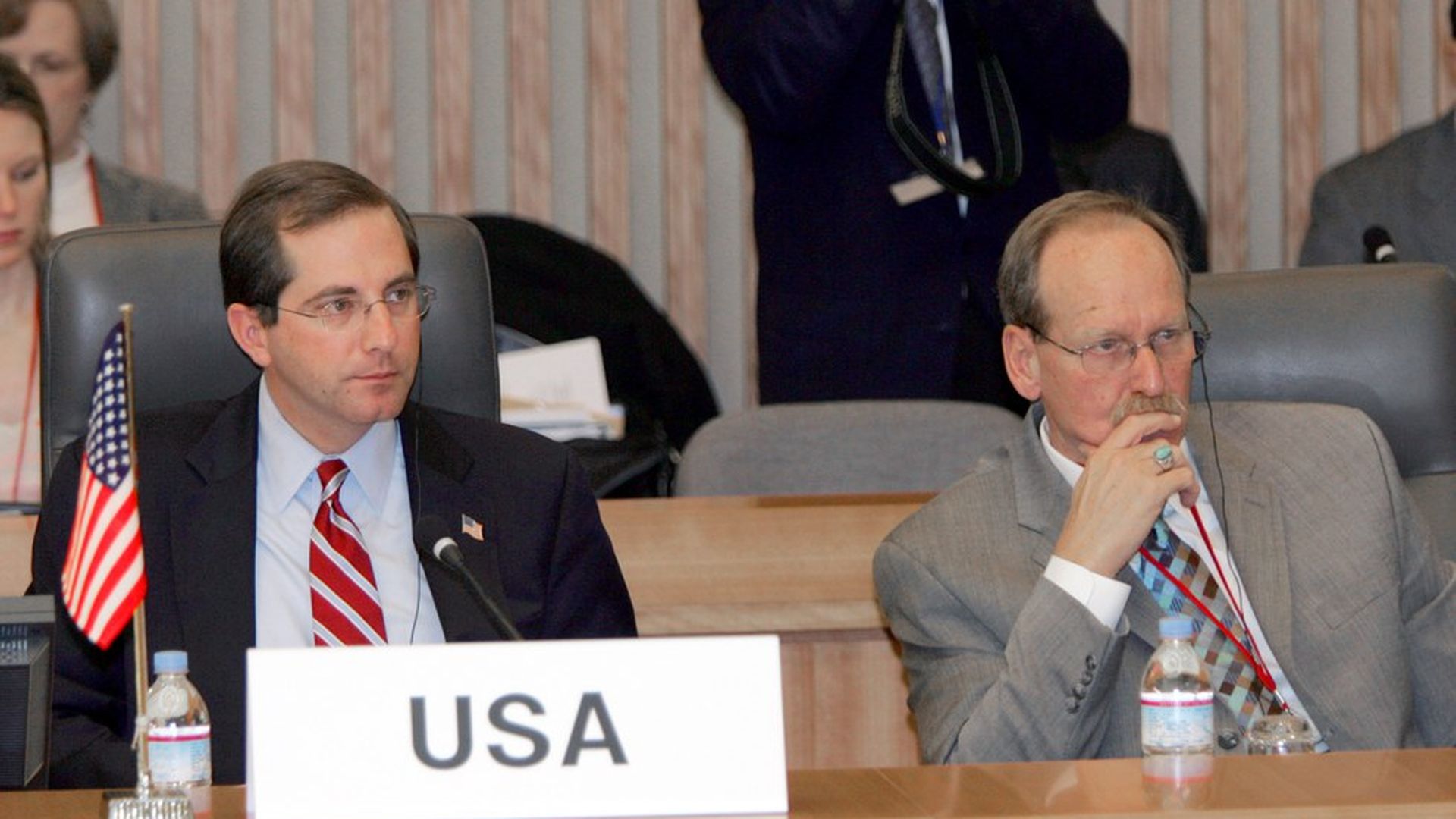
Alex Azar, President Trump's nominee to replace Tom Price as Health and Human Services secretary, is worth as much as $20.6 million, according to new federal disclosures analyzed by the Associated Press. Most of that fortune was made while Azar was at pharmaceutical giant Eli Lilly & Co.
Go deeper: Congress still needs to confirm Azar. The biggest questions surrounding him involve his history with the drug industry and what he'd do to change the U.S. drug pricing system.
"The White House says the true cost of the opioid drug epidemic in 2015 was $504 billion, or roughly half a trillion dollars," per AP's Darlene Superville:
"[T]he Council of Economic Advisers says the figure is more than six times larger than the most recent estimate. The council said a 2016 private study estimated that prescription opioid overdoes, abuse and dependence in the U.S. in 2013 cost $78.5 billion."
Anthem and Express Scripts are embroiled in lawsuits, each accusing the other side of being a bad business partner. And now court documents show Optum, a health care company owned by UnitedHealth Group, is getting dragged into the mix.
Why it matters: This is more than just a corporate brouhaha in a far-off courtroom. Three massive health care companies are spending consumers' premium dollars on legal teams to fight over prescription drug rebates — an issue that continues to pinch people's wallets when they pick up their medicine.
Experts across the political spectrum generally agree that the Affordable Care Act's individual mandate is both necessary for market stability, and probably not working as well as its authors intended.
The bottom line: Almost everyone agrees that repealing the mandate now, without a replacement, will make insurance markets function substantially worse than they are today. But many experts believe other policies might be just as effective, if not more so, at getting healthy people into the system and thus moderating premium increases.