Saturday's health stories

Pro-Obamacare crowd shouts down false "death panel" claim
Rep. Gus Bilirakis had to mediate between loud, angry Obamacare supporters and opponents of the law at his town hall in Florida today.
But nothing compared to the moment when Bill Akins, the secretary of the Republican Party of Pasco County, revived the old, false death panel claim and got shouted down by the law's supporters, per the video below:

Political risk, Marathon Pharmaceuticals style
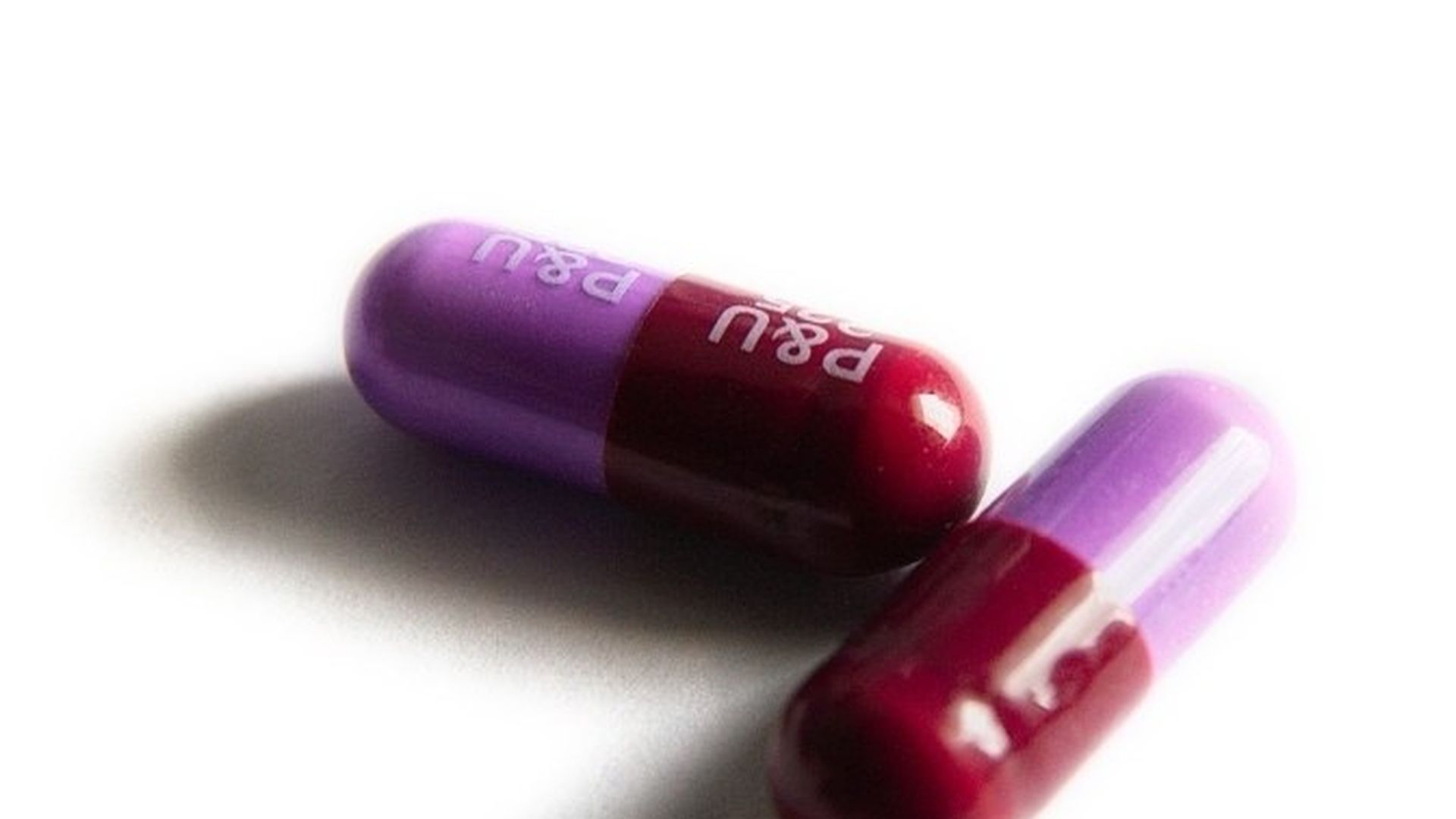
Bloomberg columnist Max Nisen has an insightful take on Marathon Pharmaceuticals' $89,000 list price for its steroid for Duchenne muscular dystrophy:
By pricing the drug so aggressively at a time when President Trump and others are focused on high prices, Marathon is creating substantial political and commercial risk for itself and its peers.
What to watch: Especially since Trump latches onto the idea that other countries are pricing drugs much more cheaply than the United States, the move could put the drug industry in his crosshairs again just as they were starting to improve their relationship. It also means insurers may decide not to cover the drug since it's priced so high. Those suffering from Duchenne muscular dystrophy may switch to cheaper alternatives, too.

An old drug gets a new approval, and an $89,000 price tag
The latest drug pricing controversy comes from Marathon Pharmaceuticals, a company that received federal approval Thursday for an old drug, deflazacort, to treat patients who are at least 5 years old and have the rare Duchenne muscular dystrophy.
The Wall Street Journal and others reported the annual list price will be $89,000. Wanda Moebius, a spokesperson for Marathon, told Axios the net annual amount that Marathon will receive after rebates and discounts will be closer to $54,000 on average.
Here's the catch: Marathon's deflazacort, a steroid, was already approved outside of the United States and can be bought for a lot less. The drug can be bought for less than $2,000 annually from the United Kingdom or Canada. Moebius justified the U.S. price, saying Marathon "can only sell the drug in the U.S. in this population." She added, "Anyone who needs this drug will get this drug."
Why this matters: Marathon's drug will get seven years of monopoly pricing, among other perks for so-called orphan drugs. That's raised the ire of many, who believe this is just another example of egregious drug pricing policy. Rachel Sachs, a law professor at Washington University in St. Louis, put Marathon's move this way:
"This is not acceptable. Full stop. It is the worst sort of gaming that other companies have engaged in over the years."

Town hall crowds turn up the heat on Republicans
Several congressman hosted town halls across the nation last night, and some of the hottest issues that came up again and again were the uncertainty surrounding Obamacare and Trump's controversial executive orders.
Politico's Dan Diamond made a timeline of tweets documenting the rooms overflowing with angry constituents who pushed their representatives to protect their healthcare and dig deeper into Trump:
In other news: the rowdy scene outside of a healthcare townhall in Murfreesboro, TN, tonight: pic.twitter.com/AIIeir61kz— MJ Lee (@mj_lee) February 10, 2017
CVS on drug prices: "We are the solution and not the problem"
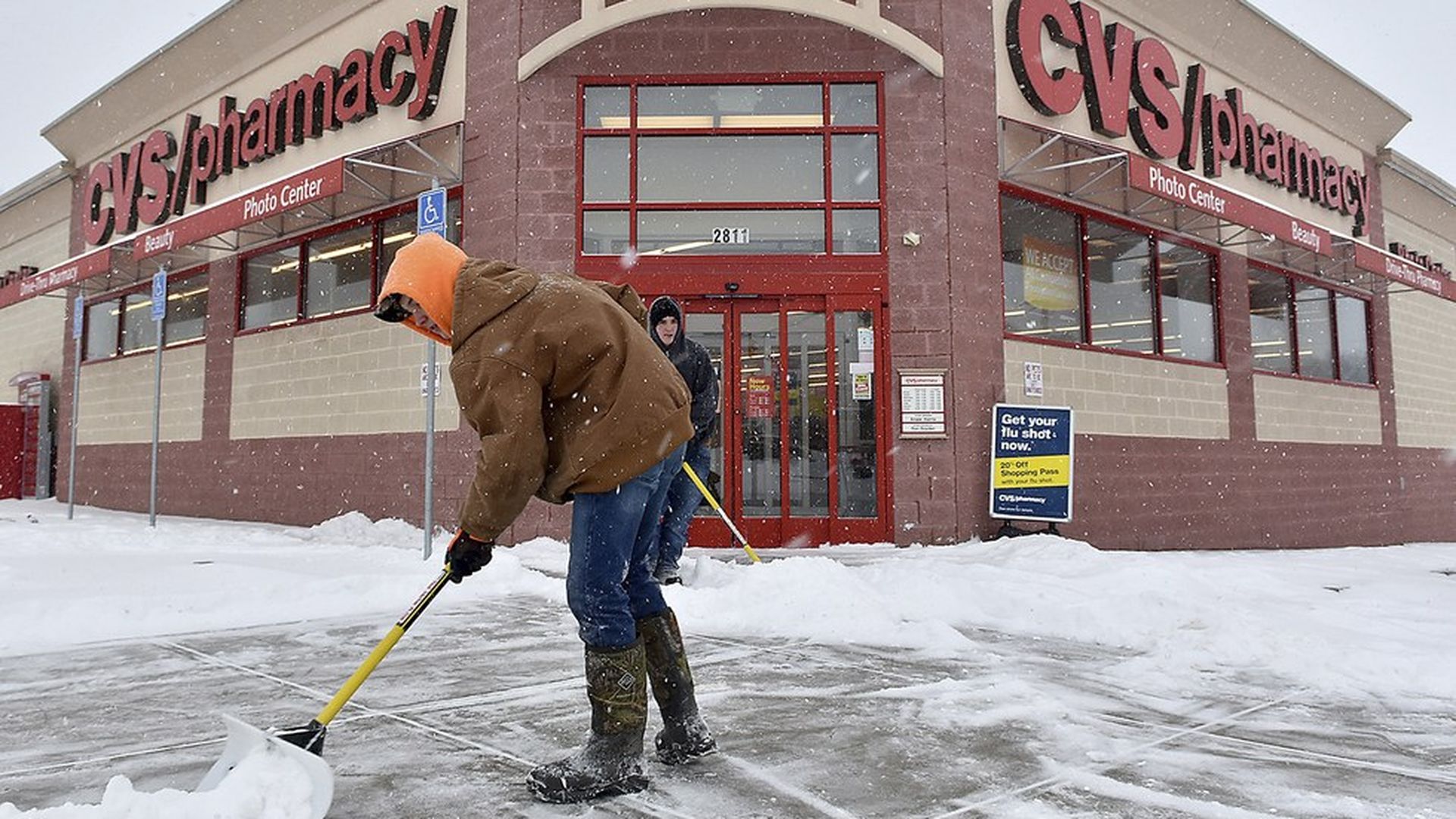
CVS Health CEO Larry Merlo pushed back Thursday against the rising criticism that pharmacy benefit managers, including his company, have contributed to the skyrocketing prices of prescription drugs over the past several years.
"Any suggestion that PBMs are causing drug prices to rise is simply erroneous. We are the solution and not the problem." — CVS Health CEO Larry Merlo
Merlo, who made $38.2 million in 2015, also said the fees and rebates pharmacy benefit managers earn from drug companies are passed through to its health plan and employer clients.
The takeaway: CVS is best known for its retail pharmacy stores, but the company also is a gigantic pharmacy benefit manager. That side of the business brought in $120 billion of revenue in 2016, or two-thirds of CVS' total revenue. CVS, which registered a profit of $5.3 billion in 2016, and its fellow industry players have a big target on their backs and will need to do a lot more explaining if they want to avoid regulatory changes.