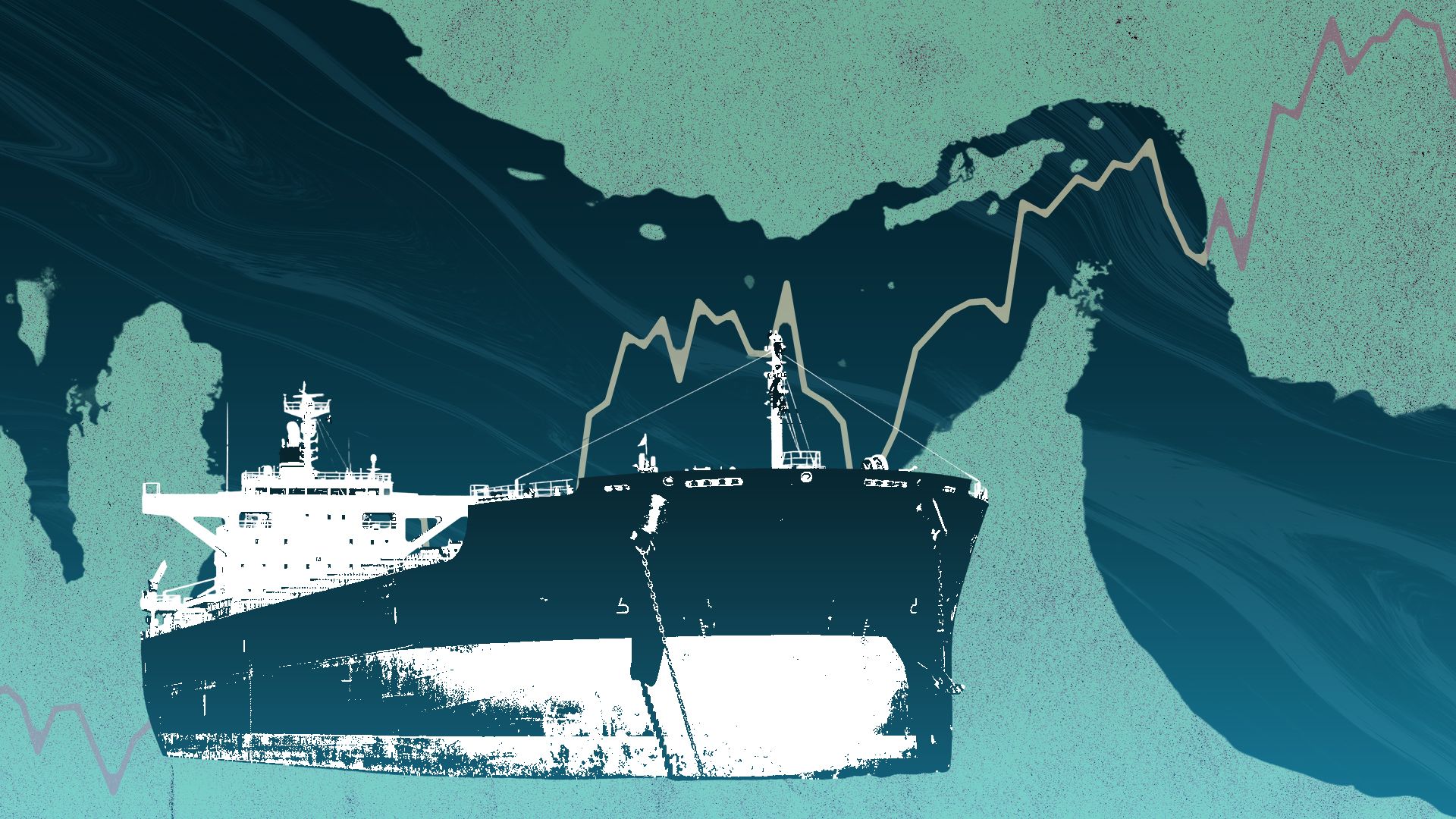
Crack spreads — energy industry measures of the gap between crude prices and refined products like diesel — have soared in recent days as the global fuel picture is increasingly determined by global politics and war.
Why it matters: Crack spreads are basically the profit margin that refiners add on top of the price of a barrel of crude in order to come up with the prices they charge for refined products like diesel.
Because the crack spread for diesel fuel, charted above, is rising, diesel fuel will likely get more expensive.
And because diesel is a key input for industries like trucking and agriculture, higher diesel prices will ultimately be passed along to consumers, at least in part.
Qatar, Pakistan and other regional mediators are trying to de-escalate tensions between the U.S. and Iran and revive negotiations on a nuclear deal, according to two sources from the mediating countries and a U.S. official.
Why it matters: While President Trump announced on Wednesday that the U.S.-Iran memorandum of understanding (MOU) and the ceasefire were "over" and ordered two rounds of airstrikes, he is focused on reopening the Strait of Hormuz and still wants to avoid a return to an all-out war with Iran.
After years of touting ambitious climate goals, big tech companies are now facing new scrutiny over what they disclose about AI's environmental footprint.
Why it matters: The AI boom is turning a handful of tech companies into defining players in the debate over electricity and water use. Their willingness to disclose these impacts is becoming almost as important as the impacts themselves.
Microsoft's latest environmental report shows the growing tension between its race to build AI infrastructure and its long-standing climate commitments.
Why it matters: The report mirrors recent disclosures from Google and Amazon, whose emissions and resource use have also climbed alongside AI growth.
The oil economy's surprising flexibility and countries' plans to cut reliance on the Strait of Hormuz could together limit how much the war boosts the global energy transition.
Why it matters: Energy crises have long-term consequences — like the 1970s oil shocks that brought U.S. gasoline mileage rules for cars, and the country's turn away from burning oil to make electricity.
The U.S. military struck Iranian targets near the Strait of Hormuz on Wednesday, a U.S. official said.
Why it matters: This was the second day in a row that the U.S. had attacked Iranian targets in what U.S. officials say is an effort to stop Tehran from striking commercial ships in the Strait of Hormuz.