With Iran ceasefire "over," Trump shifts to battle for Hormuz

Add Axios as your preferred source to
see more of our stories on Google.
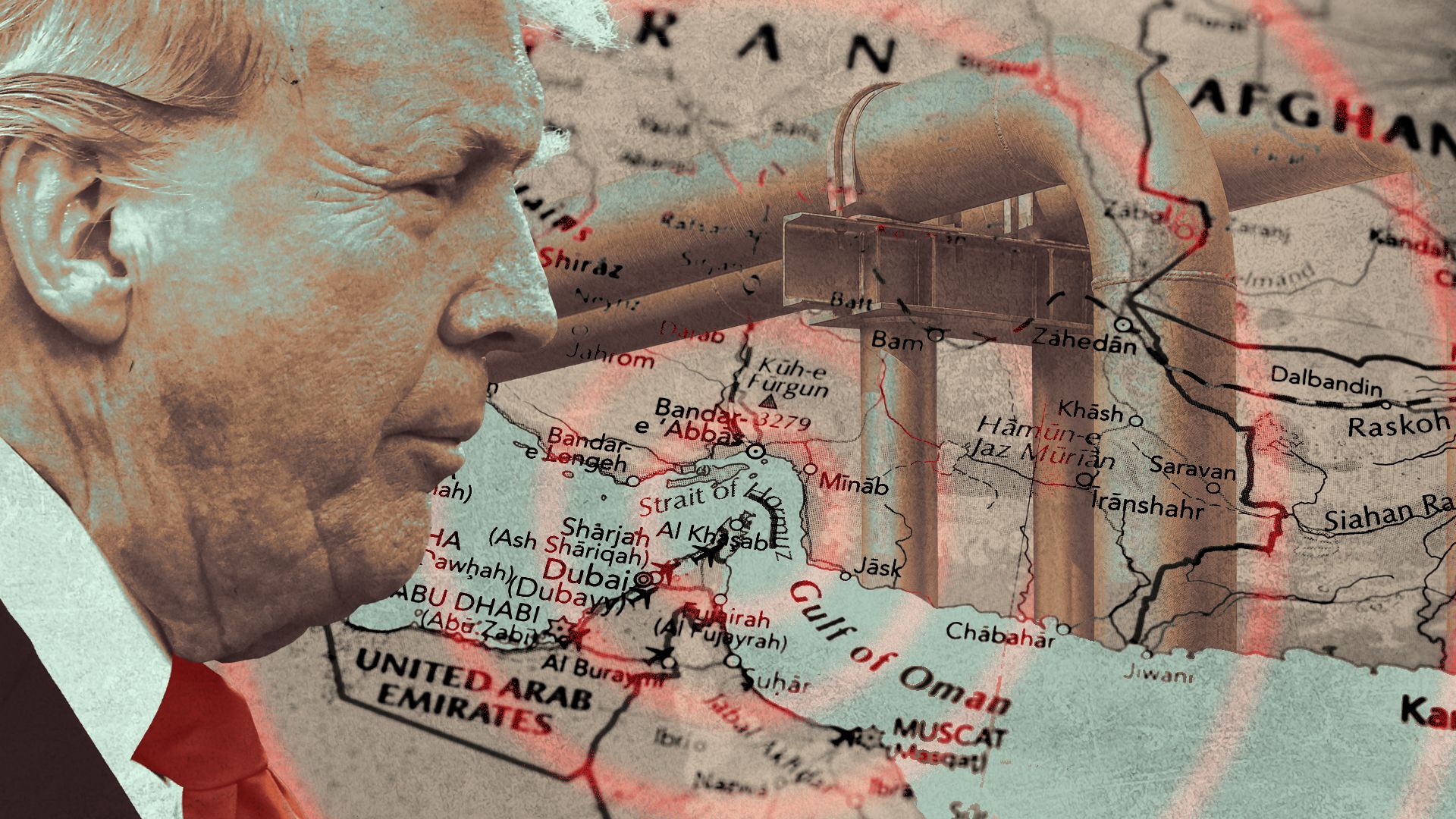
Photo illustration: Sarah Grillo/Axios. Photo: Beata Zawrzel/NurPhoto via Getty Image
The White House is preparing for what could become a multi-day or even multi-week exchange of fire with Iran over the Strait of Hormuz.
- The length and severity of the new campaign hinge entirely on Tehran's next moves, U.S. officials tell Axios.
Why it matters: A war that began with the goal of degrading Iran's missile capabilities and destroying what remained of its nuclear program has evolved into an open-ended fight over the world's most important energy chokepoint.
- A U.S. official said the current escalation could last a day or two, a week or a month, depending on whether Iran continues its attacks on commercial ships in the Strait of Hormuz.
- "We're going to slap them a bit so they understand we're not f*cking around," the U.S. official said.
Driving the news: Diplomacy has stalled for now, and military pressure is back at the center of President Trump's strategy.
- Trump said Wednesday the 60-day ceasefire outlined in the memorandum of understanding (MOU) was "over" after an exchange of fire triggered by Iranian attacks on commercial ships.
- The U.S. then launched a second round of strikes near the Strait of Hormuz, including attacks on infrastructure targets inside Iran for the first time in months.
- Iran retaliated with attacks on U.S. bases in Kuwait and Bahrain, while insisting it would not back down from its claim to control the strait.
Shortly after, Trump signaled the U.S. was ready to de-escalate, telling reporters on Air Force One that Iranian officials had "called a little while ago" and "want to make a deal."
- It was unclear what call Trump was referring to, and Iranian officials did not immediately confirm any direct outreach.
- "I just don't know if they're worthy of making a deal. I don't know that they're going to do honor the deal," Trump added. "They're sort of crazy, to be honest."
The other side: Iran's top negotiator, Mohammad Bagher Ghalibaf, accused the U.S. of "bullying and breaking promises" and warned that the strait would only reopen on Tehran's terms.
- "If you strike, you'll get hit," Ghalibaf wrote on X. "The Strait of Hormuz will only open with 'Iranian arrangements,' not American threats."
The big picture: Reopening the Strait of Hormuz and restoring freedom of navigation for commercial ships has become a central goal for the Trump administration, mainly to stabilize global energy markets.
- For Iran, maintaining control over the strait has become a key objective in any deal to end the war.
- The issue was a central provision in the U.S.-Iran MOU, and conflicting interpretations of the strait clauses are now causing the deal to unravel.
- The MOU requires Iran to allow safe passage for ships through the Strait of Hormuz. But soon after it was signed, Iranian officials accused the U.S. of violating the deal by routing ships through a southern lane near the Omani coast without Tehran's approval.
Between the lines: U.S. officials say the White House believes it has more room to escalate because hundreds of oil tankers have managed to leave the Gulf through the strait in recent weeks.
- That has eased concerns inside the administration that a renewed clash would immediately trigger a major oil price spike, the officials said.
Behind the scenes: A U.S. official claimed the current escalation stems from frustration among more radical elements inside Iran's fractured leadership who believe the MOU has not delivered real benefits for Tehran.
- Iran saw its leverage in Hormuz slipping as hundreds of ships transited through the southern route close to the Omani coast, the official said.
- Despite U.S. sanctions waivers, Iran struggled to sell oil because financial institutions would not approve transactions and countries were reluctant to rely on temporary waivers.
- No Iranian frozen funds have been released because Iran has not yet taken nuclear steps required by the agreement.
- The framework agreement the U.S. brokered between Israel and Lebanon made the Lebanon portion of the MOU unnecessary, the official said.
What to watch: "Part of the Iranian leadership was not happy about all of those things," the U.S. official said.
- "They started shooting and we decided it's time to slap them back hard. It's a process. We have patience. If we don't feel we're getting the deal we want, we are not going to do it."
The bottom line: Vice President Vance said Wednesday the U.S. position is simple: the Strait of Hormuz must remain open.
- "If they try to close it down, there's going to be a response from the American military," Vance said.
- "They can either follow it, or they can have exactly what happened to them last night. It's just going to keep on happening until they open up that lane and stop shooting at ships."
