Four states — Tennessee, Utah, Idaho, and Nebraska — say they're interested in hosting the entire range of nuclear energy-related development, including high-level waste.
Why it matters: The Energy Department hopes that by building what amount to nuclear mega-cities for such activities as uranium enrichment and fuel fabrication, states will have to address the thornier problem of waste as well.
The Iran war has scattered the highly concentrated helium supply chain, knocking out a significant share of global production for a practically irreplaceable element.
Why it matters: Helium does more than fill party balloons: It's critical for cooling highly advanced tech and integral to chip production and medical imaging. Now, roughly a third of the world's supply is in limbo.
Why it matters: With economic uncertainty swirling, car buyers are seeking out alternatives to new vehicles, whose price tags are now averaging more than $49,000.
American consumers are bracing for an Iran war inflation jolt, though they don't anticipate the effects will linger.
That's the upshot of the New York Federal Reserve Bank's March Survey of Consumer Expectations, the first to capture sentiment since the war began.
Why it matters: So far, that is more consistent with a one-time inflation surge than the alternative outcome that might alarm the Fed: signs of unmooring in long-run inflation expectations.
Energy Secretary Chris Wright says on the upcoming episode of "The Katie Miller Podcast" that repairing the Persian Gulf's energy infrastructure must be a priority, but acknowledges a "rough patch" until the war in Iran ends.
Why it matters: Rising gas prices are the biggest way most Americans are feeling Operation Epic Fury. President Trump and his Cabinet are making the case that the increases will be temporary, and are worth it in the long run.
The throttling of oil and gas flows could push multiple countries to try to cut exposure to seaborne energy commodities — and create different risks in the process.
Why it matters: The Iran crisis is chaotic and costly enough to spur long-term policy changes.
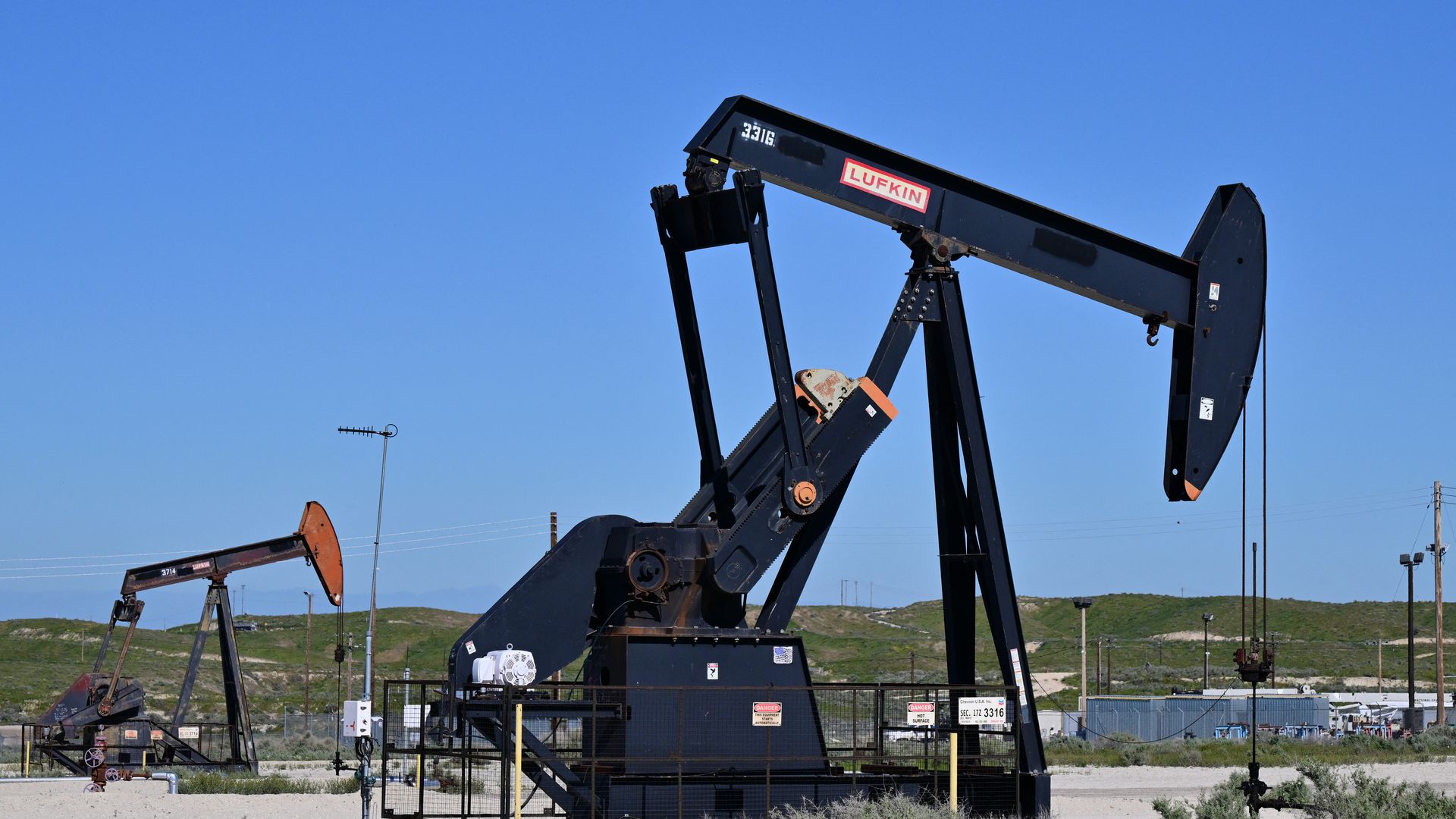
Brent crude oil climbed more than 1% to above $110 per barrel when markets opened Sunday — only to decline slightly later — amid mixed signals about the Iran war that's creating unprecedented disruption to global energy flows.
Why it matters: President Trump is signaling major escalation, but also told Axios' Barak Ravid that the U.S. is in "deep negotiations" with Iran.
The sharp spike in gas and oil prices caused by the Iran war will likely lead to a further rise in food prices in the coming weeks, economists and agricultural experts tell Axios.
Why it matters: The war is just the latest stress driving up food inflation — on top of tariffs, rising electricity prices and an immigration crackdown that has driven up labor costs.
Even if the Iran war ended now and the Strait of Hormuz reopened, the crisis has lasted long enough to bring a meaningful and damaging toll worldwide.
Why it matters: "What began as a disruption in a key energy corridor is now feeding through the entire global economy," the UN's trade and development arm said in an analysis.