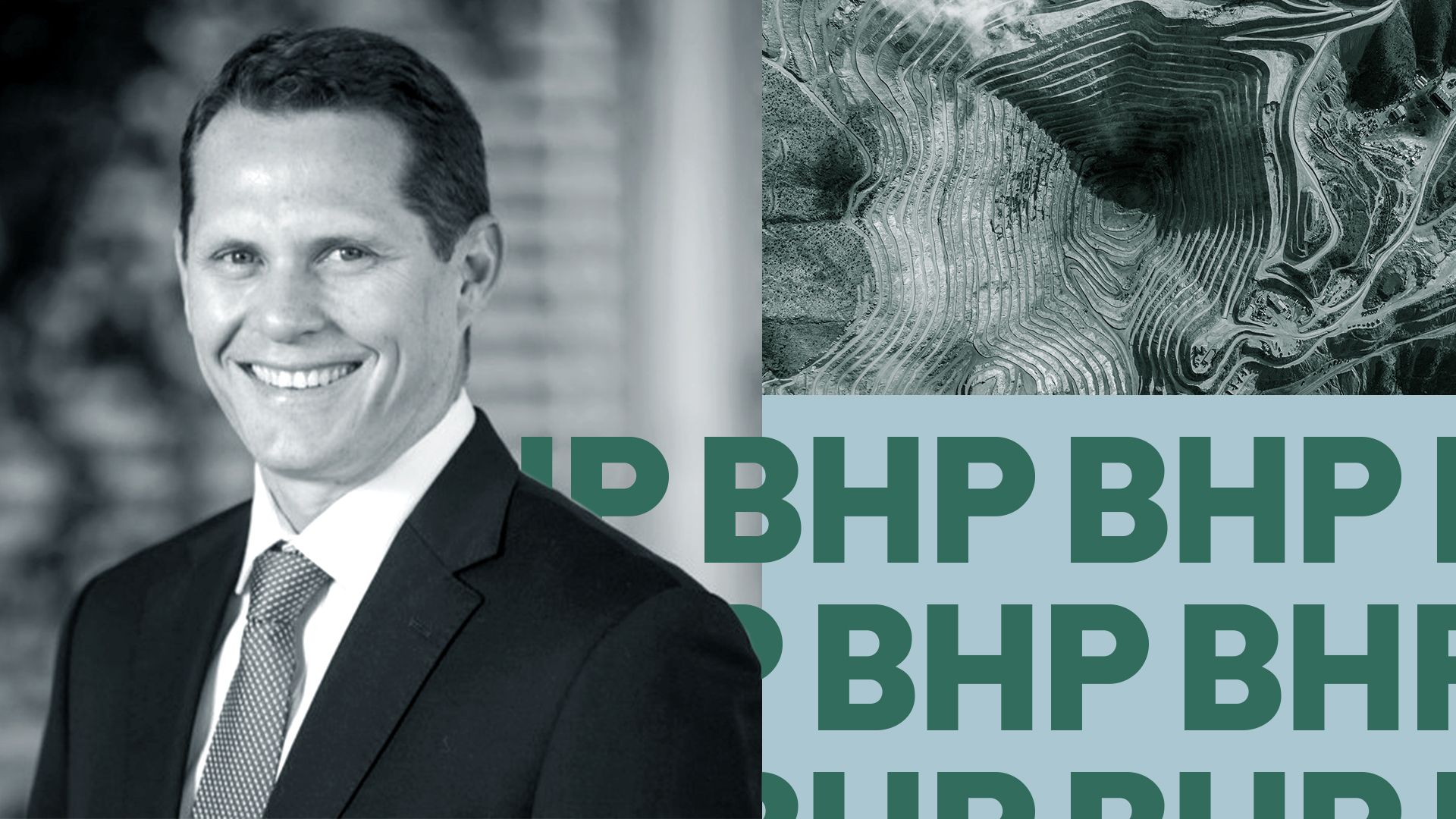
BHP, operator of the world's largest copper mine, sees a bright future for AI improving the industry — but cautions that it's early days, a top executive tells Axios.
Why it matters: BHP Americas President Brandon Craig's comments show how the huge, capital-intensive sector hopes to harness AI amid rising demand for key commodities.
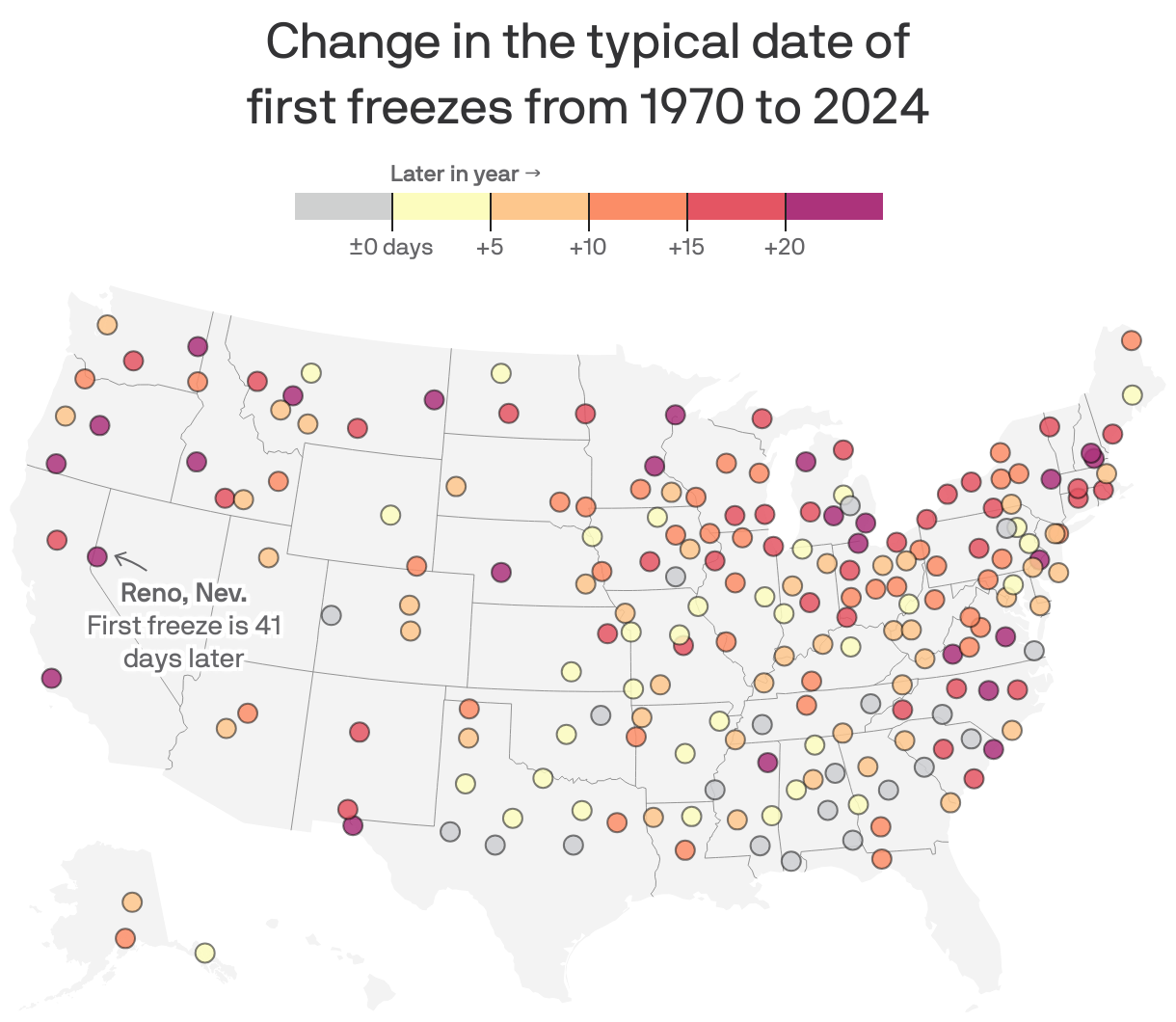
Driving the news: Compared to 1970, first freeze is arriving later in nearly 90% of the 204 U.S. cities analyzed in a new report from Climate Central, a climate research group.
Among those cities, first freeze is happening 12 days later on average.
The group defines "first freeze" as the first calendar date from Aug. 1 onwards with low temperatures at or below 32°F.
Caveat: "First freeze" is different from "first frost," which can happen with slightly higher temperatures — and damage frost-intolerant crops.
Zoom in: Reno, Nev. (41 days later); Bend, Ore. (38 days) and Santa Maria, Calif. (35 days) have seen the biggest first freeze delays.
Some cities are experiencing an earlier first freeze, including Dothan, Ala. (16 days earlier compared to 1970); Waco, Texas (11 days earlier) and Charlotte, N.C. (10 days earlier).
How it works: Climate Central's analysis is based on NOAA weather station data.
The group excluded locations without traditional freezing seasons.
What's next: NOAA's latest seasonal outlook covering November-January is calling for an elevated chance of above-normal temperatures for most of the country.
Green energy stocks are making a comeback despite political headwinds, according to data released this week by research firm Rystad Energy.
Why it matters: Conventional wisdom suggests that clean-energy companies are down and out with President Trump repealing a raft of policies supporting them. But the stock reality says otherwise.
United Airlines' Lauren Riley is at the forefront of executives evangelizing for a switch to jet fuel with less of a carbon footprint.
Why she matters: As United's chief sustainability officer, Riley has sought to position the airline — the first to publicly commit to a carbon-reduction target — as a leader on sustainable aviation fuel, or SAF.
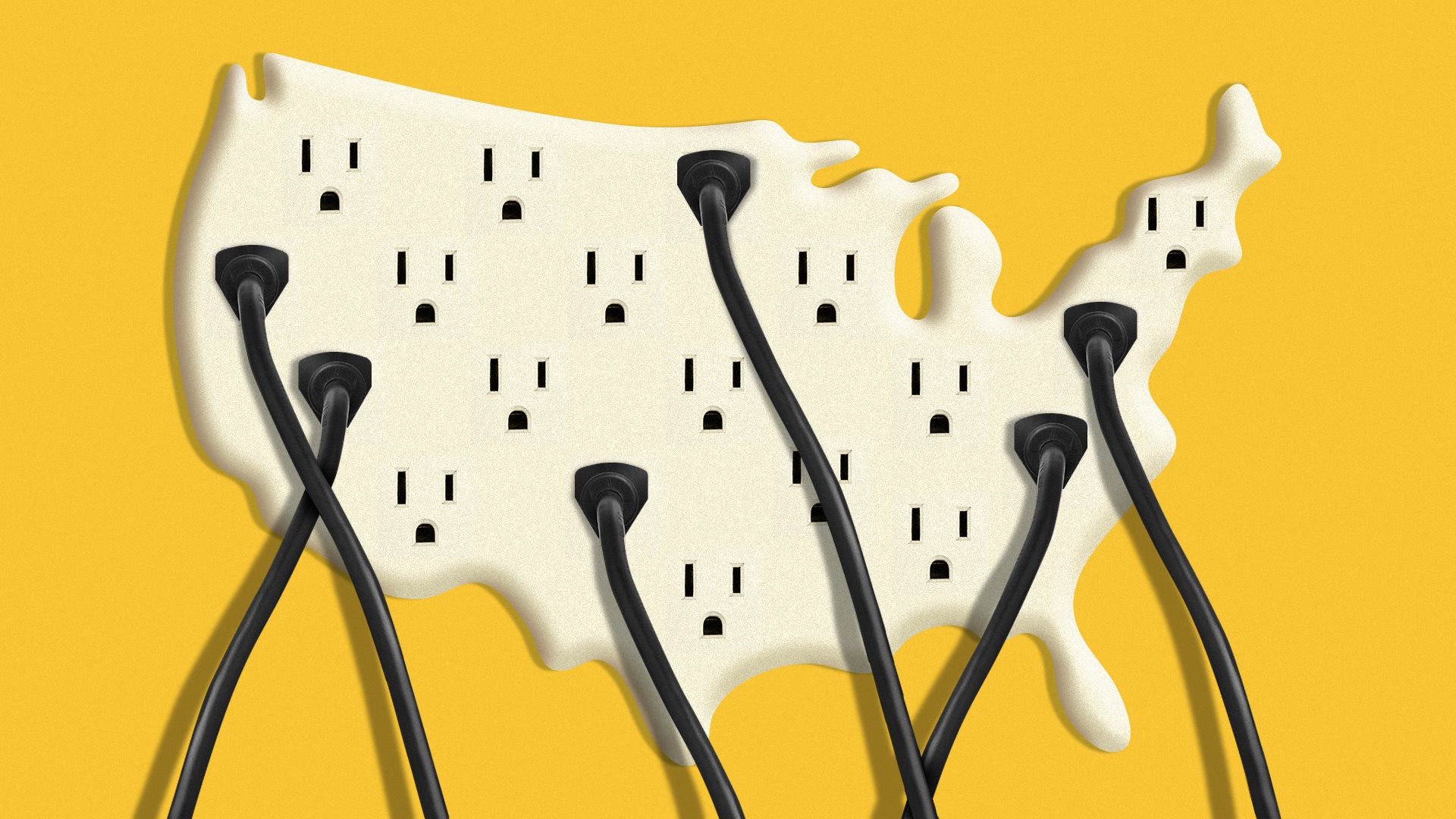
America faces an economy-shaping energy jam: We've never needed more of it more urgently to meet rising consumer and business demand.
Why it matters: We produce and export more energy than at any point in history. But the data centers powering the AI boom suck up so much energy, so fast, it's increasingly jacking up prices for nearby ordinary residents.
The big picture: This dynamic — surging demand and finite supply — is playing out in community after community. It creates a difficult tension for President Trump, who wants both to accelerate AI and slow energy spikes for consumers.
Top climate investors are aligning on an unusual plan to scale high-risk startups after a private coastal retreat sparked a push for joint action.
Why it matters: The investors — including Bill Gates, John Arnold and Vinod Khosla — hope that synchronized investment can break the logjam for deploying new energy projects.
Cautious unity emerged at the retreat in the face of cooling political and economic momentum for climate action.