"First freeze" is coming later as fall warms

Add Axios as your preferred source to
see more of our stories on Google.
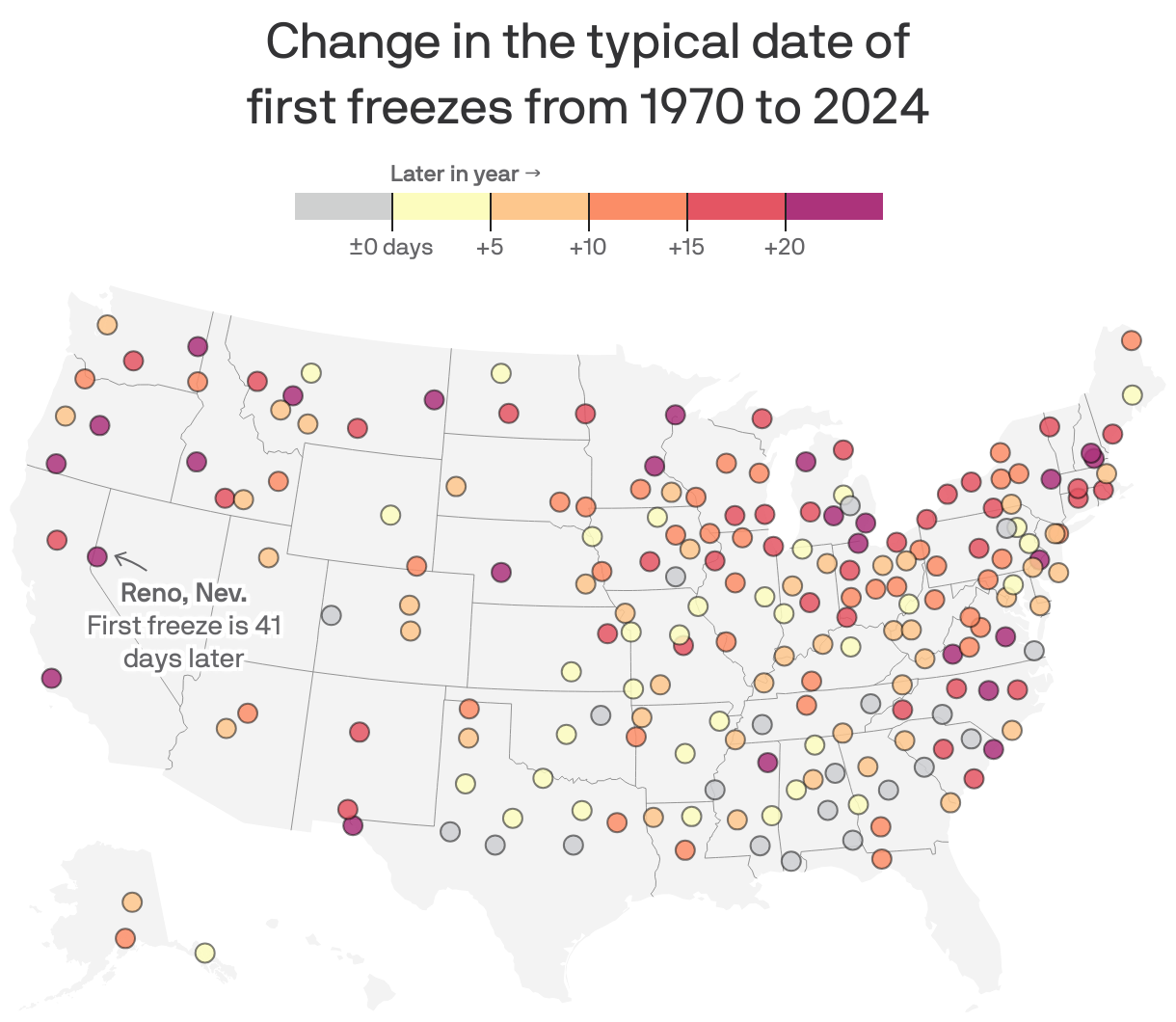
The first freezing temperatures after summer are coming later on the calendar than they used to in many U.S. cities, a new analysis finds.
Why it matters: It's another indication of fall warming amid climate change, and affects farmers, gardeners and allergy sufferers.
Driving the news: Compared to 1970, first freeze is arriving later in nearly 90% of the 204 U.S. cities analyzed in a new report from Climate Central, a climate research group.
- Among those cities, first freeze is happening 12 days later on average.
- The group defines "first freeze" as the first calendar date from Aug. 1 onwards with low temperatures at or below 32°F.
Caveat: "First freeze" is different from "first frost," which can happen with slightly higher temperatures — and damage frost-intolerant crops.
Zoom in: Reno, Nev. (41 days later); Bend, Ore. (38 days) and Santa Maria, Calif. (35 days) have seen the biggest first freeze delays.
- Some cities are experiencing an earlier first freeze, including Dothan, Ala. (16 days earlier compared to 1970); Waco, Texas (11 days earlier) and Charlotte, N.C. (10 days earlier).
How it works: Climate Central's analysis is based on NOAA weather station data.
- The group excluded locations without traditional freezing seasons.
What's next: NOAA's latest seasonal outlook covering November-January is calling for an elevated chance of above-normal temperatures for most of the country.
