BHP, operator of the world's largest copper mine, sees a bright future for AI improving the industry — but cautions that it's early days, a top executive tells Axios.
Why it matters: BHP Americas President Brandon Craig's comments show how the huge, capital-intensive sector hopes to harness AI amid rising demand for key commodities.
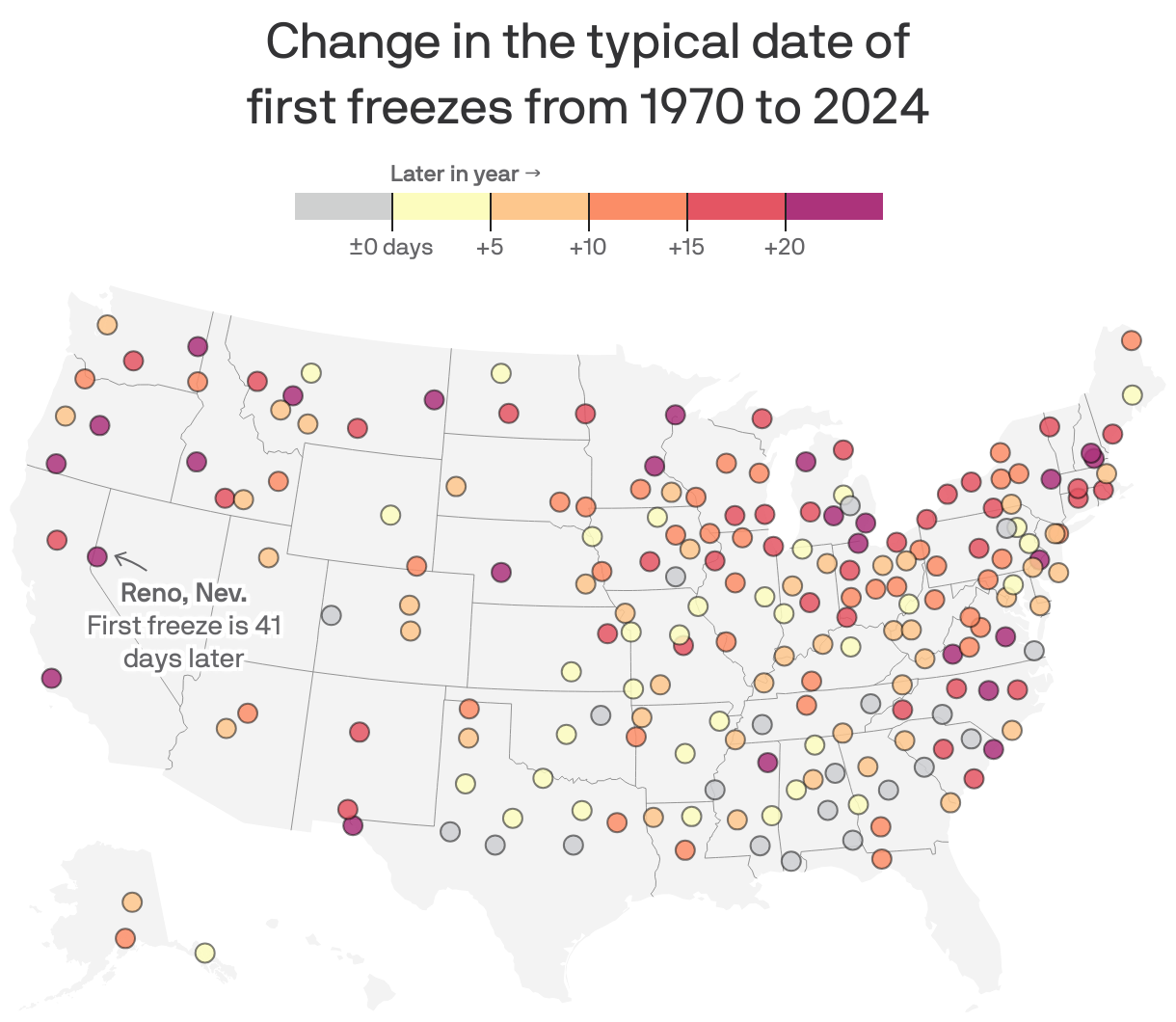
Driving the news: Compared to 1970, first freeze is arriving later in nearly 90% of the 204 U.S. cities analyzed in a new report from Climate Central, a climate research group.
Among those cities, first freeze is happening 12 days later on average.
The group defines "first freeze" as the first calendar date from Aug. 1 onwards with low temperatures at or below 32°F.
Caveat: "First freeze" is different from "first frost," which can happen with slightly higher temperatures — and damage frost-intolerant crops.
Zoom in: Reno, Nev. (41 days later); Bend, Ore. (38 days) and Santa Maria, Calif. (35 days) have seen the biggest first freeze delays.
Some cities are experiencing an earlier first freeze, including Dothan, Ala. (16 days earlier compared to 1970); Waco, Texas (11 days earlier) and Charlotte, N.C. (10 days earlier).
How it works: Climate Central's analysis is based on NOAA weather station data.
The group excluded locations without traditional freezing seasons.
What's next: NOAA's latest seasonal outlook covering November-January is calling for an elevated chance of above-normal temperatures for most of the country.
Green energy stocks are making a comeback despite political headwinds, according to data released this week by research firm Rystad Energy.
Why it matters: Conventional wisdom suggests that clean-energy companies are down and out with President Trump repealing a raft of policies supporting them. But the stock reality says otherwise.