Friday's energy & climate stories

Nvidia's Jensen Huang sees possibilities in AI power use

Nvidia CEO Jensen Huang contends that AI's benefits for the power grid and society ultimately will offset its massive energy suck.
Why it matters: AI's rise is fueling fears in the power sector and the climate community about grid reliability and meeting greenhouse gas emissions reduction targets.

Hurricane Helene's rapid intensification fits ominous trend
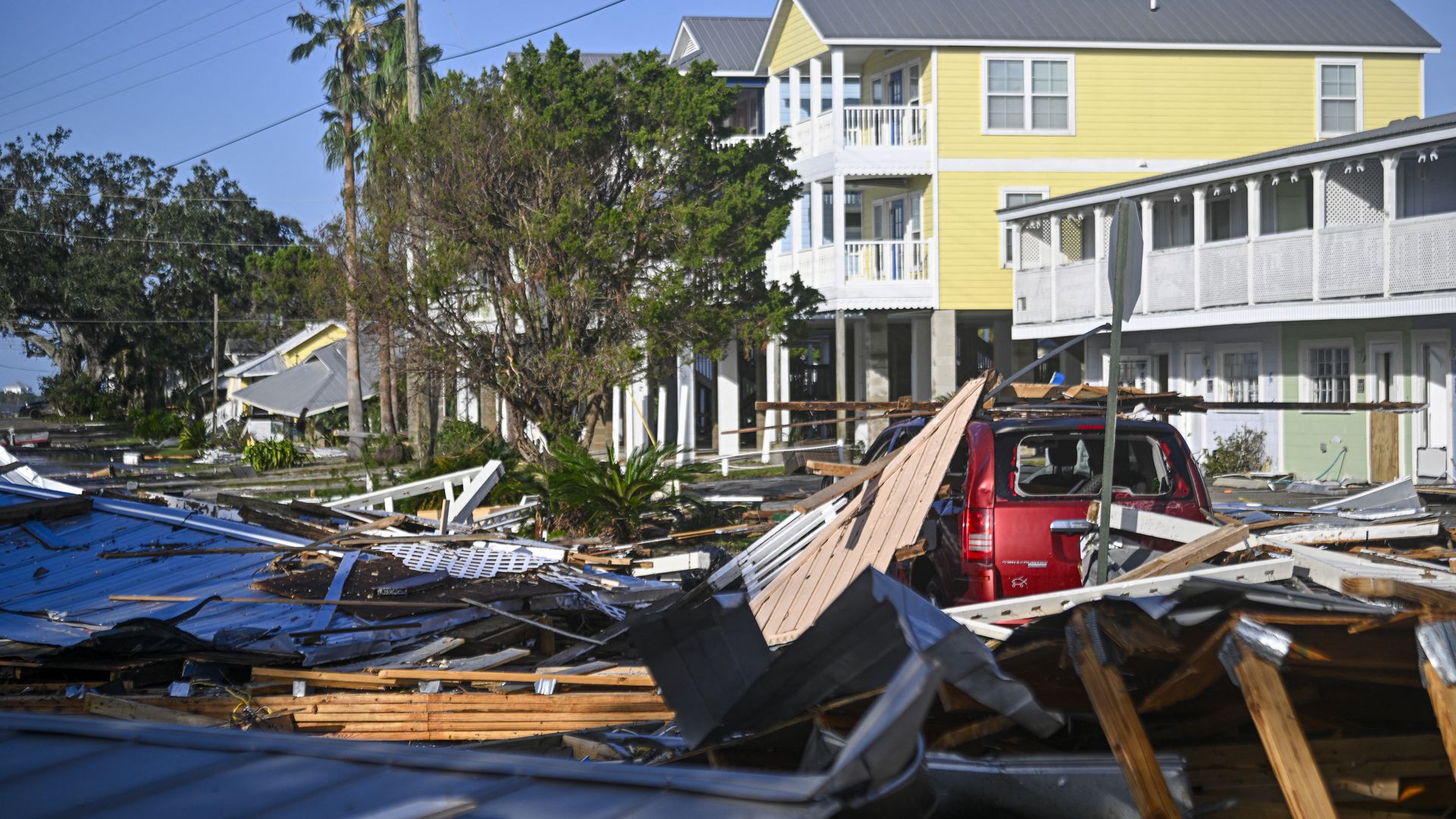
Hurricane Helene began the day Thursday as a Category 1 hurricane, and quickly transformed into one of the largest, most powerful Gulf storms on record, with maximum sustained winds of 140 mph at landfall.
Why it matters: Rapidly intensifying hurricanes can catch residents off guard and unable to flee a suddenly stronger storm as it bears down on them.

"Catastrophic" Hurricane Helene lashes Georgia after Florida landfall
Editor's note: Read our latest coverage on Hurricane Helene.
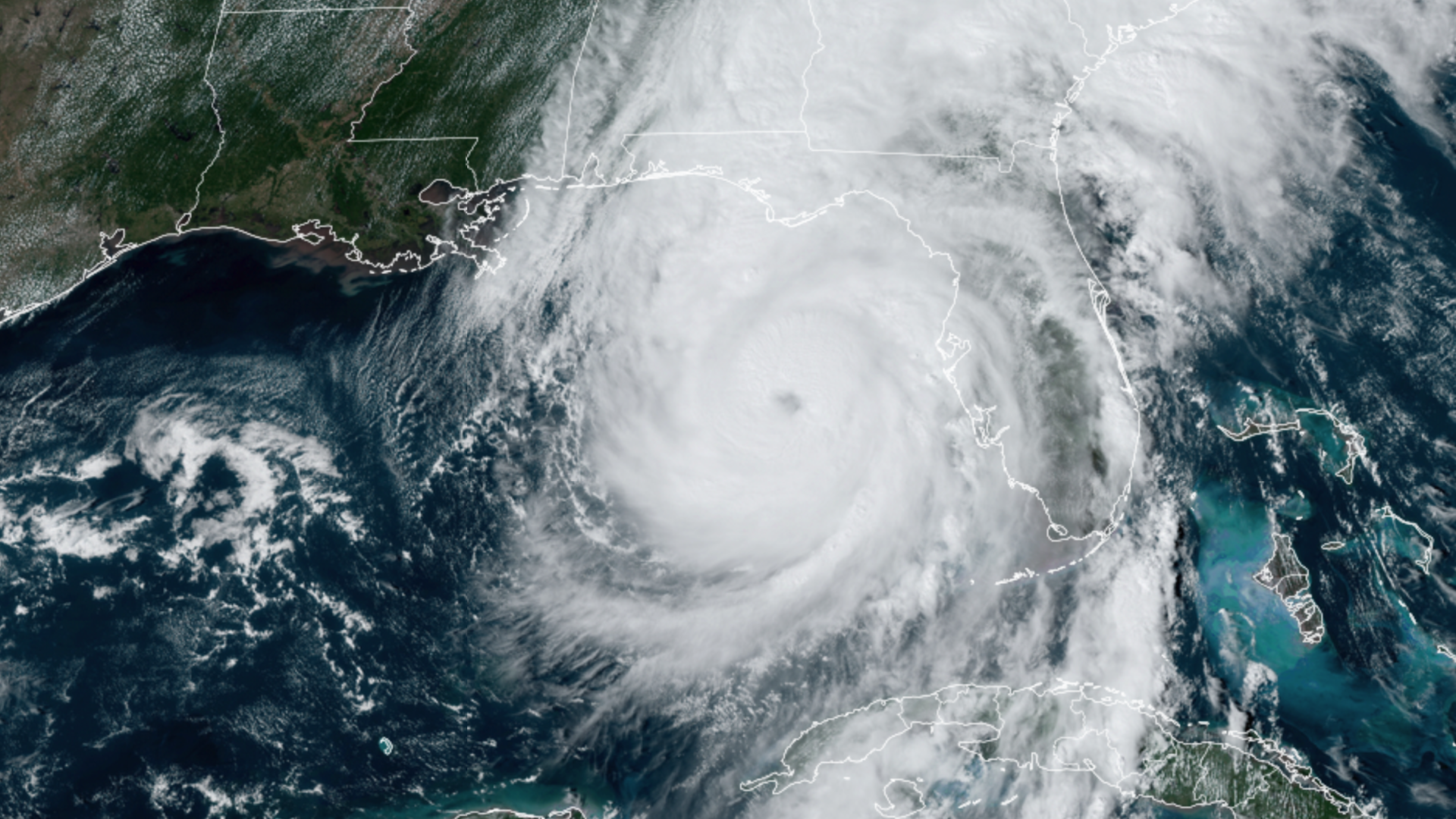
Hurricane Helene made landfall in Florida's Big Bend region as a Category 4 storm late Thursday before moving into Georgia with "catastrophic winds" as a still-dangerous high-end Category 2 hurricane early Friday.
The big picture: The deadly hurricane weakened to a Category 1 storm by 2am ET, but "life-threatening storm surge," winds and heavy rains continued amid multiple water rescues across Florida.

Exclusive: Amazon expects to remain renewable energy's top buyer
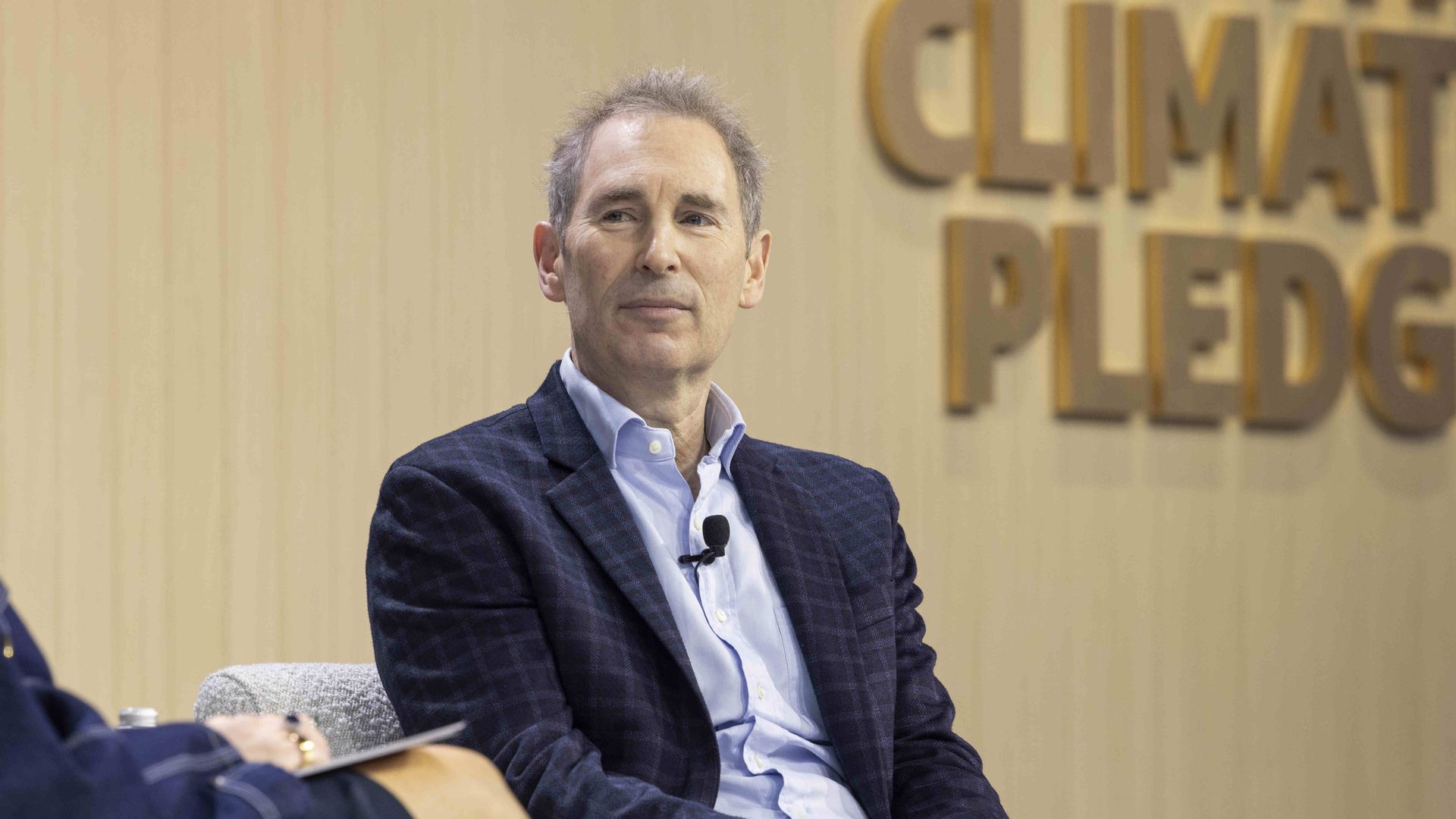
Amazon CEO Andy Jassy expects the company to remain the world's largest renewable energy-buying company for "several years to come," he said Thursday.
Why it matters: His comments signal that tech's outsized influence on green energy adoption will remain intact as AI reshapes demand for electricity and resources.

Axios House: Energy secretary says U.S. can meet increasing demand
NEW YORK – The U.S. is struggling to meet fast-growing energy demand while transitioning to cleaner power sources, and the issue has become increasingly intertwined with national security and economic competitiveness.
- Axios senior climate reporter Andrew Freedman and energy reporter Ben Geman moderated conversations with Columbia University Center on Global Energy Policy founding director Jason Bordoff; Energy Secretary Jennifer M. Granholm; and Rockefeller Foundation president Rajiv J. Shah at Axios House for Climate Week and the UNGA, which was sponsored by GE Vernova.
Why it matters: Finding ways to meet increasing energy demand has only become more urgent with the rise of artificial intelligence.
What they're saying: "There are serious concerns with how this energy transition, which is picking up speed, plays out in terms of U.S. national security and economic competitiveness," said Bordoff.
- The challenge to meet AI's energy demands happens at a time when the U.S. is also competing with China to lead in development of the technology.
- Investments to meet the demand for AI data centers are "existential" for Big Tech companies, Bordoff added.
Secretary Granholm estimated 15% growth in energy demand in the next few years from AI alone, but is confident the U.S. grid can rise to the challenge.
- "The good news is that we can do this," Granholm said, noting that the U.S. will be adding 60 gigawatts of clean power to the grid this year.
- "That's 30 Hoover Dams worth of clean power on our electric grid this year," she added.
Yes, but: Transitioning developing economies from fossil fuels to renewables is also key in the global fight against climate change.
- "Unless we transition developing and emerging economies big and small from fossil fuels to renewables, no matter what we do in other parts of the world, we simply do not win the fight against climate change," Shah said.
Sponsored content:
In a View From the Top sponsored segment, GE Vernova Chief Executive Officer Scott Strazik said that the growing demand for electricity provides an opportunity to restructure the U.S. energy system.
- "We need to figure out how to continue to create more supply of electricity while decarbonizing it quickly," Strazik said.
- "To me, it's one of the more contradictory things I feel like I've seen in the U.S. the last six months. People are almost scared of the growth. The growth is the only thing that's going to give us a chance to actually address this," he continued.
Axios House: Priorities and challenges for decarbonization vary by sector
NEW YORK – Efforts to decarbonize key industries are underway but solutions are not scaling fast enough.
- Axios host/editor Niala Boodhoo and Sara Kehaulani Goo, executive editor of Axios Live, moderated conversations with National Climate Advisor Ali Zaidi, Delta Air Lines chief sustainability officer Amelia DeLuca and Bridgetown Initiative director and special advisor to the Barbados Prime Minister on climate resilience Pepukaye Bardouille at Axios House for Climate Week and UNGA, which was sponsored by PAGE.
Why it matters: Building out infrastructure for renewable energy is a key aspect of accelerating energy transitions in the U.S. and globally.
What they're saying: "One of the big things that we try to focus on is just blocking and tackling on the ground to get things built, and that's a big focus for us in these last few months," Zaidi said of the Biden administration's energy priorities for the rest of his term.
Zaidi said the Biden administration has tried to focus "sector by sector" when it comes to decarbonization.
- For the power sector, the top priority is building more transmission lines and finalizing the tech neutral tax credits for the Inflation Reduction Act, he said. For transportation, it's building up more momentum for heavy duty and freight decarbonization.
- Scaling sustainable aviation fuel is a key part of the aviation industry's decarbonization strategy. "Sustainable aviation fuel is the real challenge. It's not scaling as fast as it needs to, and that is the single most important lever that we have to pull," DeLuca said.
What we're watching: Climate finance has been a key focus of international conversations on the need to speed up global energy transitions.
- A lack of adequate funding for developing economies to move away from fossil fuels and improve climate resilience is a big challenge.
- "But I think when financing institutions and development partners really kind of look at the numbers and expressly realize that for every dollar that you invest in adaptation, you save between $4 and $7 in reconstruction, then it's actually pretty good value for money," Bardouille said.
Sponsored content:
In a View From the Top sponsored segment, EQT president and CEO Toby Z. Rice emphasized the importance of growing energy production in the United States but also noted that it has never been more difficult to do so.
- "It's never been a more important time to produce energy in the United States, whether that is fueling our allies with our LNG and meeting the growing demand of our allies overseas, or powering this AI revolution that's taking place in our shores. But unfortunately, it's never been more difficult to produce energy in this country."
Axios House: Patagonia shuns ‘sustainable’ company label, CEO says
NEW YORK – The tension between profit and environmental impact raises questions for corporate America about whether business can ever meet the true definition of "sustainable."
- Axios host/editor Niala Boodhoo, energy reporter Ben Geman and senior business reporter Hope King moderated conversations with Climeworks CEO Christoph Gebald; Amazon chief sustainability officer Kara Hurst; Patagonia CEO Ryan Gellert; and EILEEN FISHER CEO Lisa Williams at Axios House for Climate Week and UNGA. The event was sponsored by Suntory Global Spirits.
Why it matters: Sustainability commitments have become a key business objective for many companies, but the impact of such pledges varies depending on how leaders see them through.
What they're saying: "We're not a sustainable company, we don't describe ourselves that way," Patagonia's Gellert said.
- "Sustainability is taking less from a system than it can regenerate, and that doesn't define how we are able to run our business today. If anything, we're a responsible company in that we really sweat the details on the decisions that we make," Gellert continued.
Making money while actually doing good for the planet is a difficult thing to do. "It's a constant juggling match to make it happen, and to make it happen in an integrated way," Williams said.
One of the strongest ways the private sector can take action is through their purchasing power, and Hurst said Amazon has invested heavily in renewable energy.
- Amazon made a commitment to be 100% renewable across their global operations by 2030. Hurst said they reached the goal last year, which was well ahead of schedule.
Sponsored content:
In a View From the Top sponsored segment, Maker's Mark managing director Rob Samuels explained how the company's distillery has embraced regenerative agriculture and helped their 26 growers do so, too.
- "We have funded all of the research, all of the education for all 26 of these growers to embrace regenerative agriculture, which is moving away from heavy industrial farming that destroys the topsoil, that heavily relies on pesticides and fertilizers to this regenerative model," Samuels said.
Zillow home listings to feature climate risk, insurance data

Mindful of increasing risks from extreme weather events such as hurricanes, Zillow will combine climate risk scores, interactive maps and insurance information on its home listings, the company announced this morning.
Why it matters: This step gives prospective buyers their first combined look at climate risk information with home insurance recommendations.

Uber's EV drivers need more spots to plug in

The push to electrify urban taxi and rideshare fleets has created a new issue: not enough charging infrastructure in cities like New York and San Francisco.
Why it matters: While government funding is directed primarily to highway charging spots, dense urban centers stand to benefit the most from the shift to electric cars, trucks and buses — provided they have a place to charge.

Why thieves aren't targeting EVs

Thieves aren't very interested in electric vehicles.
Why it matters: More than 1 million vehicles were stolen in the U.S. in 2023, according to the National Insurance Crime Bureau (NICB).
Helene takes aim at Florida, with huge impacts across Southeast
Editor's note: Read our latest coverage on Hurricane Helene.
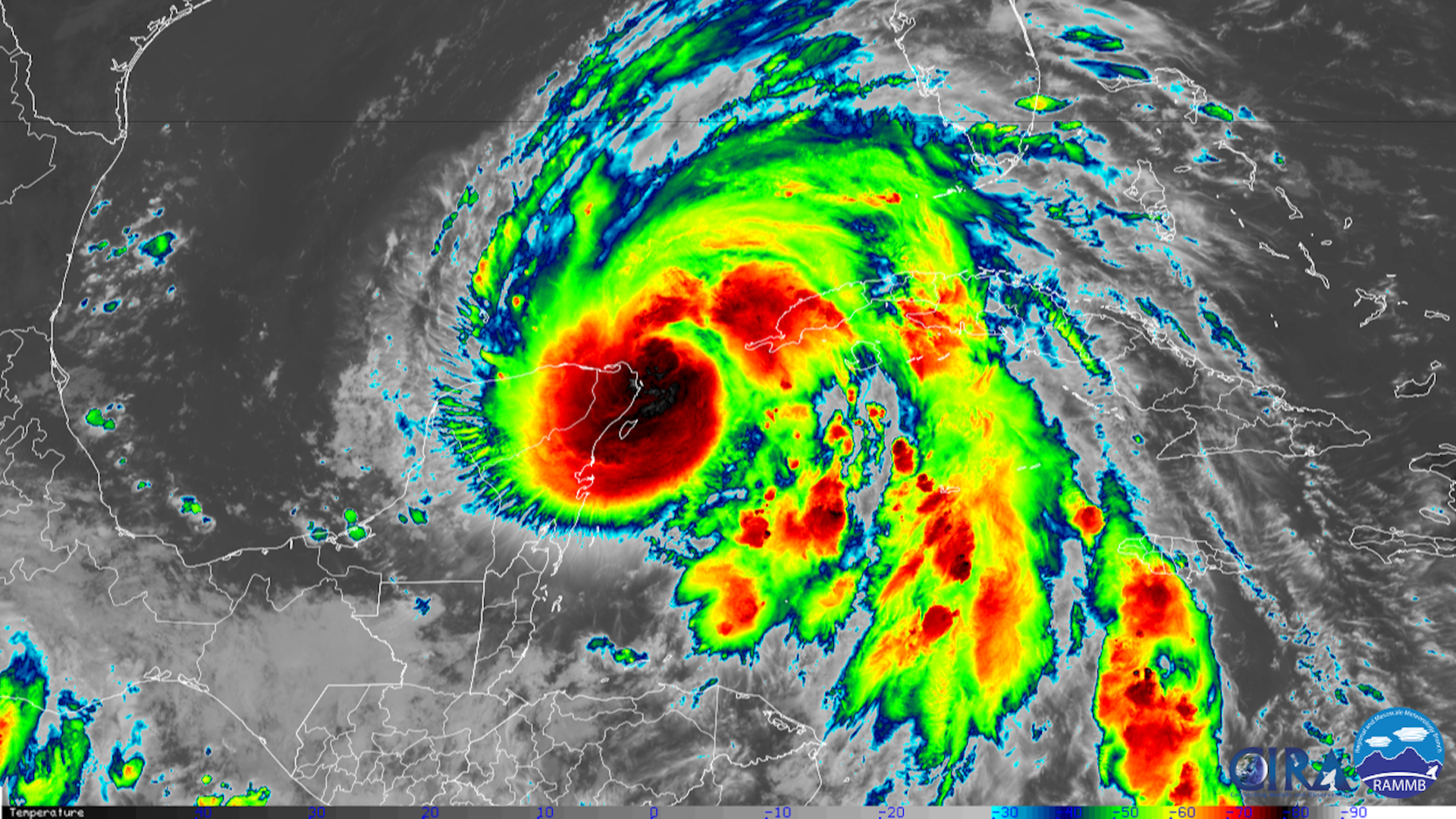
A landmark, highly destructive hurricane is brewing in the southern Gulf of Mexico, and is forecast to become a ferocious Category 3 storm during the next 24 hours.
Threat level: Hurricane Helene will affect all of Florida through Friday. In a rare occurrence, the entire state — with the exception of the far western Panhandle — is under some type of tropical storm or hurricane warning.

NOAA issues rare alert on Hurricane Helene's widespread flooding rains
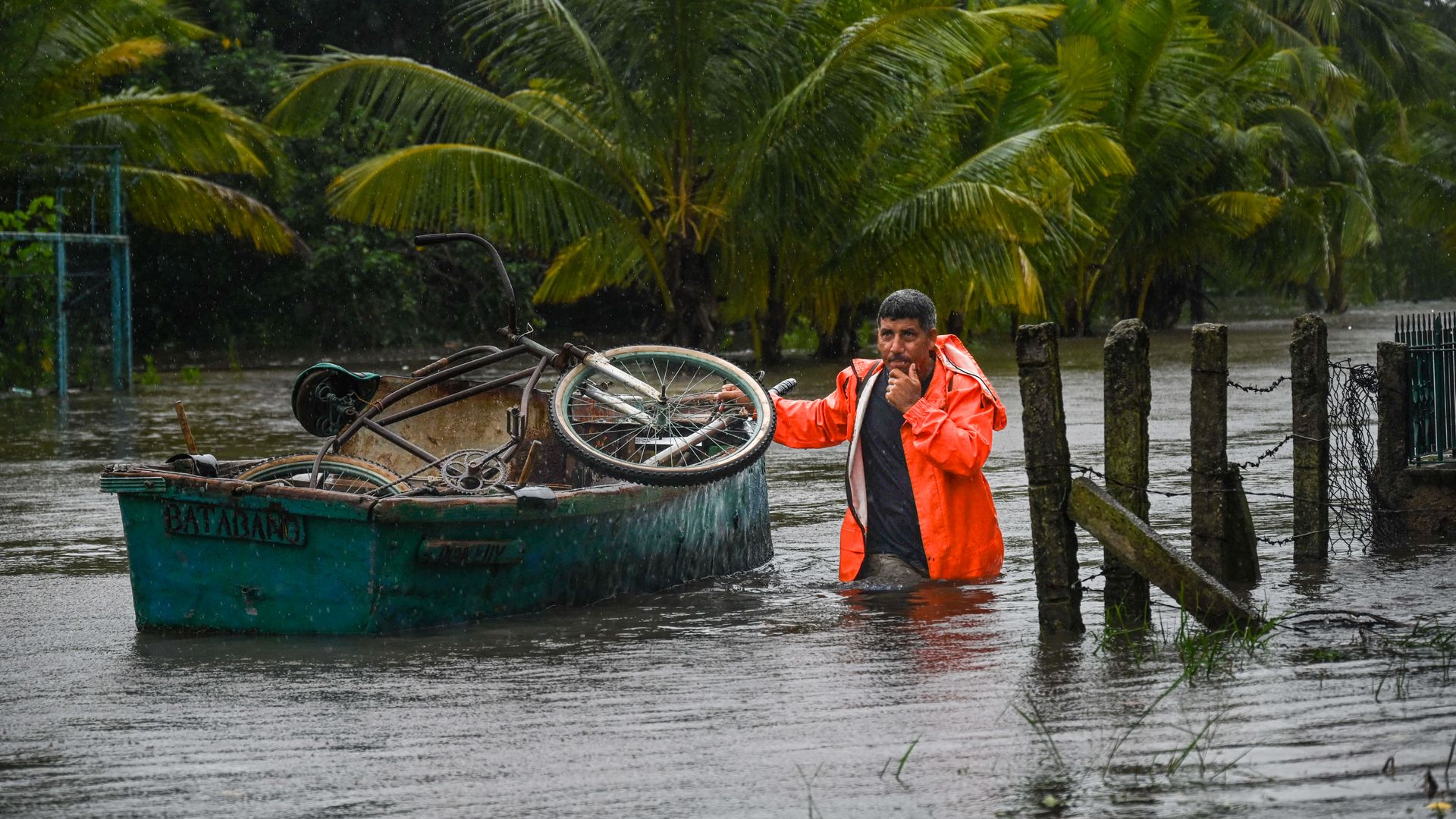
Hurricane Helene's threat of widespread flooding rains and high winds prompted NOAA to issue a rare alert Wednesday, warning the storm's effects "won't be limited to the Gulf Coast," with it "expected to travel hundreds of miles inland."
The big picture: NOAA warned in its special weather statement that "heavy rainfall will begin" in parts of the southeastern U.S. "well before" the "unusually large" storm's expected landfall along Florida's northwest coast as a major hurricane Thursday evening,