The NOAA is adding to its high-performance computing resources in a bid to bolster its uses of AI and machine learning for weather and climate.
Why it matters: The agency's $100 million investment comes as it faces rapid advances in forecasting techniques, and new entrants build accurate weather models trained on historical data.
For some Americans, the air is getting crisper and the leaves are starting to change as fall approaches — but one thing's certain no matter your local weather: The days are getting shorter.
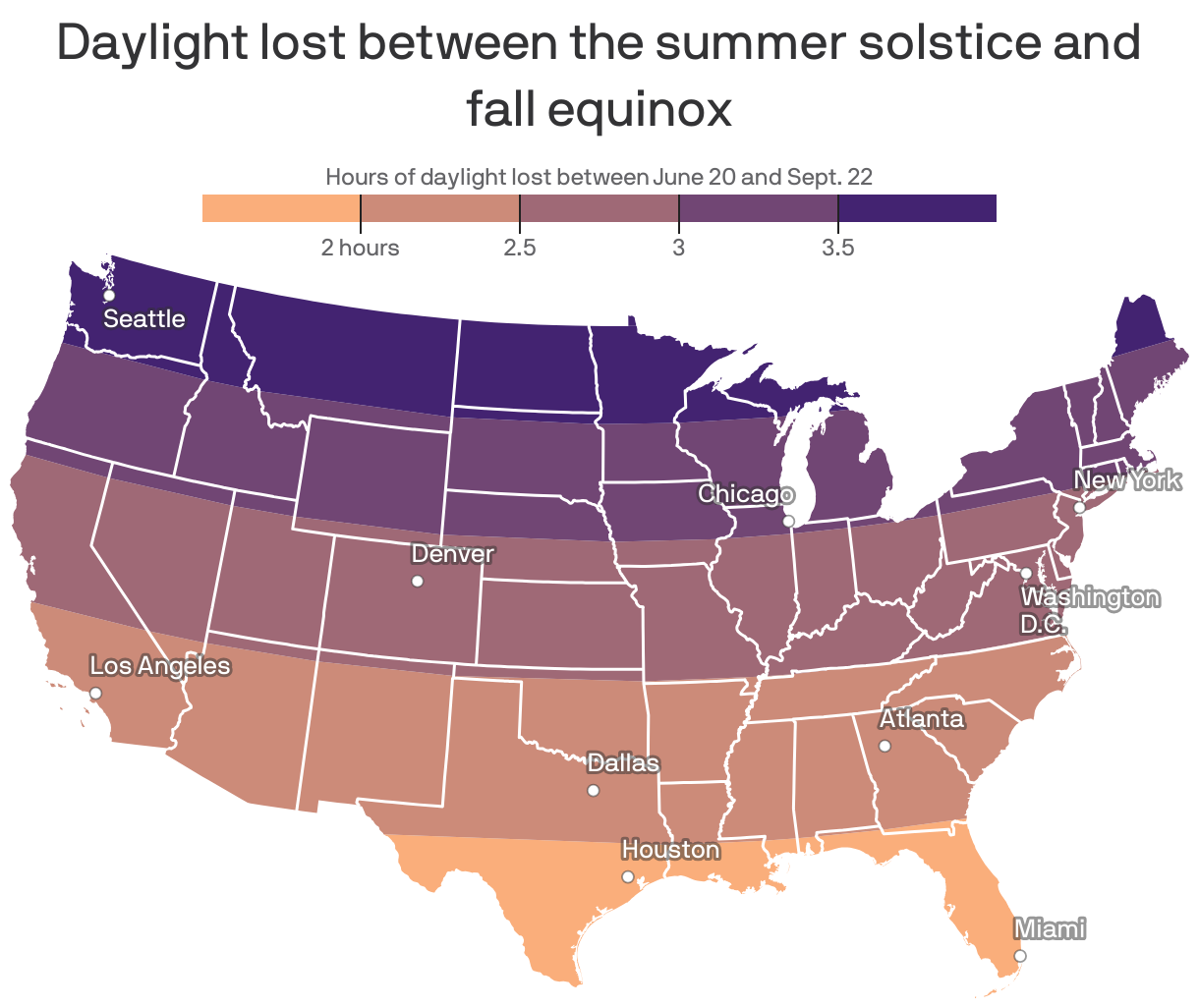
The big picture: Parts of the northern U.S. are losing more than three hours of daylight between June 20 (the summer solstice) and Sept. 22 (the fall equinox), per NOAA's handy Solar Calculator.
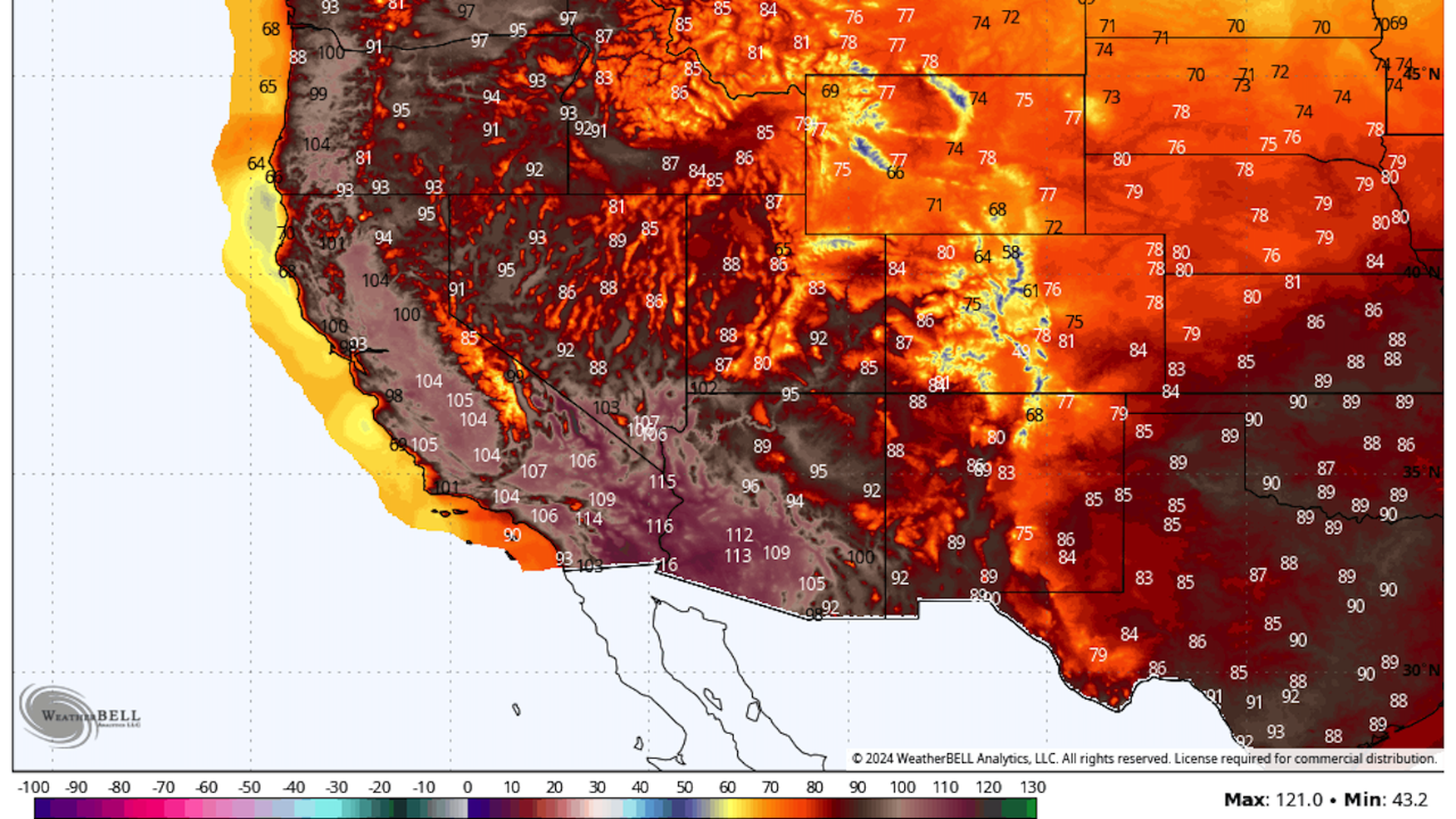
Threat level: A strong heat dome will send temperatures soaring into the 100s°F to 110s°F in Phoenix and Las Vegas, with triple-digit heat also affecting much of inland California.
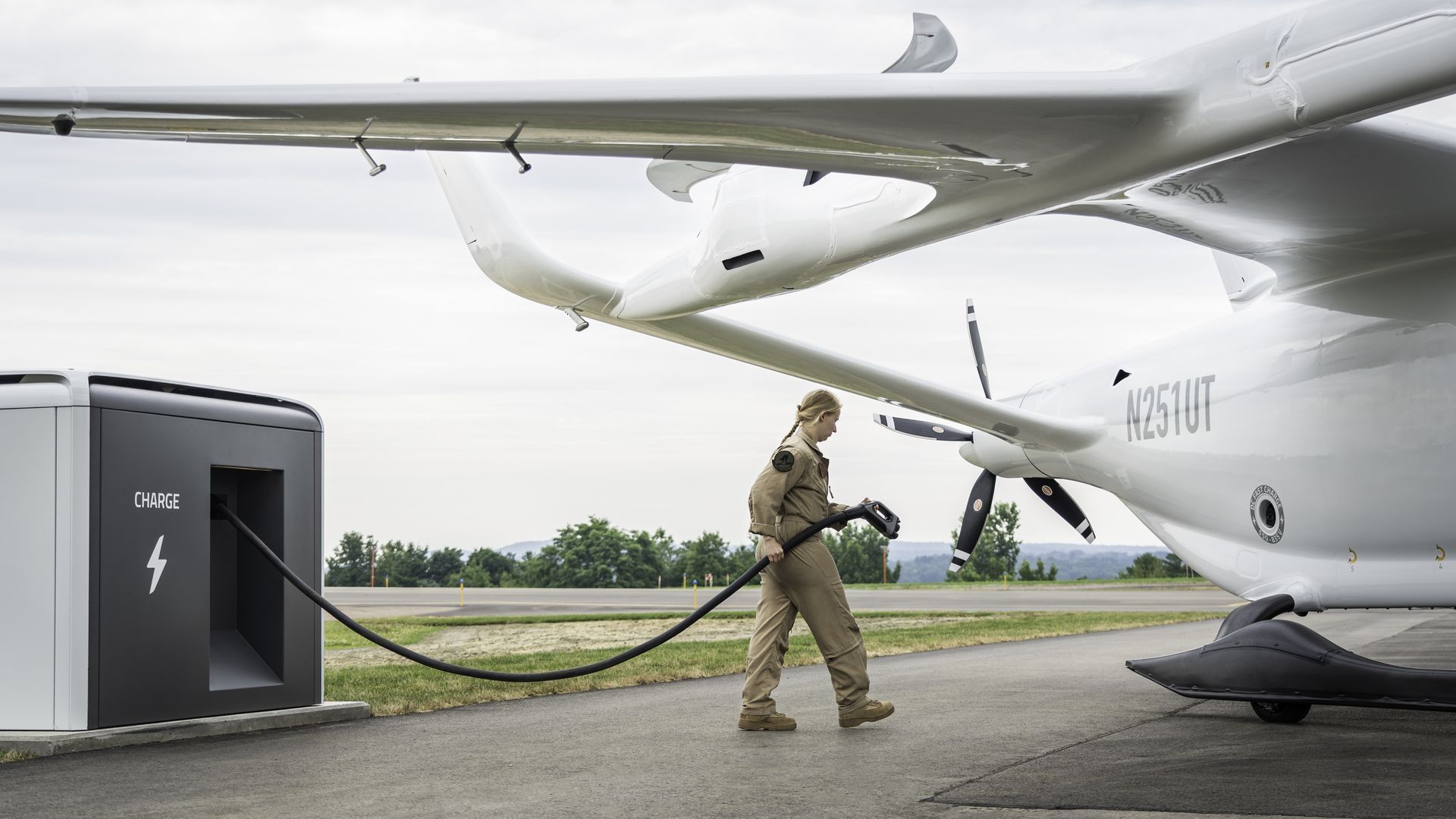
The federal government is laying the groundwork to test electric air taxis to quickly respond to natural disasters and other public health emergencies in remote areas, Axios is first to report.
Why it matters: Rural areas increasingly lack access to hospitals and other medical facilities — a health care gap that's especially acute after a natural disaster like a hurricane.
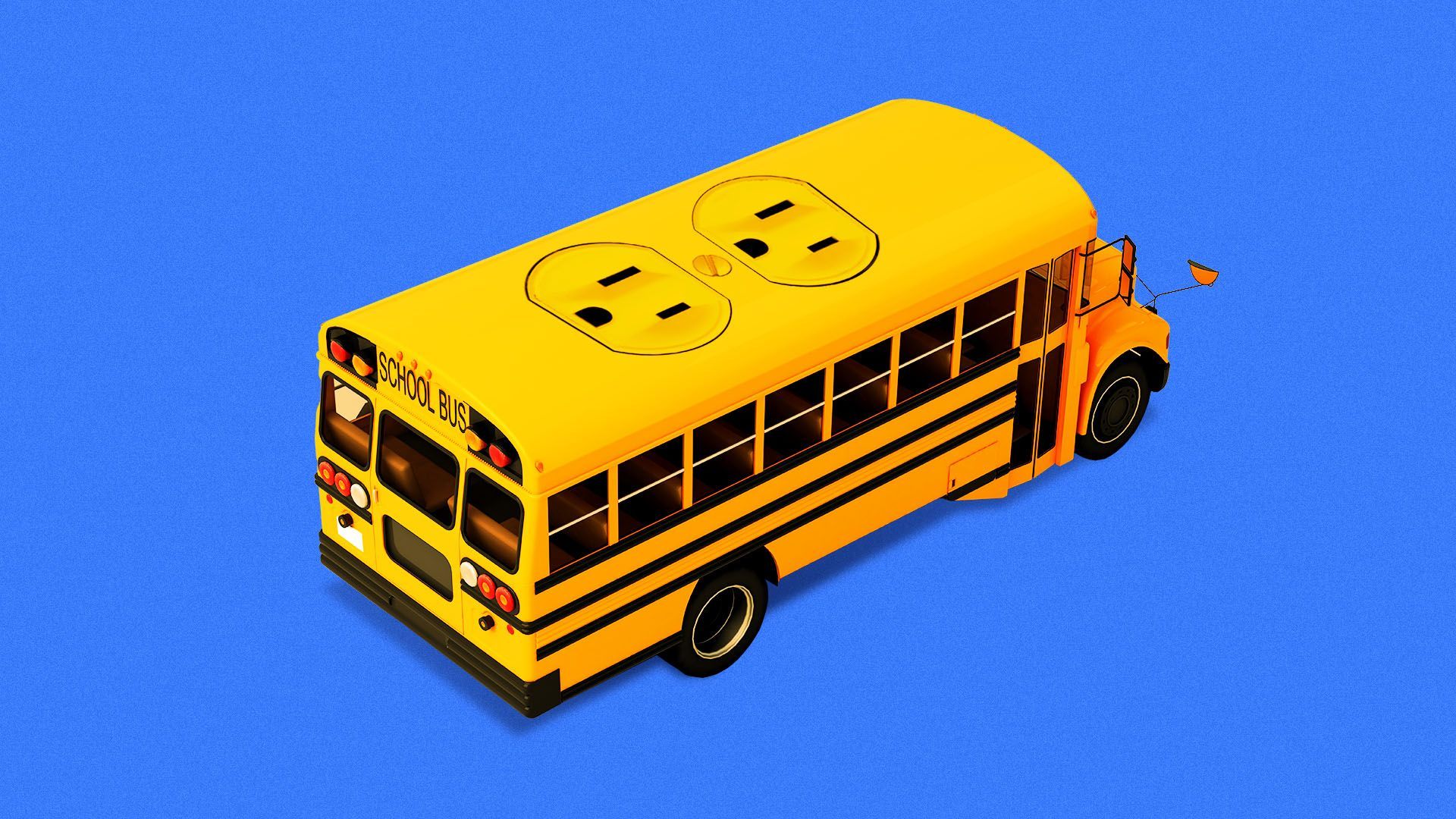
More students than ever are headed to class in an electric school bus this fall as school districts race to take advantage of unprecedented government funding to replace their diesel fleets.
Why it matters: Exhaust from diesel buses is linked to serious health and development conditions for children, especially in low-income communities.
Vice President Kamala Harris' campaign won't say whether she supports requiring automakers to build only electric or hydrogen vehicles by 2035 — a position she took during her 2020 campaign for president.
Why it matters: Since taking over President Biden's campaign in July, Harris has been light on policy details.