Harris' cautious, hold-the-details campaign

Add Axios as your preferred source to
see more of our stories on Google.
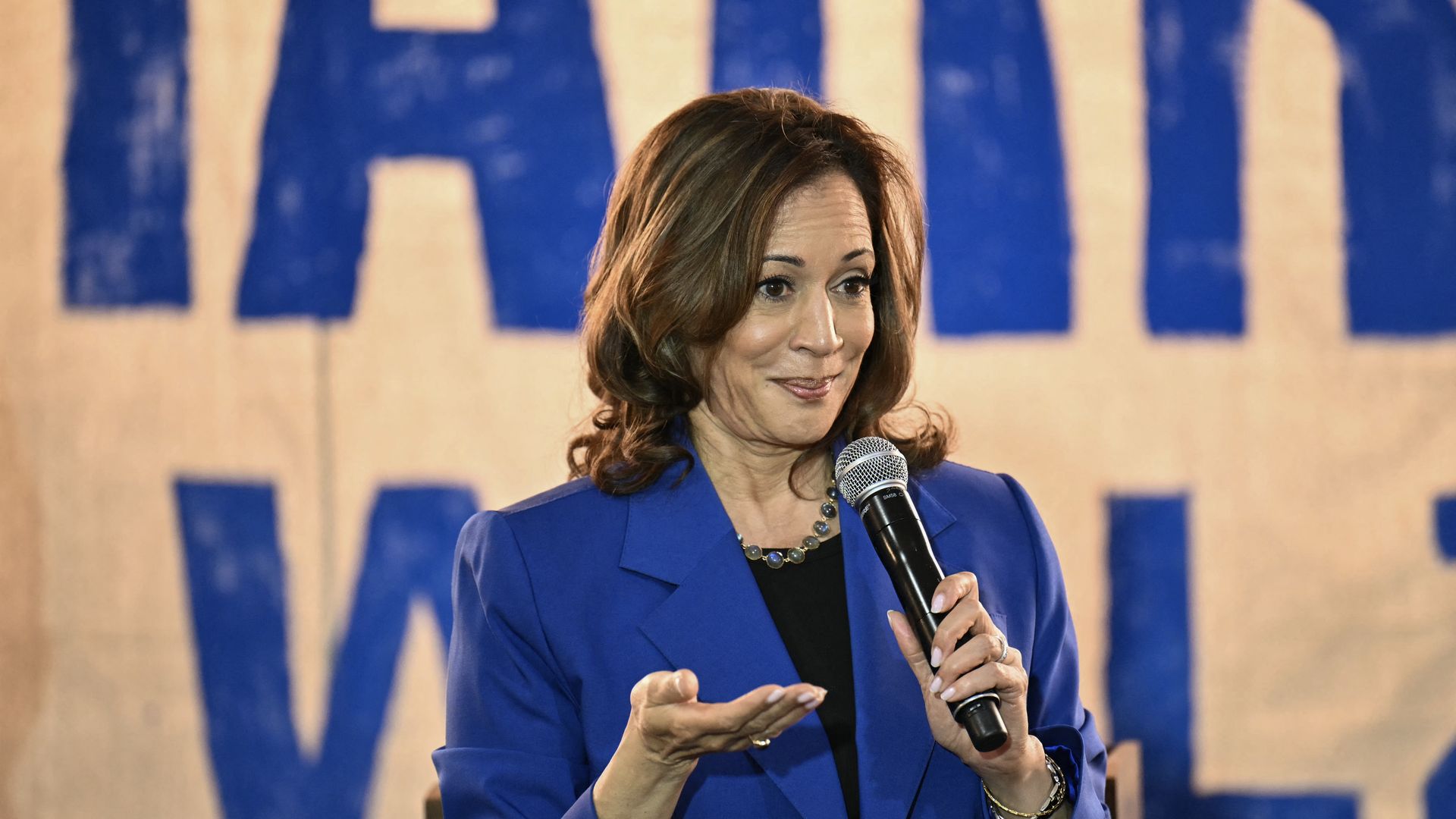
Vice President Kamala Harris speaks at a campaign stop in Pennsylvania on Sunday. Photo: Angela Weiss/AFP via Getty Images
Vice President Kamala Harris will accept the Democratic presidential nomination Thursday without having sat for an interview, held a press conference or released many details about her policy priorities in the month since she entered the race.
Why it matters: The initial strategy is part of a larger pattern of Harris being risk-averse, with highly choreographed and scripted appearances — and just a couple of short gaggles with reporters.
Driving the news: Harris' team has put off repeated interview requests from media outlets for four weeks.
- She has committed to one interview by Aug. 31.
Since declaring her candidacy after President Biden's withdrawal from the race on July 21, Harris hasn't shared many details about what she would focus on during her first 100 days as president and beyond.
- Through anonymous campaign spokespeople, Harris' campaign has said she wouldn't ban fracking, try to pass Medicare for All, or implement some other progressive ideas she embraced during her presidential campaign for the 2020 nomination.
Between the lines: Harris' cautious approach has been evident during her time as vice president.
- Some of her aides have felt she has been too risk-averse, and would get too frustrated when anything went wrong — a dynamic the aides say made them less likely to push for creative proposals.
- In 2022, the White House asked Harris to be the headliner for D.C.'s traditional Gridiron Dinner, in which a speaker tells jokes to an elite political crowd.
- Harris resisted participating, and her staff didn't push it. Commerce Secretary Gina Raimondo did it instead, as Axios previously reported.
Reality check: Harris' defenders cast her approach as steady and disciplined, rather than overly careful.
- Her consistent and steadfast loyalty to Biden over 3½ years helped her earn his immediate endorsement after he dropped out — and has put her in a good position to win the White House.
- Harris' lack of details also is partly the result of the rushed nominating process after Biden stepped aside.
Zoom in: Harris hasn't made clear whether she'd continue all of Biden's policies and, if not, which ones she wouldn't.
- The Democratic Party's policy platform originally was passed through a committee on July 16 — before Biden dropped out — and still includes several references to a second Biden term rather than a Harris presidency.
This past week, Harris proposed some of her first policy initiatives.
- They largely focused on the economy, as Donald Trump maintains a polling lead on the issue. Harris proposed $25,000 in down-payment aid for first-time home buyers and continued support of the child tax credit.
- Harris' campaign also says she wants to raise the corporate tax rate from 21% to 28% — the same position as Biden.
Harris rolled out her most significant proposal in a speech Friday in North Carolina, calling for a law that would punish companies that are deemed to be price-gouging.
- It's an effort to address increased prices under Biden even as inflation has ebbed in recent months.
- That proposal has been criticized by some liberal economists and hasn't been universally embraced by other prominent Democrats who have dodged questions about whether they support the proposal.
- Republicans have labeled the plan as "price controls."
Flashback: When Hillary Clinton and Biden ran for president in 2016 and 2020 respectively, each campaign wrote out dozens of policy proposals they touted publicly.
- Harris' current website still doesn't have a policy page.
- Harris' sister, Maya Harris, was one of the most senior policy advisers for Clinton's campaign and now is a close confidante in Harris' effort.
What they're saying: The Harris campaign declined to comment.
