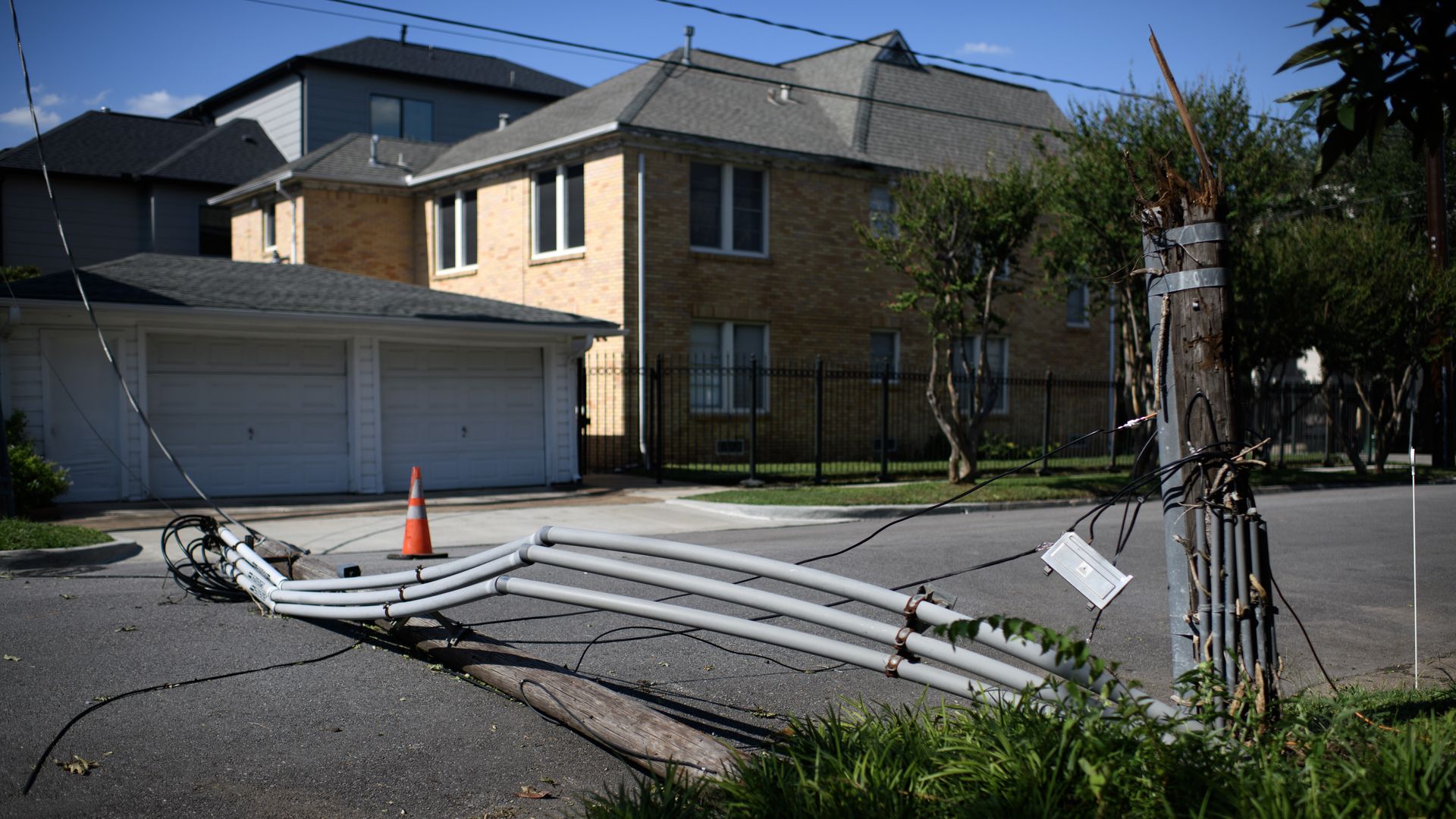
The lack of power to hundreds of thousands of Houston residents for the fourth straight hot and humid day since Hurricane Beryl struck the city is creating dangerous — and in some cases deadly — conditions.
Why it matters: With global average temperatures on the increase, along with the likelihood and severity of heat waves, society is increasingly vulnerable to this type of one-two punch of an extreme weather disaster.
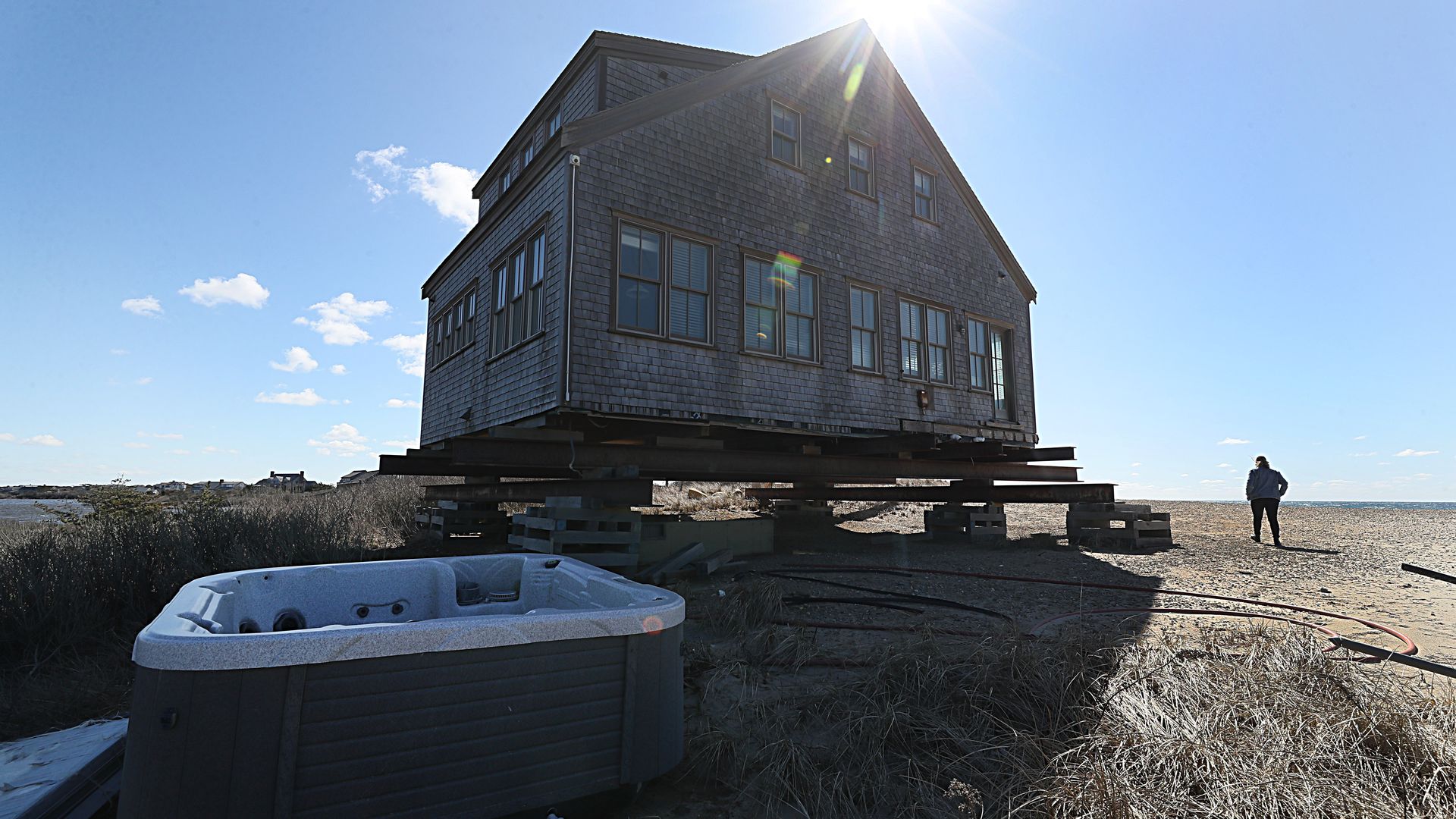
A house on the New England island of Nantucket that was valued at $1.9 million but recently sold for $200,000 has brought U.S. coastal erosion concerns into focus.
Why it matters: Climate risks bring the "potential for widespread property value declines in coastal areas" and "constitutes a major economic threat," per Alice Hill, an expert on energy and the environment at the nonprofit Council on Foreign Relations.
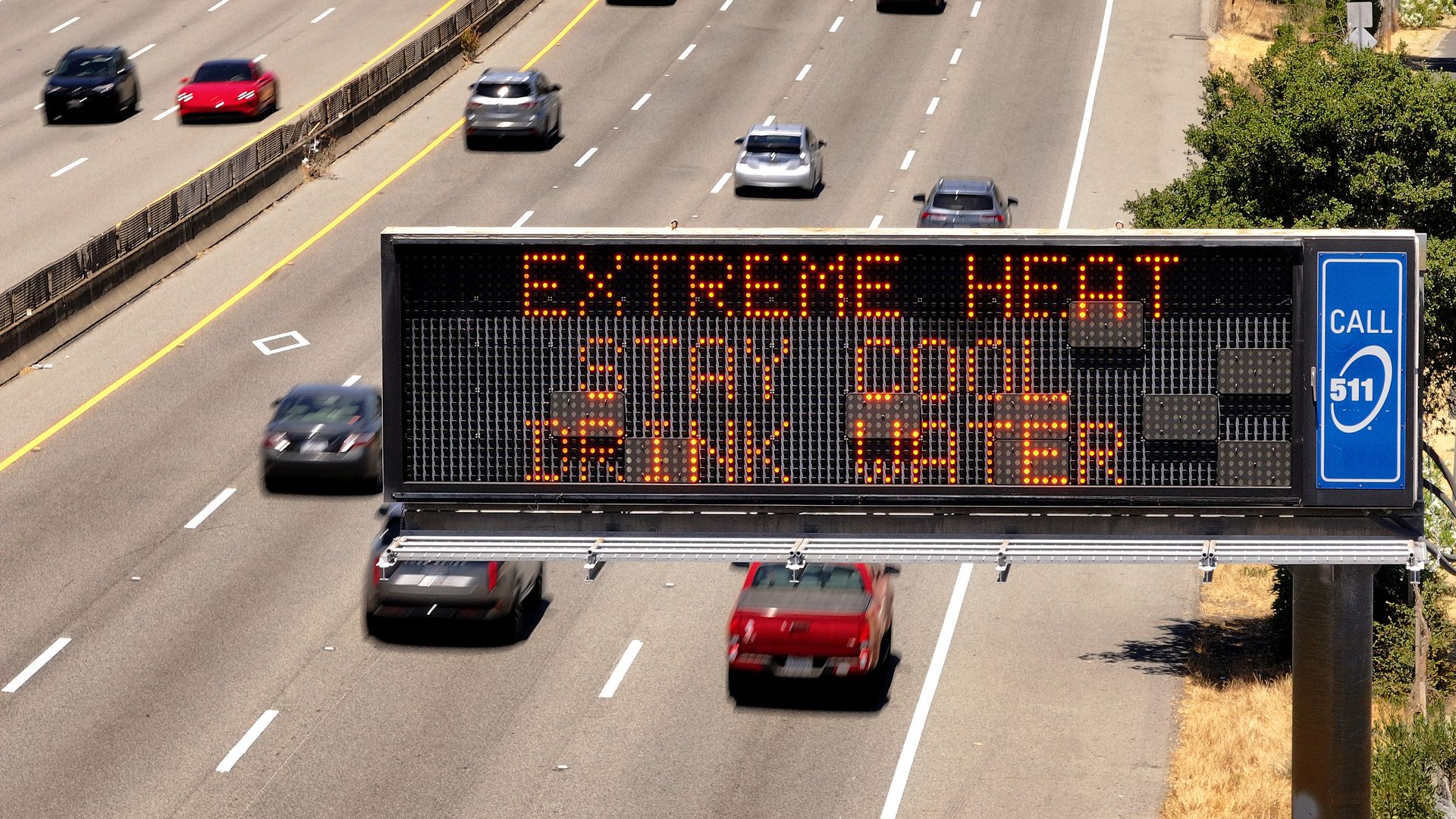
The record-shattering heatplaguing much of the East and West shows no signs of ebbing. Instead, it may actually spread further during the next seven days, from the West to the Southeast.
It's been miserably hotand unbearable in Houston, especially for the more than 1 million CenterPoint Energycustomers still without power three days after Beryl hit.
Why it matters: Houston is no stranger to storms, yet Beryl — a damaging hurricane, though not the worst we've seen by far —revealed the nation's fourth-largest city's lack of preparedness to respond to mass power outages.
The Energy Department is giving automakers and suppliers nearly $2 billion to save at-risk or shuttered plants — if they convert to serve the electric vehicle market.
Why it matters: The money via the 2022 climate law is among the most direct White House attempts to fuse manufacturing and climate policies.
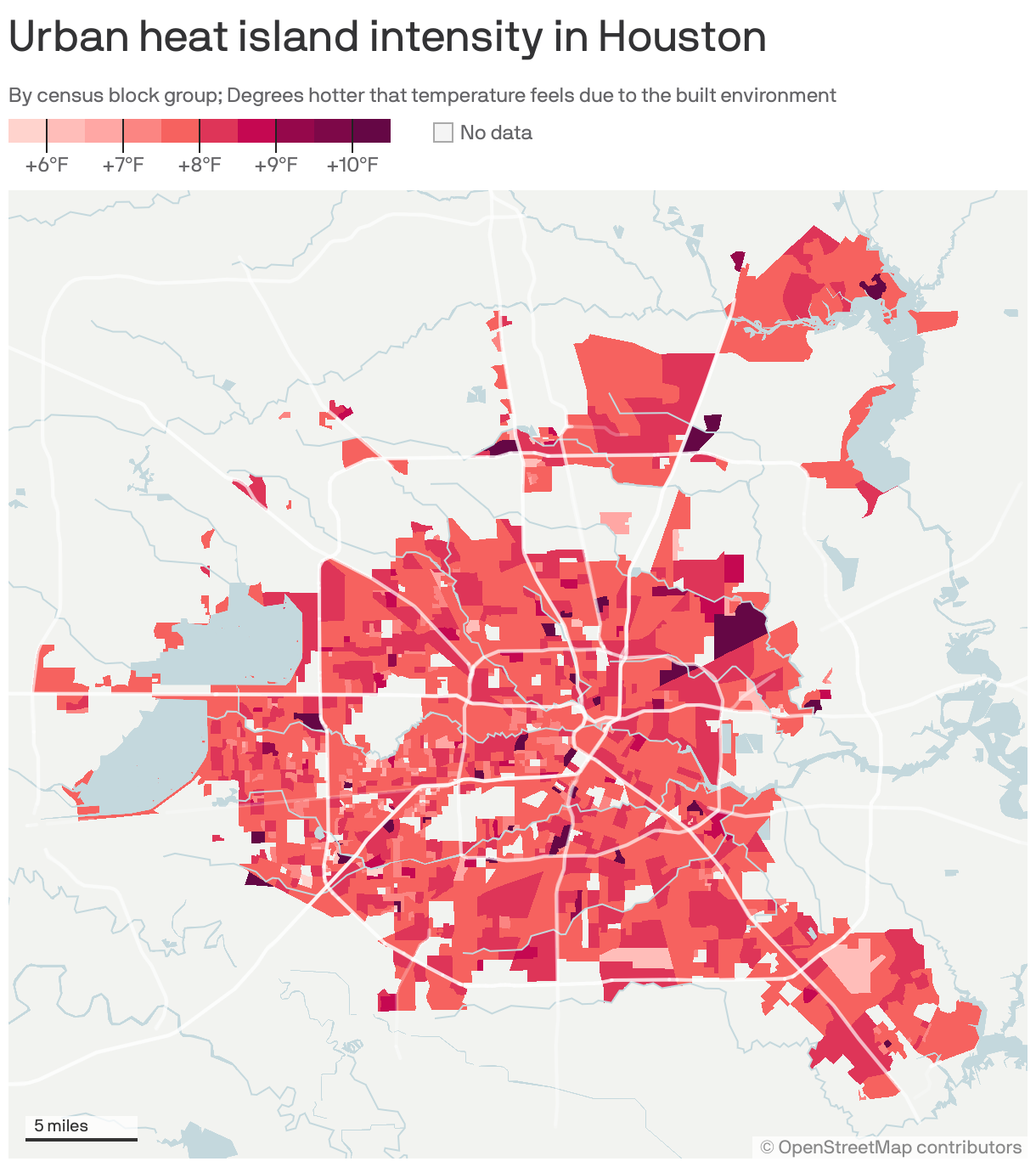
The big picture: Urban heat islands (UHI) are boosting temperatures within 65 major U.S. cities that are home to 50 million people, or 15% of the total U.S. population, according to Climate Central's analysis.