Hurricanes, extreme heat form insidious combo

Add Axios as your preferred source to
see more of our stories on Google.
The lack of power to hundreds of thousands of Houston residents for the fourth straight hot and humid day since Hurricane Beryl struck the city is creating dangerous — and in some cases deadly — conditions.
Why it matters: With global average temperatures on the increase, along with the likelihood and severity of heat waves, society is increasingly vulnerable to this type of one-two punch of an extreme weather disaster.
- The aftermath of Beryl, a Category 1 storm, also illustrates the susceptibility of the Houston region — which has a long history of hurricane and tropical storm landfalls — to even a relatively weak storm compared to what the Gulf of Mexico is capable of spinning up.
Zoom in: In particular, the storm has shined a spotlight on the preparedness of Houston's dominant electricity provider, CenterPoint Energy, for severe weather.
- It also may provide residents with a lesson in why evacuating before a hurricane landfall, even if it is "just" a Category 1, should be considered, simply because of the lengthy and hazardous heat during storm recovery.
We've seen this play out before.
- After Hurricane Irma struck Florida in 2017, nine nursing home patients perished due to heat exposure when the facility lost power for multiple days in Hollywood Hills, leading to criminal charges being filed.
- A study pointed to the high likelihood that other nursing homes also lost patients because of heat exposure.
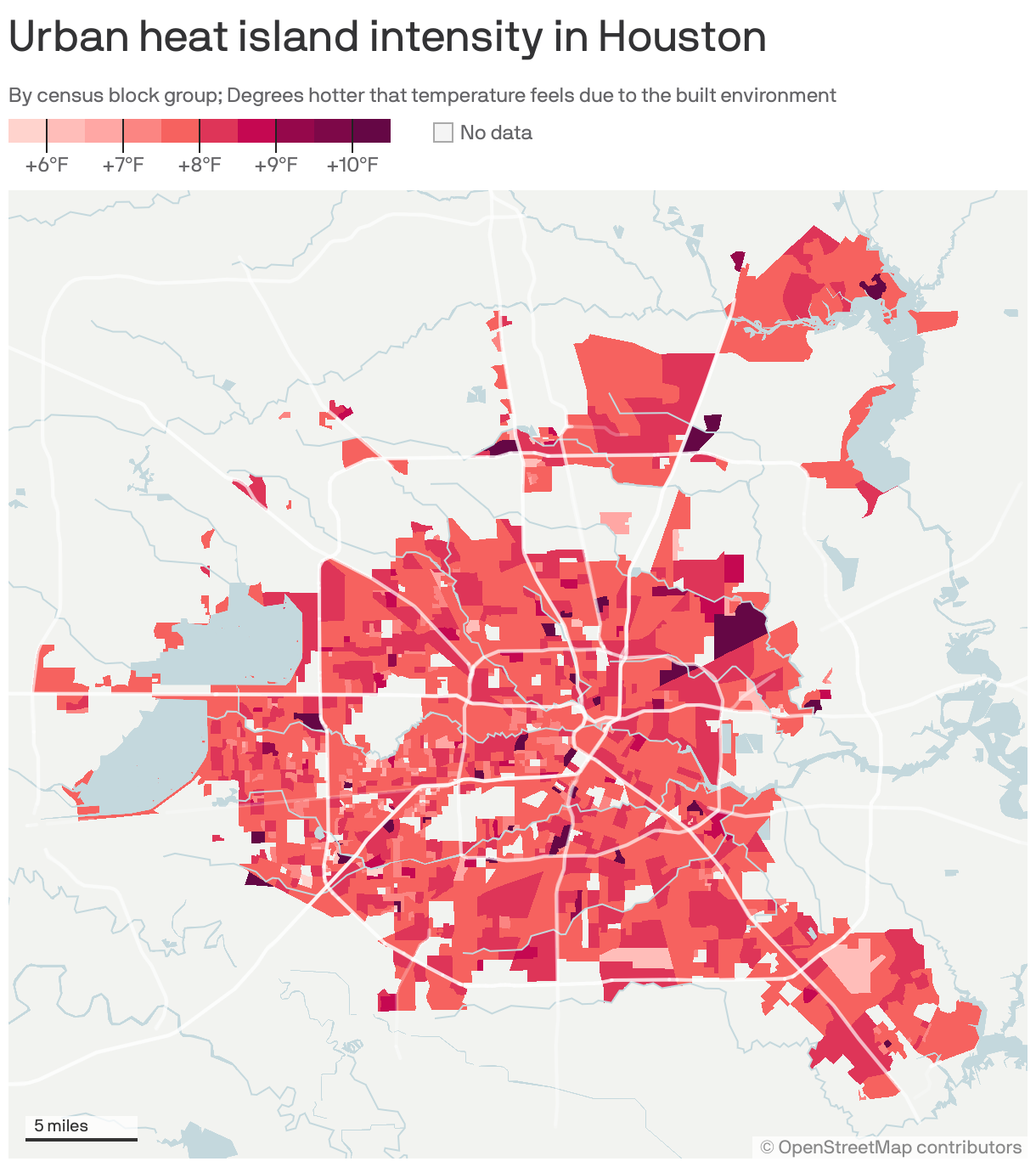
- The urban heat island found in Houston, along with many other large coastal cities, is making it even hotter for residents of some neighborhoods compared to others, new data shows.
State of play: "Residents are scrambling to stay cool and provide care to elderly and disabled individuals reliant on medical devices," Axios Houston's Shafaq Patel reports.
- "There were wraparound lines at gas stations and drive-thru restaurants, and people have been racing to find ice to preserve any food they have left. Many have suffered lost wages and spoiled food."
The intrigue: The heat wave and hurricane relationship is no accident. Hurricanes are often followed by hot and humid air masses, since they transport warm, humid air inland from the tropics.
- In addition, climate change is not only supercharging hurricanes in certain ways, but it is also altering heat wave characteristics.
Between the lines: "This hurricane season is already forcing us to face some difficult realities," says Steve Bowen, chief science officer for Gallagher Re.
- "Our aging infrastructure has largely been built to meet the demands of a 20th century climate that no longer exists," he said. "As more people migrate into known high-risk communities, it puts further strain on grids that need to be modernized."
