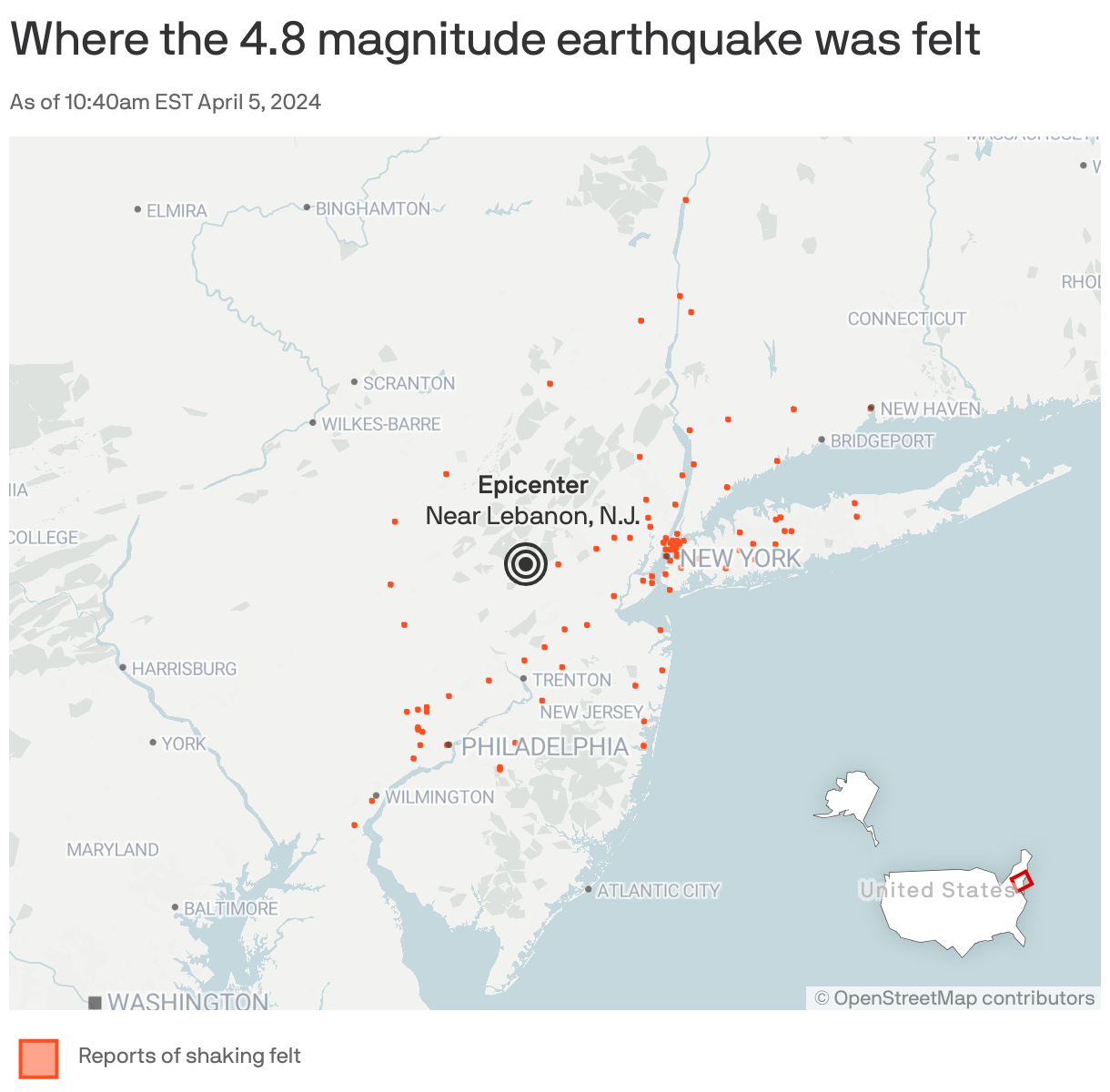
An earthquake with a preliminary magnitude of 4.8 hit the New York and New Jersey region on Friday morning, followed by an aftershock in the evening, according to the U.S. Geological Survey (USGS), stunning and shocking people who felt its tremors and rumbles.
Why it matters: This appears to be the strongest earthquake to hit the New York area since a 5.2 magnitude quake in 1884, according to a tracker from Columbia University's Lamont-Doherty Earth Observatory.
The East Coast's ancient rocks allowed the Friday morning earthquake to rattle an estimated 42 million people in several states, giving it a much wider reach than its West Coast cousins, geologists said.
Why it matters: If an earthquake of the same magnitude happened on the West Coast, it's likely that it wouldn't have been felt as far away, because seismic waves in the eastern half of North America behave differently than those out West.
Why it matters: Fresh inquiries to the IEA and Energy Secretary Jennifer Granholm are seeking data on U.S. funding for the international body, which produces influential analyses about the future of fossil fuels.
Tesla's stock partially recovered from a sharp drop in midday trading Friday after CEO Elon Musk refuted a report that the company is killing off a long-planned affordable electric car.
Why it matters: Tesla and other automakers need to make affordable, mass-market electric cars in order to stay competitive — especially with cheaper Chinese EVs knocking on America's doorstep.
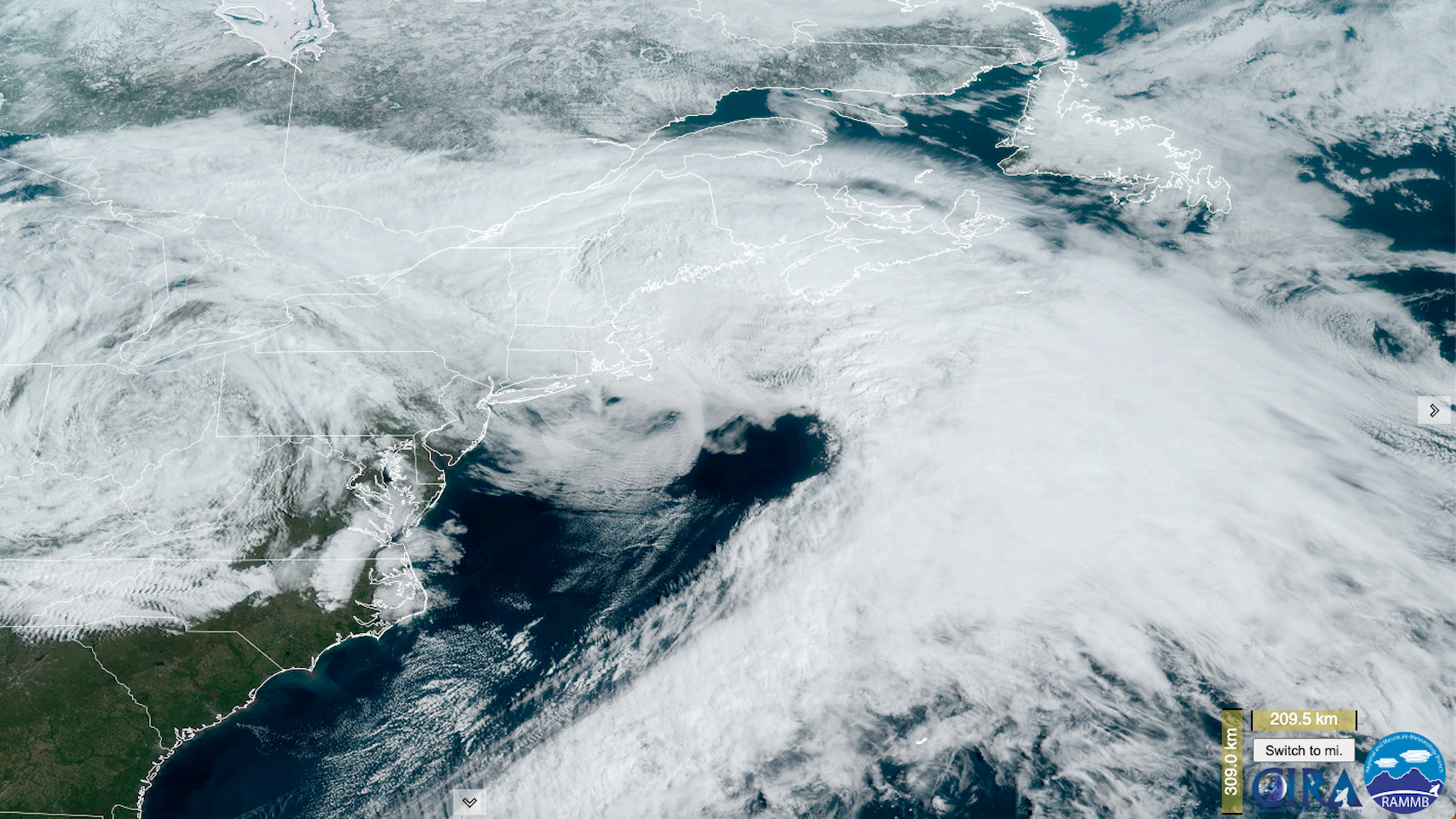
A powerful, deadly storm that's dumped several inches of snow across New England and other parts of the U.S. Northeast disrupted travel and caused widespread outages into Friday morning.
The big picture: Well over a foot of snow has fallen in parts of Vermont, New Hampshire and Maine. Nearly 290,000 customers had no power in Maine alone, with nearly 116,00 in the dark in neighboring N.H. on Friday morning.
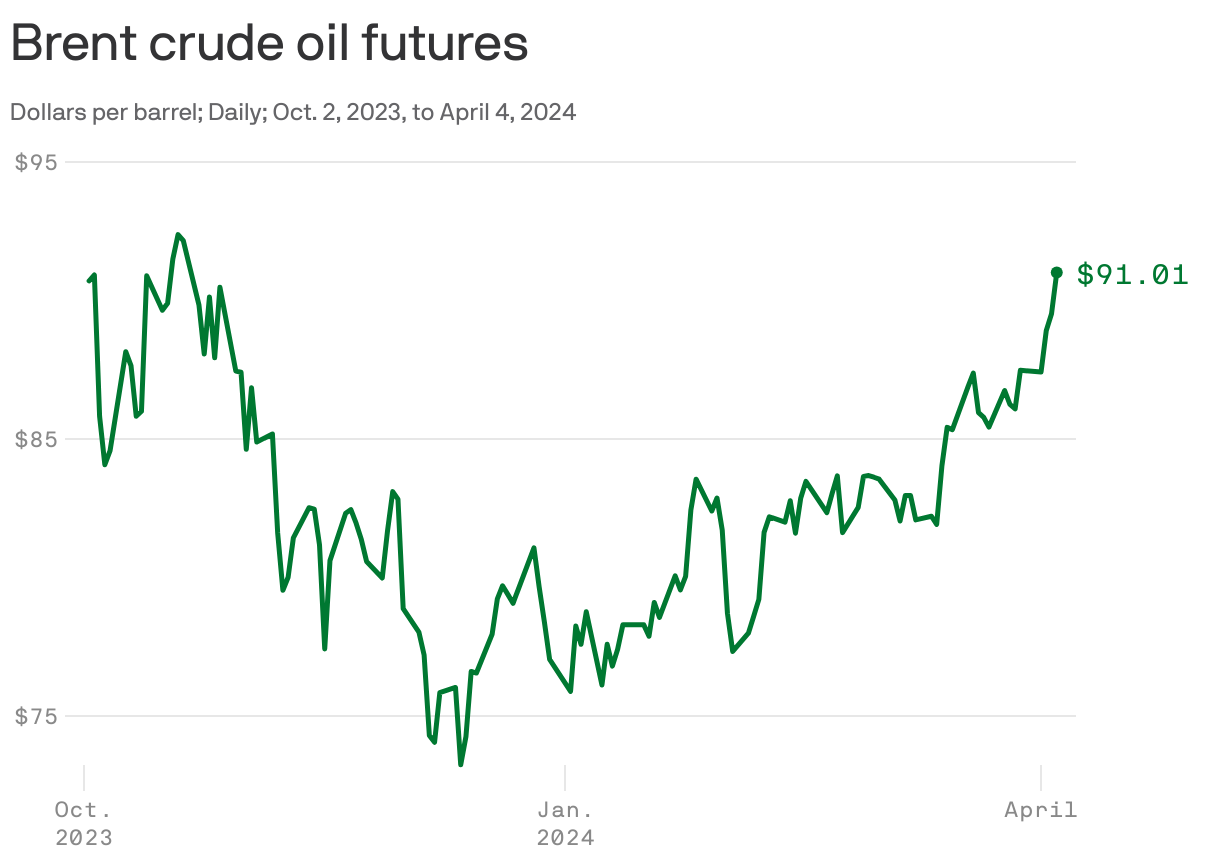
Brent crude hit levels around $91 per barrel on Thursday, the highest since October 2023, with markets getting more anxious about increasing geopolitical risks.
Why it matters: After months of being hemmed in by fears of soft global demand, the benchmark added nearly $2 per barrel during the session, inching closer to the psychologically-charged $100 level.
And when oil's market value rises, gasoline prices at the pump usually follow, posing yet another challenge to inflation-weary consumers, and a president seeking reelection in November.
What they're saying: JPMorgan's notes there's a possibility for Brent to reach $100 this year, if no actions are taken to offset the loss of Russian supply.
"At face value, and assuming no policy, supply or demand response, Russia's actions could ...reach mid-$90 by May, and close to $100 by September, keeping pressure on the U.S. administration in the run-up to elections," JPMorgan notes.
Considered to be a safe haven for investors, gold is also touching an all-time high, reaching $2,307.6 a troy ounce on Thursday, signaling that jittery investors are looking for safety, especially as stocks buckle.
What we're watching: How commodities continue to react with global risks, solid demand and production cuts in a geopolitical chess match where every move counts.
The tropics lost the equivalent of 10 soccer (football) fields of forest per minute last year due to logging, human-set fires and climate change, according to a new report from the World Resources Institute (WRI).
Why it matters: Declines in rainforest deforestation rates in Brazil and Colombia were counteracted by increases in other countries, which set the world further off track from meeting forest loss goals critical to curbing climate change.
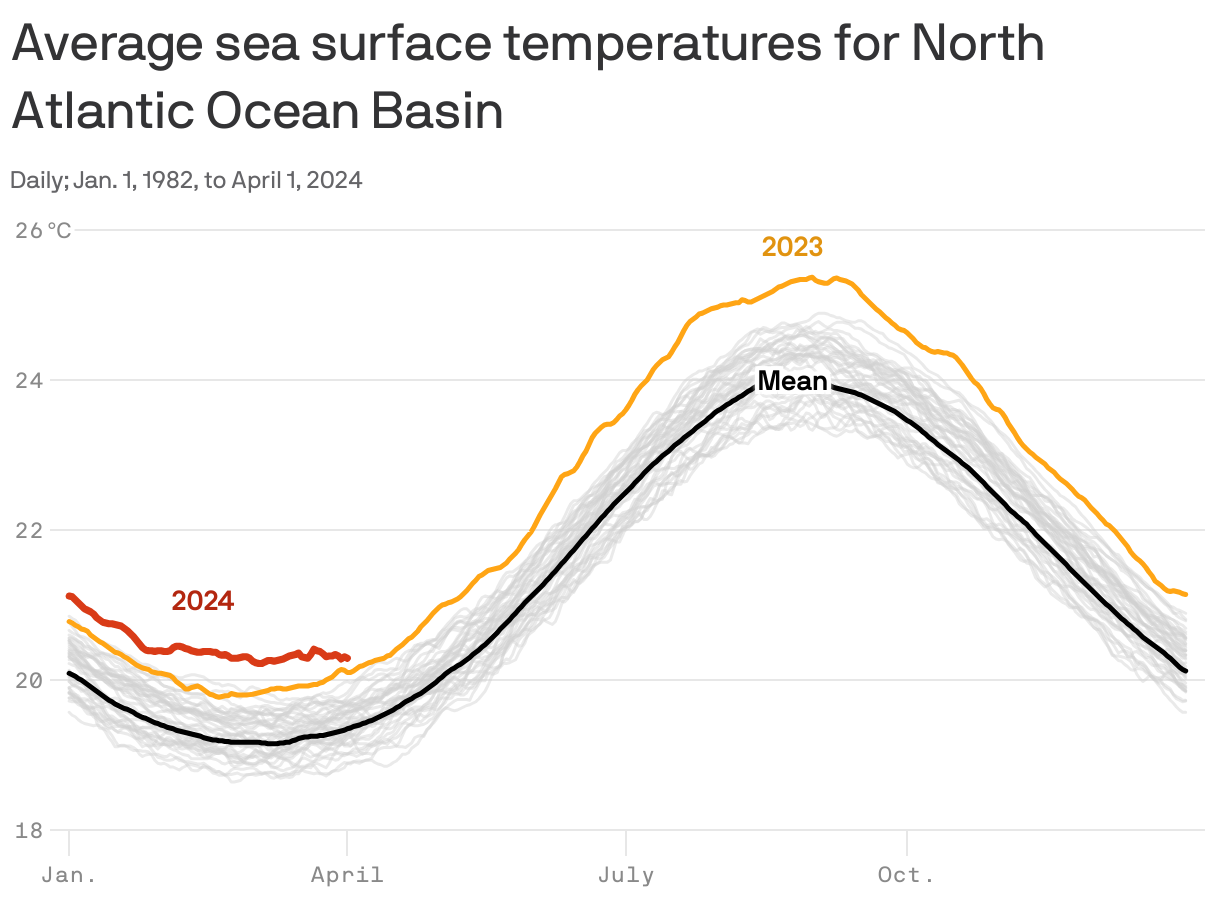
Data: NOAA OIST v2.1 via Climate Reanalyzer, University of Maine; Note: Mean refers to 1982-2011; Chart: Simran Parwani/Axios
The Atlantic hurricane season is likely to be "extremely active," with 23 named storms, 11 hurricanes and 5 major hurricanes, a prominent forecast group said Thursday.
Why it matters: This is the highest number of hurricanes that a team of meteorologists from Colorado State University have issued in the 41 years they have produced such outlooks during April.
Biden officials just unveiled organizations that will receive$20 billion designed to flow into tens of thousands of clean energy and pollution-cutting projects nationwide.
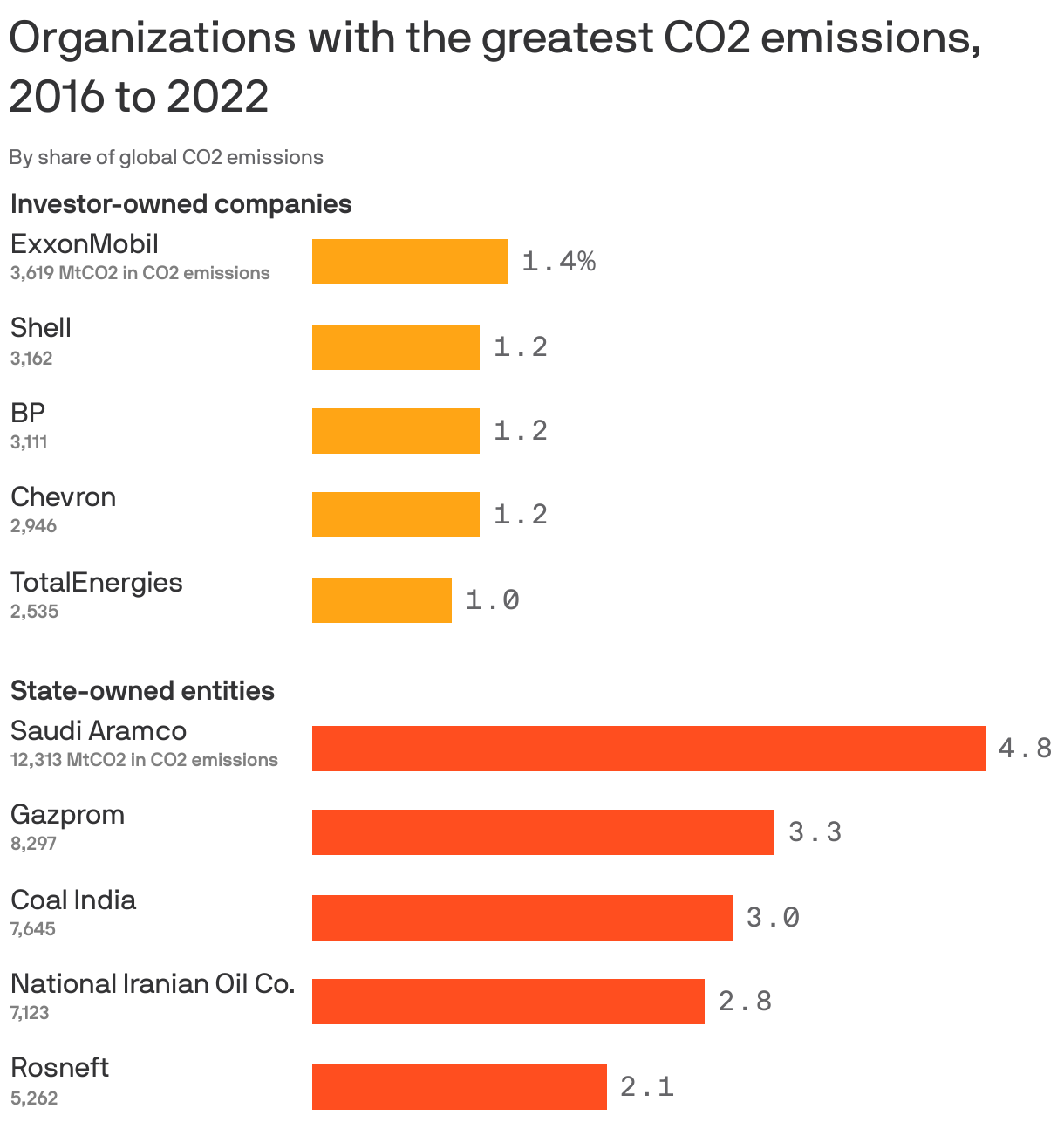
Why it matters: Many producers, be they state-owned entities or investor-owned oil companies, have been expanding production, and emitting more CO2, since Paris was signed.










/2024/04/03/1712186612062.gif?w=3840)