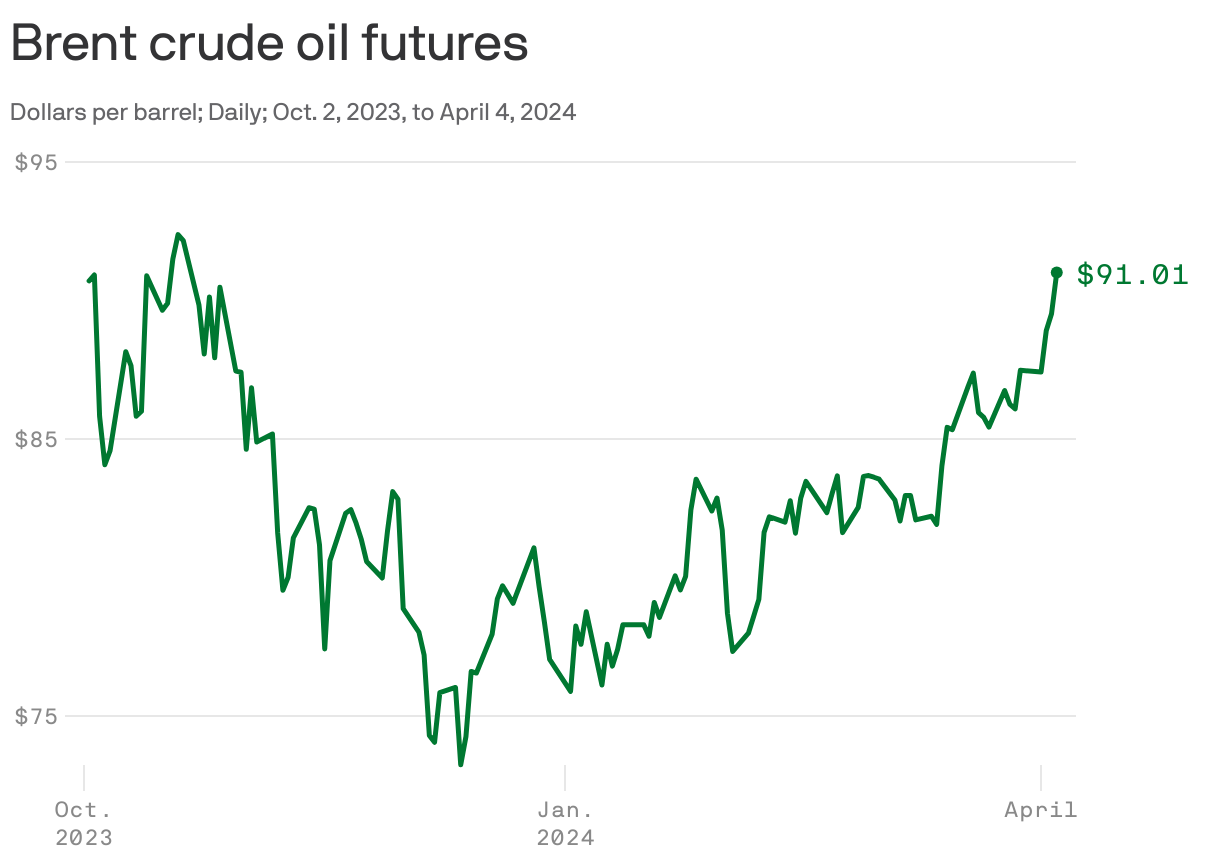
Brent crude hit levels around $91 per barrel on Thursday, the highest since October 2023, with markets getting more anxious about increasing geopolitical risks.
Why it matters: After months of being hemmed in by fears of soft global demand, the benchmark added nearly $2 per barrel during the session, inching closer to the psychologically-charged $100 level.
And when oil's market value rises, gasoline prices at the pump usually follow, posing yet another challenge to inflation-weary consumers, and a president seeking reelection in November.
What they're saying: JPMorgan's notes there's a possibility for Brent to reach $100 this year, if no actions are taken to offset the loss of Russian supply.
"At face value, and assuming no policy, supply or demand response, Russia's actions could ...reach mid-$90 by May, and close to $100 by September, keeping pressure on the U.S. administration in the run-up to elections," JPMorgan notes.
Considered to be a safe haven for investors, gold is also touching an all-time high, reaching $2,307.6 a troy ounce on Thursday, signaling that jittery investors are looking for safety, especially as stocks buckle.
What we're watching: How commodities continue to react with global risks, solid demand and production cuts in a geopolitical chess match where every move counts.
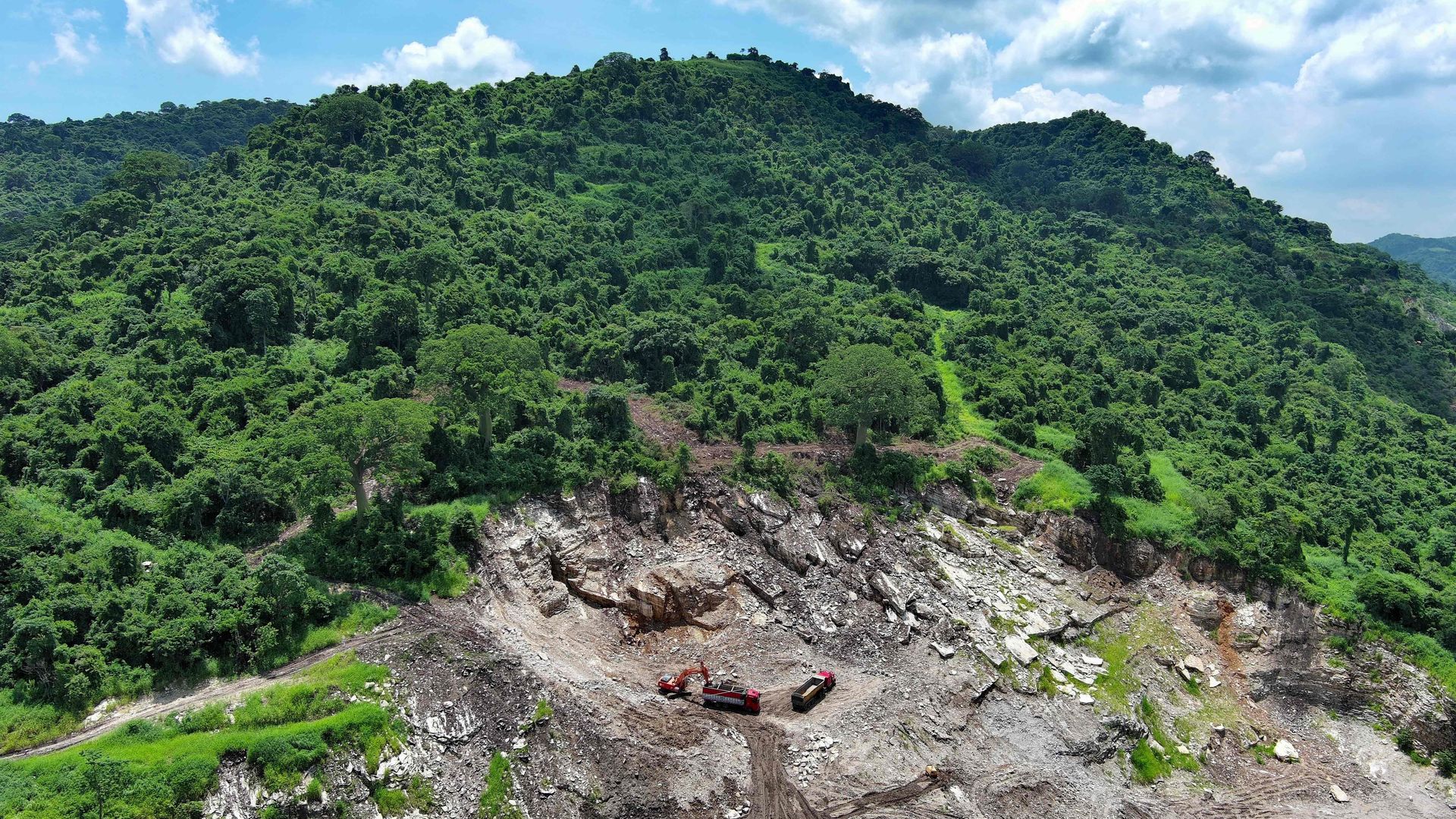
The tropics lost the equivalent of 10 soccer (football) fields of forest per minute last year due to logging, human-set fires and climate change, according to a new report from the World Resources Institute (WRI).
Why it matters: Declines in rainforest deforestation rates in Brazil and Colombia were counteracted by increases in other countries, which set the world further off track from meeting forest loss goals critical to curbing climate change.
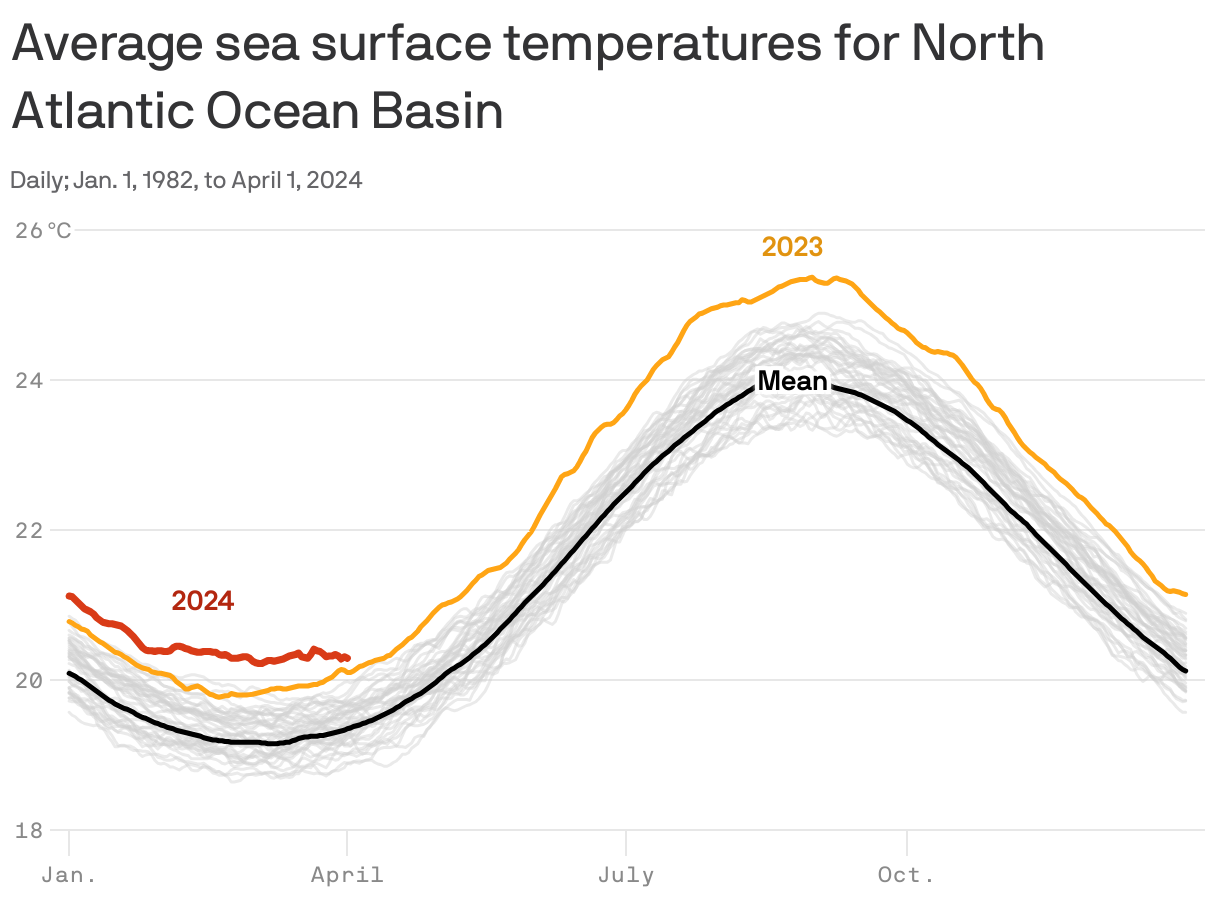
Data: NOAA OIST v2.1 via Climate Reanalyzer, University of Maine; Note: Mean refers to 1982-2011; Chart: Simran Parwani/Axios
The Atlantic hurricane season is likely to be "extremely active," with 23 named storms, 11 hurricanes and 5 major hurricanes, a prominent forecast group said Thursday.
Why it matters: This is the highest number of hurricanes that a team of meteorologists from Colorado State University have issued in the 41 years they have produced such outlooks during April.
Biden officials just unveiled organizations that will receive$20 billion designed to flow into tens of thousands of clean energy and pollution-cutting projects nationwide.
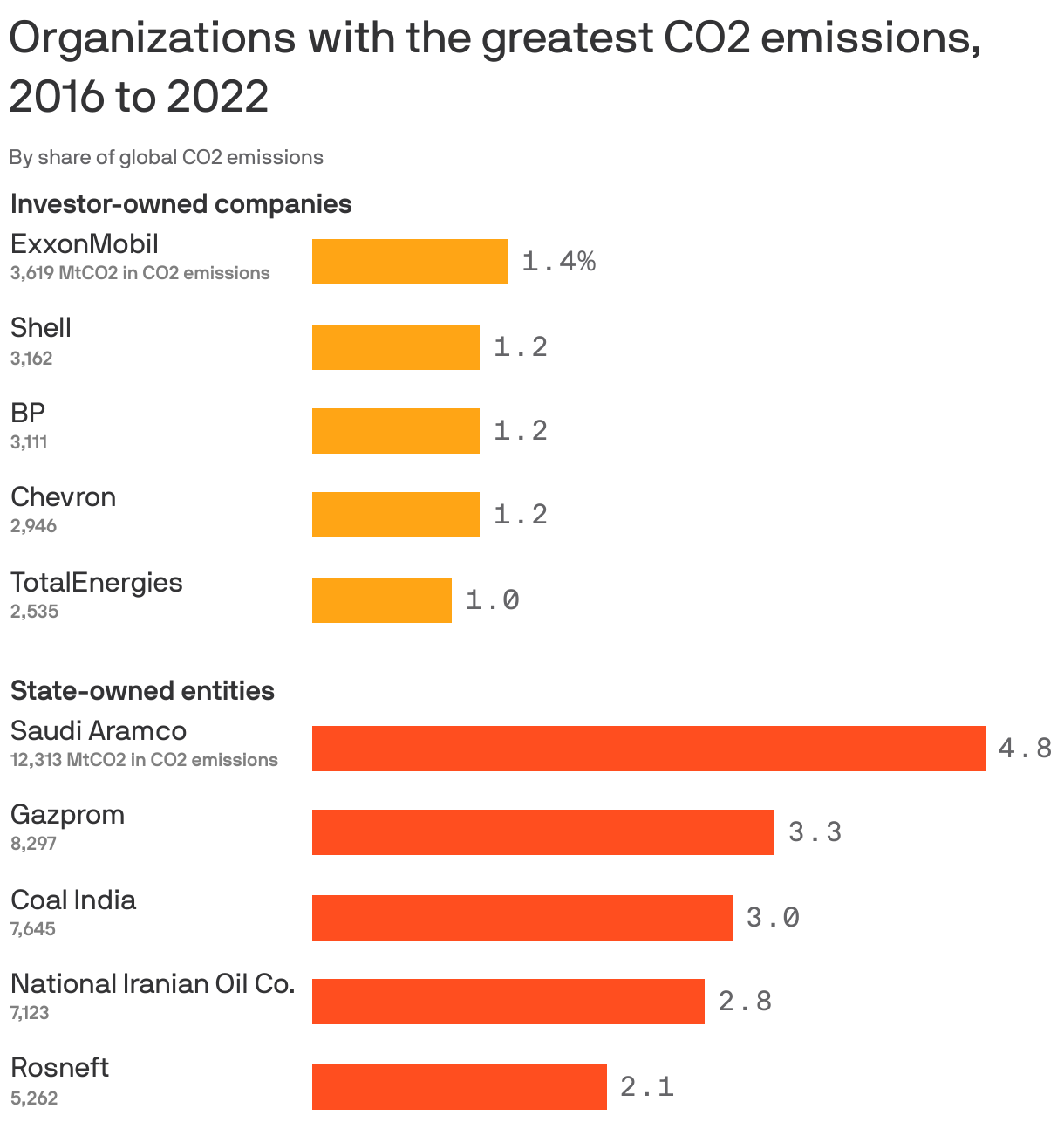
Why it matters: Many producers, be they state-owned entities or investor-owned oil companies, have been expanding production, and emitting more CO2, since Paris was signed.
A new Government Accountability Office report finds that the Nuclear Regulatory Commission needs to more fully consider climate change's possible impacts on nuclear power plants when making licensing and other decisions.
Why it matters: Many of the country's fleet of 94 operating commercial reactors that generate electricity were designed for a climate that no longer exists.
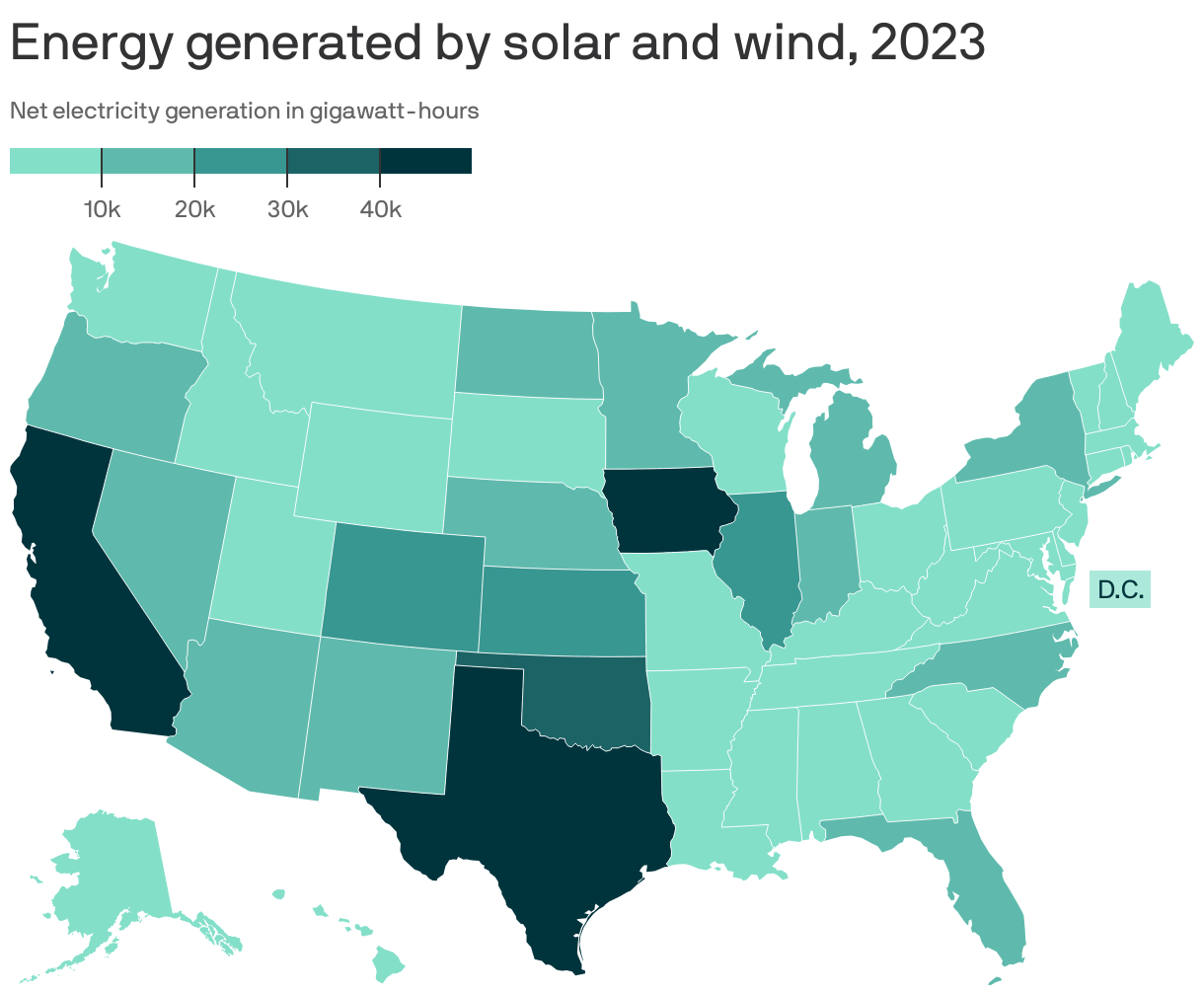
Data: Climate Central; Note: Includes both utility-scale and small-scale solar generation; Map: Axios Visuals
California, Texas and Florida are leading the country in terms of solar power generation, while Texas, Iowa and Oklahoma are the leaders in wind energy, per a new analysis.
Why it matters: Solar and wind power are producing a comparatively small but growing share of America's overall energy supply — yet they make up a bigger slice of the energy pie in some states compared to others.
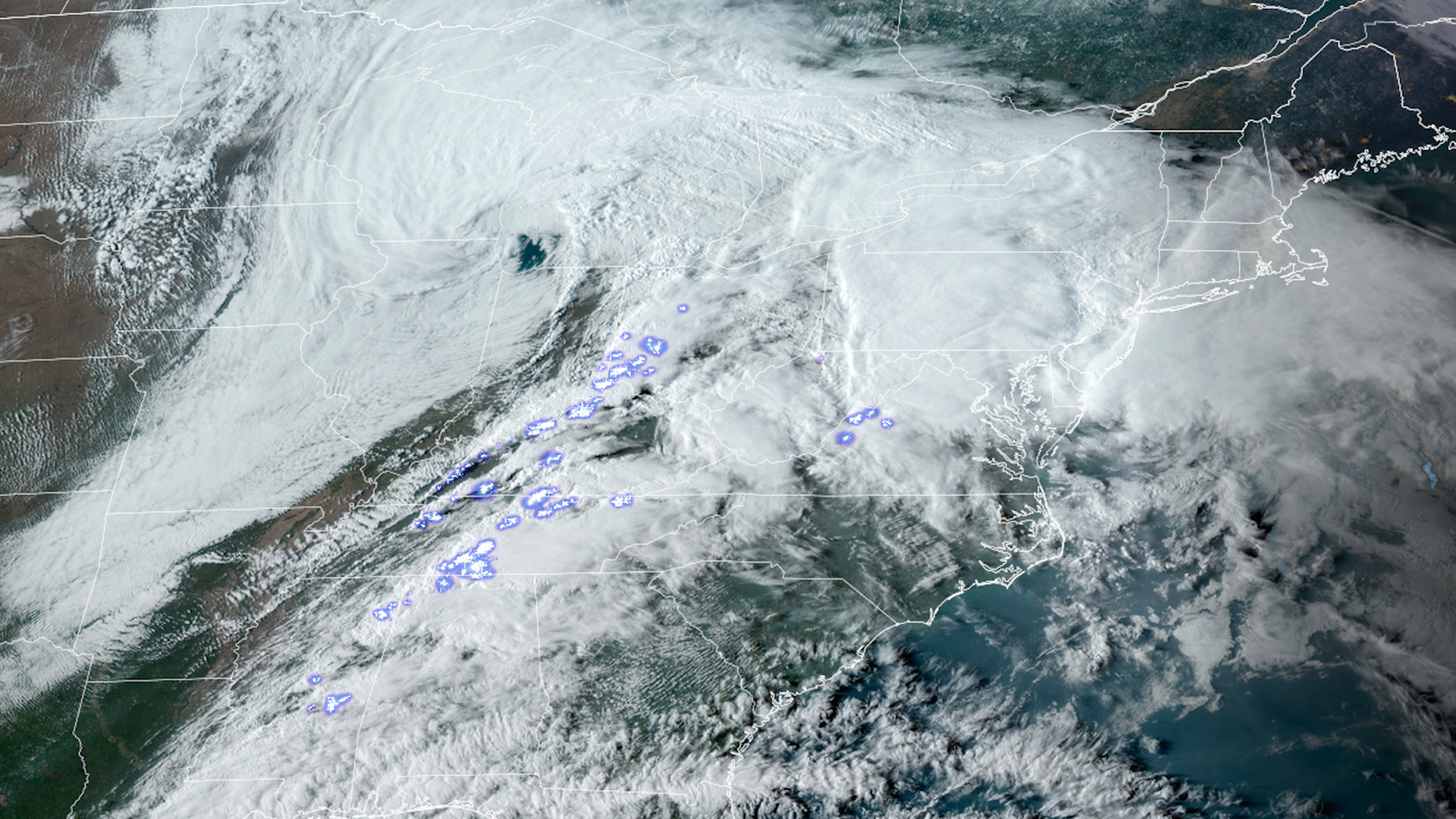
A broad and dangerous severe weather outbreak was affecting a large swath of the eastern U.S. from Ohio to Alabama over Tuesday night.
Why it matters: This is the most expansive and significant severe weather threat of the spring season to date, with high winds, hail and tornadoes threatening the affected areas. There were reports of widespread storm damage across the Ohio and Tennessee valleys.



/2024/04/03/1712186612062.gif?w=3840)