Sweltering temperatures baking the globe this year, both on land and sea, have amplified the odds of the Earth setting an inauspicious record.
Driving the news: Months of hotter-than-normal weather have made the planet go from a 46.8% chance of having the warmest year on record at the end of July, to a greater than 99% chance of this outcome now, according to new data from NOAA.
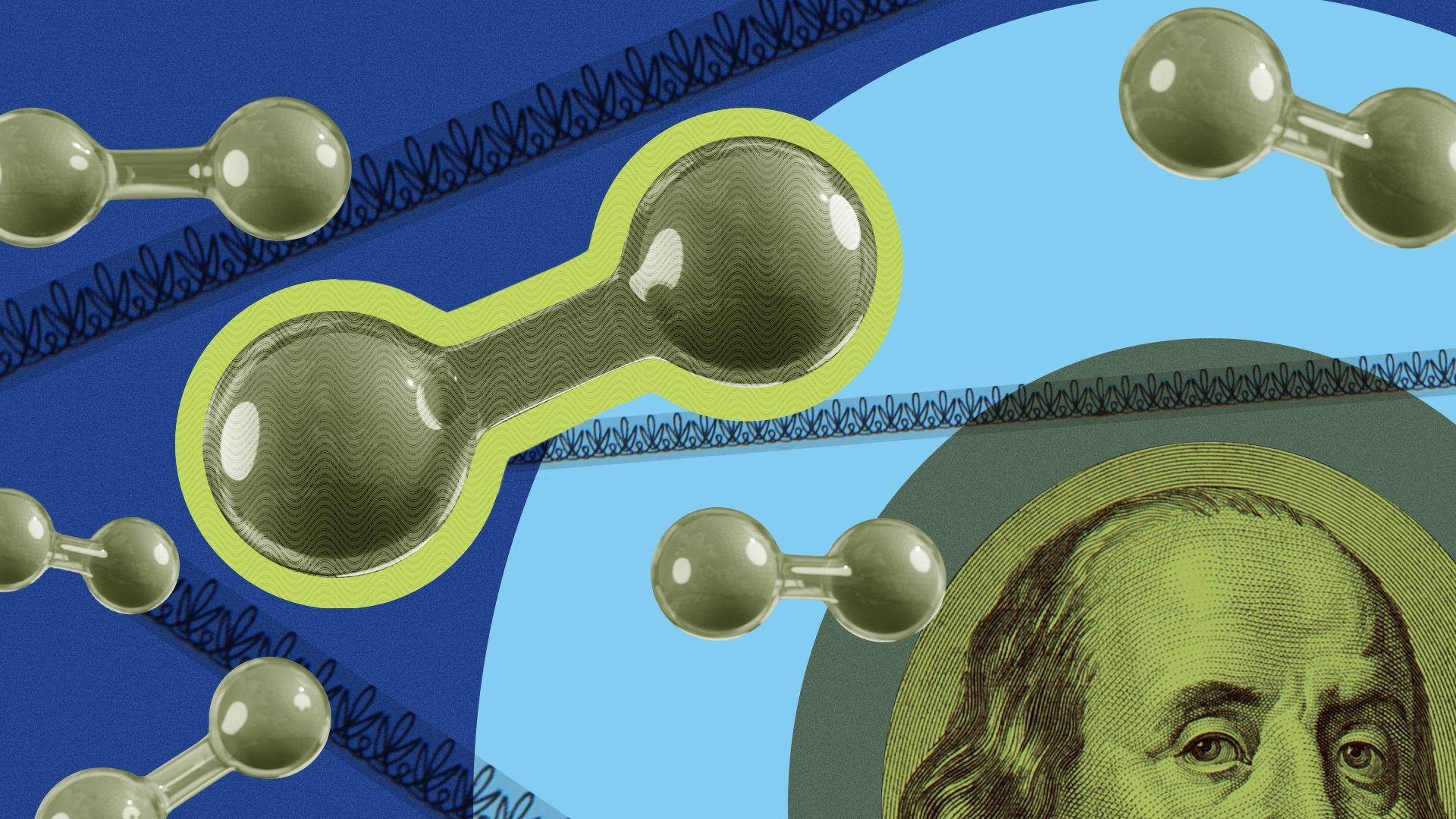
The Energy Department this morning unveiledplans toprovide $7 billion to spur regional "hubs" for producing climate-friendly hydrogen.
Why it matters: It's the largest U.S. effort yet to spur production using renewables, nuclear energy, or carbon capture. But there's a long and uncertain road to the projects becoming reality.
A little more than a month remains before the start of the next United Nations Climate Summit, known as COP28, taking place in Dubai. But the already fraught talks are facing another potential obstacle: the threat of regional Mideast instability following Hamas' terrorist attacks in Israel.
Why it matters: At COP28, countries are tasked with weighing actions to close the gap between commitments to cut greenhouse gas emissions to date, and what is required to fulfill the aims of the Paris climate agreement.
ExxonMobil's plan to buy shale heavyweight Pioneer Natural Resources in a mega-deal valued at roughly $65 billion including debt comes with several defining takeaways.
State of play: The all-stock deal would make Exxon by far the largest player in the Permian Basin, the country's most prolific oilfield, as Axios' Matt Phillipspoints out today.
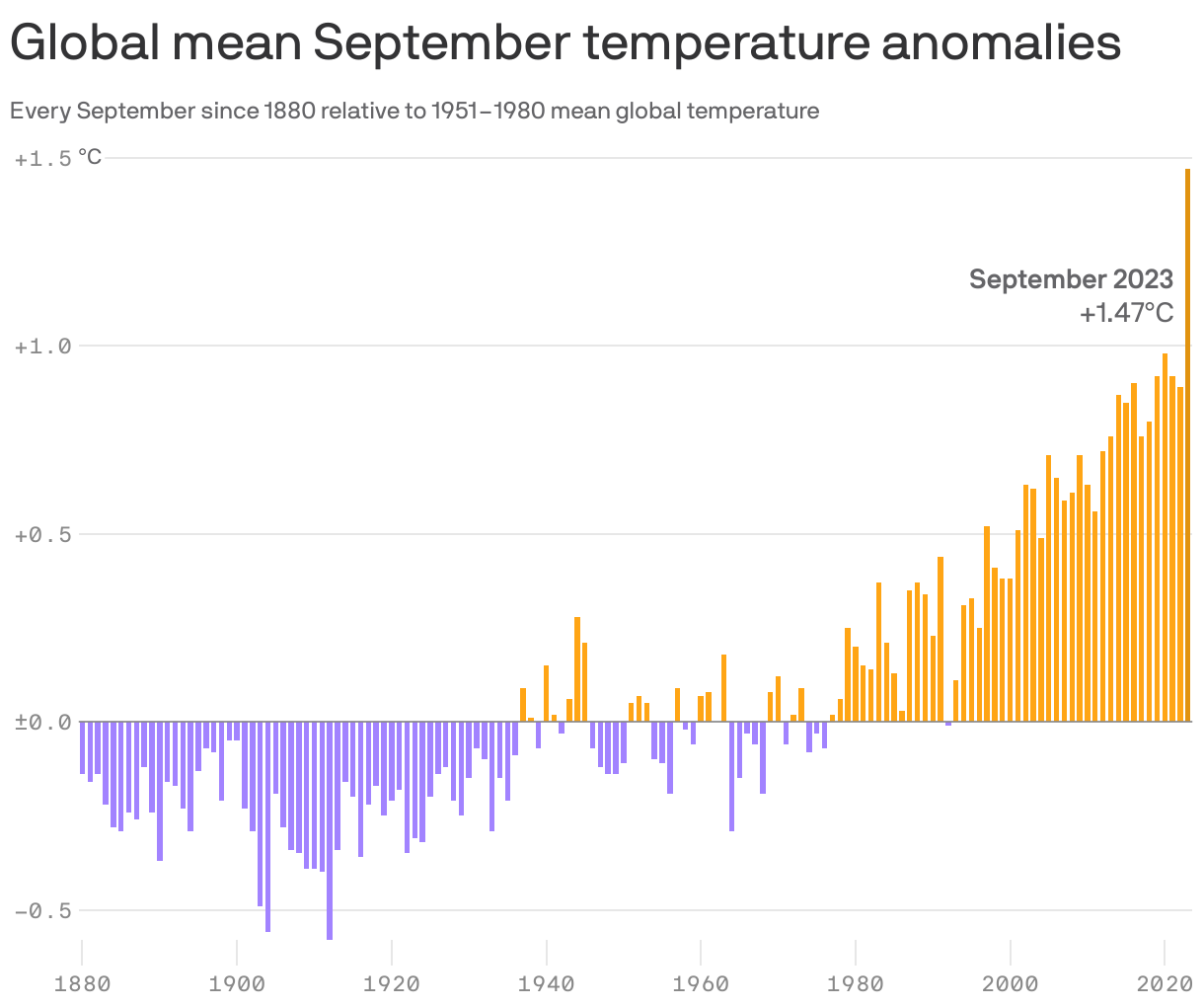
The globe's pronounced and unexpected temperature spike during the past few months is provoking unease among some of the most level-headed climate scientists.
The big picture: September was the most unusually warm month in recorded history. This followed record heat in June and July — which was also the planet's hottest month — as well as August.
Exxon Mobilemphasized plans to boost production as part of its blockbuster deal announced Wednesday that would make it the single biggest player in the strategically important U.S. Permian Basin.
Why it matters: Russia's war in Ukraine altered world energy markets, underscoring the importance of domestic production for the U.S.
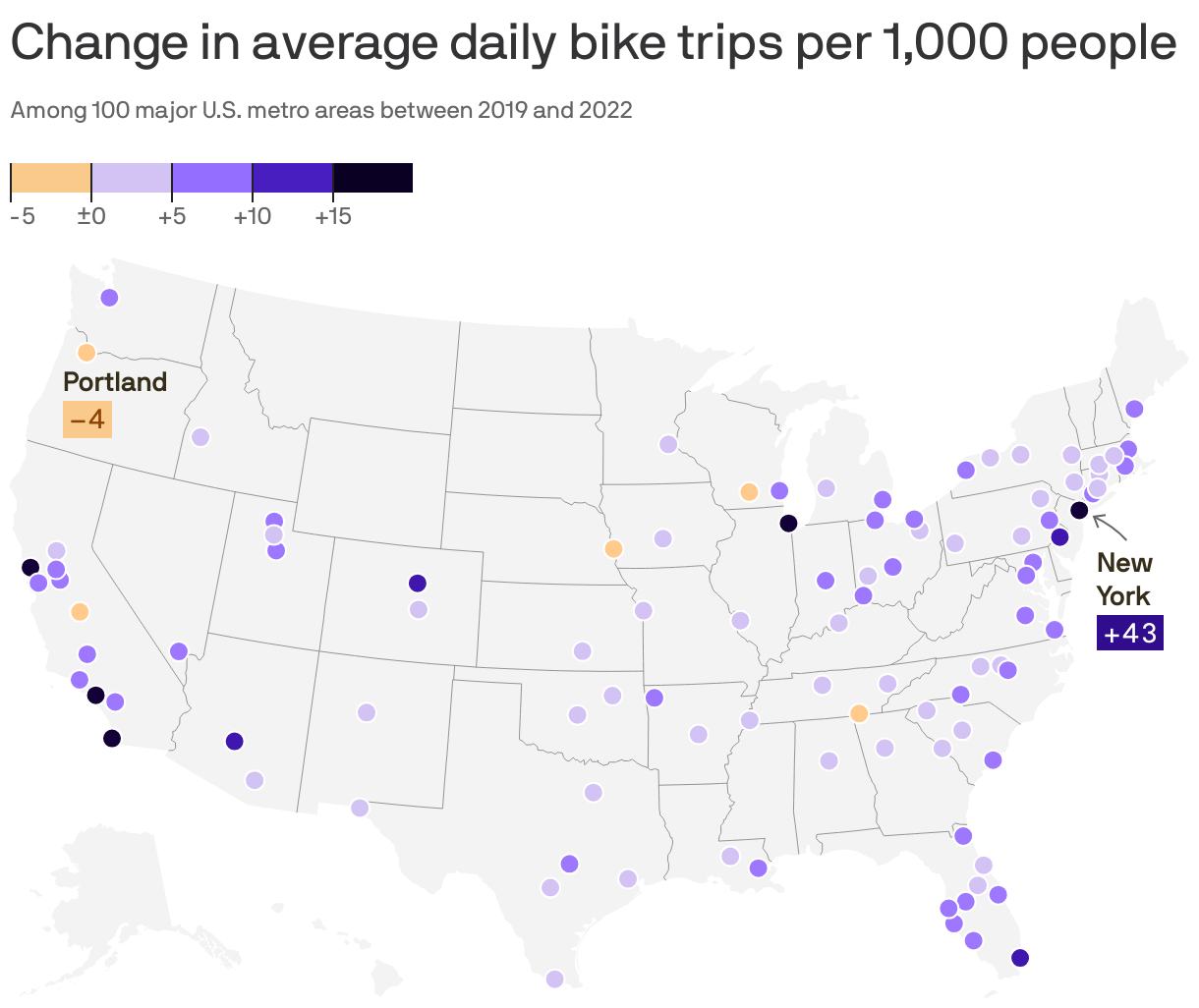
Pandemic-era cycling fever appears to be lingering, with the number of average daily bike trips per 1,000 people increasing in almost every major U.S. metro area between 2019-2022.
That's per a new report from mobility data firm StreetLight Data, which uses GPS and other location data to measure urban transportation patterns.