Corporate America has launched a two-pronged, eleventh-hour assault on Democrats' reconciliation package by targeting Sen. Kyrsten Sinema (D-Ariz.), the one person that big business hopes can stop — or modify — the $740 billion bill.
Why it matters: If successful, the barrage of paid media and personal phone calls will knock out the main provision that terrifies the business community: a 15% minimum book tax that will cost the biggest 150 U.S. companies some $313 billion over 10 years.
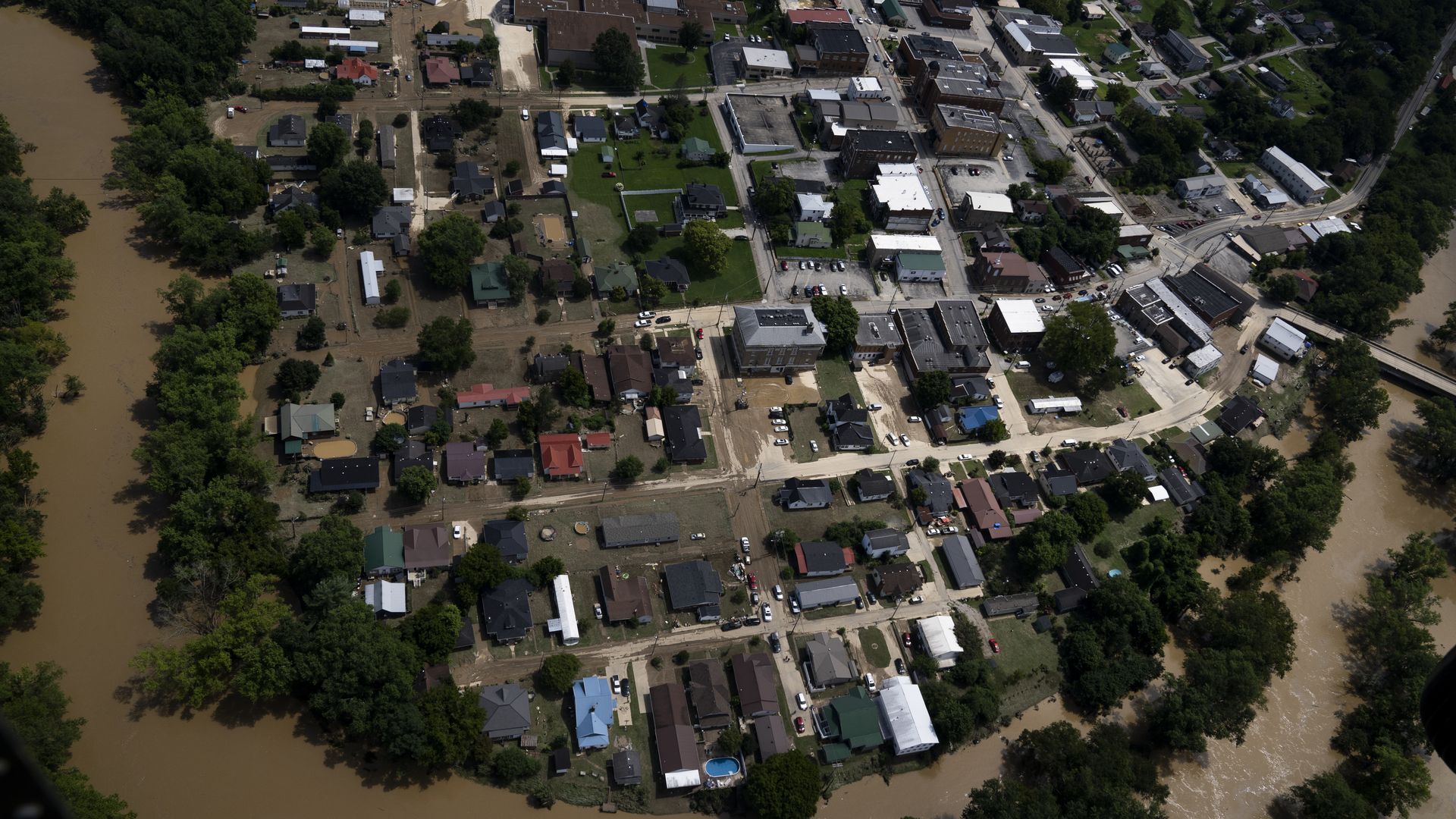
At least 37 people died in Kentucky from the catastrophic flooding in Appalachia last week, Kentucky Gov. Andy Beshear said Monday.
The latest: Beshear said at a press conference earlier Monday that the death toll was likely to increase because the state knew of "additional bodies" beyond the confirmed tally at that time.
Aurora Hydrogen, which aims to produce zero carbon hydrogen at the point of use, has raised a $10 million Series A funding round led by Energy Innovation Capital.
Why it matters: The Canadian company’s distributed technology, if successful, could allow hydrogen to make rapid inroads in hard-to-decarbonize sectors.
Emissions from oilleasing mandates in the revived Democratic energy bill would be tiny compared to carbon cuts expected from the legislation, a new analysis finds.
Why it matters: Pro-drilling provisions in the delicate deal have caused some grumbling among activists, even as huge swaths of the climate movement back the overall bill.
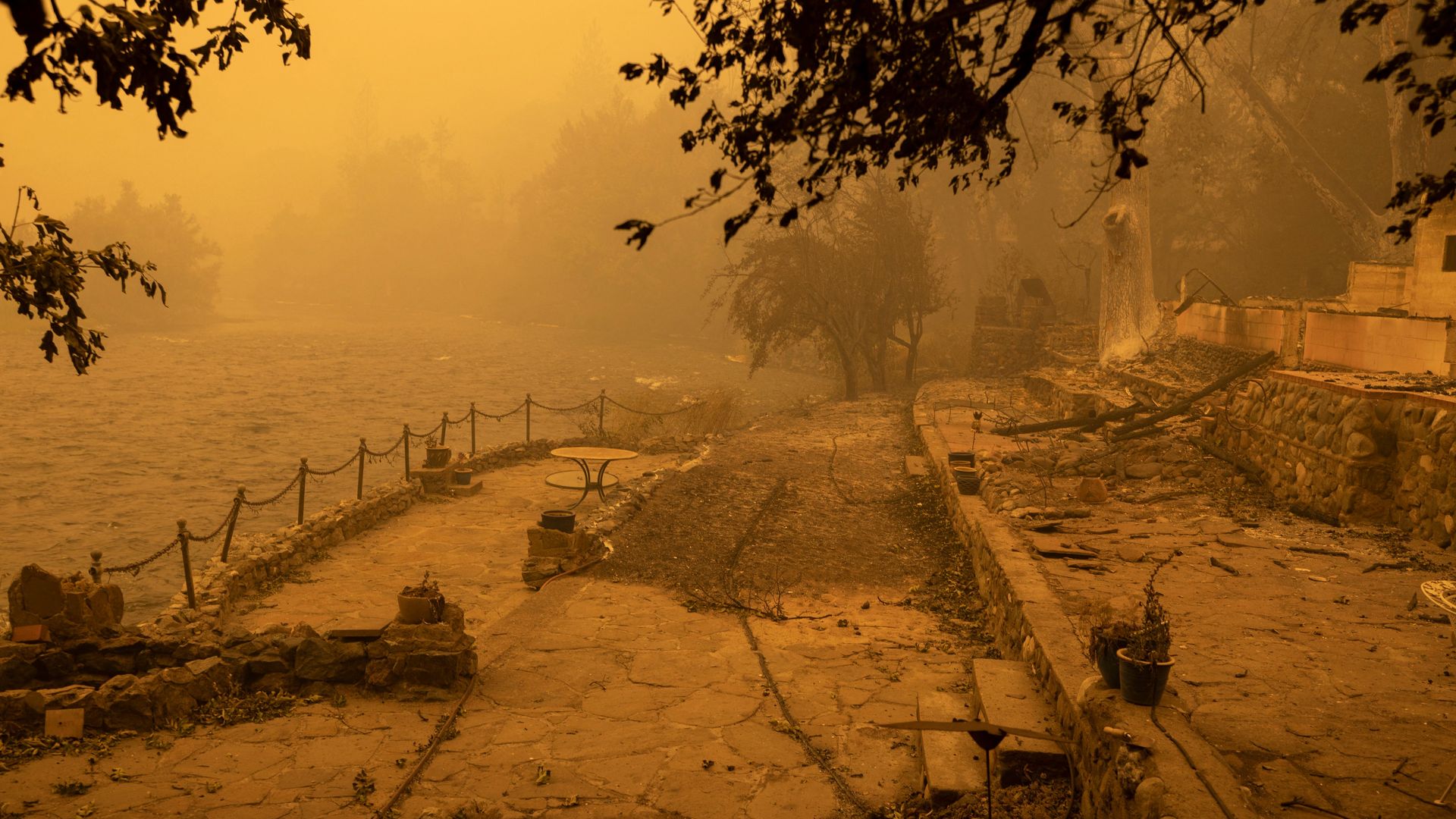
A wildfire in far northern California, near the border with Oregon, grew from ignition on Friday afternoon to become the state's biggest fire so far this year, at nearly 52,500 acres by Sunday evening.
The latest: At least two people were found dead in a car in a residential driveway on Sunday morning in the town of Klamath River, the Siskiyou County Sheriff's Office wrote on Facebook on Monday.
Large wildfires ignited in California, Montana, Oklahoma, Oregon and Texas on Sunday, bringing the total number burning across the U.S. to 53, according to firefighting agency data.
The big picture: A report from the National Interagency Fire Center (NIFC) Sunday indicates the worst may be yet to come, with the "potential for lightning followed by a heat wave across the northern half of the West." This "could increase the potential for significant fire activity," per the NIFC.
Authorities believe a blistering heat wave that hit the Pacific Northwest earlier this week continued into Sunday has contributed to at least seven deaths, AP reports.
Driving the news: An elderly man living in Clackamas County, Oregon, was the latest suspected heat-related death. The man died in his home, which didn't have a functioning air conditioner, the county said in a statement.