There isn't much consistency in how companies measure their targets. A lot of them rely on carbon offsets — but that doesn't reduce the actual emissions they create.
Over the past decade, net zero emissions targets have become mandatory for a company to be taken seriously on sustainability.
Why it matters: Net zero targets could produce real progress toward reducing greenhouse gas emissions within the next few decades — assuming the targets will actually be met and not leave out important factors like the emissions from using a company's products.
Jobs and working conditions around the world are being altered by the effects of climate change and efforts to limit global warming.
The big picture: Companies and countries are expected to create millions of new jobs over the next few decades as they take steps to reduce carbon emissions.
Pressure on big companies to disclose and slash carbon pollution is spawning a hot growth industry: sophisticated emissions accounting services.
Why it matters: Precisely tallying greenhouse gas output — and crafting strategies for reducing it — requires complex data gathering and analytics that many companies aren't equipped to do in-house.
New climatedisclosure regimes are being put in place around the world, setting expectations for how companies will do business as climate change threatens everyone and everything on the planet.
Why it matters: A company's role in spewing more greenhouse gas emissions and its exposures to climate risks are becoming key metrics in the evaluations conducted by investors, customers, and the public.
Good afternoon, and welcome to the first installment of our new Climate Truths Deep Dive series, which shows how climate change affects nearly everything in our lives.
Companies have been volunteering in droves to cut their greenhouse gas emissions to "net zero" within the next two to three decades.
Yes, but: A lack of a standard definition of what "net zero" actually means for corporations — and the absence of a regulatory entity that can enforce the pledges — means investors, government officials and consumers are unable to discern greenwashing from genuine commitments.
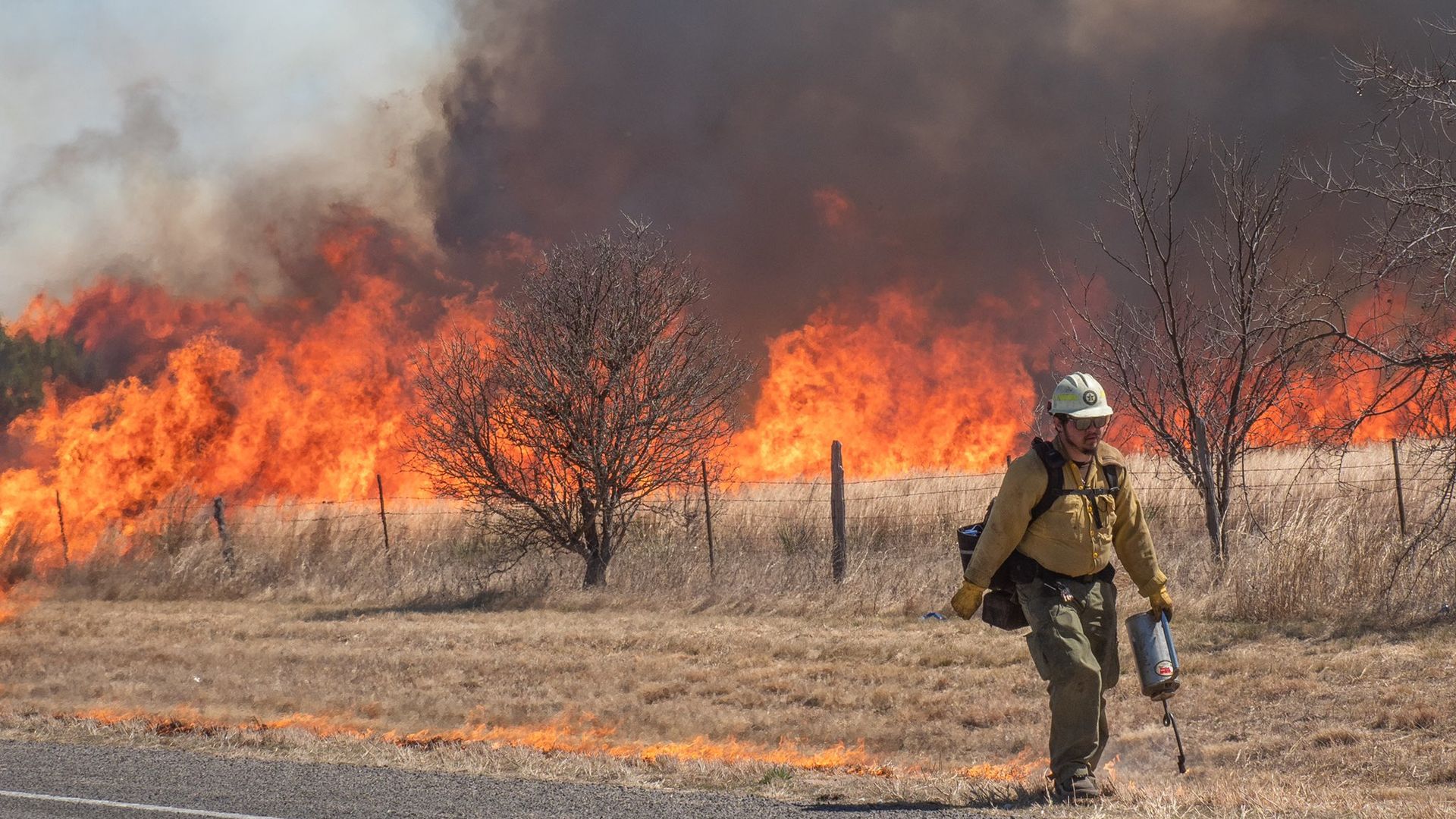
Texas Gov. Greg Abbott issued an emergency order in 11 counties Friday night as a rapidly growing wildfire has consumed more than 50,000 acres and forced evacuations statewide.
Why it matters: Approximately 500 people have been evacuated and 50 homes were destroyed in central Texas after a massive wildfire scorched upward of tens of thousands of acres over the past two days, the New York Times reported.
Heirloom, a startupdeveloping novel tech for removing CO2 from the atmosphere, raised $53 million in a Series A round that includes boldface names in climate VC.
Driving the news: The Bill Gates-led Breakthrough Energy Ventures co-led the round with Carbon Direct Capital Management and Ahren Innovation Capital.
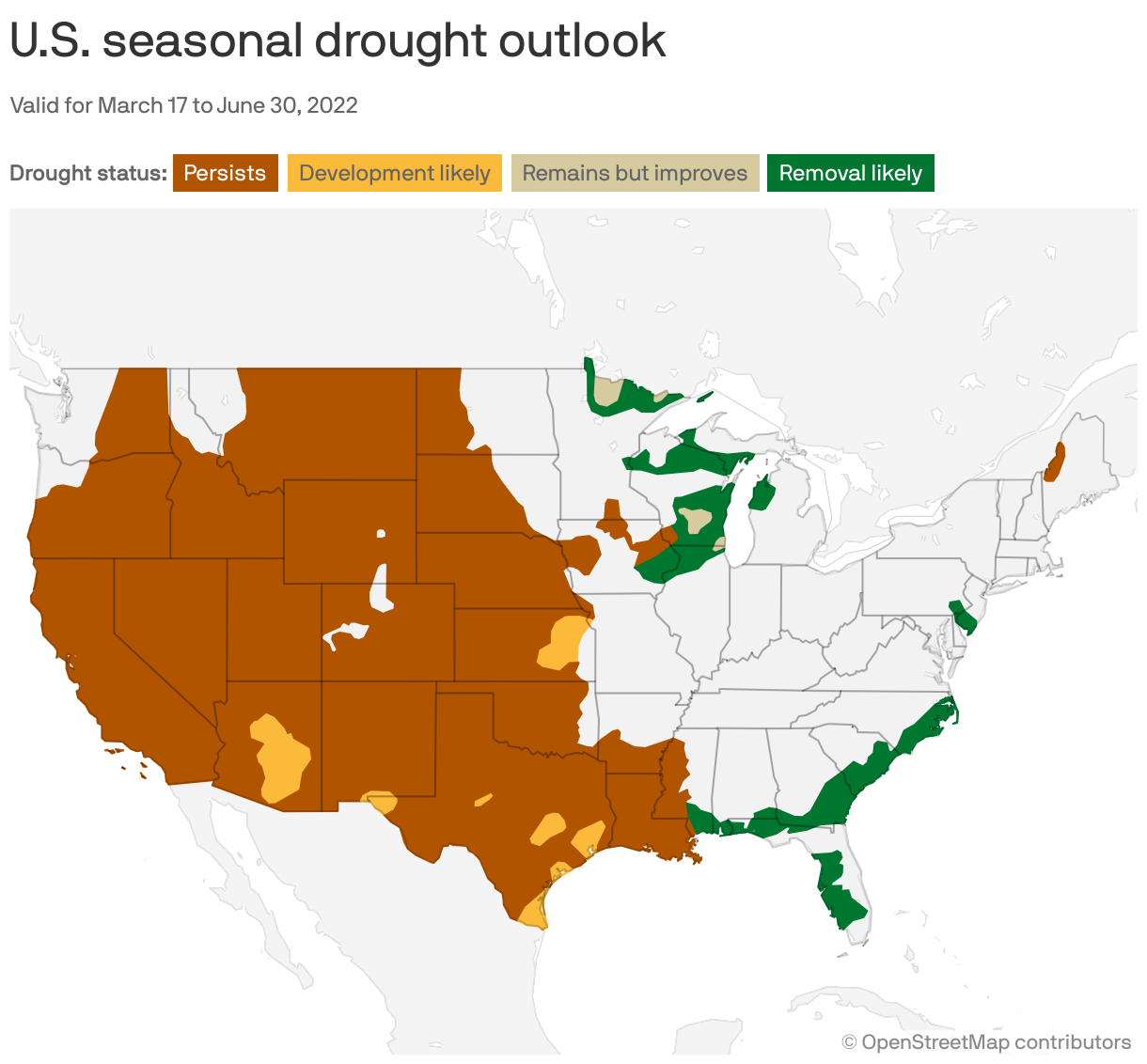
In an alarming new outlook, the National Weather Service said Thursday that drought conditions are likely to persist and even expand across a vast stretch of the country.
The big picture: As of March 15, drought extended across about 61% of the country, the greatest drought extent seen since 2013, according to the National Oceanic and Atmospheric Administration.
The International Energy Agency just unveiled ideas for quickly cutting oil demand at a time when Vladimir Putin's war on Ukraine could bring substantial loss of Russian barrels from global markets.
Why it matters: The 10-point plan comes amid IEA warnings that the war could become the biggest supply crisis in decades as countries look to isolate Russia.
The UN Intergovernmental Panel on Climate Change (IPCC) is set to report its next slate of findings, focused on mitigating global warming, on April 4.
Why it matters: The IPCC's conclusions on how to avert the most severe consequences of global warming will help guide policymakers and business leaders as they aim to cut emissions.