The prominent climate tech-focused VC firm Energy Impact Partners has raised $200 million — and is aiming for more — for a new fund to support "early-stage, revolutionary technologies" across several industries.
Driving the news: EIP announced the launch of the Deep Decarbonization Frontier Fund yesterday with a target of $350 million.
Reproduced from Rystad Energy; Chart: Axios Visuals
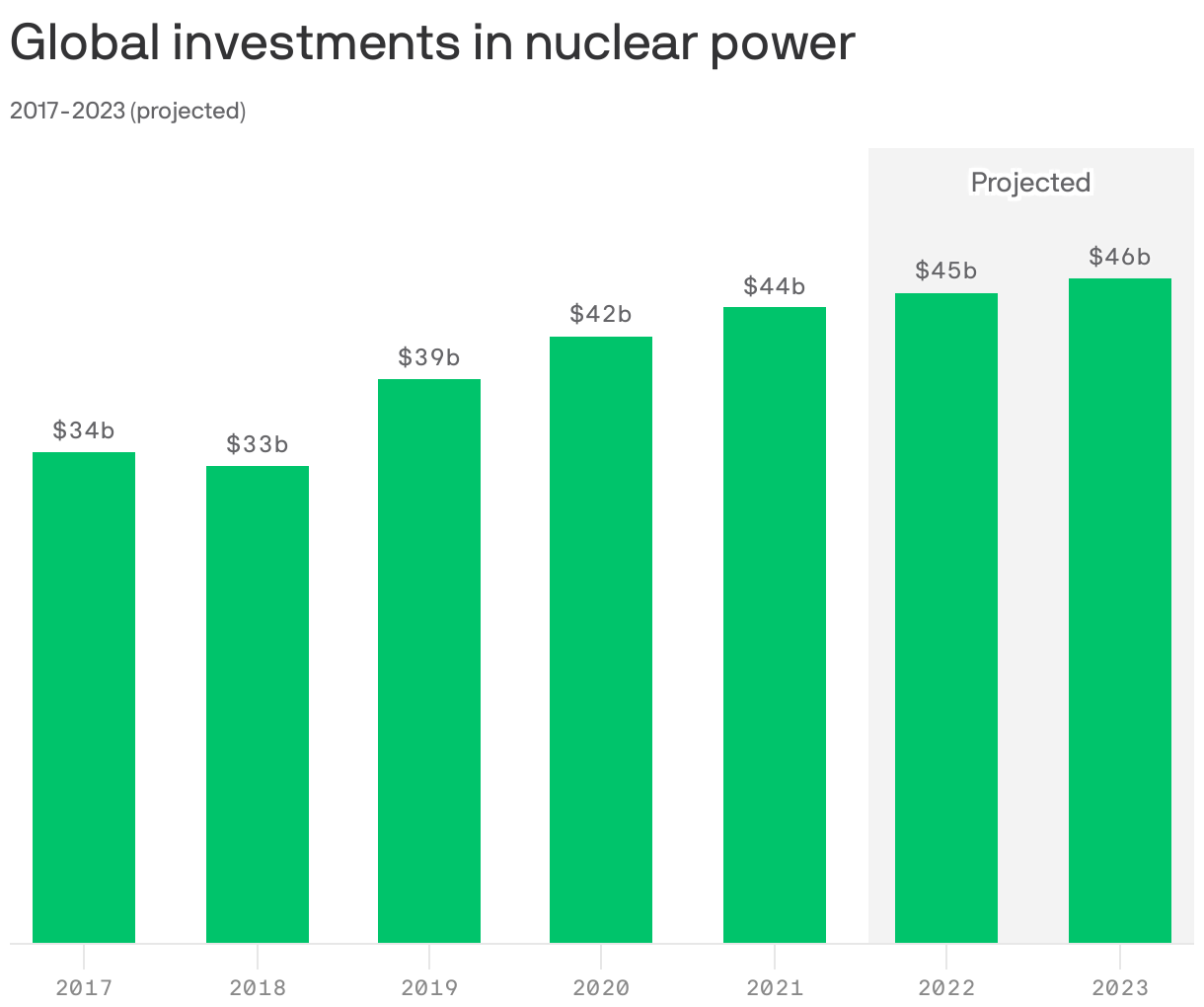
Investment in nuclear energy is slated to rise in the next couple of years as countries "seek greener, low-carbon alternatives to fossil fuels," the consultancy Rystad Energy said in a new analysis.
By the numbers: There are 52 reactors under construction across 19 countries that, once completed, will add 54 gigawatts of installed capacity.
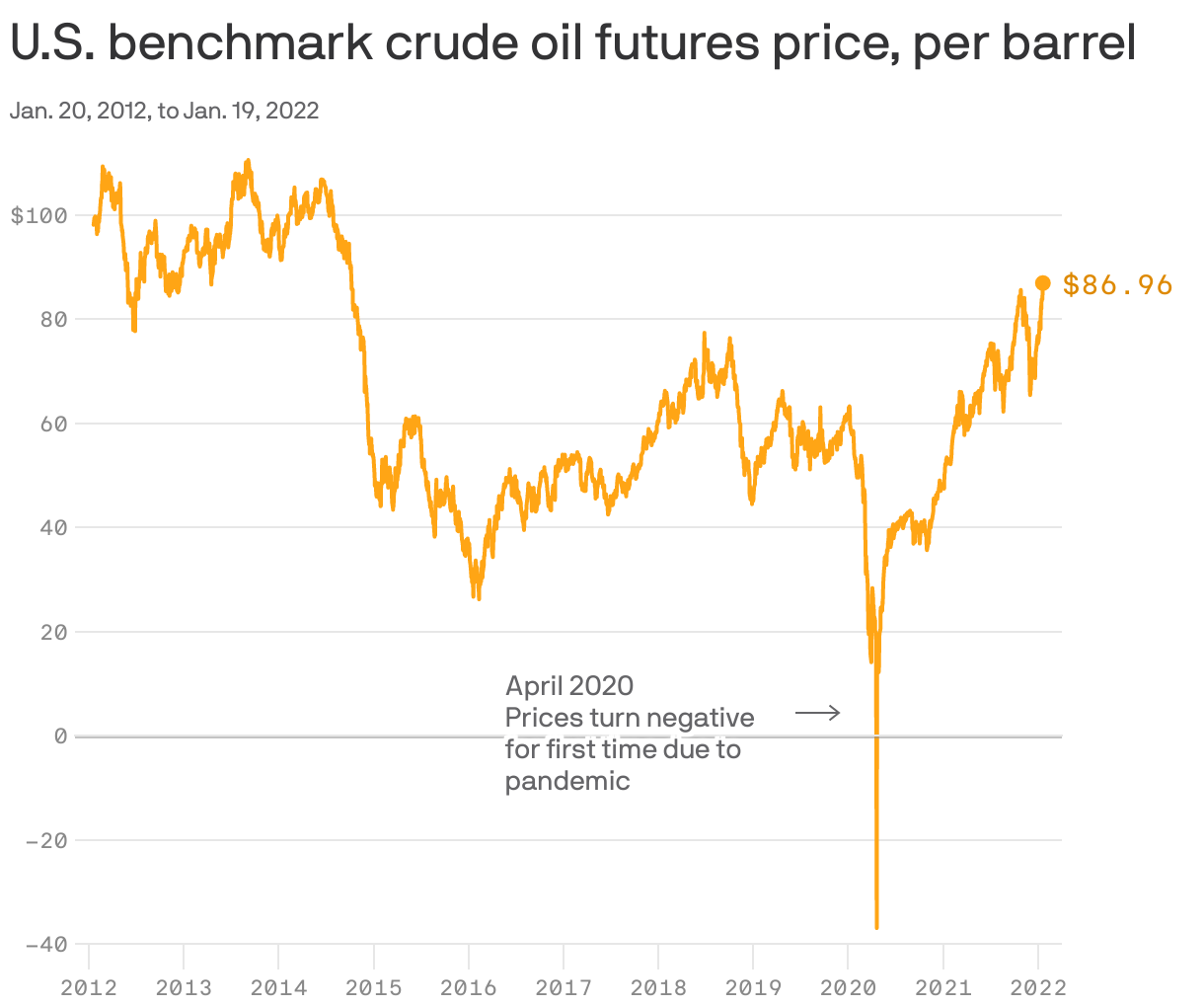
U.S. crude oil prices reached the highest level in seven years this week, amid supply disruptions and geopolitical jitters.
Why it matters: The climbing cost of crude — which is an input cost into virtually everything that is transported — will add to the inflationary pressures that are bedeviling politicians, policymakers and consumers.
Researchers like David Holland, an atmospheric scientist at New York University, are in a race to understand the fate of a massive glacier in West Antarctica that has earned a disquieting nickname: "The Doomsday Glacier."
Why it matters: Studies show the Thwaites Glacier (its official name) could already be on an irreversible course to melt during the next several decades to centuries, freeing up enough inland ice to raise global sea levels by at least several feet.
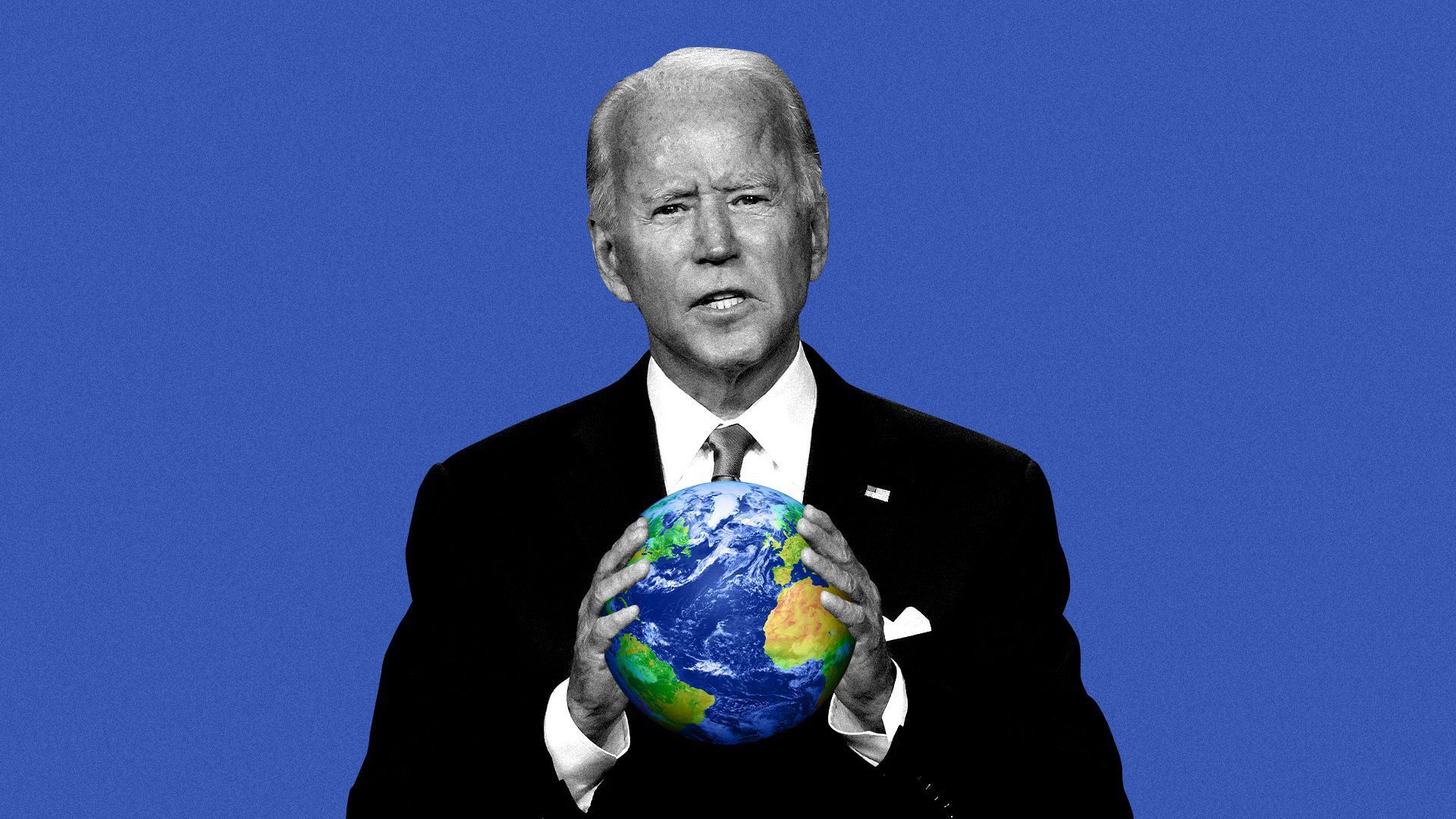
President Biden's attempt to salvage his faltering clean energy and social spending plan could bring new efforts to revive climate-related measures separately or within a slimmed-down package.
Driving the news: Biden on Wednesday publicly endorsed the prospect of splitting up the $1.75 trillion Build Back Better plan. Biden suggested there's agreement possible on the roughly $550 billion in climate and provisions.
Bank of America analysts see 2022 as a "major year of commercialization" for the electric vehicle market amid a slew of new vehicle launches and many more on the horizon.
Driving the news: Over 85 new models are slated to launch in model years 2022-2025 (calendar 2021-2024), they said in a note that says a "tsunami" of new cars are coming.
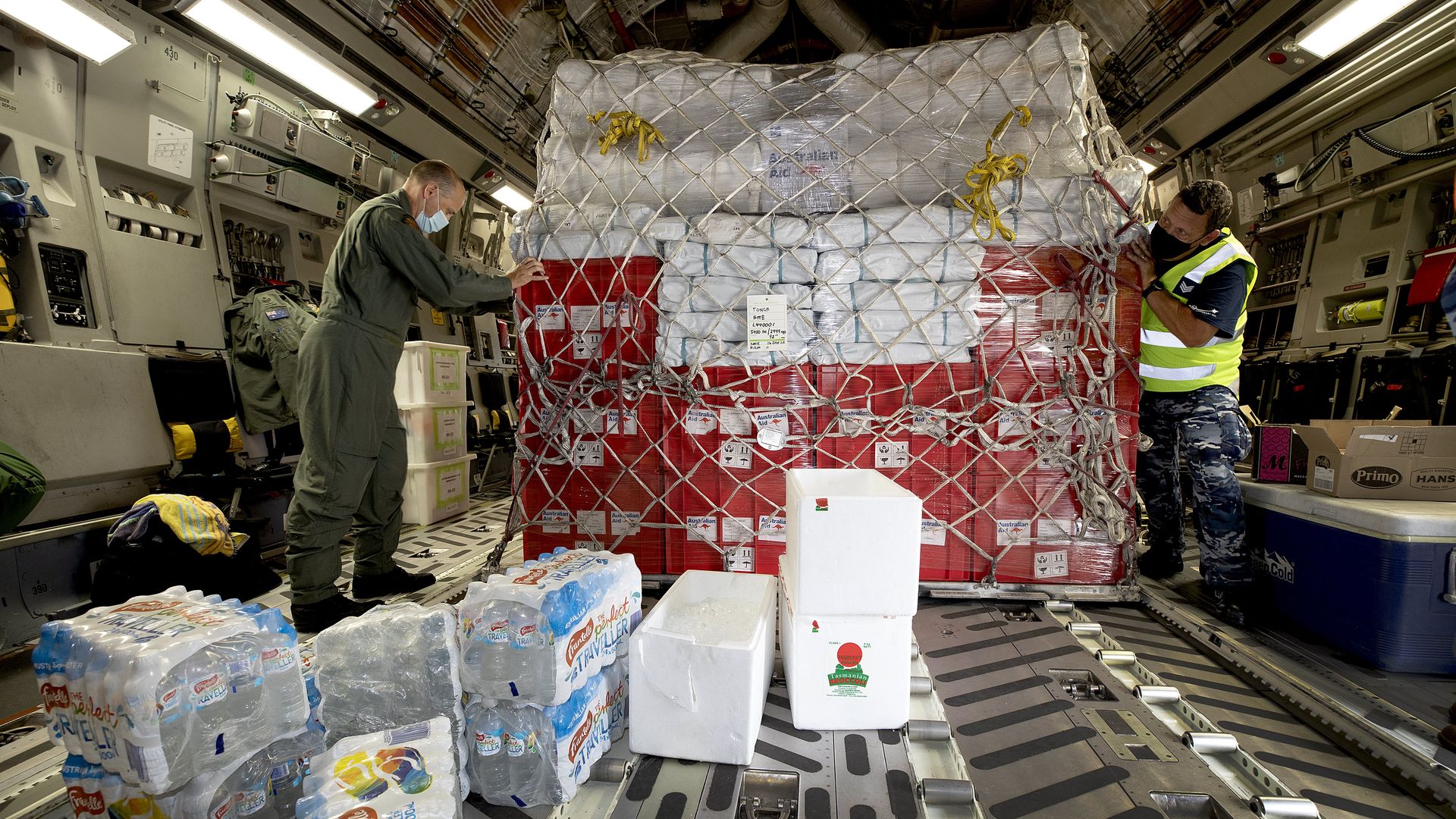
The first emergency supply aircraft landed in Tonga on Thursday, days after an undersea volcano erupted and triggered tsunami waves across the nation's islands.
Driving the news: A Royal New Zealand Air Force C-130 Hercules landed in Tonga after volcanic ash was cleared off the runway, according to a statement from the New Zealand government.
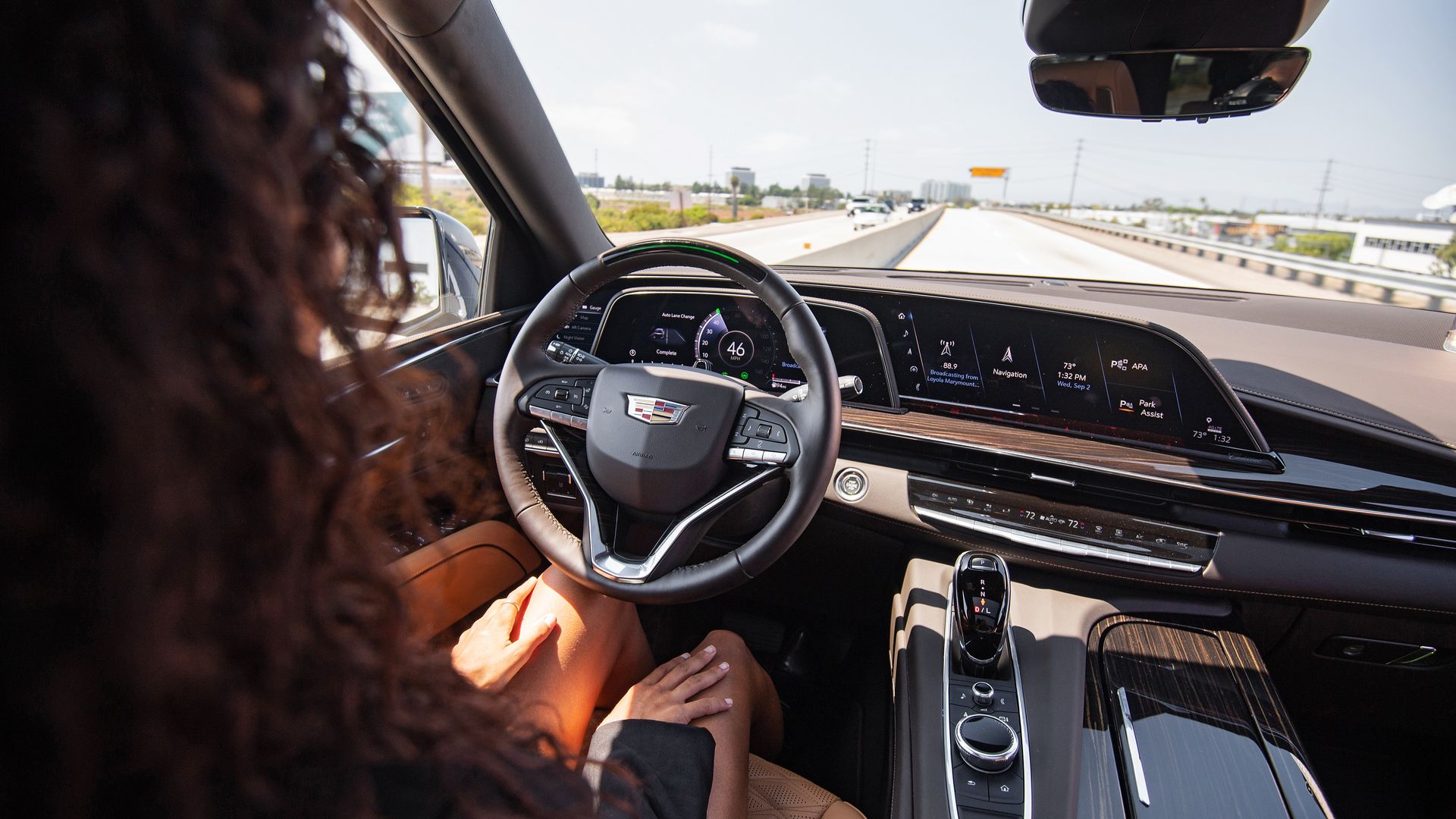
Consumer Reports tested the driver monitoring systems in today's cars and "uncovered some serious flaws," finding that most "don’t do enough to encourage safe driving."
Only GM and Ford are getting it right, according to CR, which comes out with its annual car rankings on. Feb. 17 — and will, for the first time this year, factor in these particular safety features.
Why it matters: Driver monitoring systems are new features that carmakers are adding alongside assisted-driving technology like adaptive cruise control and lane-centering. These camera-based systems are intended to make sure drivers who use the automated features are still paying attention.
Only five companies have driver monitoring so far, but it'll soon be commonplace in most cars with assisted driving tech.
What they're saying: “We believe it's time to recognize vehicles that have found a safer way to deploy this technology,” said Jake Fisher, senior director of CR’s Auto Test Center.
“GM's Super Cruise and now Ford's BlueCruise both have the right combination of helping drivers enjoy the convenience of automation while verifying that they're keeping their eyes on the road."
Where it stands: About half of new models now offer active driving assistance systems, per a CR analysis.
But only five automakers—BMW, Ford, GM, Tesla, and Subaru—have added driver monitoring alongside the technology.
How it works: Most driver monitoring systems use infrared cameras that can track head or eye movements.
If the driver turns away for a certain amount of time, they may sound an audible alarm.
Ford’s BlueCruise will tap the brakes to “jolt” an inattentive driver. In GM vehicles, a light on the steering wheel will flash.
If, after multiple alerts, the driver doesn't react, the system will bring the vehicle to a safe stop.
Details: In tallying its rankings, Consumer Reports gave extra points to GM and Ford — the only automakers whose monitoring systems prevent use of the technology if drivers aren't paying attention.
The systems from BMW, Subaru and Tesla all allowed drivers to keep using assisted-driving features even if the monitoring camera was blocked, or shut off, CR found.
What to watch: Beginning with the 2024 model year, CR said it will deduct points from cars with assisted-driving features that lack adequate driver monitoring.
The bottom line: The Biden administration is stepping up its scrutiny of assisted-driving systems, too.
NHTSA has also opened a formal investigation into Tesla Autopilot after a series of crashes involving emergency vehicles.