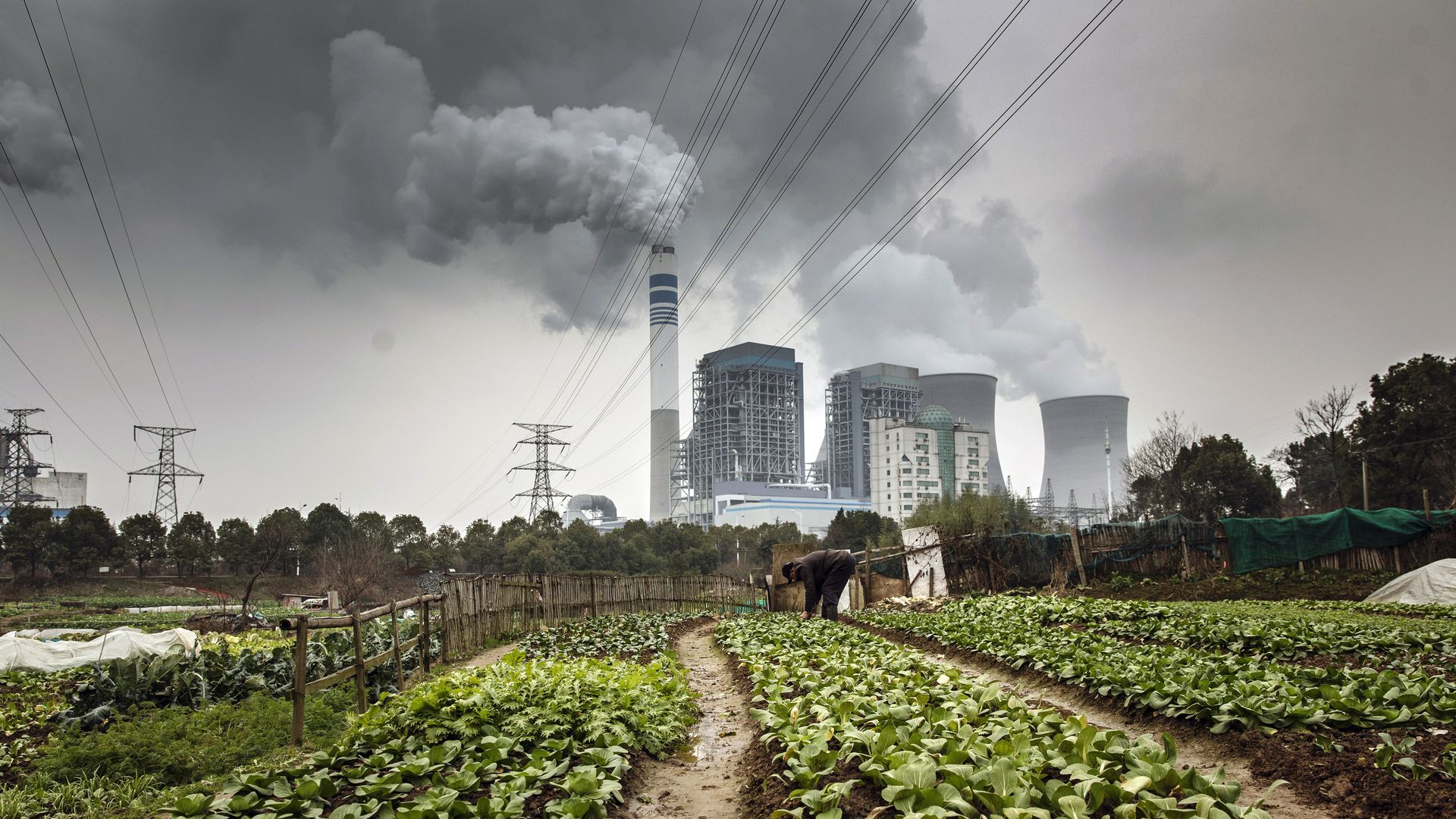
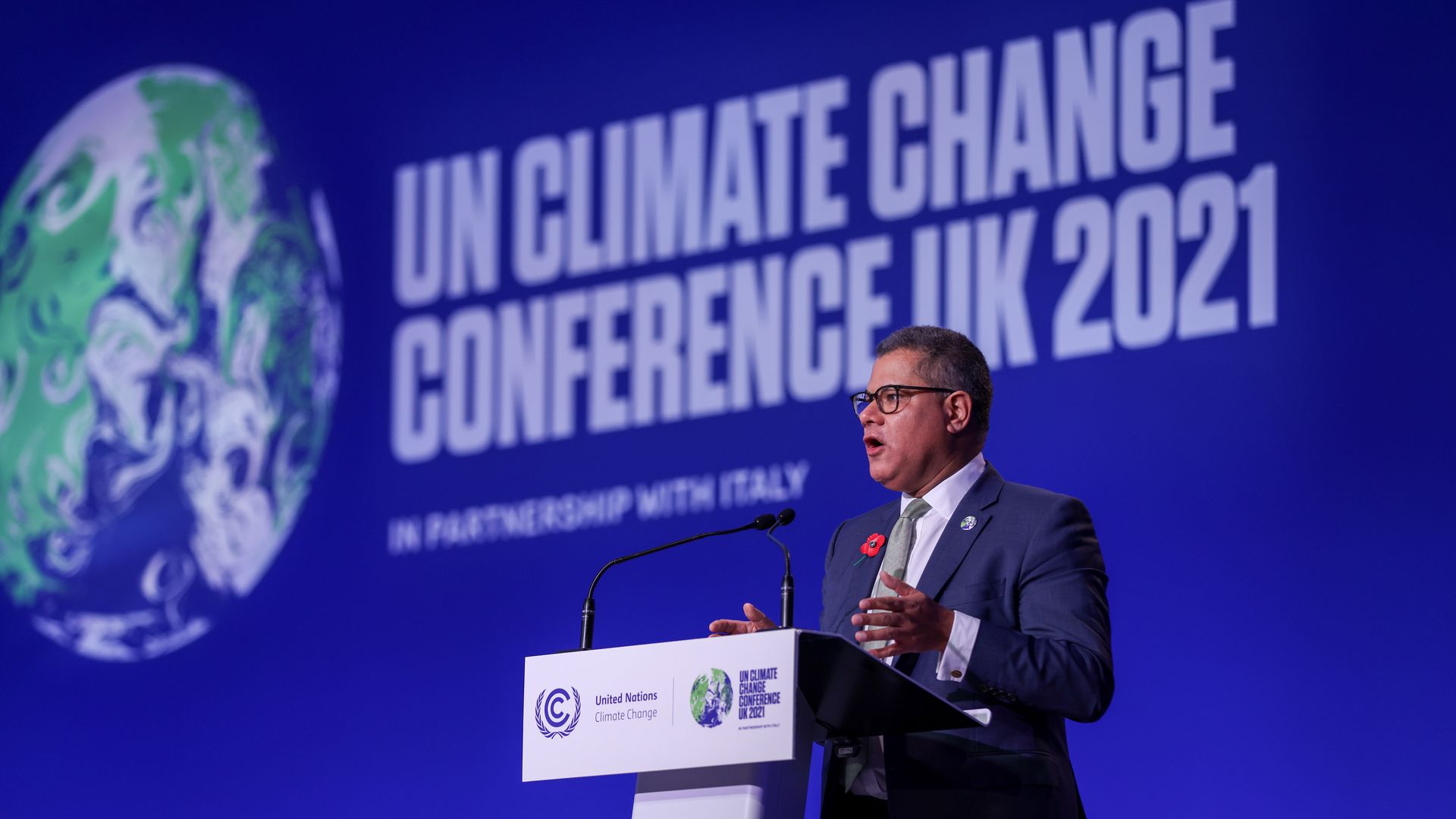
GLASGOW, Scotland — China vowed more aggressive steps on emissions Wednesday in a joint declaration with the U.S. — a surprise move that signals an easing of tensions evident at the COP26 climate summit here.
Why it matters: China is the world's largest greenhouse gas emitter, and the development could also help improve the chances for an ambitious final summit outcome.
Greta Thunberg and other youth climate activists on Wednesday petitioned UN Secretary-General António Guterres to declare a "systemwide, Level 3 climate emergency."
Driving the news: Climate change "is at least as serious and urgent a threat as a global pandemic and similarly requires immediate international action," the 14 youth climate activists wrote in a legal petition to Guterres, citing the UN's Level 3 Emergency declaration for the coronavirus pandemic.
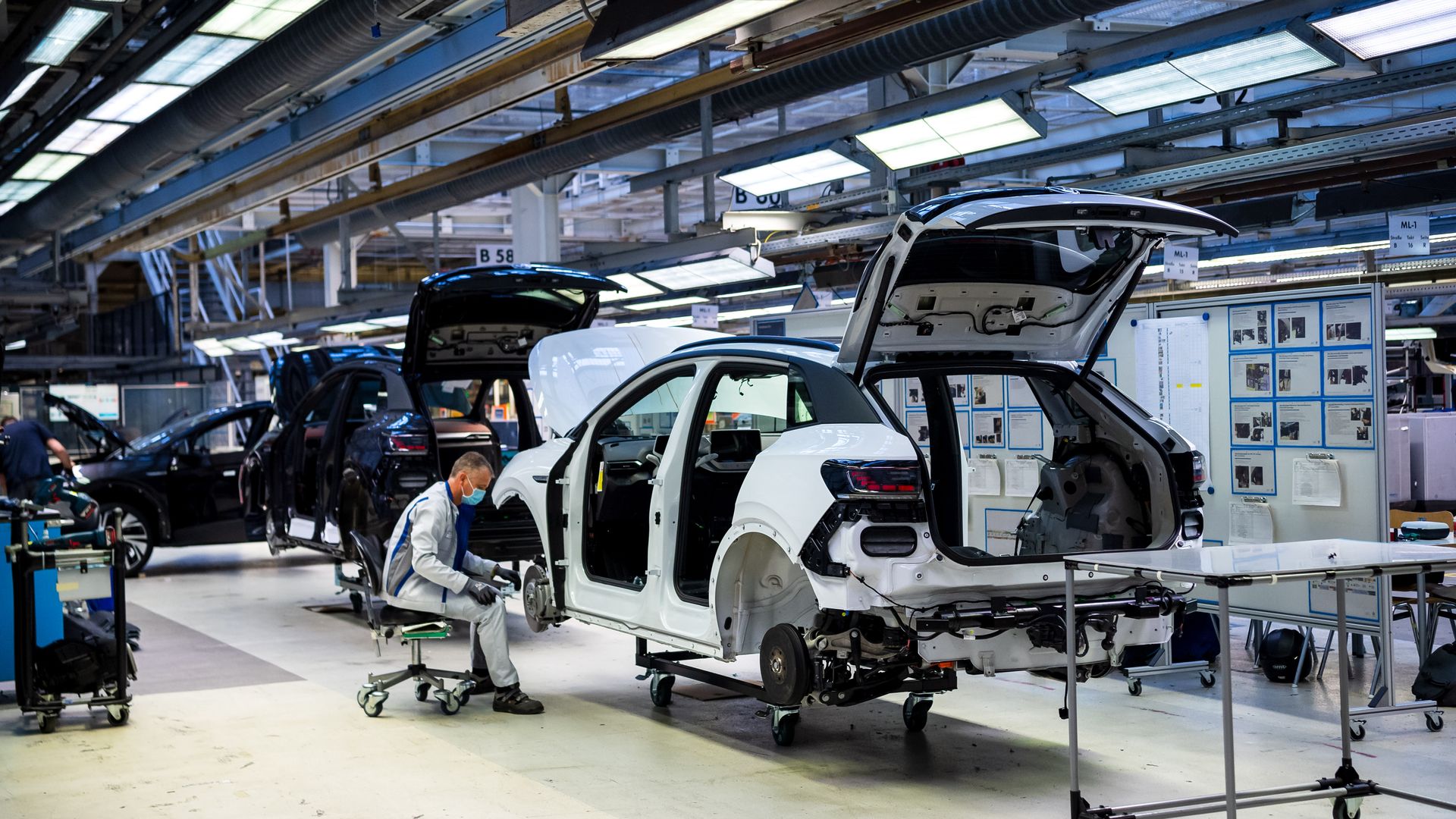
The latest big COP26 pledge aims to greatly speed the transition to electric vehicles, but it has split the auto industry and lacks buy-in from key countries.
Driving the news: The nonbinding commitment from a suite of companies, nations, cities and others calls for all car and van sales to be zero-emissions globally by 2040, and by 2035 in "leading markets."
GLASGOW, Scotland — A draft COP26 agreement released early Wednesday morning would, for the first time in a formal U.N. climate agency text, call for a coal phase out and end to fossil fuel subsidies. It would also reaffirm the Paris Agreement's goal of limiting human-caused global warming to 1.5°C above preindustrial levels.
Why it matters: The agreement that emerges from Glasgow will help determine what future people willexperience for the next several decades. Studies show every increment of global warming raises the odds of deadly extreme weather events, increases sea level rise and destabilizes polar ice sheets.
As world leaders meet in Glasgow at the United Nations climate summit — COP26 — to set the global agenda in the climate fight, cities are developing their own plans to stay resilient.
Why it matters: Cities are on the front lines of climate change, dealing with power outages, floods and fires — and they're often acting more swiftly than countries to combat the crisis.