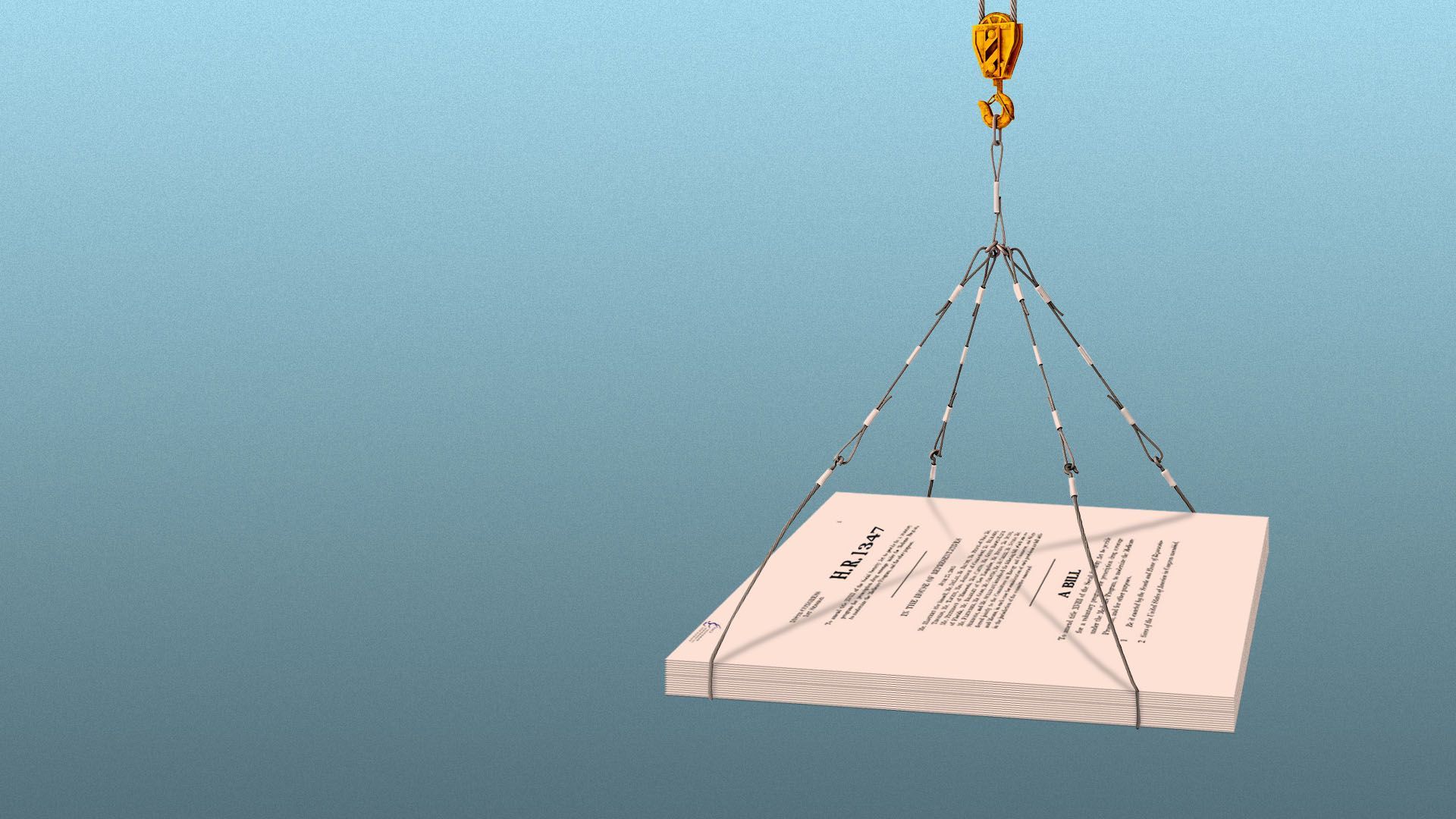
Amtrak released a proposed map Wednesday of an expanded U.S. rail system that could be built with funding from President Biden's infrastructure plan.
Why it matters: The expanded rail system — funded with the $80 billion Biden's infrastructure plan allocates to rail specifically—would "create jobs, improve the quality of life, reduce carbon emissions and generate economic growth,” Amtrak said in a statement.
The White House faces a big challenge as it promotes sweeping plans to steeply cut U.S. emissions this decade — and works to convince other countries it'll happen.
The big picture: Electricity sector emissions have been on a general downward trend as natural gas and renewables have shoved aside coal.
HSBC Global Research analysts are taking an increasingly granular look at which nations are the most and least resilient to climate change.
The big picture: A report this week ranked 77 countries on their capacity to adapt, shift away from fossil fuels, and benefit from growing cleantech markets.
The White House decided to go big or go home in proposing a more than $2.2 trillion bill that, if enacted, would be the most far-reaching climate legislation ever adopted by the U.S.
Between the lines: This could be a long slog on Capitol Hill, given Republican opposition to another big spending package and divisions among Democrats over specific provisions.
Data: International Energy Agency; Chart: Axios Visuals. Note: 2020 figures are estimates.
The U.S. currently lags way behind Europe and China in offshore wind, a fact the Biden administration hopes to change with plans to spur the development of 30 gigawatts of offshore U.S. wind generating capacity by 2030.
Why it matters: While several big commercial-scale projects along the Atlantic Coast are already in the works, there's only one small project in operation off Rhode Island as of now.
President Biden's attempt to steer huge energy infrastructure plans through Congress and his wide-ranging executive agenda are together creating intense lobbying and advocacy efforts to shape the policies.
Why it matters: The new proposal for an energy infrastructure package is vastly larger than the roughly $90 billion for clean energy in the 2009 stimulus, and the constellation of interests in play is huge.
President Biden is asking Congress to approve hundreds of billions of dollars to remake transit, overhaul power grids and expand clean energy in a sweeping plan the White House says will fight climate change while outcompeting China.
Why it matters: The plan, if enacted, would be the most far-reaching federal investment to date in programs that would help curb greenhouse gas emissions. But it faces serious challenges in the closely divided Congress.