One way carmakers comply with increasing fuel economy standards — even without selling many hybrids or electric cars — is by using regulatory credits they stockpiled from previous years or purchased from competitors.
Why it matters: The standards are getting tougher now, and companies are not only drawing down their banked credits; they've stopped generating new ones, too. That could drive up their trading value, enriching some companies with credits to spare, while putting others at risk of non-compliance.
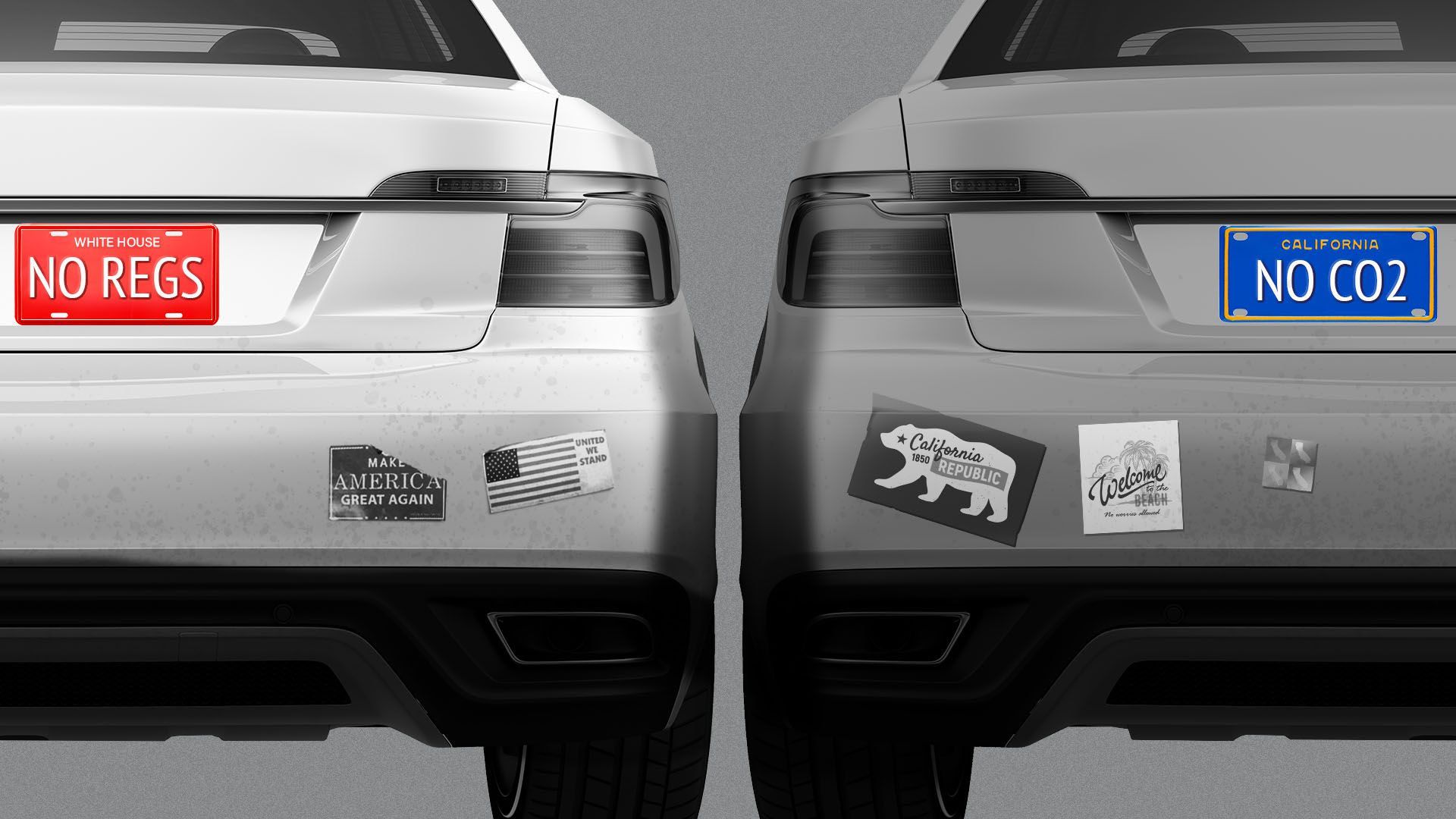
As the debate over fuel-economy standards escalates, automakers are desperately trying to forge a compromise between the goals of the Trump administration, which wants to weaken current rules, and California, which favors growing stringency.
The big picture: It's rare for companies to beg for regulation, but nothing could be worse for the auto industry than a split market, where some states have stricter rules than others. A drawn-out court battle would be just as bad, creating regulatory uncertainty.
The city of Miami has instructed electric scooter companies to move or secure their vehicles as Hurricane Dorian approaches, reports Bloomberg.
Why it matters: The storm could be a Category 4 hurricane by the time it reaches Florida on Monday with winds that could easily pick up the scooters and turn them into dangerous projectiles. Miami officially began its scooter pilot program in April after an initial 2018 run faced legal challenges, per the South Florida Sun Sentinel, and the big five companies — Bird, Lime, Lyft, Spin and Uber — told Bloomberg their scooters will be safe.
For the first time yesterday, the U.S. Chamber of Commerce publicly split with the White House over its plan to freeze Obama-era vehicle emissions and mileage rules.
Why it matters: While K Street is directionally inclined toward deregulation, there can be colliding interests below the surface. And that's certainly the case when it comes to the oil and auto industries.
Tesla yesterday rolled out an insurance line for vehicles in California and plans to eventually expand it to other states.
Why it matters: The electric automaker said it's "designed to provide Tesla owners with up to 20% lower rates, and in some cases as much as 30%," adding that it "reflects the benefits of Tesla's active safety and advanced driver assistance features that come standard on all new Tesla vehicles."
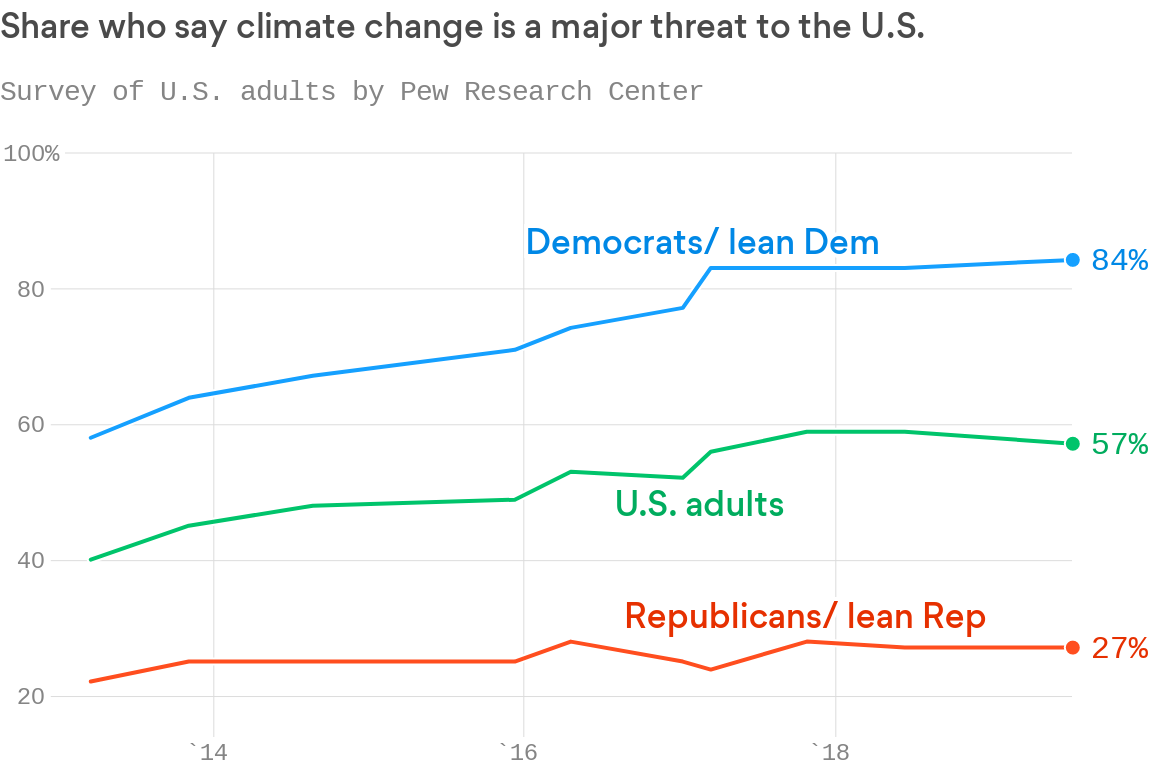
Data: Pew's July 10-15 survey on 1,502 adults, with a margin of error of ±3.0 percentage points for U.S. adults and ±4.4 percentage points for Republicans/lean Republican and Democrats/lean Democrat; Chart: Axios Visuals.
Pew Research Center data shows that public concern about climate change has risen over the last 6 years — but the angst isn't exactly shared across political lines.
Why it matters: The latest survey comes as Democratic White House hopefuls are floating expansive (and expensive) climate platforms, while the Trump administration is continuing efforts to unwind Obama-era policies.
BP's decision to offload its Alaska holdings highlights the uncertainty around whether the state — once at the heart of U.S. production — will ever regain its crude mojo.
Why it matters: Hints of the answer will come when the Interior Department sells leases in the Arctic National Wildlife Refuge as soon as this year, after a 2017 GOP tax bill opened the region following decades of political battles. It could hold over 10 billion barrels of oil in a state where the oil industry is a large part of its economic well-being. But, environmentalists strongly oppose drilling in the ecologically sensitive region.
The Environmental Protection Agency proposed new rules Thursday designed to ease Obama-era regulations on methane emissions from the oil and gas business.
Why it matters: Methane is a very potent greenhouse gas. The oil and gas industry is a significant source of emissions from wells plus natural gas pipelines, compressors and other equipment.