On Nov. 8, the Federal Reserve Bank of San Francisco — seated in a place that has seen its share of catastrophes linked to global warming — will host what is believed to be the central bank's first research conference specifically on climate change.
Why it matters: Climate change poses systemic risks to the soundness of the U.S. banking system, and the Fed is signaling its appetite to learn more. The conference — together with an invitation to submit related research papers — comes at a time when the Fed is increasingly facing pressure to follow other central banks in considering the threats that global warming poses to the economy.
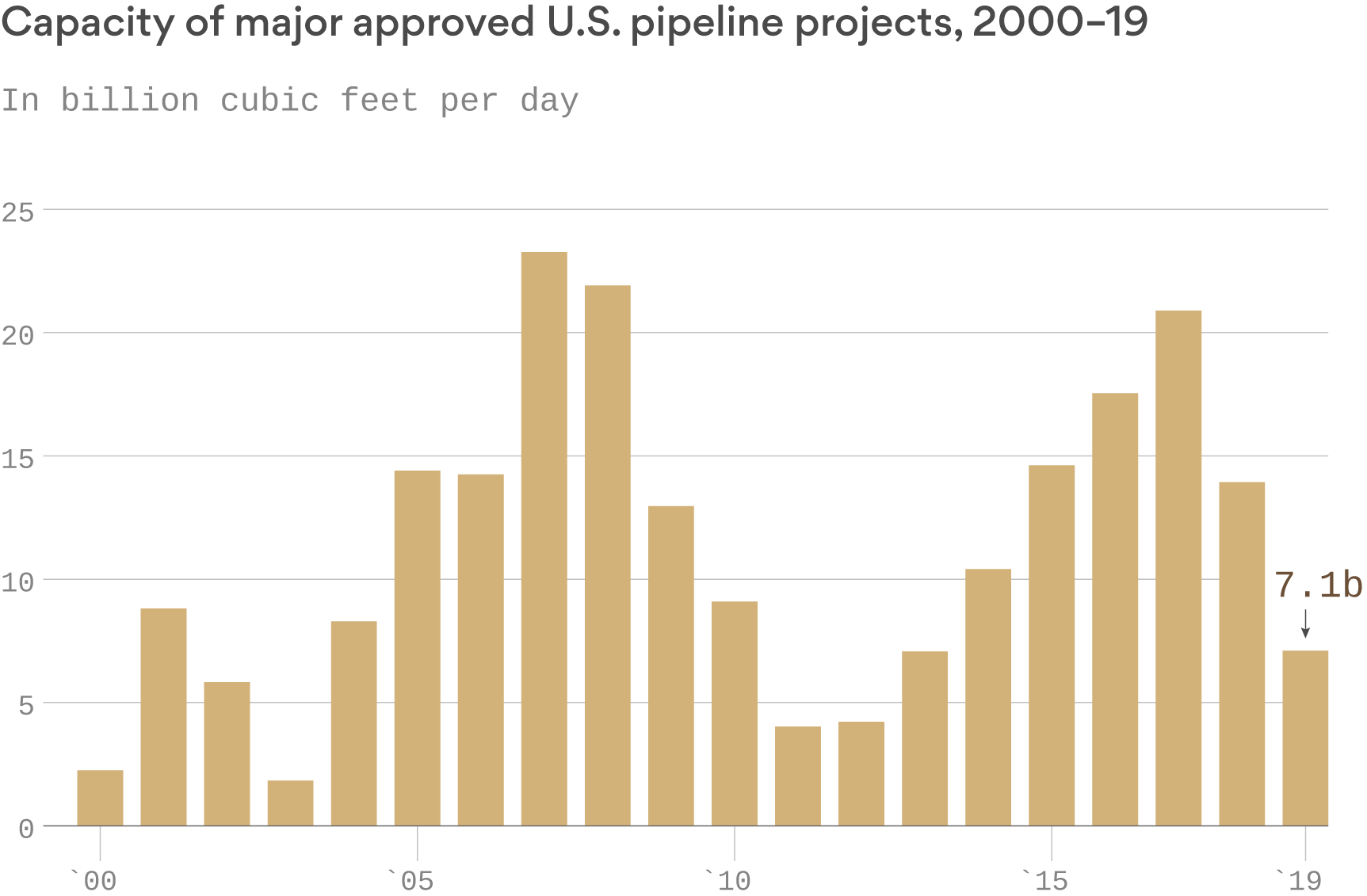
Environmental opposition to natural gas pipelines has grown significantly over the last decade, but the impact on actual federal approvals of such projects is limited.
Driving the news: The chart above, via the Federal Energy Regulatory Commission, shows annual approvals of natural gas pipeline capacity over the past couple of decades. These approvals ebb and flow with fuel prices and other cyclical parts of the energy business.
Nascent tech that pulls CO2 from the atmosphere could "significantly" reduce the costs of fighting climate change, but achieving scale is hardly a sure thing and massive deployment would consume lots of energy, a new peer-reviewed study warns.
Why it matters: The paper in Nature Communications arrives amid increasing attention to direct air capture (DAC) and other negative emissions technologies. They're important because it looks pretty unlikely that nations will cut emissions enough to meet the goals of the Paris climate deal.
Regulatory decisions about America’s bounty of natural gas are in the hands of an obscure and understaffed federal agency with a limited mandate to think about climate change.
Why it matters: With America’s production of oil and natural gas soaring and Congress not acting on climate change, the once-sleepy Federal Energy Regulatory Commission is finding itself at the center of protests and lawsuits. Interviews with all 4 FERC members illustrate their division over how to handle greenhouse gas emissions.
People on the East Coast can expect the heat wave that's gripped much of the U.S. this weekend to end Monday and Tuesday, the National Weather Service said. But the cold front will bring "strong thunderstorms" and potentially heavy rain that may trigger flash flooding.
The state of play: The cold front was moving through the Midwest Sunday, as the East Coast sweltered through another day of searing temperatures, with several records broken or tied. The heat and humidity caused more power outages and the cancellation of events Sunday.
An "oppressive and dangerous" heat wave has gripped much of the U.S., with a large number of heat warnings in place this weekend, the National Weather Service says.
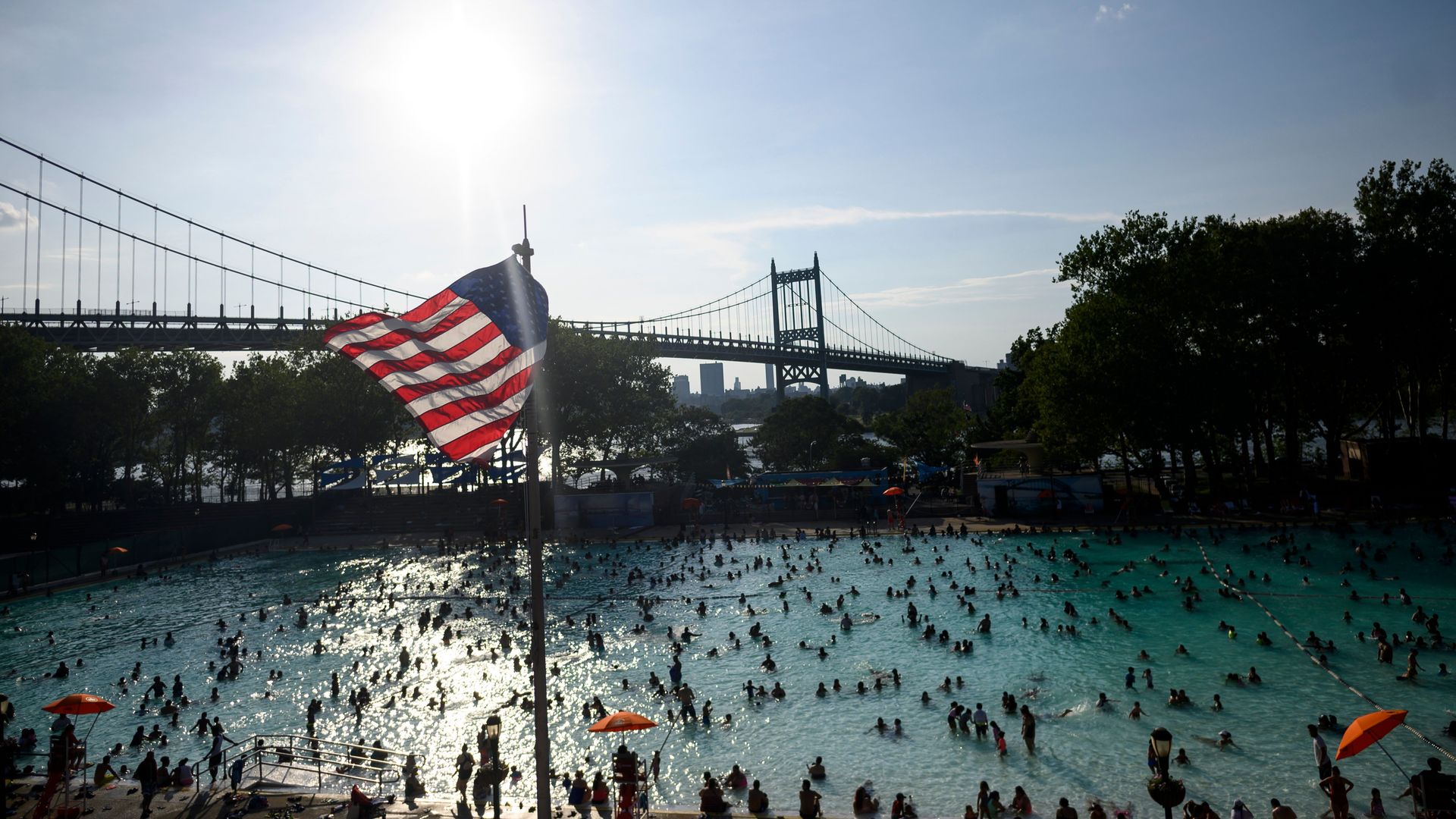
Details: As a cold front moved in to the Midwest Sunday, the NWS warned people on the East Coast to expect sweltering conditions to continue until Monday or Tuesday. Here's how some people are coping with the extreme weather, in photos.