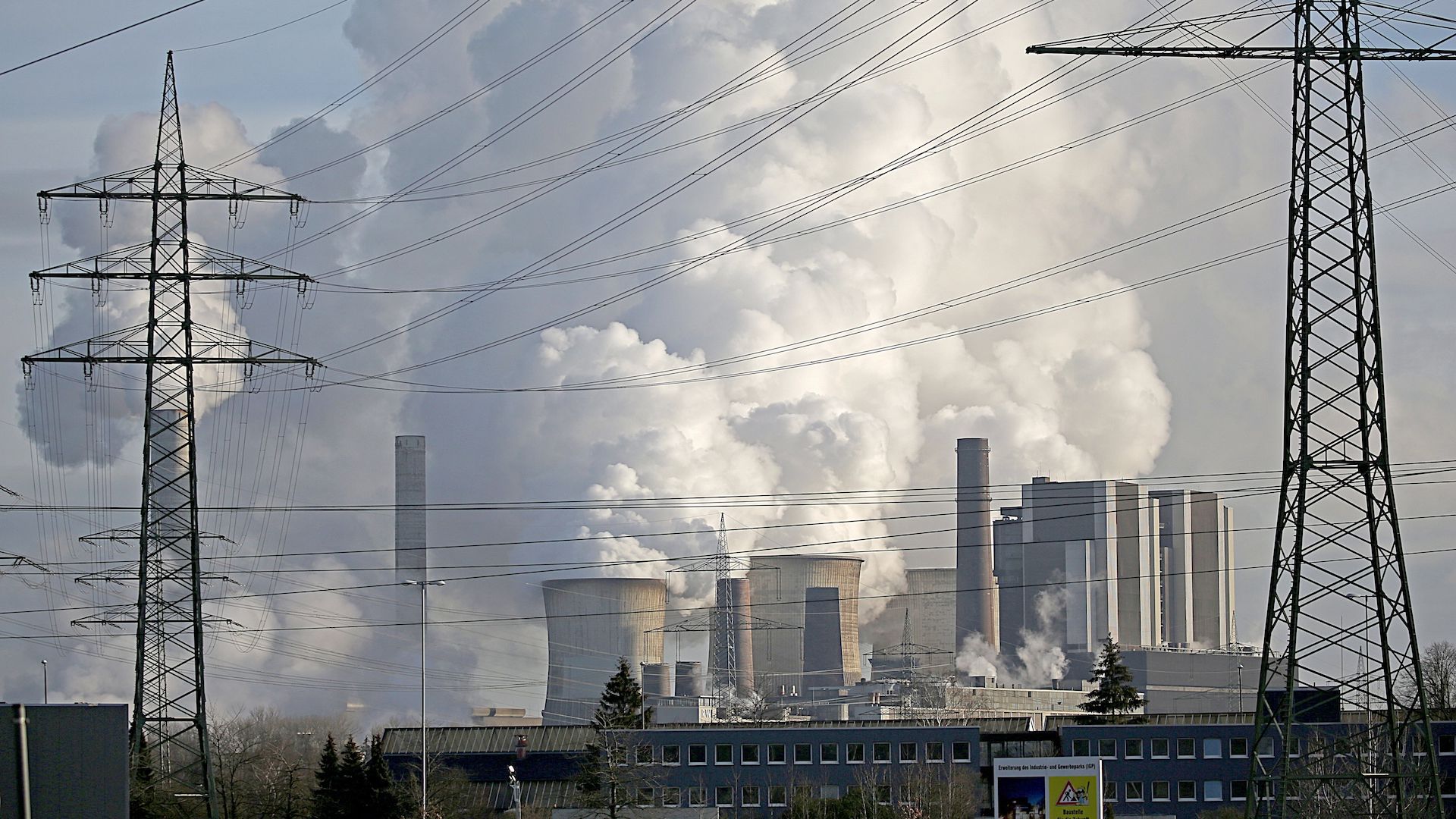
The concentration of carbon dioxide, the main, long-lived greenhouse gas causing global climate change, in Earth's atmosphere has reached new heights, according to scientists at Scripps Institution of Oceanography.
Why it matters: The new reading of 415.26 parts per million (ppm) on May 11 was the first daily baseline at Hawaii's Mauna Loa Observatory to eclipse 415 ppm. That observatory has kept long-term record of carbon dioxide in the atmosphere since 1958. That data, known as the Keeling Curve, traces the continuous increase in the amount of this greenhouse gas in the Earth's atmosphere since the Industrial Revolution.
On Friday, Reuters broke the news that Democratic White House frontrunner Joe Biden is crafting a middle ground approach on climate policy.
Why it matters: The story sheds light on how Biden may approach a topic that he has not yet emphasized in his nascent run. Biden drew quick attacks from rivals and activists, with Sen. Bernie Sanders and Gov. Jay Inslee issuing statements calling it inadequate. Per HuffPost, Sen. Kirsten Gillibrand was also critical.
Advanced economies are emitting less carbon now than at any time since the 1980s.
Source: OECD via Bespoke Investment Group; Chart: Axios Visuals
Why it matters: Even if countries don't achieve their Paris Agreement goals, decarbonization is a long-term trend worth investing in. As countries get richer, they invariably also get cleaner. This week Britain burned no coal for electricity for the first time since the Industrial Revolution.
Climate change is an enormous risk to the economy and markets. If the world manages to solve its collective action problem, investors will cheer — but, as with any major change, there will be winners and losers.
What to watch: Moody's, the ratings agency, is putting together what it calls a "framework to assess carbon risks." Individual companies will be given a carbon transition assessment, or CTA, which measures how well they'll be able to operate in a low-carbon economy.
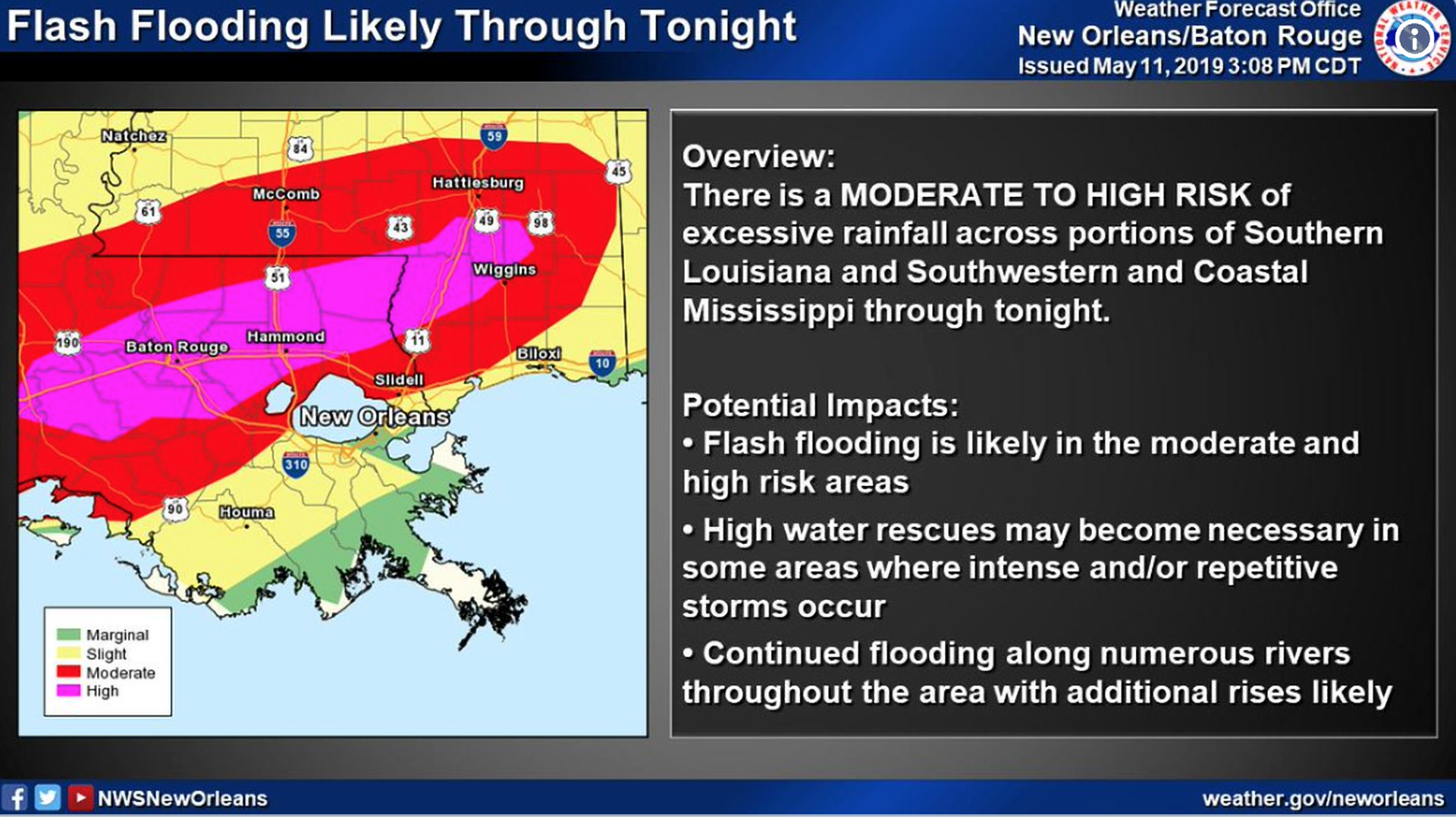
The National Weather Service in New Orleans warned of "life threatening" flash flooding in the region on Saturday night and Sunday morning, as roads were closed and thousands were left without power amid heavy rain in southeast Louisiana, Mississippi and Texas.
Details: The NWS said there's a moderate risk of excessive rainfall on Sunday from southeastern Louisiana, including New Orleans, eastward to southern Georgia. In Mississippi, a train derailed north of Poplarville because of high water levels, WJTV reports. Flash flood warnings were also issued in southeastern Texas as the storm moved out of that waterlogged region.