The big picture: The national security consequences of climate change, mainly through extreme weather events, are here and now, Axios Science editor Andrew Freedman emails.
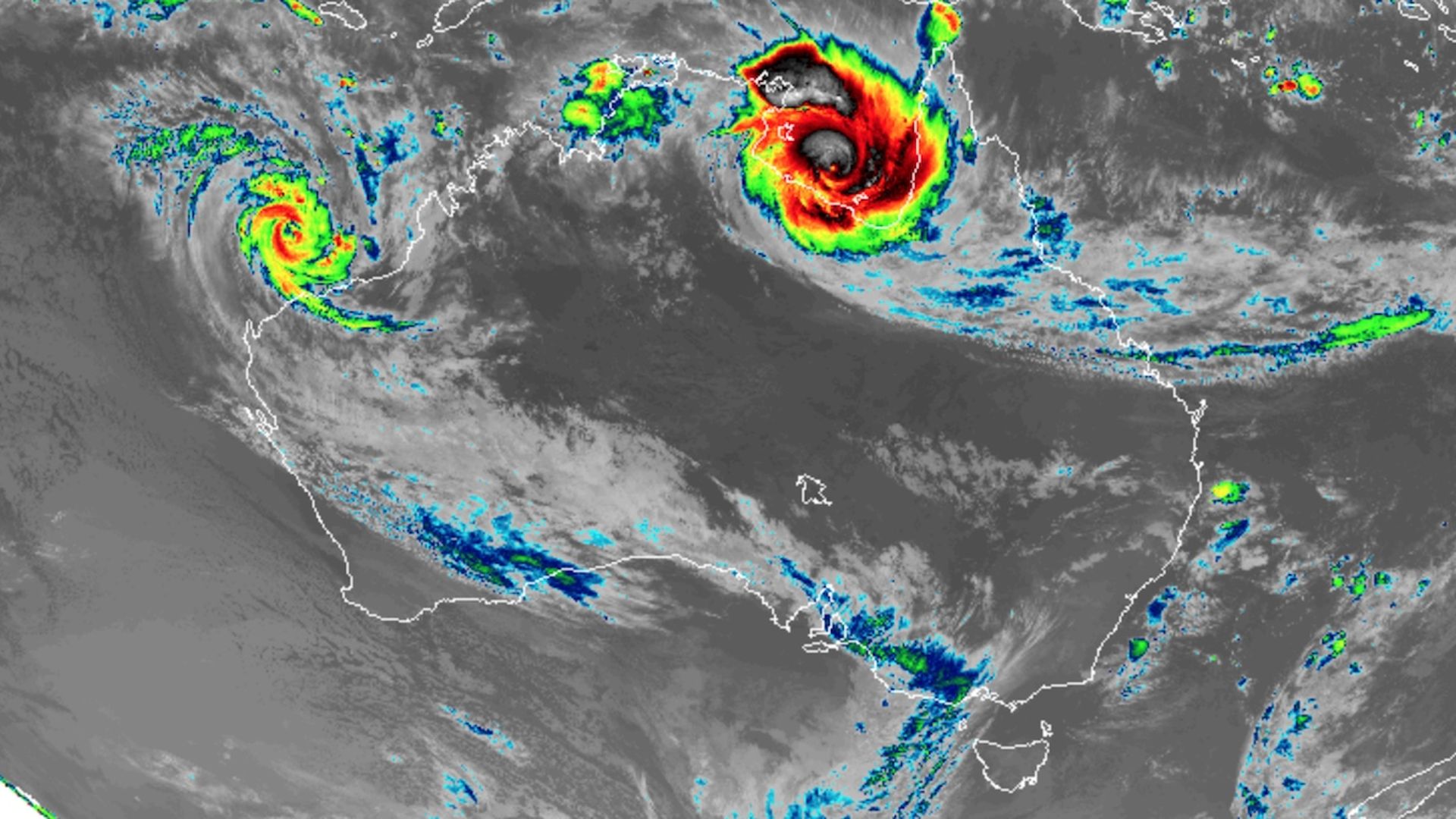
Two ferocious cyclones are taking aim at Australia this weekend, with the possibility that both could make landfall as Category 4 or greater storms within 24 hours of each other. If that happens, it would mark only the second time in the country's history that such a weather event has occurred.
Why it matters: Cyclone Trevor, in the Gulf of Carpenteria, and Cyclone Veronica, off Western Australia, are each intensifying while moving slowly toward land. These storms threaten to bring storm surge flooding to the coast, damaging winds and excessive inland rainfall. Of the two, Cyclone Veronica appears poised to hit a more populated part of the country, potentially coming ashore on March 24 near Port Hedland in Western Australia. That city of about 16,000 could be inundated by a powerful storm surge as the storm barrels slowly inland.
TheGlobal Fuel Economy Initiative (GFEI) report released via the International Energy Agency this week warned that the average fuel economy improvement rate for advanced countries slowed to only 0.2% per year between 2015 and 2017 — and "more than 20 countries experiencing a reversal in the evolution of their fuel economy."
Why it matters: It's nowhere near the GFEI target of 3.7% annual improvements in order to help control CO2 emissions.
Yesterday marked 25 years since the UN's Framework Convention on Climate Change entered into force.
Why it matters: The deal struck in Rio de Janeiro laid the foundation for negotiations — lots of negotiations — that ultimately produced the 2015 Paris climate agreement.
Silicon Valley startup accelerator Y Combinator has thrust carbon removal startups into the spotlight, amid growing concerns over climate change.
Why it matters: Venture capital's natural appetite for funding moonshots could make it a positive force — if it overcome disappointments from last decade's failed cleantech investments.
The emergence of electric vehicles, automated tech and ride-sharing has prompted a wave of corporate partnerships and joint ventures in the auto industry as big players seek their footing in the evolving market.
Driving the news: Volkwagen and the Swedish battery company Northvolt said yesterday they'll lead a new industry R&D consortium called the European Battery Union. The other companies aren't public yet.