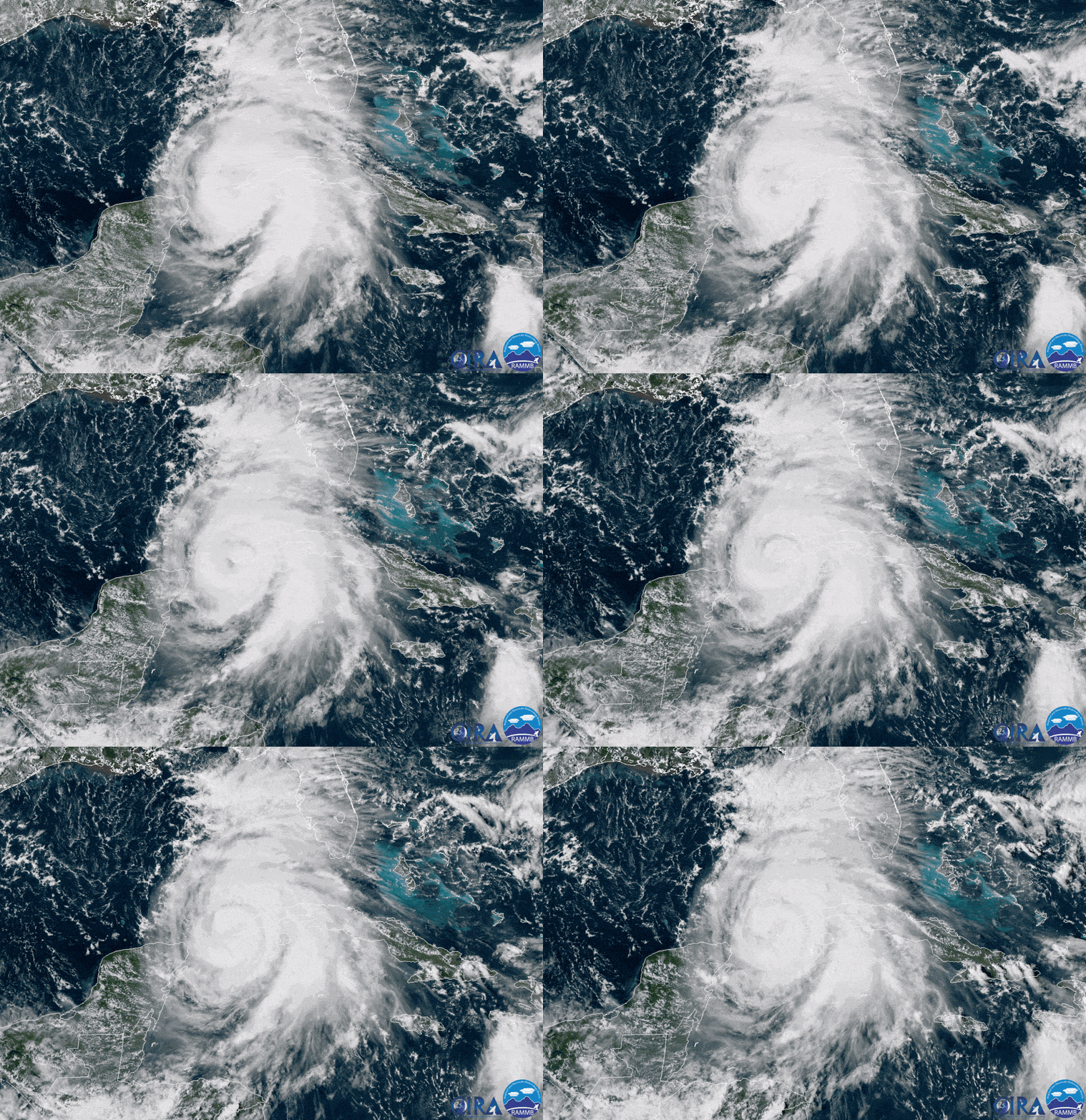
Satellite loop of Hurricane Michael swirling off the western tip of Cuba on October 8, 2018. Image: CIRA/RAMMB
Hurricane Michael rapidly intensified on Sunday and Monday between Mexico's Yucatan Peninsula and Cuba, and is headed for Florida's Big Bend region — likely coming ashore between Destin and Apalachicola on Wednesday — as a major Category 3 or 4 storm. Hurricane and storm surge warnings are now in effect for parts of Florida, with watches extending west into Alabama.
Why it matters: This storm presents a particularly dangerous situation for the Sunshine State, since computer models and official forecasts have trended toward a stronger hurricane. The storm's track means residents will have only a few days at most to prepare, and some may be caught unaware after a long holiday weekend.
Carbon dioxide emissions are on track to rise in 2018 for the second straight year following a plateau in 2014-2016, according to the International Energy Agency.
Why it matters: IEA's finding arrived as a United Nations science panel unveiled a major report concluding that large emissions cuts are needed in coming years to hold global warming to 1.5 degrees Celsius above preindustrial levels.
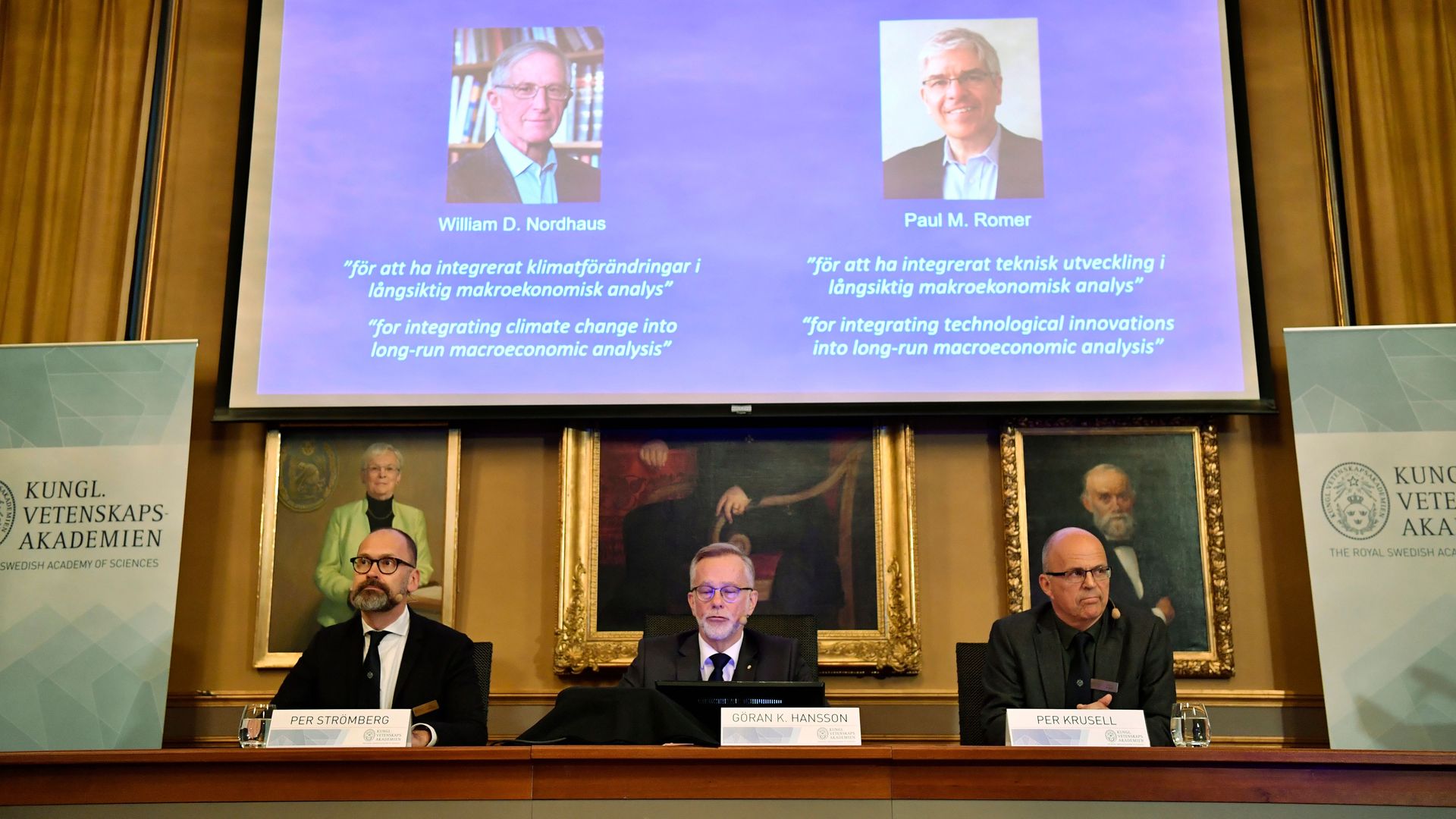
American economists William Nordhaus and Paul Romer were awarded the Nobel Prize for Economics on Monday for their work on how climate change impacts the economy, AP reports.
The big picture: Though they work separately, the two economists have tackled climate change from different angles. Nordhaus' work has called for a universal carbon tax while Romer "has studied the way innovation drives prosperity." The win comes just hours after the release of a new UN report that says — without an unprecedented worldwide effort — key global warming targets could soon slip out of reach.
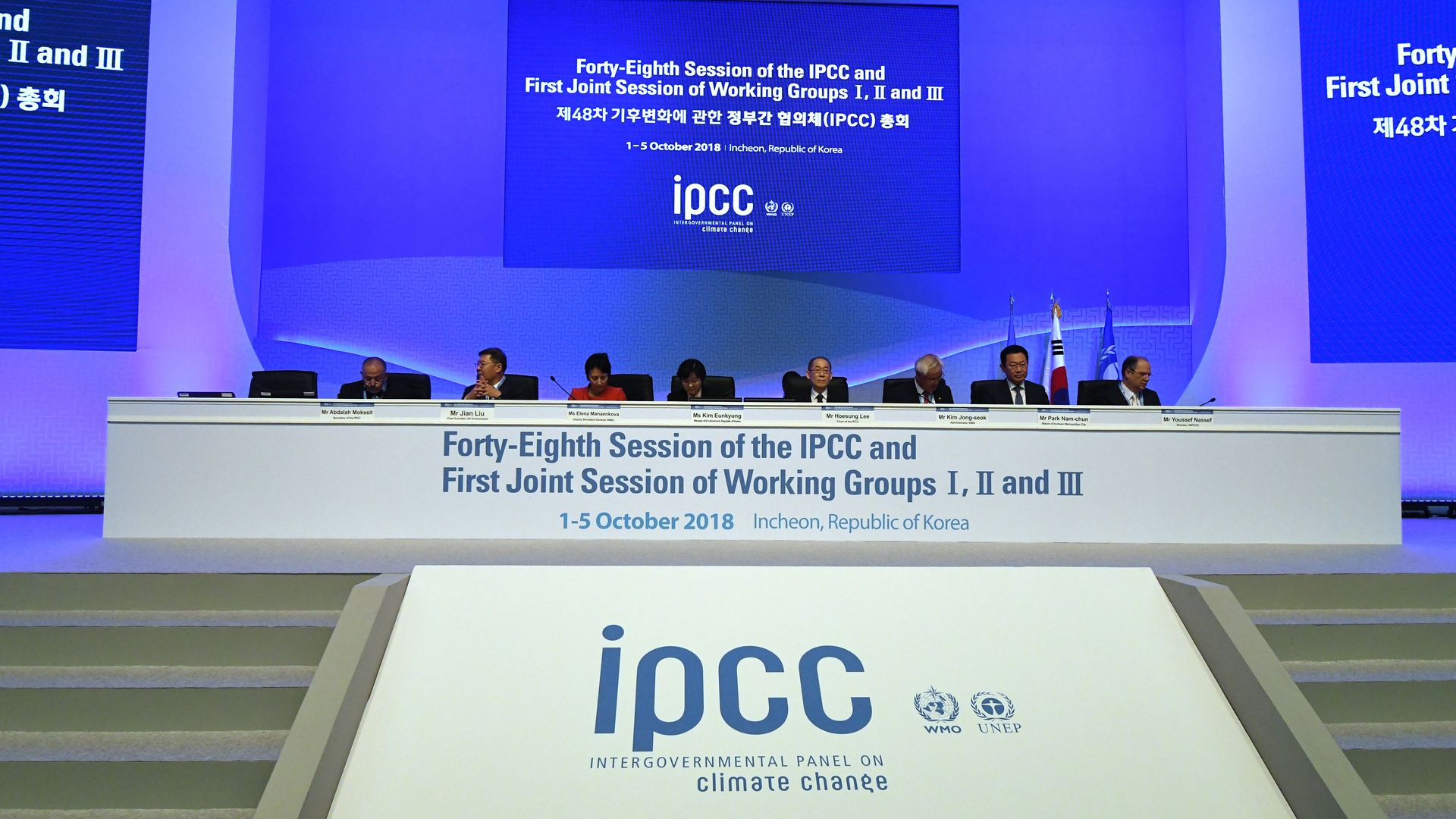
Global warming can still be held to 1.5°C relative to preindustrial levels, but only if countries take "unprecedented" steps to rein in greenhouse gas emissions and change how we live, according to a landmark science report released Sunday night by the UN Intergovernmental Panel on Climate Change.
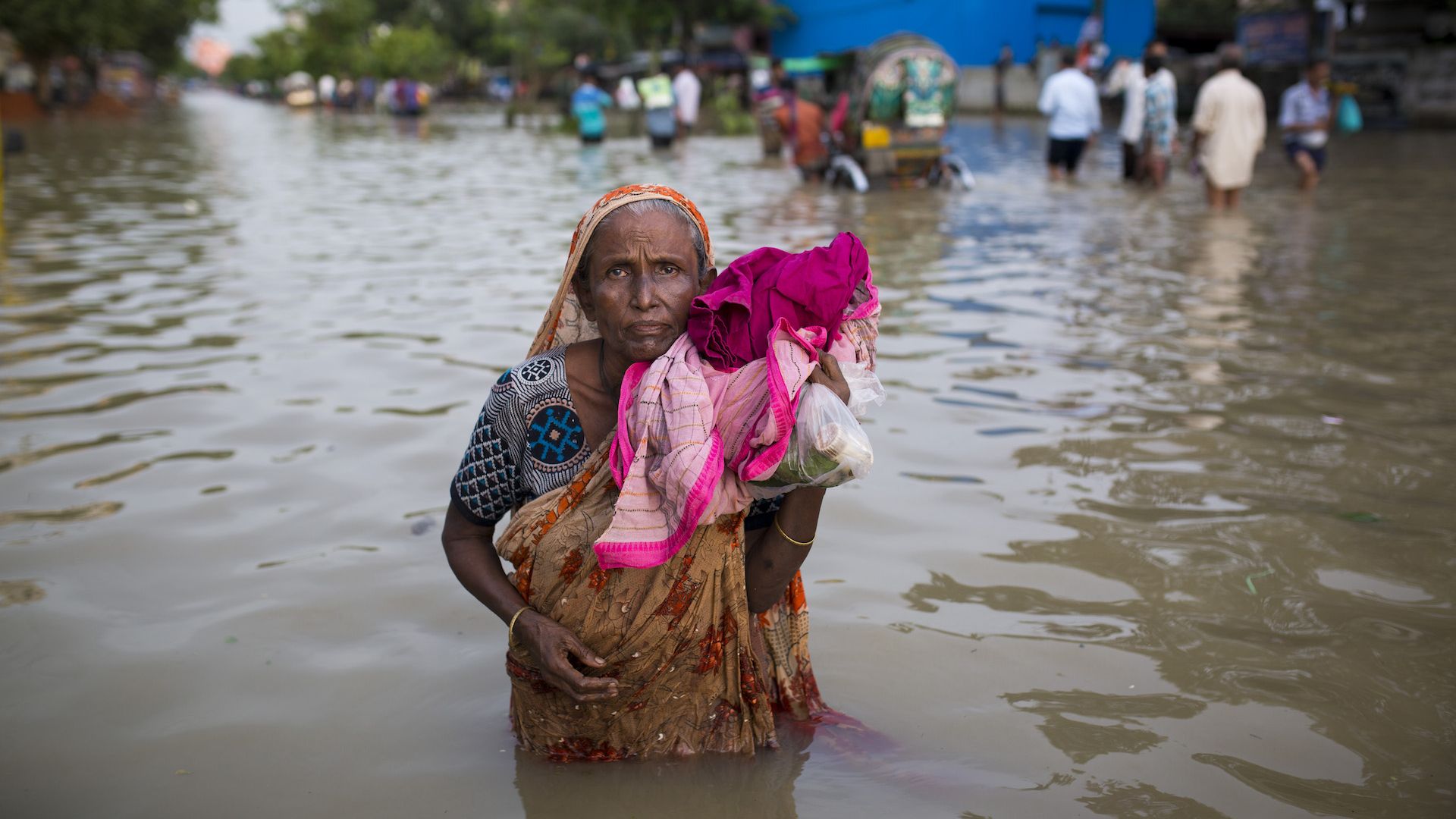
Why it matters: Global warming will have far more severe consequences if temperatures are allowed to creep past 1.5°C, or 2.7°F, of warming, scientists concluded. They noted that there are already deadly impacts from the1°C, or 1.8°F, of warming so far — including more severe and longer lasting heat waves, more heavy precipitation events, and ocean warming that is killing many of the planet's coral reefs.
Justin McAnear last month resigned as VP of global finance and operation for Tesla, in order to take a CFO job at an undisclosed company. Now we know his new employer: 10X Genomics, a Silicon Valley genomics company whose investors include Fidelity and SoftBank.
Why it matters: First, because it solves a Silicon Valley mystery. Second, because it may signal IPO plans for 10X Genomics.
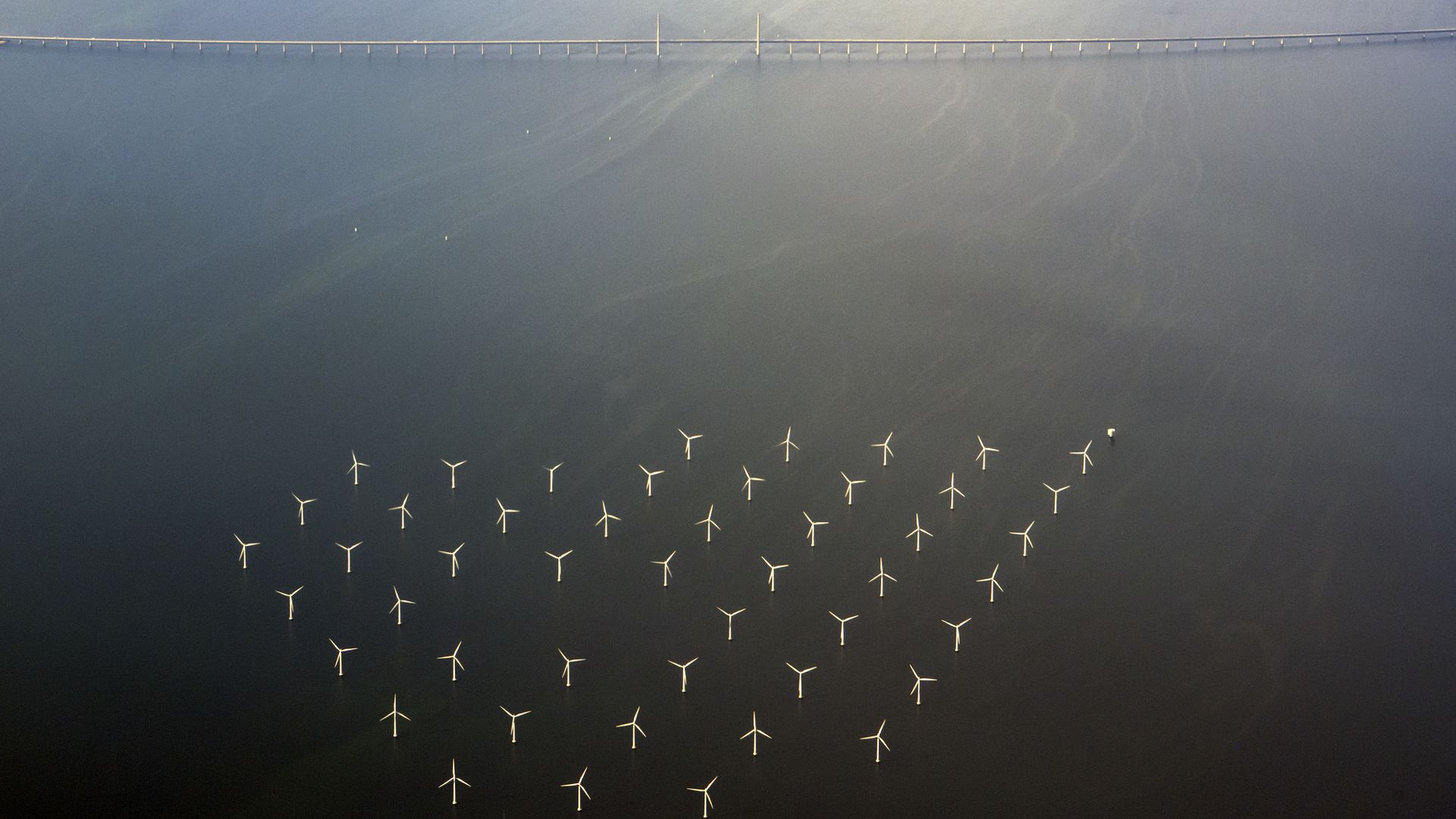
Denmark-based Orsted is buying the U.S. firm Deepwater Wind for $510 million, giving the world's largest offshore wind company a much bigger foothold in the emerging Atlantic coast market.
Why it matters: The deal announced Monday is another sign of the emergence of offshore wind in the U.S., which lags far behind the older and much larger European market, but is increasingly a hotbed of activity.
Keeping global warming in check will require deployment of carbon-trapping technologies and aggressively moving away from fossil fuels, a major new United Nations report concludes — far more quickly than current forecasts envision.
Why it matters: The scientific analysis of what's needed to limit temperature rise to 1.5 degrees Celsius above pre-industrial levels — the ambitious goal of the Paris climate agreement — reveals huge hurdles to avoiding widespread damages from climate change.