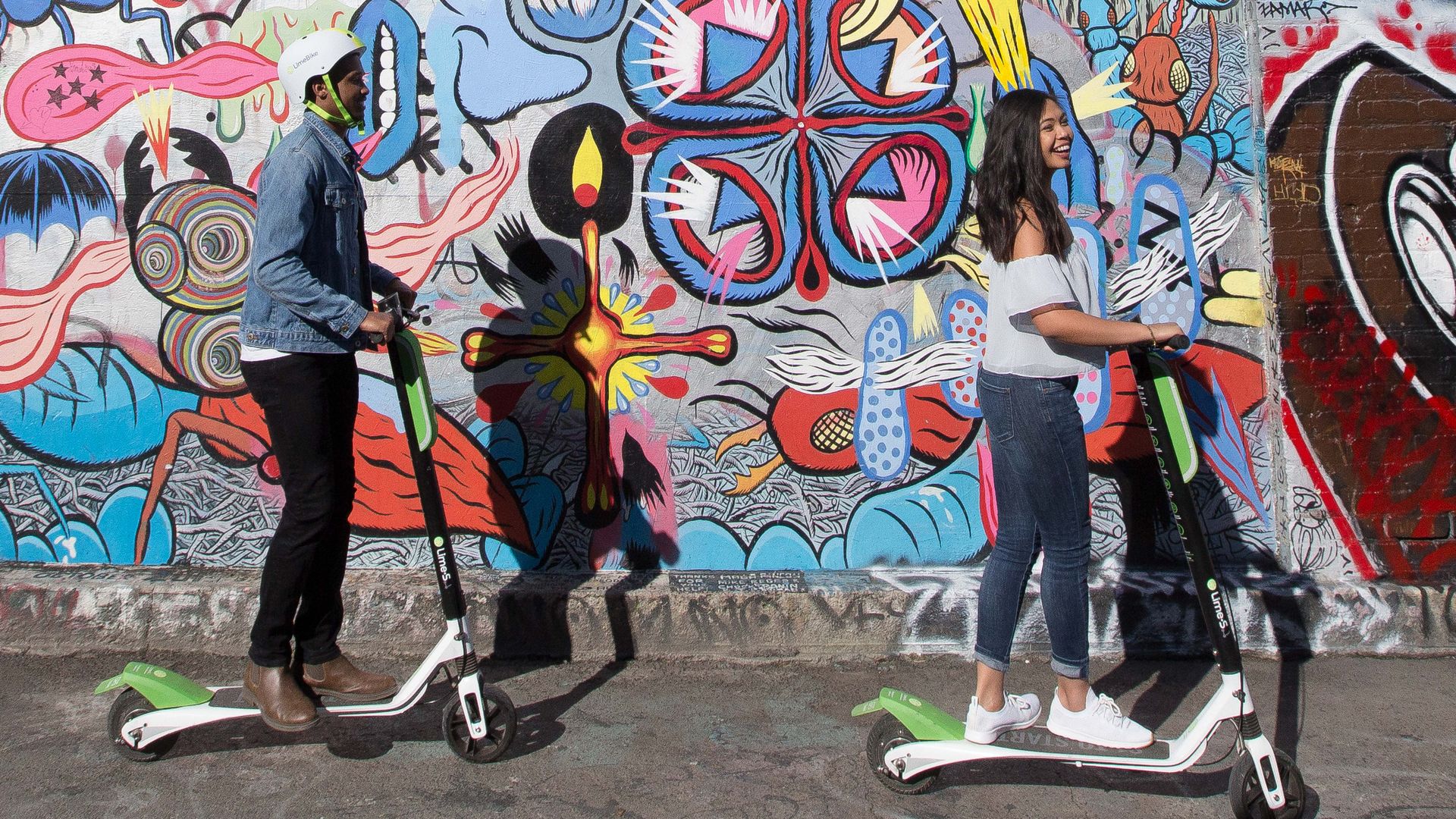
On Friday, Lime said it's rolling out its electric scooter rental service in Mexico City, its first location in Latin America, just hours after rival Bird announced its own arrival in the city.
Why it matters: As we saw with ride-hailing a few years ago, the scooter wars are going global. In Latin America, Lime and Bird will not only compete with each other, but also against local rivals like Grin and Yellow.
Saudi Crown Prince Mohammed bin Salman said delayed IPO plans for state oil giant Aramco will go forward in late 2020 or early 2021, according to a new interview with Bloomberg.
Why it matters: The massive listing — initially slated for late 2018 — is designed to raise tens of billions of dollars to fund the kingdom's economic diversification plans. But it's been repeatedly pushed back, and a few weeks ago looked dead, or at least in a deep freeze.
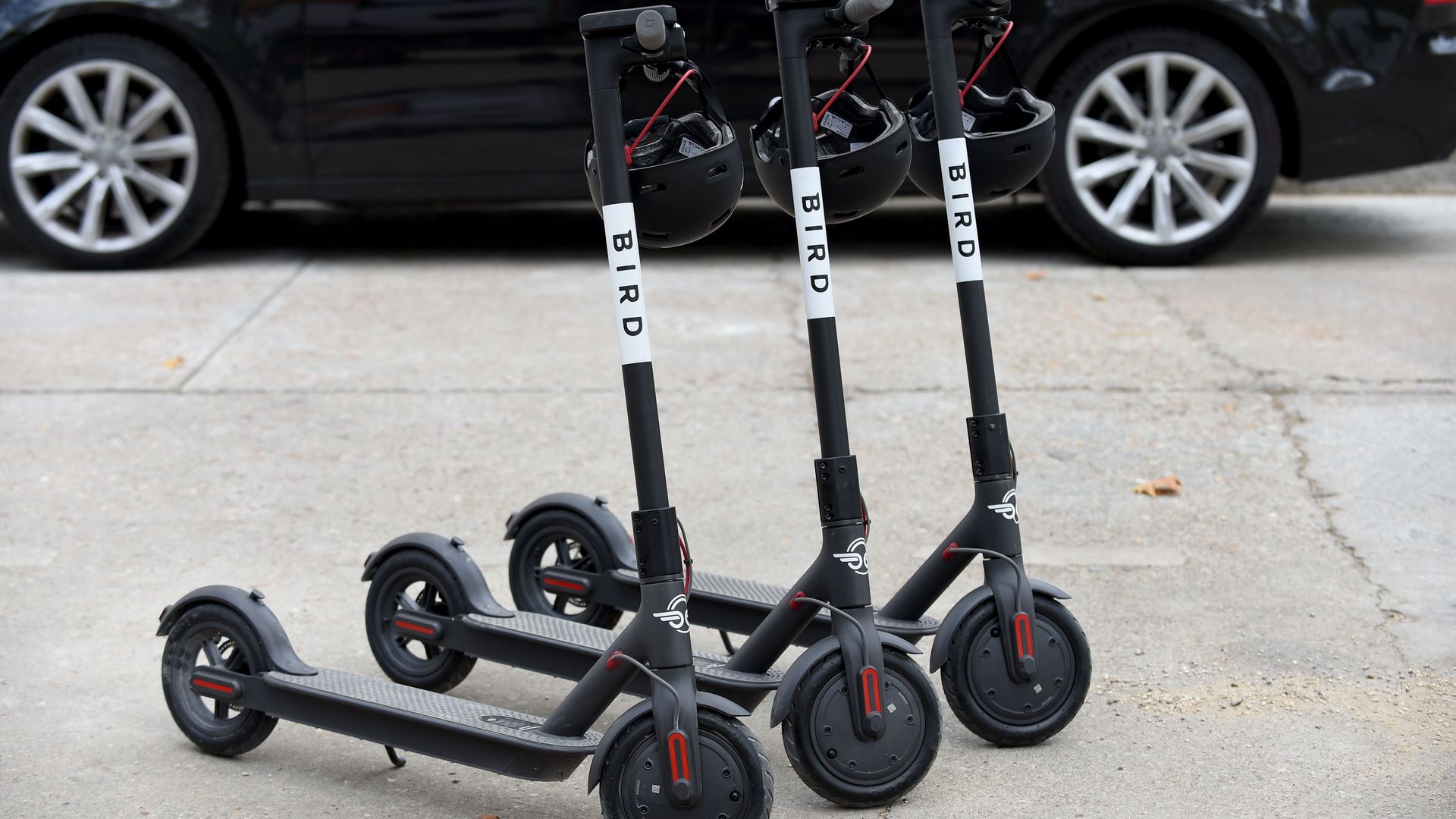
Scooter rental company Bird is expanding to Latin America, with scooters now available in certain neighborhoods in Mexico City, and plans to expand to Brazil soon.
Why it matters: Bird will have to compete will local rivals in Latin America, where the scooter wars are already brewing between Mexico's Grin and Brazil's Yellow. Outside the U.S. Bird is also in Paris, Tel Aviv, Brussels, and Vienna.
The story has been updated to note that Bird is also available in Brussels and Vienna.
On Sunday evening eastern time, the UN Intergovernmental Panel on Climate Change is scheduled to release its special report on the risks and benefits of limiting global warming to 1.5°C, or 2.7°F, above preindustrial levels.
Why it matters: The report is expected to contain sobering findings about how difficult it will be to meet the 1.5-degree target, which is an aspirational goal contained in the Paris Agreement on Climate Change. Every country in the world — except the U.S. — intends to honor the 2015 agreement, and the report will help inform negotiators in the next round of climate talks, set for December.
By the numbers:
We are currently on track for global warming of between 2.7 to 3.7°C by 2100, according to Kelly Levin, a scientist with the nonpartisan World Resources Institute.
To meet the 1.5-degree target, we'd need to reach net zero emissions by mid-century, and negative emissions thereafter, using carbon removal technologies.
Emissions in 2030 would also need to be about 50% less than 2010 levels.
Yes, but: Current emissions projections show the world is on track to increase emissions through 2030.
Between the lines: Some climate scientists are making clear that the 1.5-degree target, which is seen as low-lying island nations' best hope for long-term survival, is effectively out of reach. For example, the report is expected to call for a scaling up of carbon removal technologies, such as direct air capture, in order to reach negative emissions as soon as possible.
That alone will be a heavy lift, since these technologies are currently in their infancy.
"Overall, the idea that we can limit warming to 1.5°C is so ridiculous that it doesn't seem to even merit thinking about it,"said Andrew Dessler, a climate scientist at Texas A&M University.
"It is technically feasible for me to fly to the moon in the next 10 years, but it is clearly not feasible in a broader sense. With 1.5°C it is potentially feasible from a technical perspective, but unless the political, social and technical aspects of feasibility are aligned, it is not going to happen."
— Glen Peters, research director at the Center for International Climate Research in Norway
Tom Damassa, climate program director at Oxfam America, told Axios that even 1.5 degrees of warming will cause hardships for millions.
We're already seeing widespread changes due to the nearly 1-degree of warming experienced so far. "1.5 [degrees] was never going to be some sort of magical threshold. I hope what the report makes clear is there is no safe level of climate change,” Damassa said.
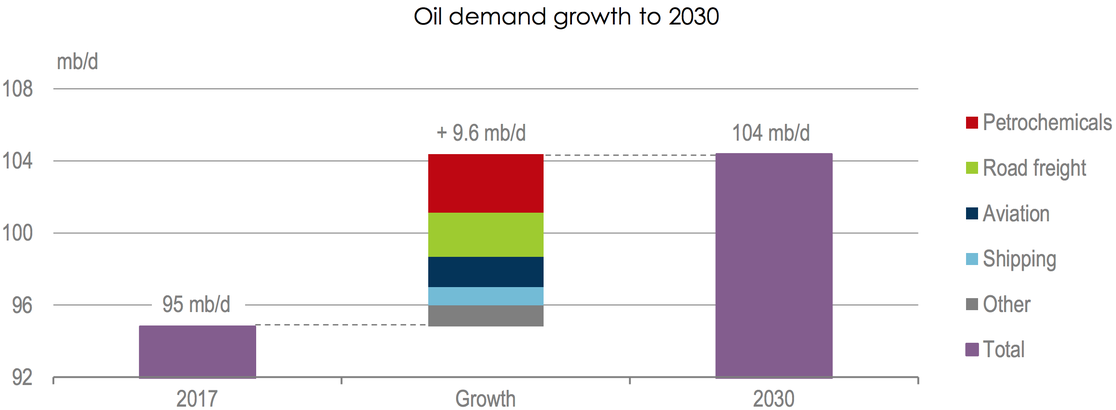
Screenshot from summary of IEA report, "The Future of Petrochemicals"
Rising use of petrochemicals that make plastics and other products will be the largest source of crude oil demand growth in coming decades, the International Energy Agency said in a new report.
The big picture: "Petrochemicals ... are set to account for more than a third of the growth in oil demand to 2030, and nearly half to 2050, ahead of trucks, aviation and shipping," the report shows.
Why it matters: Despite ranking low in energy use, New York State has developed an aggressive roadmap to support new energy storage projects such as the one on the Luther Campus. The state's support is necessary for both the funding and development of these projects, which aim to reduce peak energy demand during critical periods, dependence on fossil fuels and, ultimately, greenhouse gas emissions.