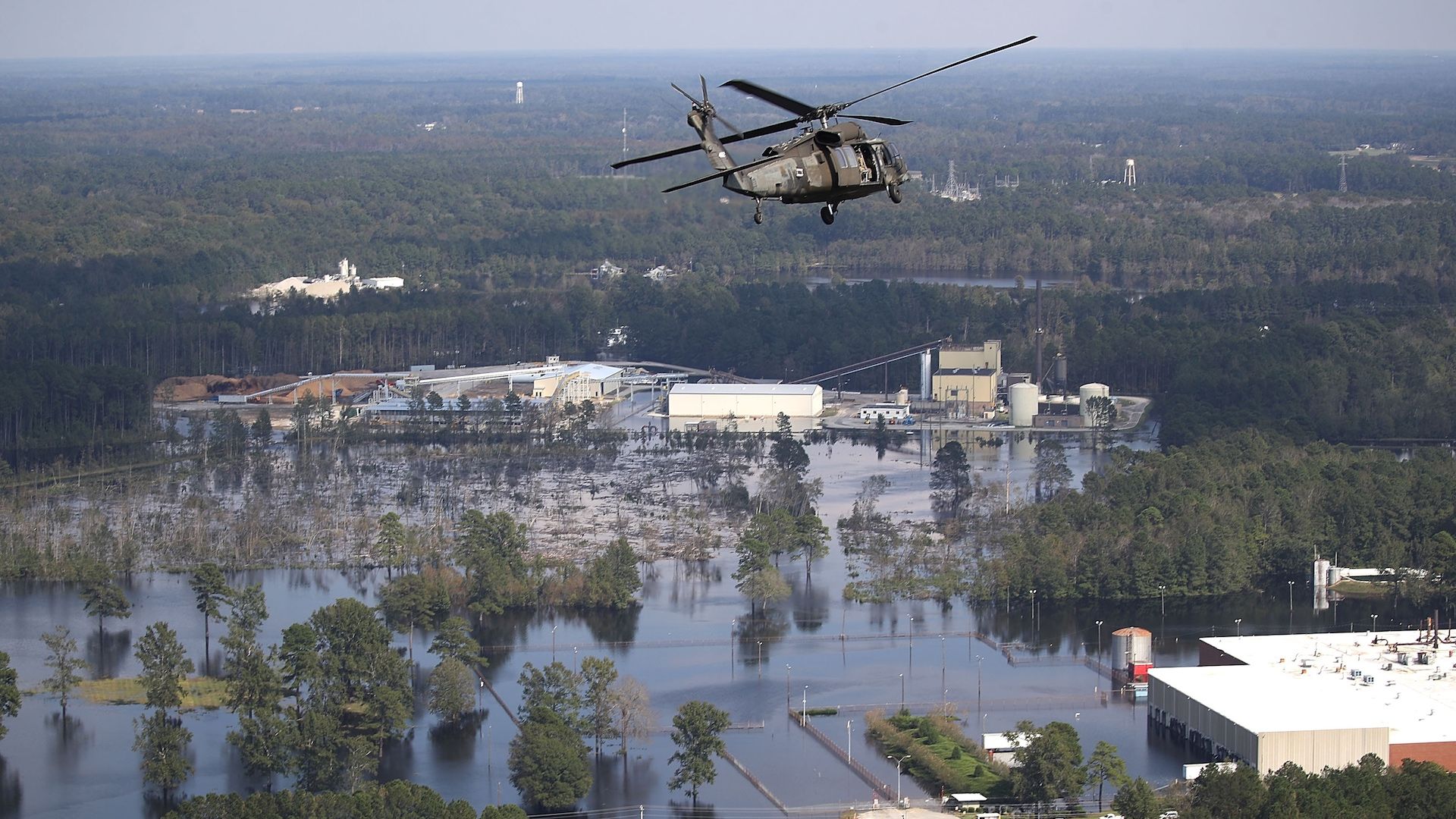
Floodwaters from Hurricane Florence have breached a 1,100-acre cooling lake dam at the L.V. Sutton Power Station in North Carolina, about 8 miles northwest of Wilmington, Duke Energy told Axios. The power plant, which now runs on natural gas, has shut down in response to the flooding.
Why it matters: Coal ash contains hazardous heavy metals that are harmful to human health, such as arsenic and mercury. If these pollutants enter water supplies, they pose a serious hazard to public health.
Iraqi officials, struggling to form a new government months after May parliamentary elections, now have an even more pressing concern: persuading the Trump administration to waive sanctions that could deprive Iraq of 40% of its electricity. Due to go into effect November 5, the sanctions will exclude from the U.S. market foreign companies that buy Iranian oil, natural gas and petrochemicals. Bound by a “take-or-pay” contract with Iran, Iraq must pay $3 million a year for Iranian natural gas regardless of whether it's received.
Why it matters: For Iraq, which did $12 billion in trade with Iran last year, the impact would be particularly dire. In addition to losing natural gas supplies that account for 6,000 megawatts of electricity, Iraq could face potentially huge penalties if its neighbor takes it to arbitration for violating this contract. Just a month ago, the second-largest city in Iraq, Basra, exploded in riots in part because of electrical blackouts. Just imagine how much violence and disruption could occur if those blackouts were nationwide.
The news that Exxon and Chevron are joining a global industry partnership called the Oil and Gas Climate Initiative could signal a broader pivot under two rather new CEOs, ExxonMobil's Darren Woods and Chevron's Michael Wirth.
The big picture: "I think it's clear that this shift reflects the leadership changes at both Chevron and Exxon," a source familiar with the companies' thinking tells Axios. Occidental Petroleum, another large U.S. player, also joined. The arrivals add heft to the 4-year-old group, which already includes BP, Shell, Saudi Aramco and roughly a half-dozen others.
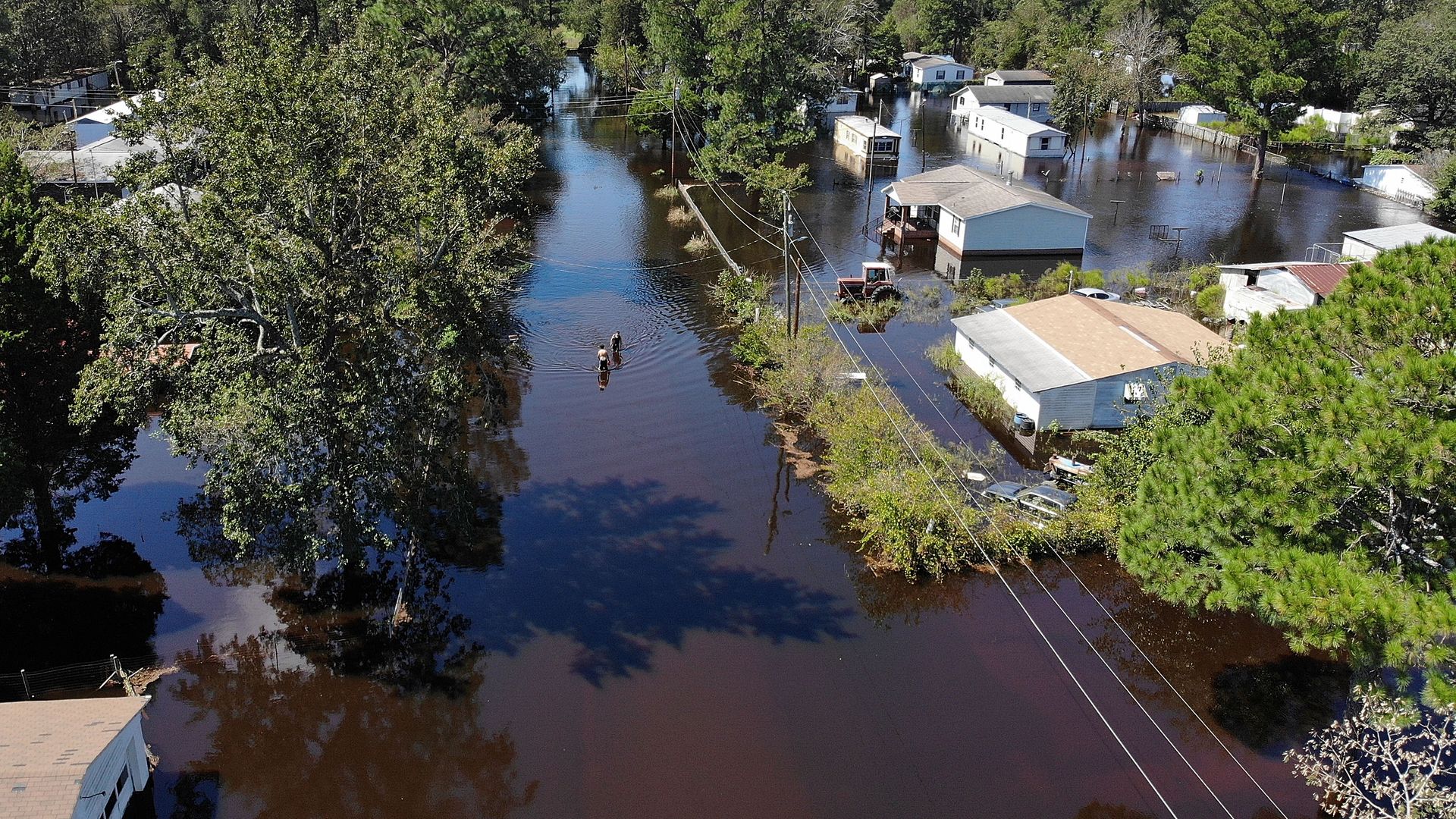
Five days of flooding in North Carolina, the state with the second-most pigs in the United States, continues to submerge hog lagoons that set up residents nearby for a slew of health, air and environmental problems.
The big picture: North Carolina is home to nearly 10 million pigs, and as water rises more feces and urine from the pig-manure lagoons is exposed at a increasing rate. The North Carolina Department of Environmental Quality said its inspectors have been unable to visit the hardest hit areas or collect samples of the flood water for lab testing, per the Associated Press.
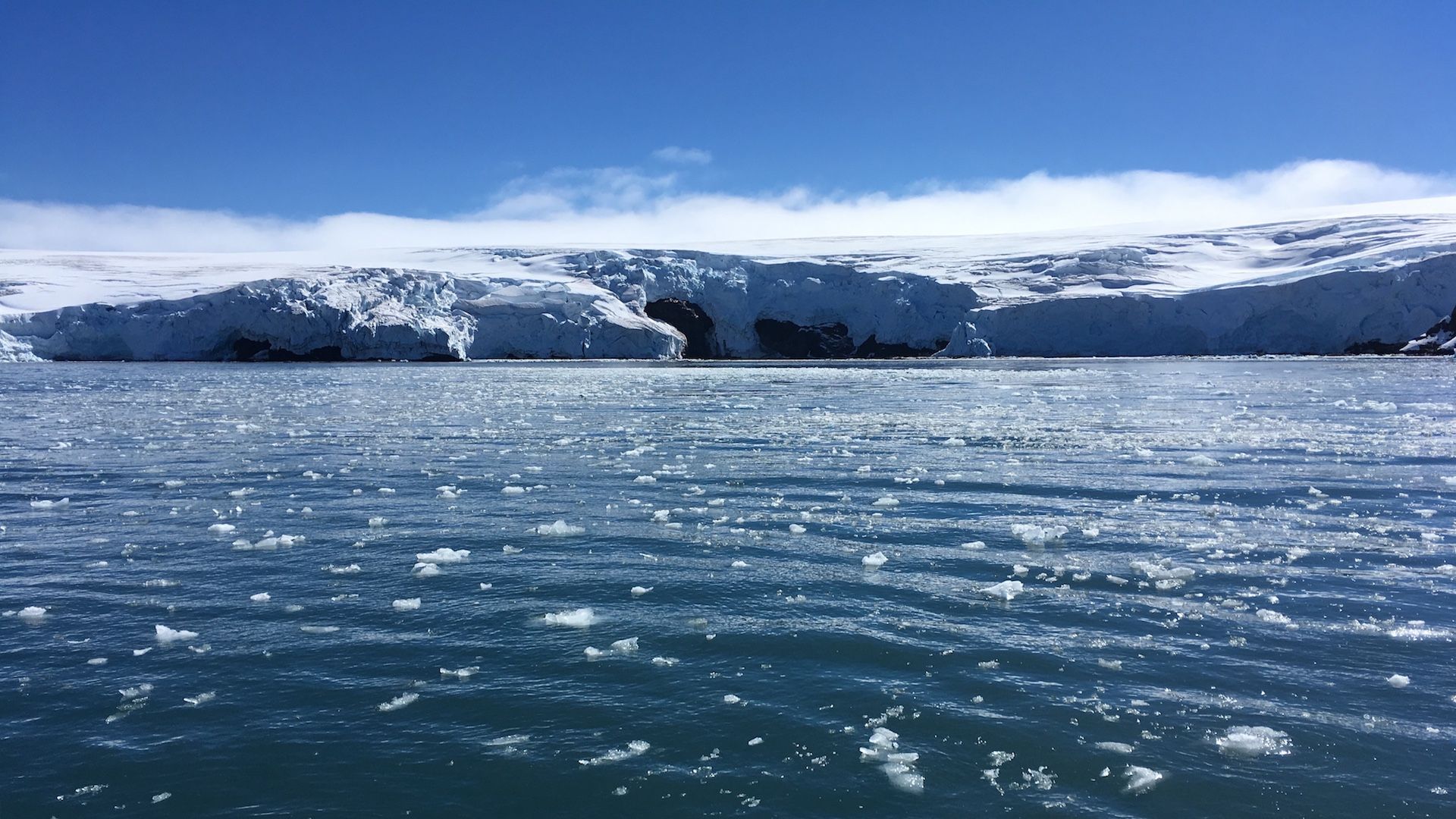
A new study of the East Antarctic Ice Sheet's response to past warm periods has unsettling implications for the magnitude and timing of sea level rise as global warming continues. Until recently, most of scientists' concerns were about the instability of Greenland and the West Antarctic Ice Sheet, but that is starting to change.
Why it matters: The study, published Wednesday in the journal Nature, reveals the history of ice retreat and expansion in the Wilkes Subglacial Basin, in the southeastern corner of the East Antarctic Ice Sheet. The fate of the Antarctic Ice Sheet represents one of the largest uncertainties in climate science.
Trump resumed his attacks on OPEC Thursday morning amid oil prices that have climbed to their highest level in two months.
"We protect the countries of the Middle East, they would not be safe for very long without us, and yet they continue to push for higher and higher oil prices! We will remember. The OPEC monopoly must get prices down now!"
— President Trump
Quick take: With the caveat that it’s quite possible to over-interpret Trump’s tweets, today's action underscores the tricky oil politics facing the White House.
It turns out scooter rentals are popular: Lime and Bird have each already crossed the 10 million ride mark, with Lime recently reaching 11.5 million (including bike rides).
Why it matters: Scooter rentals are seen as the "new ride-hailing" by investors and users alike, the former chasing the next transportation hit and the latter looking for an easy alternative to auto traffic. At least for now, it looks like Bird and Lime are neck and neck in the race.
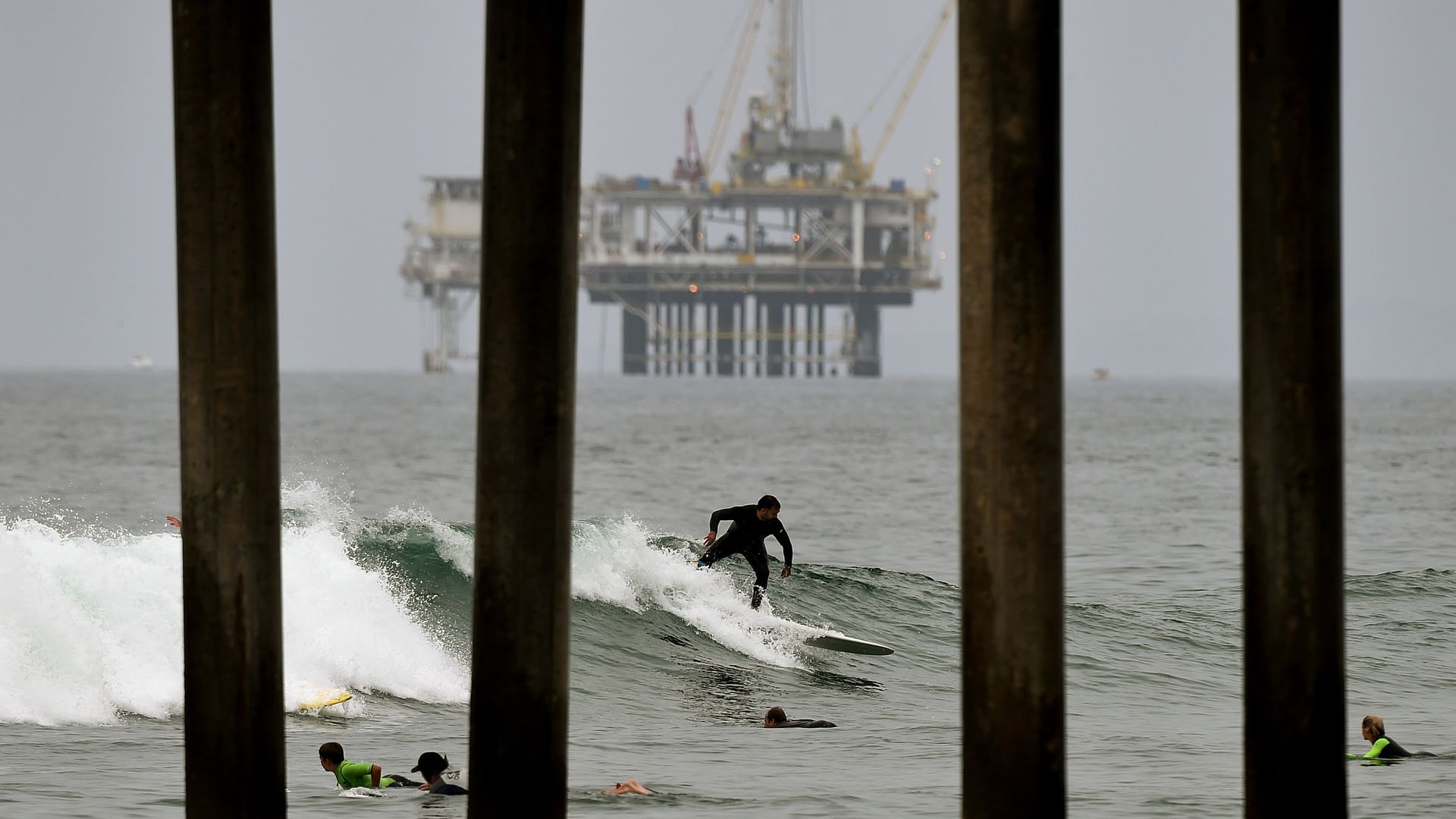
Some of America’s most powerful U.S.-based oil companies — ExxonMobil, Chevron and Occidental Petroleum — are joining a global consortium of oil and gas producers seeking to address climate change, Axios has learned.
Why it matters: The companies are the first U.S.-based members of the group, called the Oil and Gas Climate Initiative. This is one of the strongest signs yet of how America’s biggest oil companies, under pressure from investors and lawsuits, are joining most other U.S. corporations in working to reduce greenhouse gas emissions despite President Trump reversing America’s course on the matter.