Some of Washington’s most influential industry trade associations, including the U.S. Chamber of Commerce, have formed a new advocacy group, launched Monday, urging President Trump to back an Obama-era climate policy.
The details: The coalition, called Let America Lead, focuses on how the policy — a phase-down of heat-trapping chemicals used in appliances like air conditioners — makes America competitive and creates jobs. Climate change isn’t mentioned.
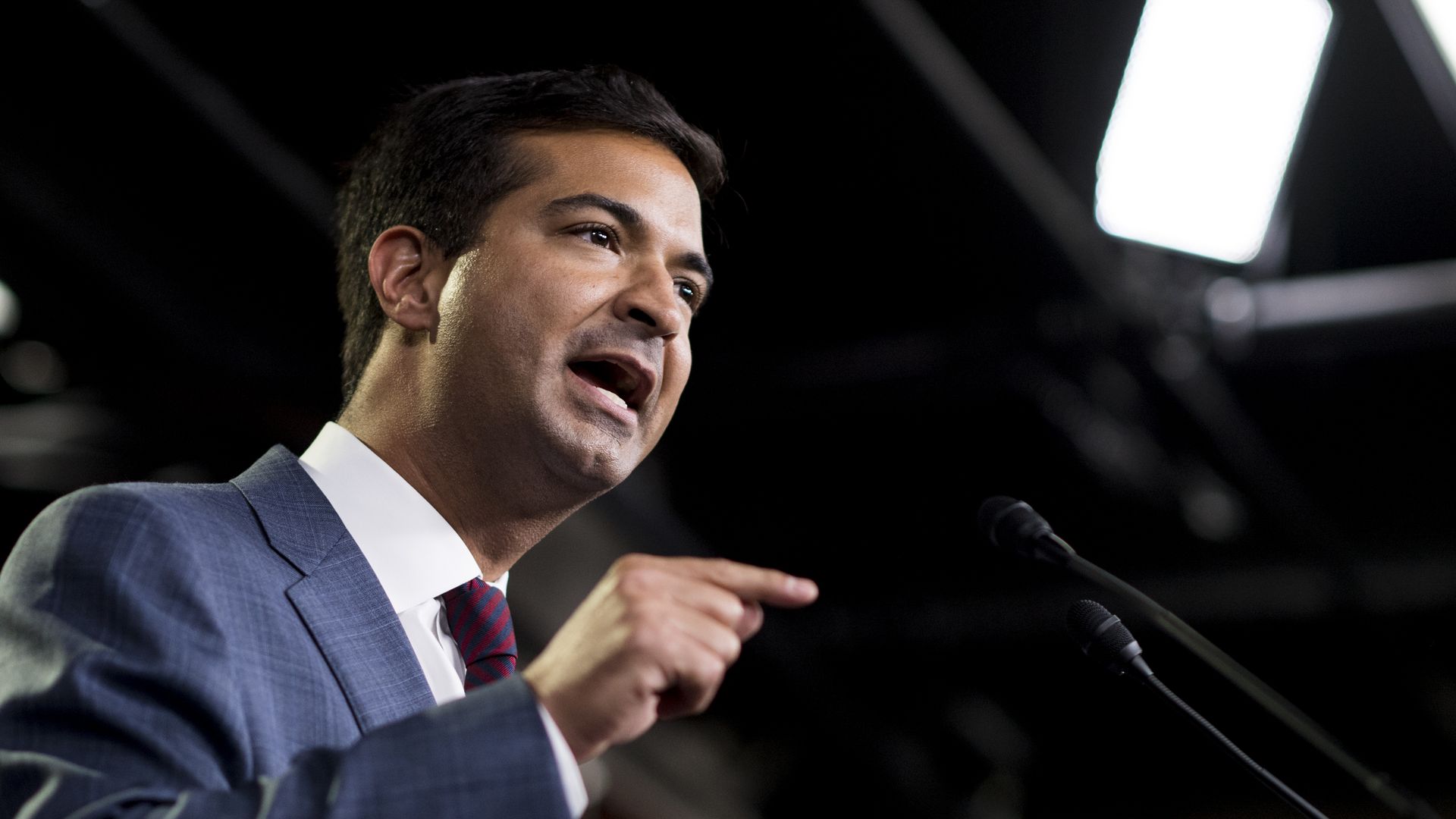
Republican Rep. Carlos Curbelo of Florida officially introduced his legislation taxing carbon emissions Monday afternoon.
The bottom line: This bill is significant not because it has a chance at passing Congress soon (it doesn’t), but because it’s the first substantive Republican measure on the issue in nearly a decade. The bill’s existence will further fuel what has been for months a simmering policy and political fight over one of the most contentious ideas Washington has ever considered.
Just weeks after floods that killed 200, Japan is facing another threatening natural phenomenon: a heat wave reaching record temperatures nationwide, already reportedly killing at least 70 people.
The big picture: Because of the lack of an El Niño event in the Pacific (which boosts temperatures), 2018 wasn't expected to be a record-shattering hot year, but it's shaping up to be a top five warmest year on record globally. The 106 °F reading, which topped the previous all-time high of 105.8°F in 2013, occurred in Kumagaya, a town 40 miles north of Tokyo.
A new nonprofit is launching today that seeks to use emerging digital technologies like blockchain to advance energy and climate-change goals by giving consumers greater control over their energy use while cutting government regulation.
Why it matters: The balkanization of the U.S. electricity market has long confused its own consumers, and the application of digital technologies in the energy and climate space is still pretty new. This nonprofit is one of the few (if only) permanent organizations focused on it.
Climate change is starting to become a political worry for some Republicans.
The big picture: For years, Republicans could ignore the issue or outright question mainstream climate science without political worry. That’s starting to change. Some congressional Republicans are beginning to find it in their political interest to at least acknowledge climate change and oppose efforts to weaken existing policies.
Electric scooter companies like Bird and Lime have adopted a new approach to dealing with regulation, electing to cooperate with cities in the early phases of development rather than wait for the relationship to inevitably become strained, reports the WSJ.
Why it matters: Per the Journal's Christopher Mims, "Scooter companies' appeasement of regulators embodies tech’s broader move toward accountability,following a period of public outrage over the industry’s overreach and mistakes."