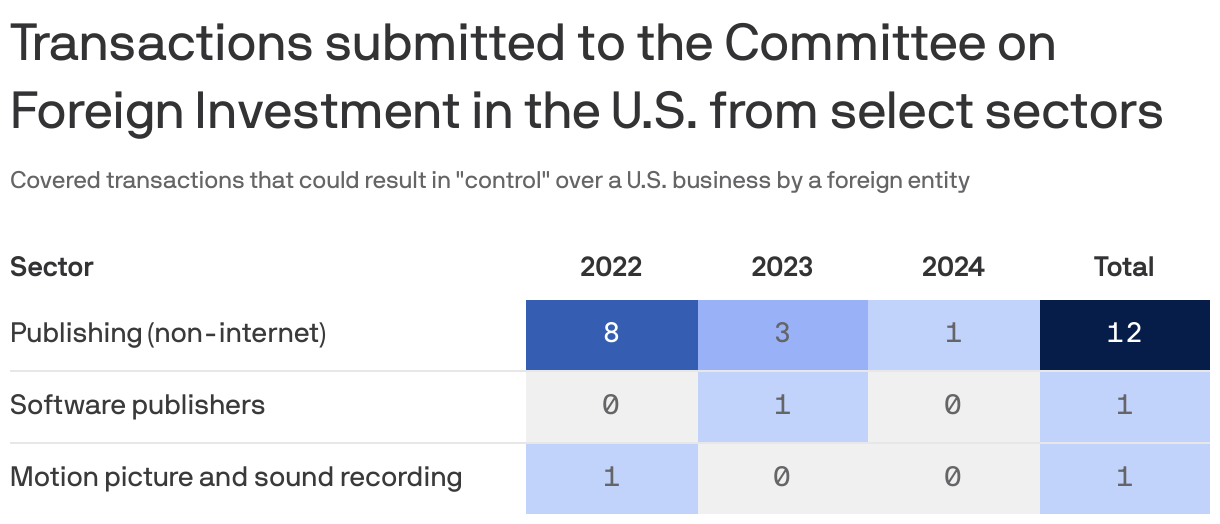
Data: Committee on Foreign Investment in the United States; Table: Axios Visuals
The Committee on Foreign Investment in the U.S. (CFIUS) hasn't historically viewed foreign investments in domestic media and entertainment companies with as much national security concern as other countries. But TikTok has proven to be an important exception.
Why it matters: Regulators overseas tend to impose much stronger restrictions on who can access their culturally relevant businesses. In the U.S., a capitalistic mindset has proven easy for foreign investors to exploit.
Paramount was bested by Netflix on Friday in its efforts to buy Warner Bros. Discovery, but it may still appeal directly to WBD shareholders through a hostile takeover offer.
Why it matters: Paramount could argue that its all-cash bid of $30 a share is better in terms of both price and the likelihood of regulatory approvals, although it also would need to disclose more information about its debt financing.
For all the headlines about an AI-driven jobpocalypse, the evidence from November points to a labor market that has been weak this autumn, but far from collapsing.
The big picture: Job growth looks to have flatlined in the second half of the year, and unemployment has inched up. But there are few signs of the kind of job loss surge or employment collapse that accompany a recession.
A Middle Eastern sovereign wealth fund last month sued to stop a Houston-based private equity firm from selling a portfolio company to a continuation vehicle, with both sides yesterday agreeing to enter arbitration.
Why it matters: This dispute gets at the fundamental conflict between LPs and GPs when it comes to CVs, which may have just peaked, if you boil away all goodwill and assumption of positive intent.
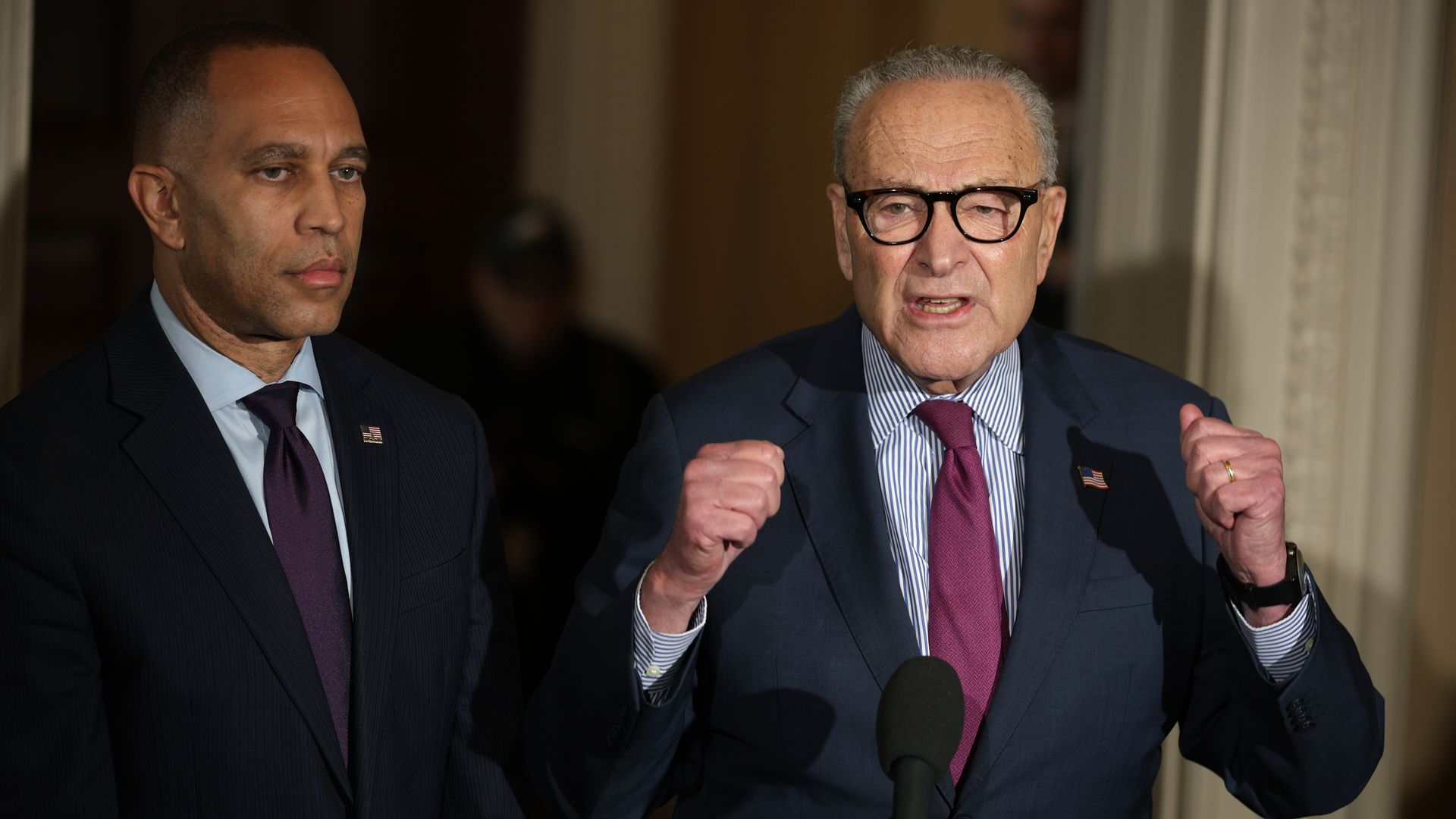
Senate Minority Leader Chuck Schumer is working with House Minority Leader Hakeem Jeffries to develop a coordinated strategy to make the 2026 election a referendum on affordability.
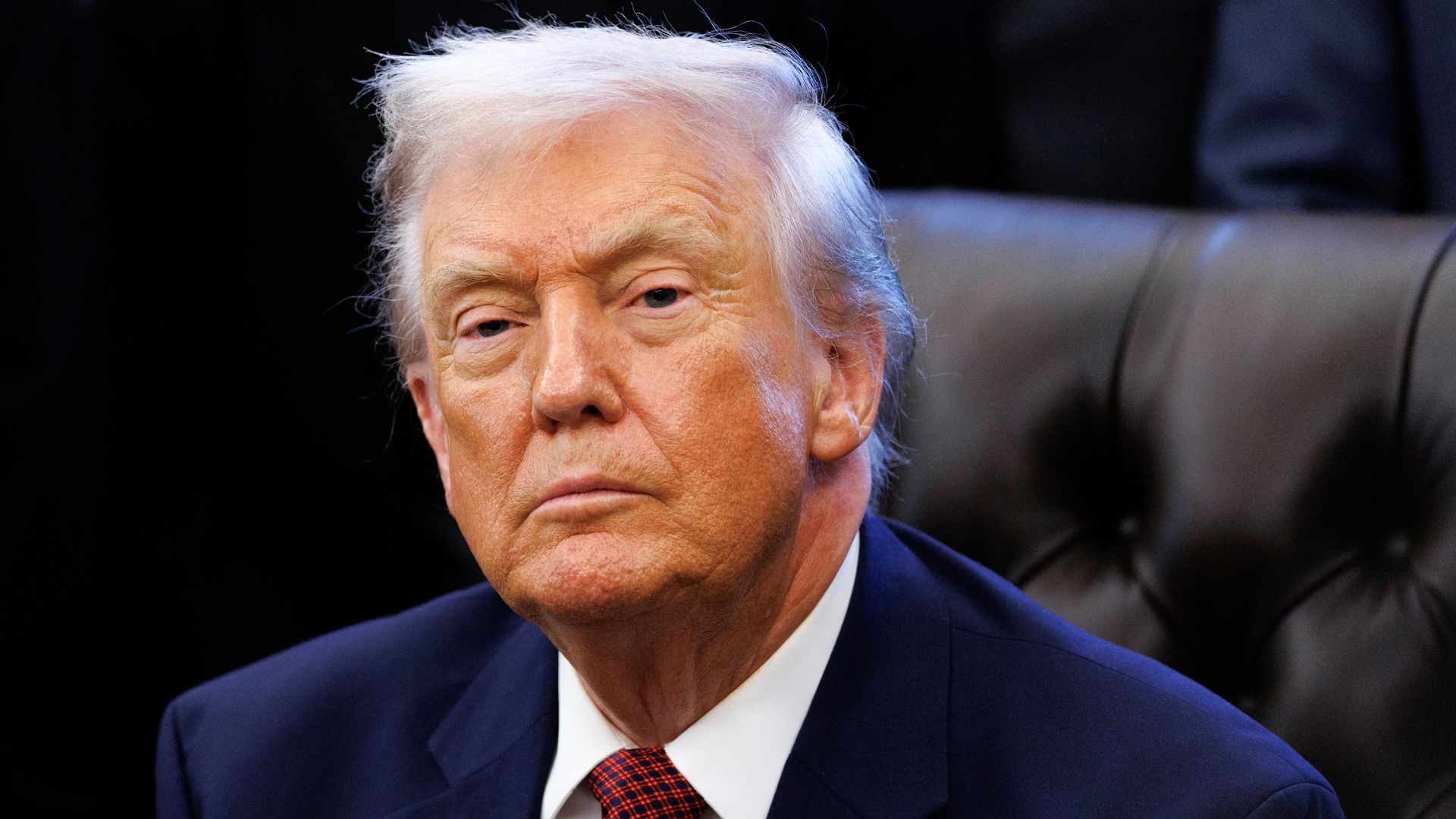
Why it matters:Making America affordable again (you could call it MAAA) will run through nearly every part of their effort to draw a sharp contrast between their economic plans and President Trump's record.
The Trump administration blamed much of America's and the world's current woes on immigration in an explosive new national security document that accuses Europe of undermining peace in Ukraine and China of ripping off the U.S.
Why it matters: The National Security Strategy, released Friday morning, asserts a "'Trump Corollary' to the Monroe Doctrine" that declares the U.S. will assert its political, economic and military will across the Western Hemisphere.
The holy grail of technology — artificial general intelligence (AGI) that can match or outdo humans — is on the horizon, Google DeepMind co-founder and CEO Demis Hassabis says.
But the risks of something going seriously wrong are also in sight, and some are even happening now, he warns.
The big picture: Google set the entire AI world spinning in recent months with the giant leaps in its frontier model Gemini, prompting a "code red" at OpenAI and forcing others to rethink the competitive landscape.
Your human resources officers are probably using AI for a lot of jobs — and they're also finding that human resources is one of the riskiest ways to use it.
Why it matters: Managing employees at work is becoming another space where machines may be making sensitive determinations previously left up to professionals.