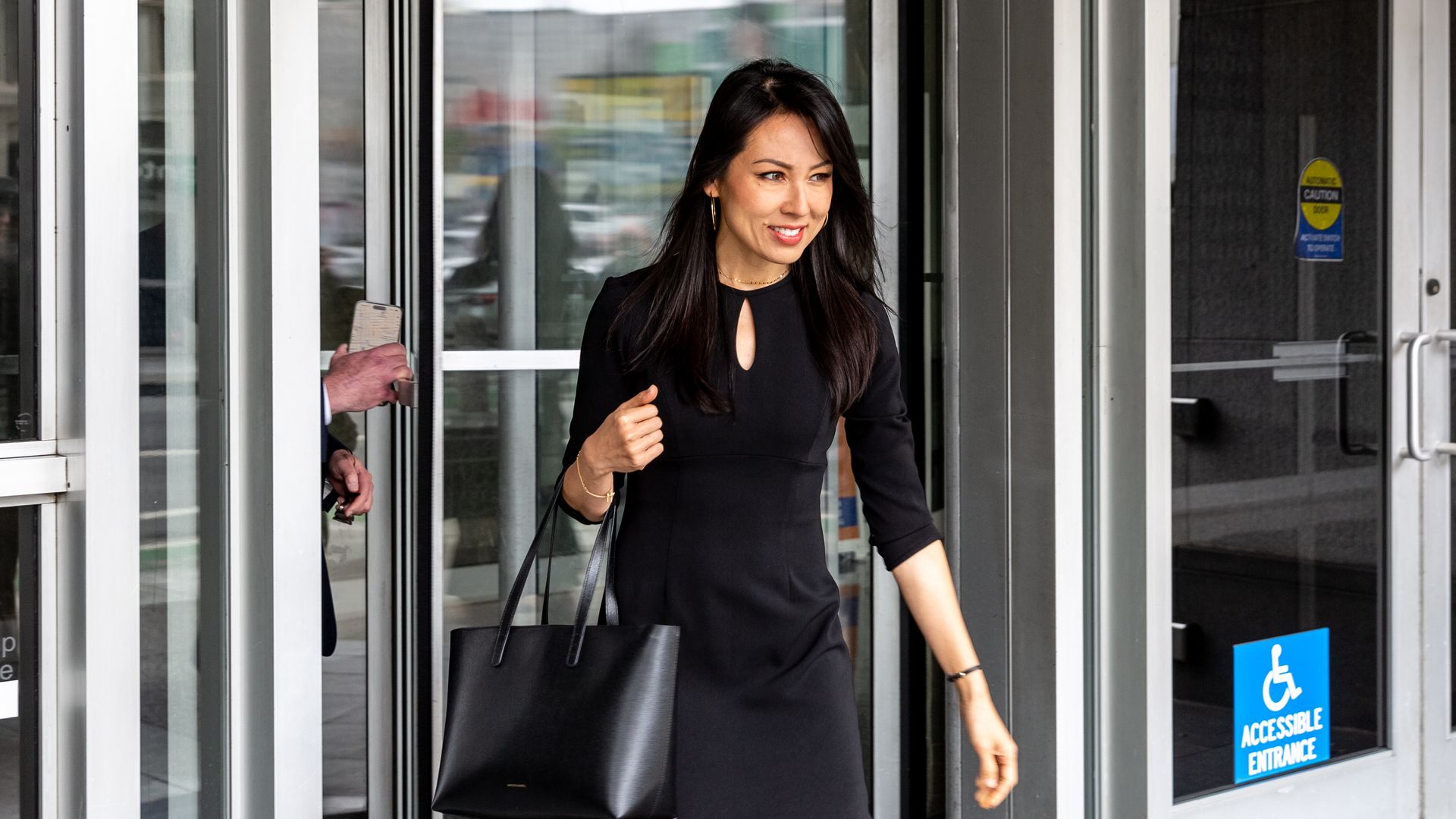
Lulu Cheng Meservey, a well-known public relations advisor to tech startups, has raised $40 million for a venture capital fund, as first disclosed in a securities filing.
The big picture: Meservey advocates for founders to take their message directly to the market, often via social platforms like X, rather than using traditional media as an intermediary.
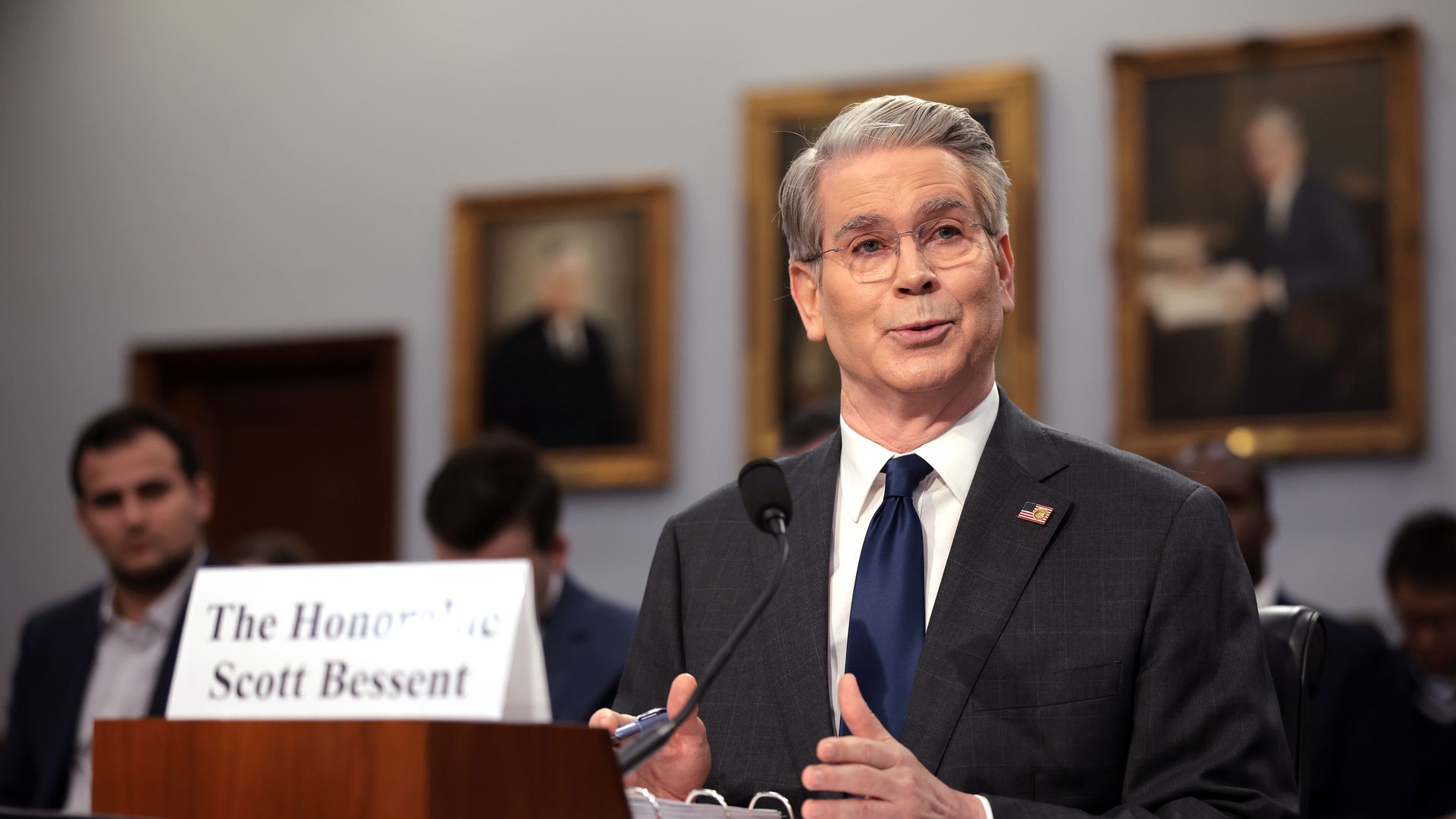
Treasury Secretary Scott Bessent said Sunday he sold his soybean farm last week and acknowledged farmers still need federal help despite a trade deal with China.
Why it matters: The long-pending sale, which Bessent was required to complete under an ethics agreement when he took office, comes as soybean futures sit near their highest levels of the year.
President Trump, facing mounting pressure over inflation at the grocery store, ordered a sweeping investigation into food price-fixing that especially targets foreign companies.
Why it matters: The order highlights a key tension of his domestic policy. It has proven difficult to have cheap food without cheap foreign labor, imports and capital.
Everything is becoming more concentrated: from merging streaming giants, to a stock market powered by a handful of AI winners, to an economy increasingly driven by the spending of the wealthy.
Why it matters: With fewer participants, winning is harder, whether you're an investor looking for returns, a consumer looking to build wealth or a business trying to compete.
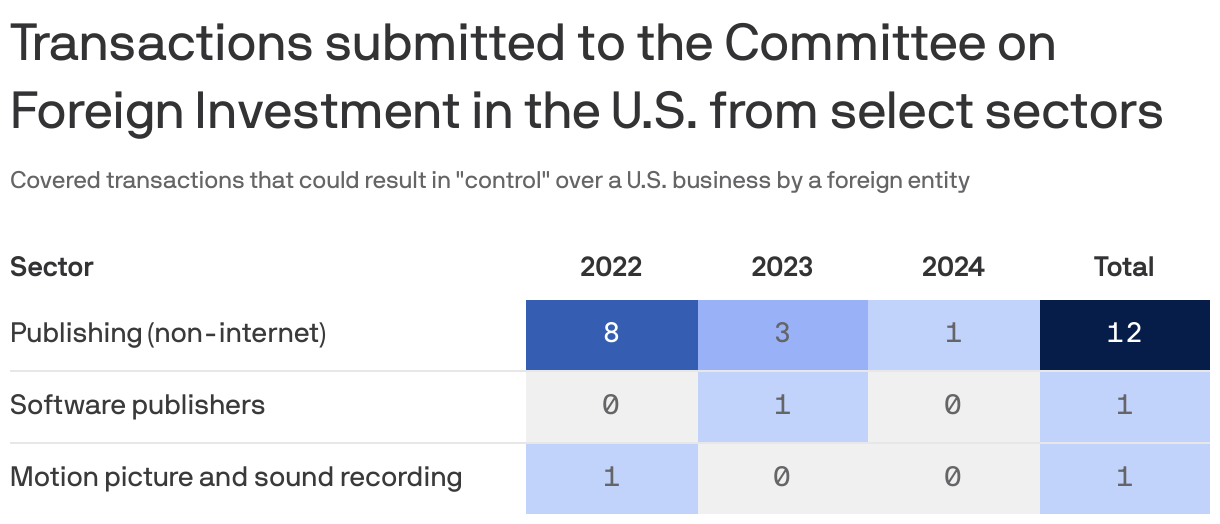
Data: Committee on Foreign Investment in the United States; Table: Axios Visuals
The Committee on Foreign Investment in the U.S. (CFIUS) hasn't historically viewed foreign investments in domestic media and entertainment companies with as much national security concern as other countries. But TikTok has proven to be an important exception.
Why it matters: Regulators overseas tend to impose much stronger restrictions on who can access their culturally relevant businesses. In the U.S., a capitalistic mindset has proven easy for foreign investors to exploit.