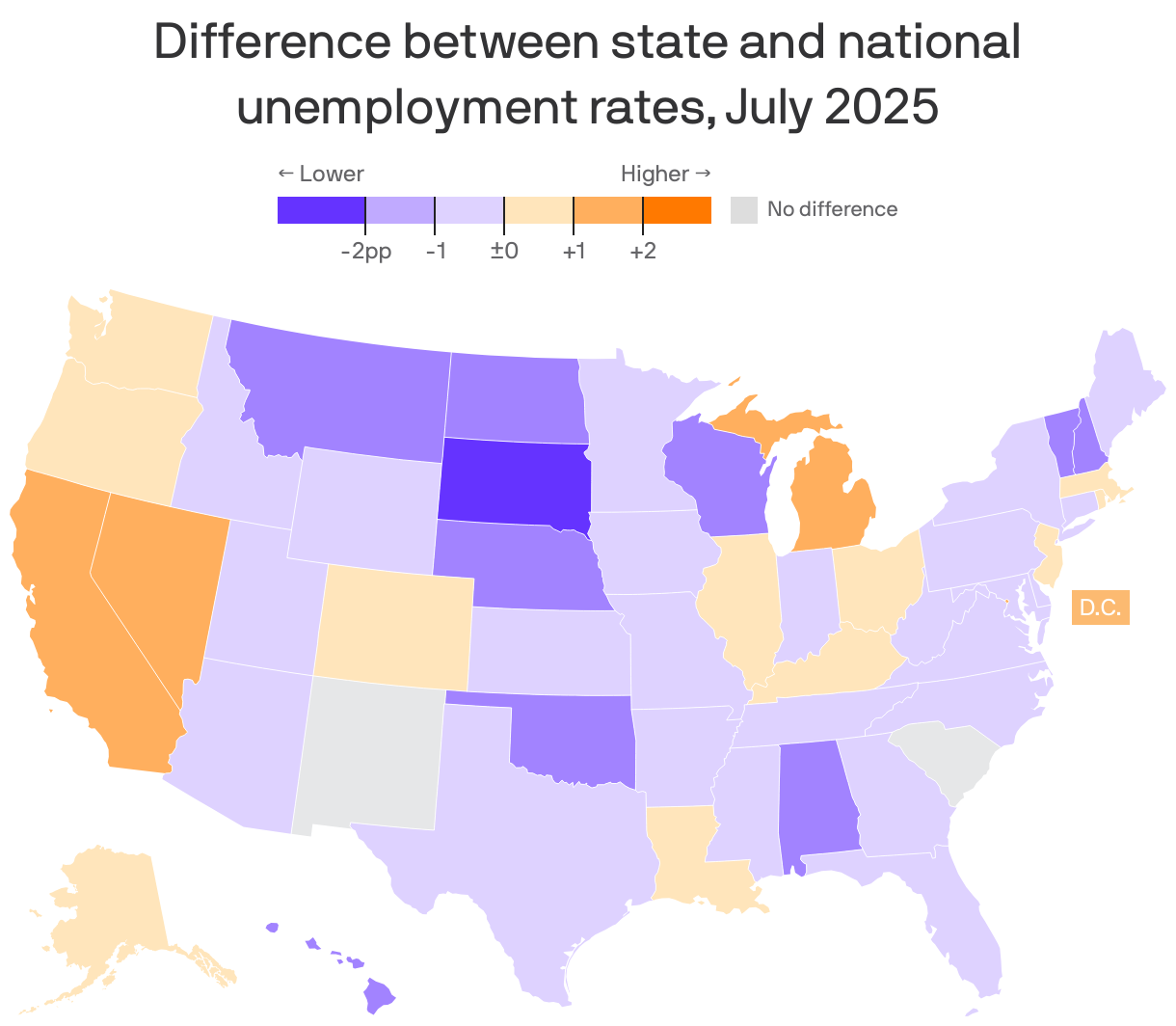
The job market is hotter than average in some states but cooler in others, new data shows.
The big picture: Americans are feeling almost as gloomy about the job market as they did during the Great Recession — and entry-level workers are having an especially hard time getting their foot in the door.
Job growth slowed down substantially this summer. What we don't know for sure is why.
That "why" is crucial for policymakers who must decide what to do next.
The big picture: If the jobs slowdown is due to less labor supply, thanks in part to restrictionist immigration policy, then it's nothing to worry about. If it is because employers are more reluctant to hire, then it's an early warning that the economy needs monetary stimulus.
Home Depot reported worse-than-expected sales in its most recent quarter, but the company's big-ticket items picked up momentum despite tariffs and elevated interest rates applying pressure to the home improvement industry.
Why it matters: Home Depot's performance is reflective of the status of the American housing market and the broader economy.
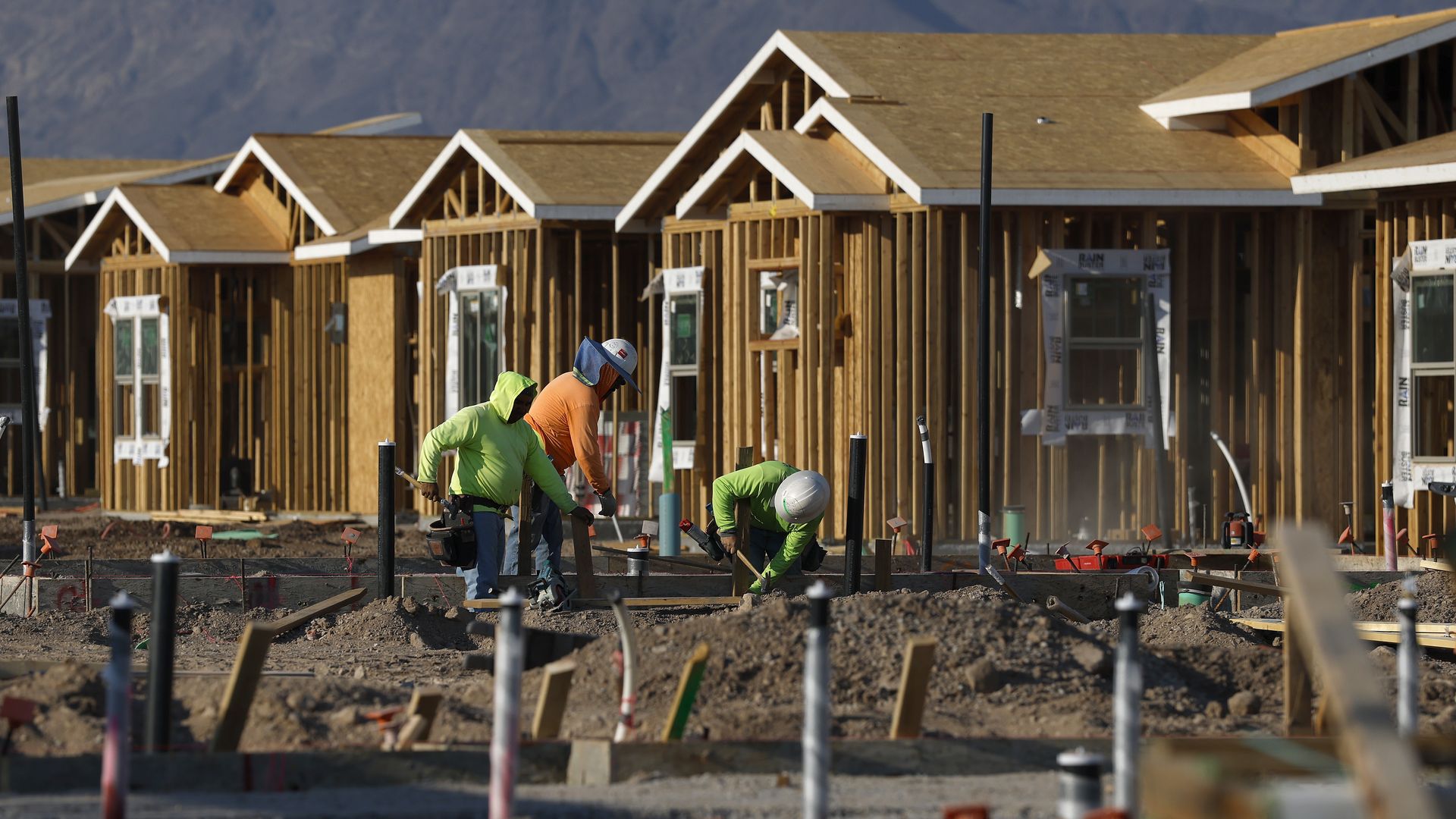
U.S. homebuilders started construction on new homes at the quickest pace in five months in July, though permits for future projects were the weakest since 2020.
Why it matters: The rise in activity might not ease fears that the housing recession, underway for years, could get worse in the months ahead.
Eight Sleep, a New York-based developer of smart sleep products, has raised $100m in Series D funding.
Why it matters: This comes just weeks after RFK Jr. said that the Department of Health and Human Services will launch a giant advertising campaign aimed at encouraging the use of wearables.
Fully adopting artificial intelligence could save corporate America $920 billion annually, new Morgan Stanley data finds, cost savings that could come from employing a lot fewer people.
Why it matters: As investors worry about soaring valuations, the data backs up the bulls: AI could boost productivity and supercharge earnings growth, leading to profits that could justify the current multiples.
For Wall Street, the worst-case scenario is in the rearview mirror. Investors now believe lower interest rates are imminent, tariffs are survivable, and consumers can keep spending as long as unemployment doesn't spike.
Why it matters: Investors are betting on an economic expansion, which could lead to market gains that are much broader than just Big Tech.
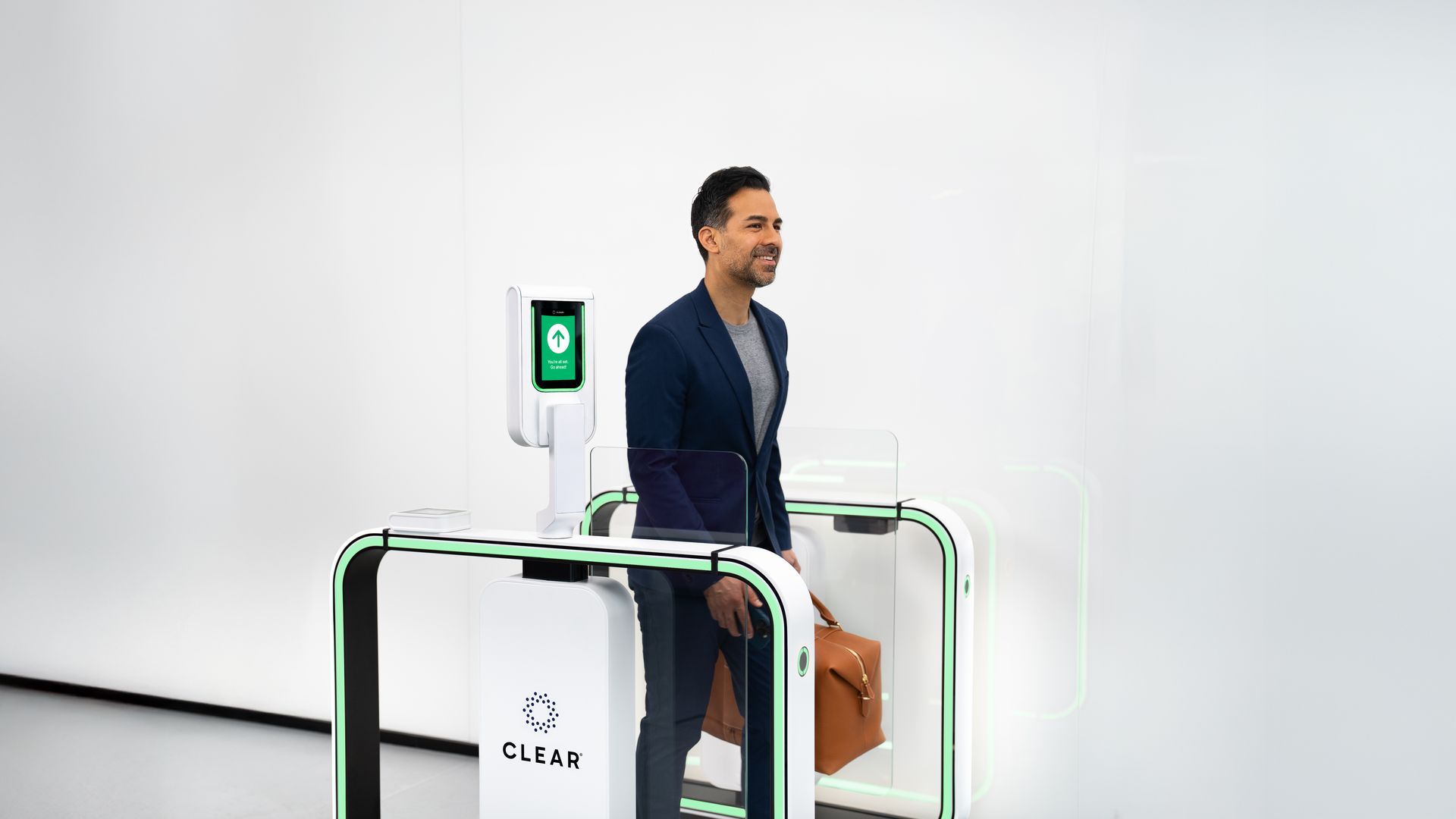
CLEAR and the TSA are piloting biometric "eGates" at three major U.S. airports ahead of a nationwide rollout, the identity verification company told Axios exclusively.
A year after the Supreme Court preserved abortion pill access, the fight over dispensing mifepristone is shifting from courtrooms to boardrooms as anti-abortion forces press pharmacy chains not to sell the drugs.
The big picture: Costco last week said it won't stock mifepristone at its more than 500 pharmacies. Conservative groups are pushing other pharmacies — including Walgreens and CVS, which offer the pills in states where abortion is legal — to follow suit.
New graduates are having an especially tough time landing a job right now: The share of unemployed Americans that are new to the workforce is at a 37-year high.
Why it matters: It's a sign of how reluctantcompanies have been to hire amid ongoing economic uncertainty over tariffs and policy.