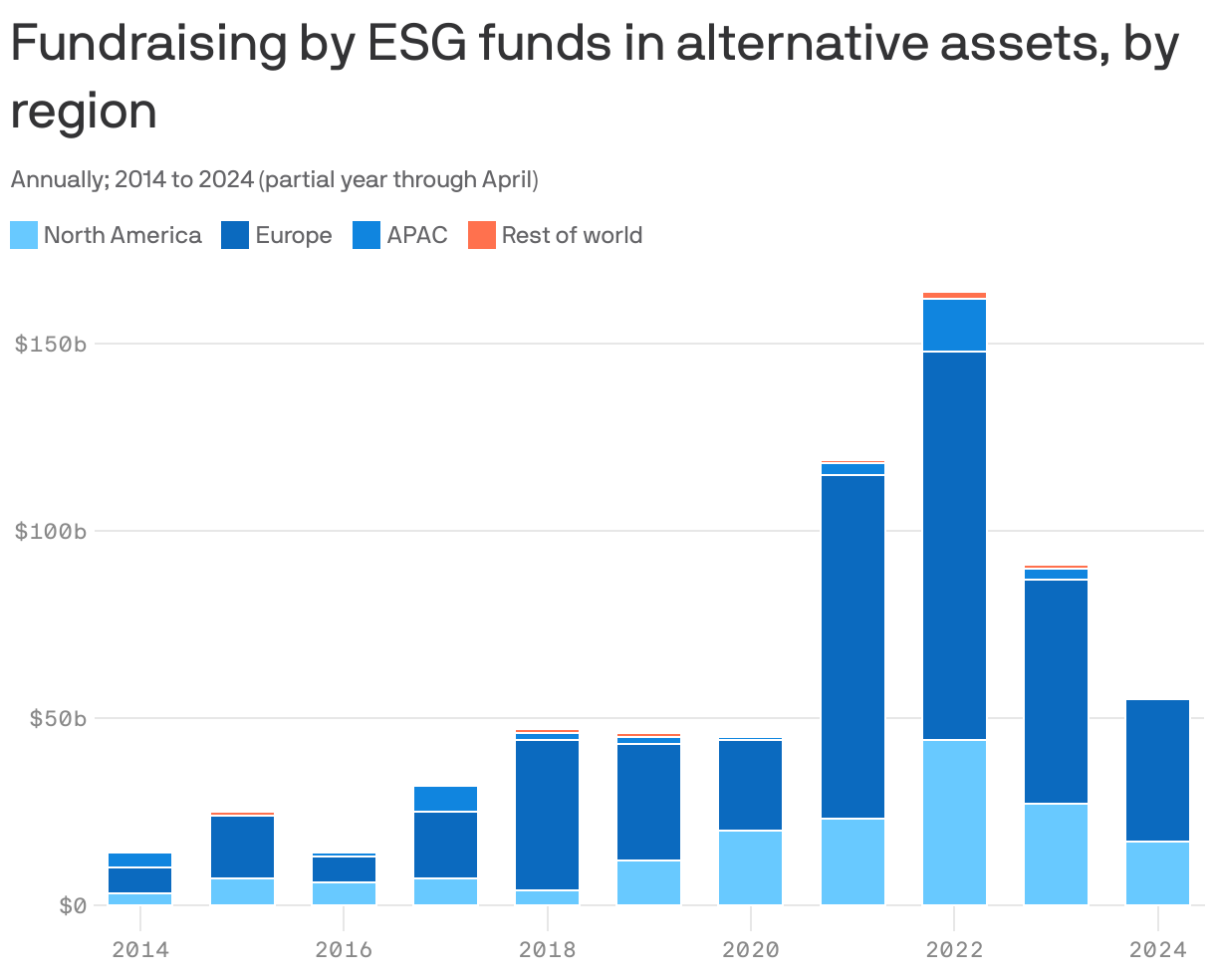
ESG funds in alternative assets have raised $55 billion as of April, on pace with 2022's record of $163 billion, per Preqin.
Why it matters: ESG-focused initiatives across the business world tend to be de-emphasized amid downturns or lessened pressure to support them.
By the numbers: ESG in alternative assets had a notable growth spurt beginning in 2021 — with a total of $282 billion raised in 2021 and 2022 across 528 funds, compared with $226 billion raised by 629 funds in total over the previous seven years.
And although 2023 totals dropped below $100 billion, fundraising levels were still higher than before 2021.
Zoom in: ESG funds made up 21% of all private capital raised this year as of April.
As of April, European limited partners make up 44% of all impact investors and 43% of all climate investors, while North American LPs represent 33% and 41%, respectively.
Infrastructure and private equity dominate ESG fundraising, with the former also dominating assets under management and the funds currently in market.
This year, climate-focused funds have pulled ahead of impact funds both in terms of number of funds raised and total capital raised.
Established managers dominate fundraising, although first-time managers have gained some ground since taking only 7% of capital in 2021.
The intrigue: ESG remains a divisive topic in the investment world, with skeptics questioning whether the sector can generate returns on par with their peers (see final numbers).
Between the lines: Despite the controversies, ESG remains a significant factor for investors.
In a June survey by Preqin, 24% of 67 respondents said they have turned down otherwise attractive opportunities because of ESG standards, 36% said they would, and 40% said they have not.
Yes, but: ESG consideration is not uniform across all alternative assets.
50% of infrastructure investors reported having an ESG policy, as did 45% of private equity investors, 19% of hedge funds, and 14% of venture capitalists, to name a few from the survey's results.
The bottom line: ESG investing is subject to investors' whims, but it's nevertheless becoming more entrenched in alternative assets.
The world's second largest cruise ship, Royal Caribbean's Utopia of the Seas, sets sail next week from Port Canaveral, Florida with a focus on "weekend energy."
Why it matters: Royal Caribbean is betting on the short cruise trend with its newest ship that it has dubbed "the world's biggest weekend" and the "ultimate short getaway."
Why it matters: Sellers never technically had to offer compensation to the buyer's agent — and that number has technically always been negotiable — but it's certainly status quo.
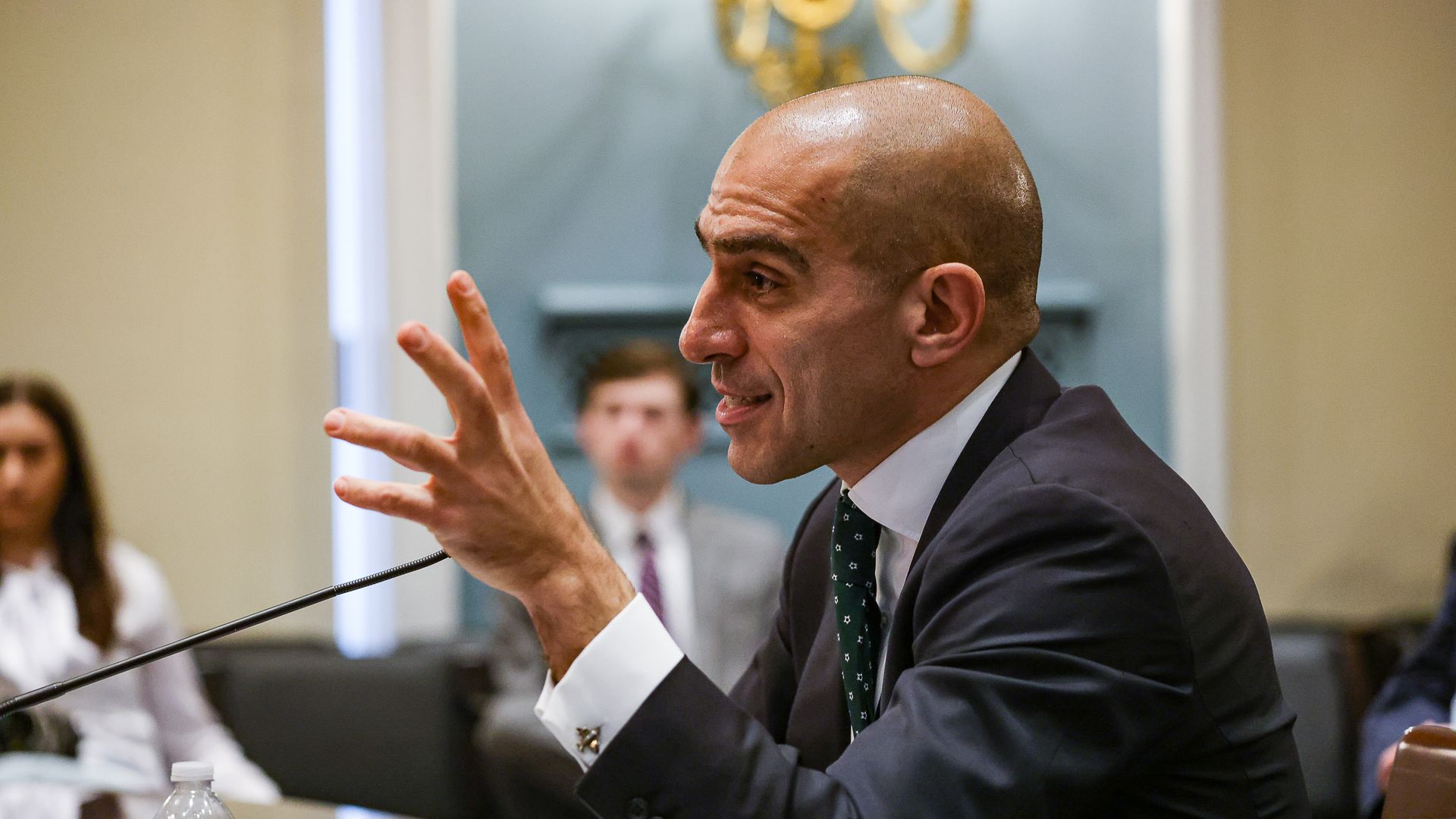
One of the U.S.'s two top investment regulators waded, once more, into the most fraught question in the blockchain business Wednesday when he said Congress needs to create a "comprehensive framework" to clarify which assets are commodities and which are securities.
Why it matters: The regulatory status of cryptocurrency has been the most fraught issue in the space going back to at least 2017, when entrepreneurs started using blockchains for capital formation en masse.
Bitcoin is losing the hearts and minds of criminals, according to a fresh report from Chainalysis.
They like stablecoins now.
Why it matters: Money laundering takes time, and even criminals don't want to expose themselves to volatility as they slowly but surely move ill-gotten gains into a form they can use.
MicroStrategy, the enterprise software company that has effectively become a leveraged bet on bitcoin, announced yesterday that it would split its stock.
Why it matters: That means more shares will be created, and lower prices.
Nvidia's AI chips may be flying off the shelves, but they don't seem likely to pay for themselves in the form of higher corporate revenues any time soon.
Why it matters: The U.S. stock market continues to hit new highs, driven in large part by optimism surrounding the coming AI revolution.
The big picture: Consumer prices are no longer rising at a rapid pace — in some cases, costs are falling — a milestone for the economy that has been plagued by high inflation for years.