The IRS announced Monday that almost 940,000 people across the U.S. have yet to claim their 2020 tax refund.
The big picture: There's more than $1 billion worth of unclaimed refunds that will be left on the table if people don't file their 2020 tax return before May 17.
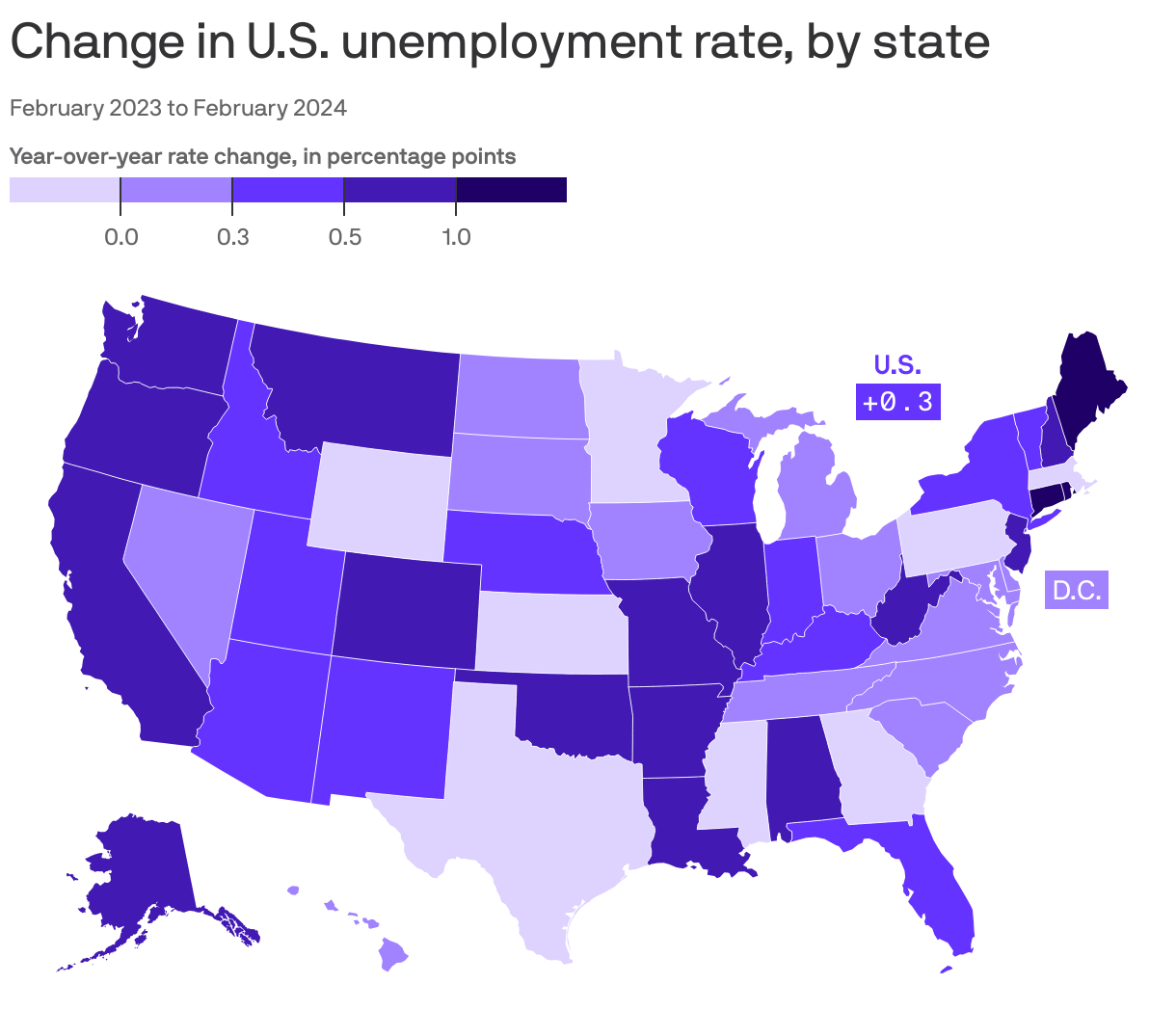
Data: Bureau of Labor Statistics; Note: Data for all states is preliminary; Map: Axios Visuals
Unemployment rates have risenin some of America's most populous and politically important states — a sign there are more pockets of weakness in the labor market than national figures suggest.
Why it matters: Instead of the coast-to-coast job boom that shaped the pandemic recovery, the job market now looks more uneven, with parts of the country missing the plentiful job opportunities available in other states.
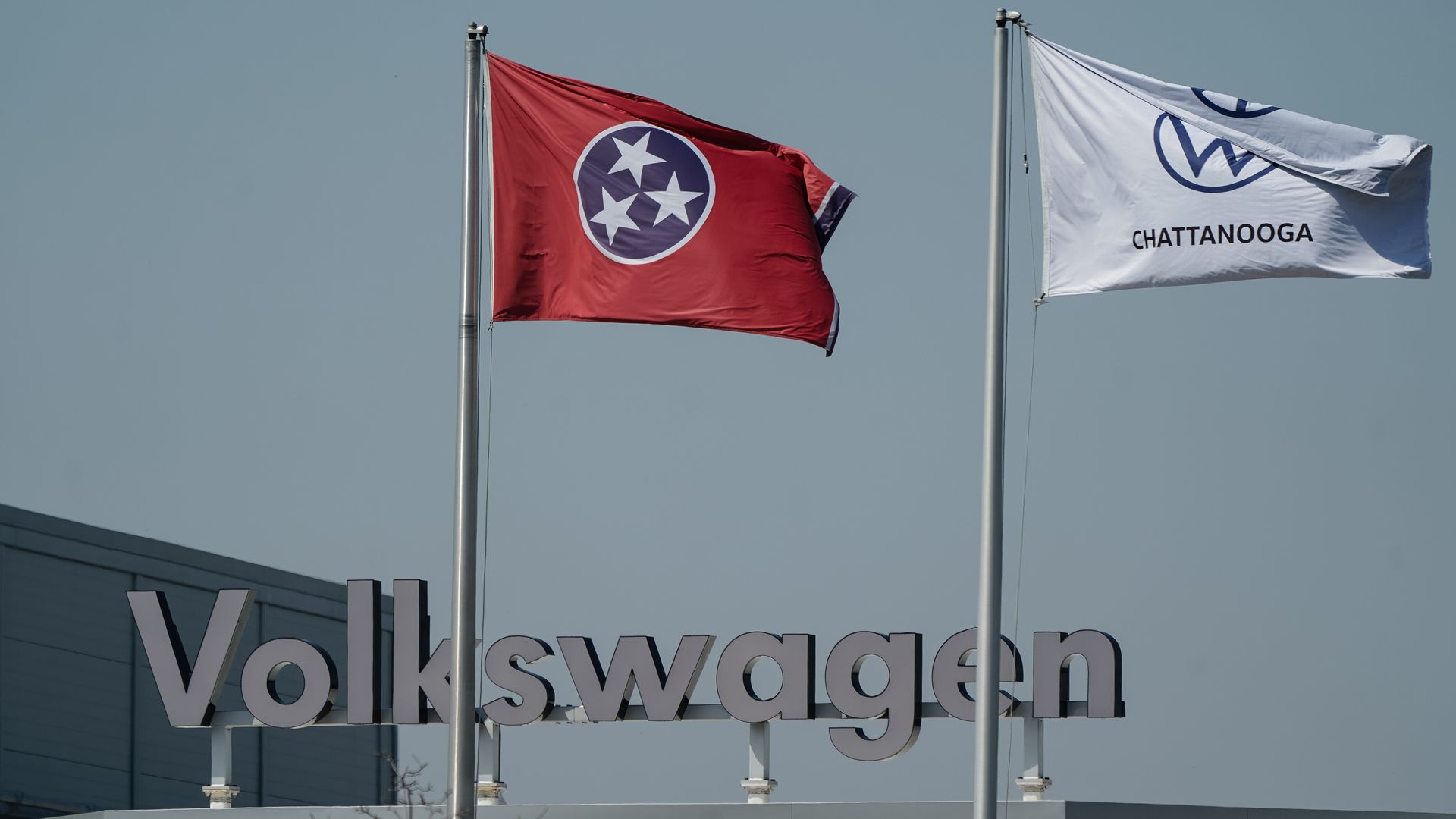
Volkswagen and the UAW have agreed to hold a vote on the union's bid to organize the automaker's plant in Chattanooga, Tennessee, the National Labor Relations Board (NLRB) said Monday.
Why it matters: With more than 4,000 workers, the factory would be the only non-Detroit Three automotive assembly plant in the U.S. to be unionized.
Why it matters: The data suggests climate change is rippling through entire economies, instead of affecting the availability or price of particular goods.
The outperformance of the U.S. stock market and its broader economy can in large part be attributed to its superabundance of world-spanning monopolies.
Why it matters: The world's biggest tech monopolies are overwhelmingly American. That's been great for investors, although the jury's still out on whether it's good for citizens more broadly.
The U.S. yield curve has now been inverted — meaning that 10-year Treasuries yield less than their two-year counterparts — for a record 628 days.
Why it matters: As a recession predictor, the amount of time spent inverted is irrelevant. Think of this milestone more as a broader indicator of how long things have been out of whack in the Treasury market.
Financial aid forms are more confusing, standardized testing is a moving target and there's no more affirmative action — this is an unusually chaotic college application season for both students and colleges.
The big picture: These immediate changes are fueling a larger debate about the future of higher education, as some students weigh whether college is even worth it.