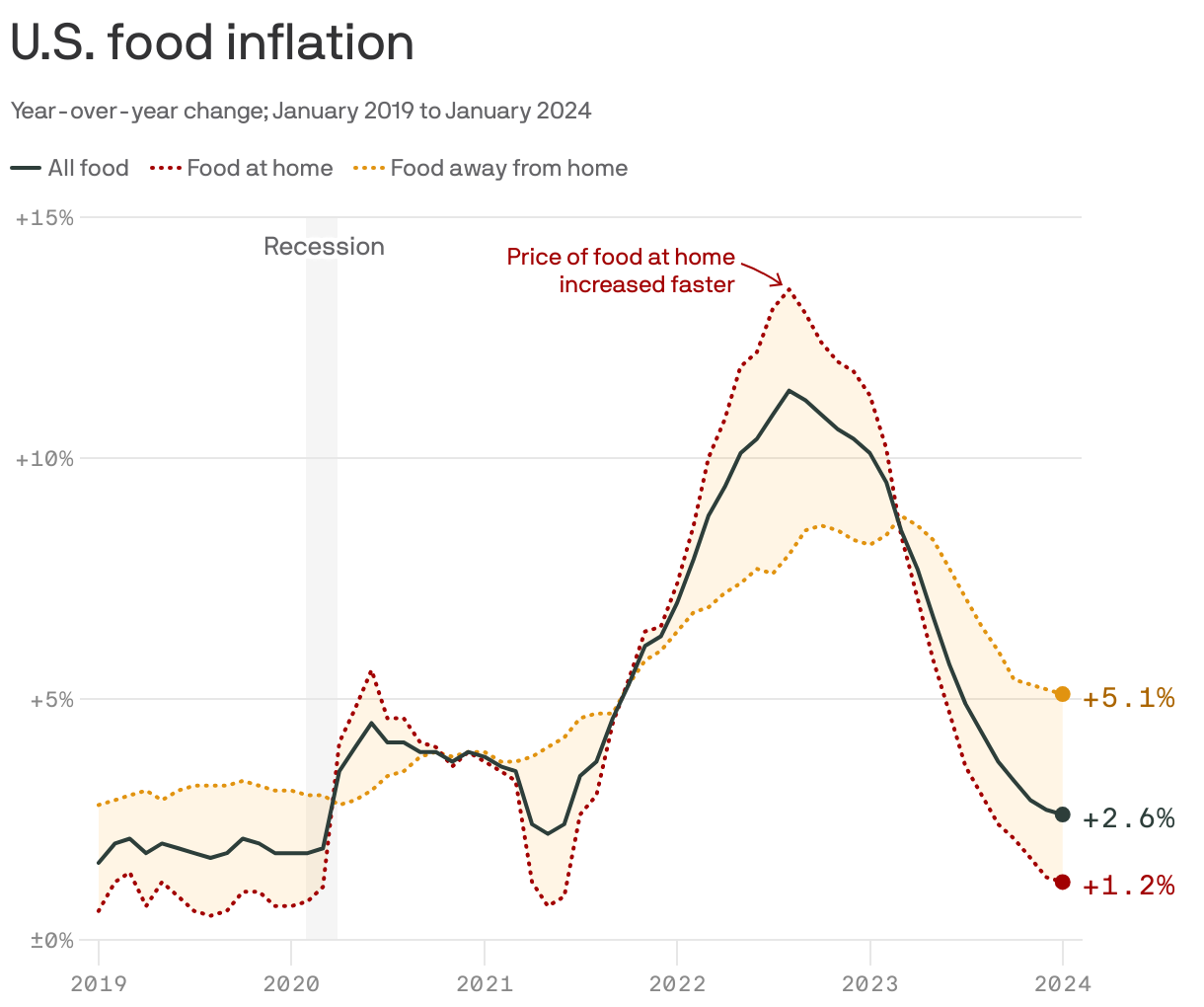
Inflation and extreme weather are changing what we eat when we eat out, Hope writes.
Why it matters: Diners' demands are not only competing against commingled global challenges but they're also being partly driven by them.
Driving the news: "There's a lot of fish and seafood that I don't bring in now from other parts of the country because they're just too expensive," chef and restaurateur Michelle Bernstein told me during Axios' BFD summit in Miami yesterday.
"I don't remember the last time I brought in things like live sea urchins and skate wings, and even foie gras."
These luxury dishes were always on her Miami menus "because people expected them. But we find that it's not really necessary. We can get creative with a head of iceberg [lettuce] if we have to."
One way to alleviate the labor shortage, Bernstein said, was through immigration, Hope writes.
When culinary school students come to work, they think they're chefs that are "ready to go," she said, so it's harder to find willing workers for all of the other essential jobs around the restaurant.
Immigrants account for more than 1 in 5 jobs in the foodservice and restaurant industry, according to recent government data.
The intrigue: The economic need may outweigh the political debate. And that extends down the supply chain to farms and transportation.
U.S. trucking companies are already recruiting in other countries, John Esparza, president of the Texas Trucking Association, told the Houston Chronicle.
Season 6 of "Drive to Survive" lands next Friday on Netflix, Hope writes.
Why it matters: The show is widely credited for helping F1 become massively popular in the U.S. since its 2019 debut — particularly among women, even though they barely appear in the show.
The intrigue: The valuations of top teams Ferarri, Mercedes and Red Bull have exploded in that time — with Red Bull now more than triple its 2019 value.
People love to use sports analogies — much to my chagrin, Hope writes.
I asked Moorad which ones make him cringe the most.
"Flat-footed," he said.
And "Show me the money."
Why he's smiling: Moorad is a former "super agent" who was a technical consultant for the film "Jerry Maguire," which made the phrase famous. He reportedly was part of the inspiration for Tom Cruise's character.
There's an unprecedented building boom underway in America. With it has come a less-noticed phenomenon: a surge of investment into communities left behind in the last economic expansion.
Why it matters: Poorer counties with lower employment rates have attracted a large share of the hundreds of billions of dollars allocated for clean energy projects, semiconductor mega-factories and more.
Bitcoin is a trillion dollar asset once again. And the overall crypto market has broken $2 trillion in market capitalization.
Why it matters: If it were collectively a publicly traded company, cryptocurrency would be the fourth-largest in the world, between Saudi Aramco and NVIDIA.
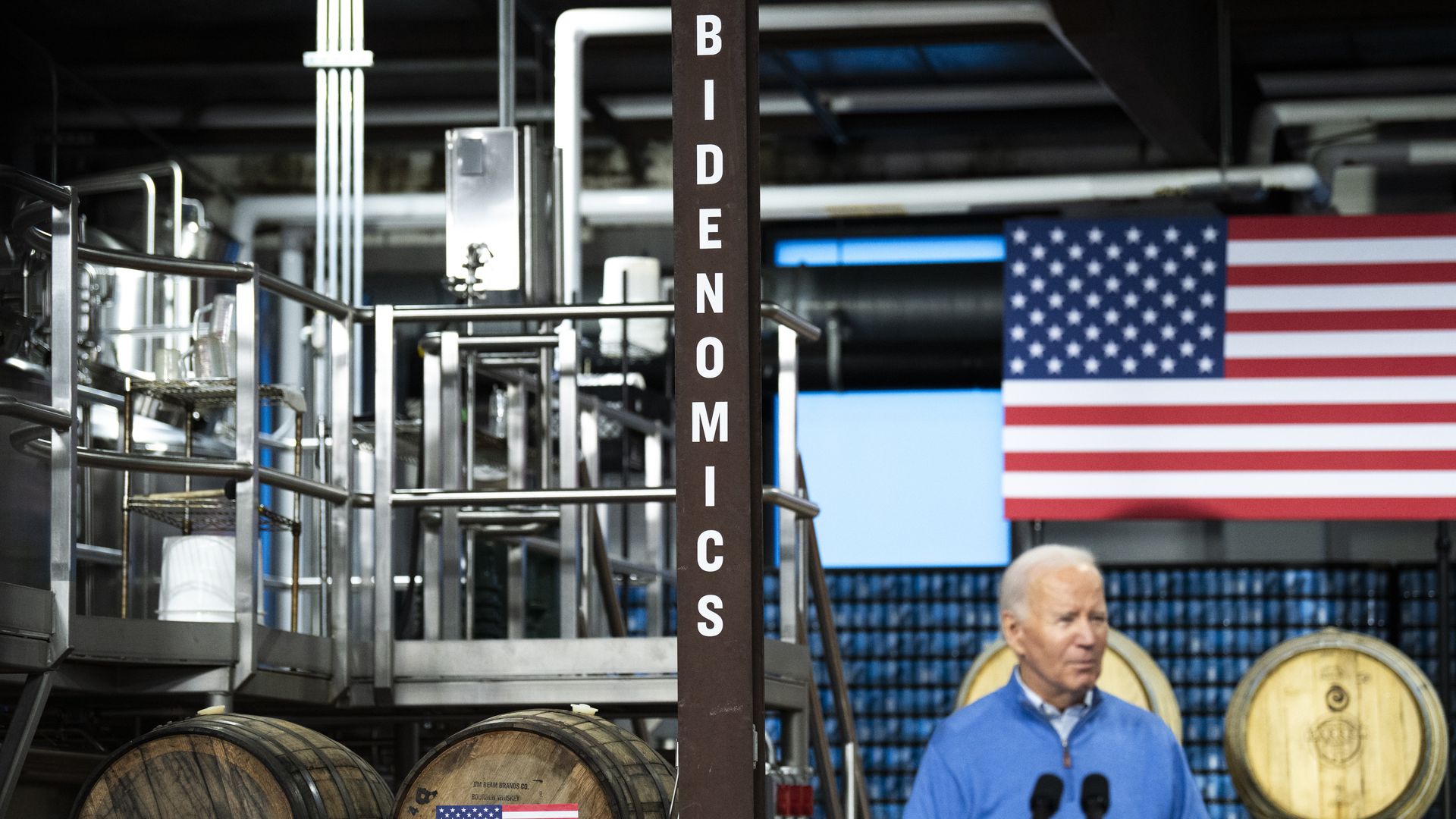
The White House will soon have an advantage to sell its economic message that recent predecessors did not: the ability to more quickly blast out its take on key data releases.
Why it matters: The Biden administration will shorten the so-called gag period that for more than 40 years has prevented officials from weighing in immediately when data is released.
The big picture: Expectations that the Fed could declare victory over inflation and quickly pivot to cutting rates was a key driver behind last year's stellar 24% gain for the S&P 500.
Since the pandemic, wage gains for Black Americans have outpaced those for white people — but wealth inequality deepened, finds new research from the New York Fed.
Why it matters: The research, which looks at changes from 2019 to the third quarter of 2023, demonstrates how firmly entrenched the racial wealth gap is in the U.S.