Thursday's economy stories


Blackburn bill would extend privacy rules to Google & Facebook
Rep. Marsha Blackburn introduced a bill on Thursday that would apply privacy rules to internet service providers like AT&T and Comcast and web companies such as Google and Facebook. The bill would require the companies to get their users' permission before sharing their sensitive information, including web-browsing history, with advertisers.
Why now?: Congress voted earlier this year to undo the Federal Communications Commission's privacy rules prohibiting ISPs from sharing or selling customer's personal data without their consent. The move led to an outcry from consumers worried that nixing the rules gave big telecom companies the opening to sell user data to the highest bidder without their knowledge.
Why it matters: Using customer data for advertising purposes is at the core of Facebook and Google's digital ad businesses, and ISPs like Verizon and AT&T are also trying to break into the online ad market. Blackburn, who chairs a key House committee overseeing telecom and tech issues, said she wanted both internet providers and web services to be subject to the same rules. "What we know is that when people talk about, 'I don't like pop ups that I get, and I don't like this and I don't like that,' that's activity that comes from the edge providers, not the ISPs," Blackburn told Axios.

Medium throws audio content into subscription service
Medium, the blogging service founded by Twitter co-founder Ev Williams, is adding audio versions of some of the content published on its platform. The catch: It's part of its paid subscription, for $5 a month, that the company unveiled in March.
Fixing the media industry: Medium's subscription service came after the company concluded that advertising isn't a sustainable model for a content business, so it wants people to pay for quality content. And adding audio versions of some content certainly makes sense as part of a paid product. Recording requires additional resources, and its a nice extra for those already willing to pay a monthly fee for good content.
But Medium should also be careful not to confuse the true value of paid content with cute features, something Silicon Valley often does when startups tackle various industries. The true hard work is in investigations, reporting, photography, crafting amazing writing—and that's where the subscribers' money should go. And that's the part Medium should work to improve.

Twitter updates privacy policies, lets you in on secrets
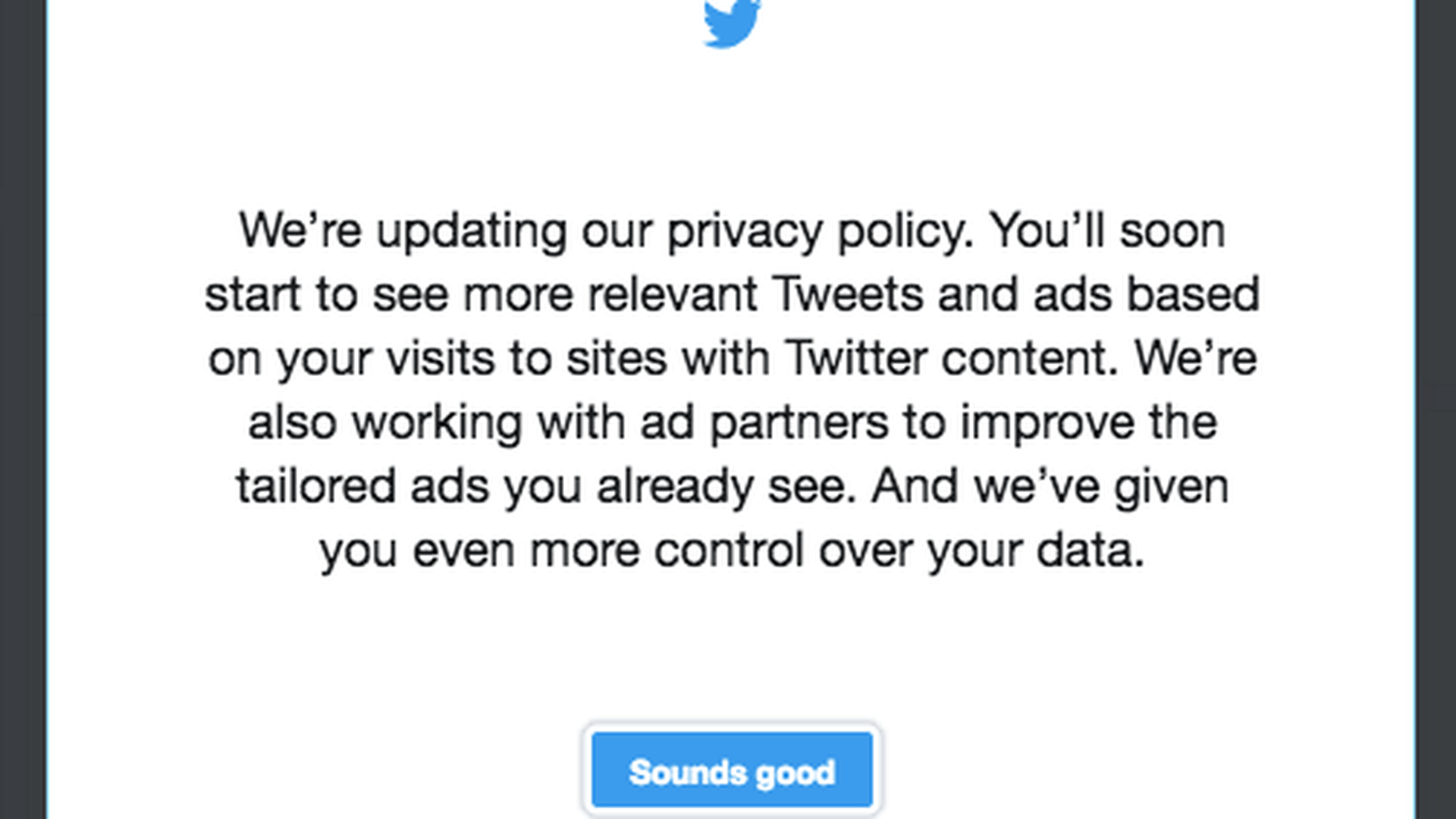
Yesterday, Twitter began informing users that it updated its privacy policy, including how Twitter uses offline browser history to inform advertisers of your interests. Twitter used to store data it collected on users for 10 days, but it says it will now store that data for a month. Of course, users can opt out of this collection entirely, and have always been able to, but Twitter made a point to flag users of this via a very visible full-screen pop-up.
Why it matters: The move comes after Facebook was penalized in France and Belgium for failing to adequately disclose details of user data collection given to third-parties to sell advertising. This is Twitter getting ahead of that problem. The update also lets users edit their audience targeting system, so that Twitter can better target you with ads you actually like.

Digital video ad spending is growing but TV is still huge
Marketers have almost doubled spending on digital video advertising since 2015, according to a new study from the Interactive Advertising Bureau. Also 80% of marketers and media buyers plan to increase spending in original digital video through the end of the year. But digital video ad revenue has a long way to go until it catches up to TV.
The big question: Experts have long predicted that TV ad spending will eventually plummet, similar what happened in newspapers in 2000, but the timing will likely depend on a few factors, like retransmission and programming contracts, and most importantly, ad-buyer efficiency.
How Google wants to help the modern-day job seeker
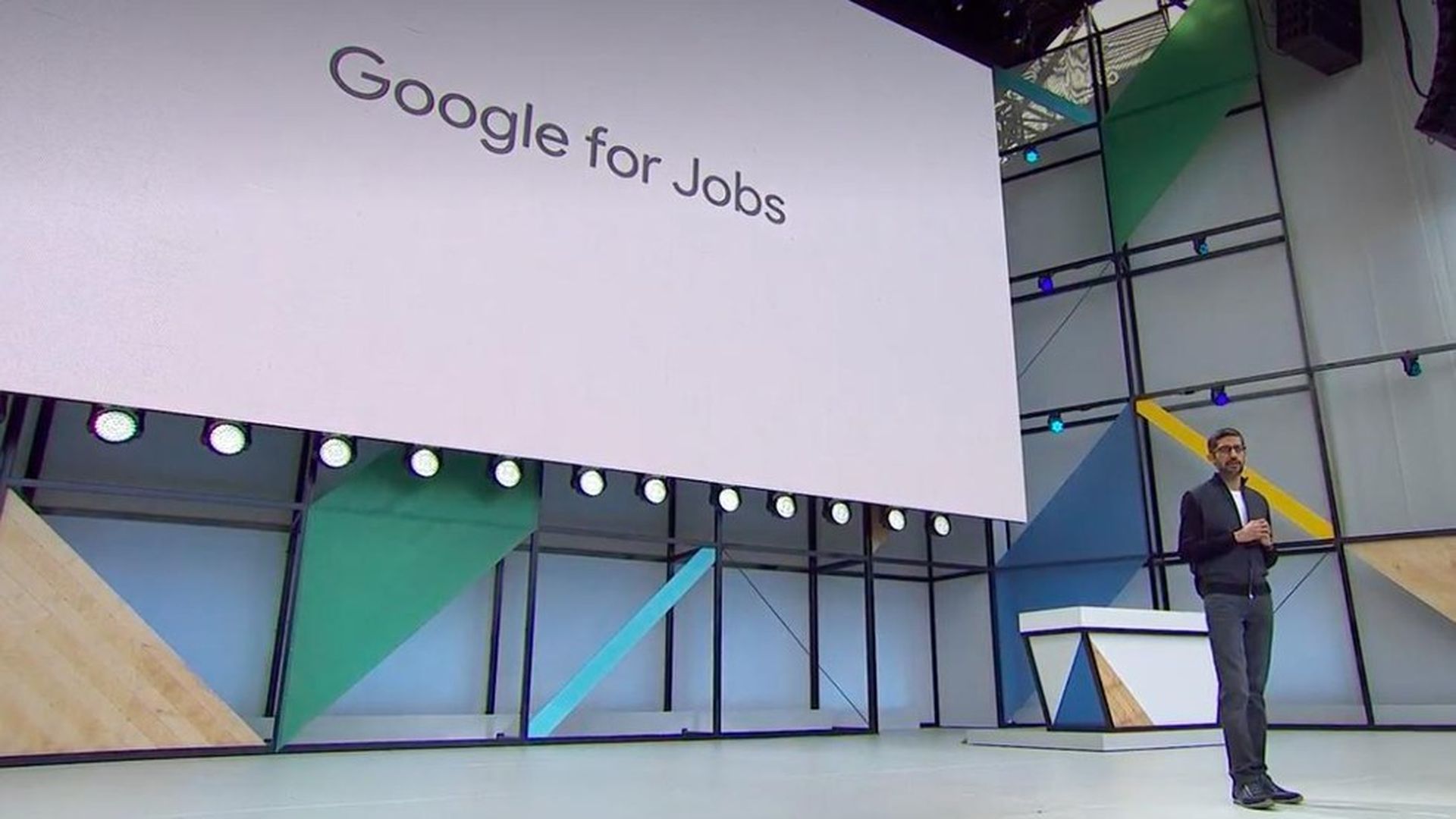
Tucked right at the end of Google's flurry of announcements at its annual conference on Wednesday (find them all here) was a timely new initiative: Google for Jobs. In short, this means that Google will turn up job listings through its search engine, and it has partnered with job sites including LinkedIn, Monster.com, Glassdoor, ZipRecruiter, and CareerBuilder to pull from their content.
Modern-day job seeking: It's not hard to see that the new feature is inspired by other recent employment trends, notably the rhetoric of many "on-demand" services like Uber and TaskRabbit. Like them, Google for Jobs wants to make it more efficient for job seekers to pull out their phones (or laptops) and quickly be matched with a job thanks to the Internet.

Dow drops 370 points amid Trump chaos
The Dow and the S&P recorded their worst day since September 2016 on Wednesday, and the Nasdaq posted its worst since June. Goldman Sachs contributed the most losses.