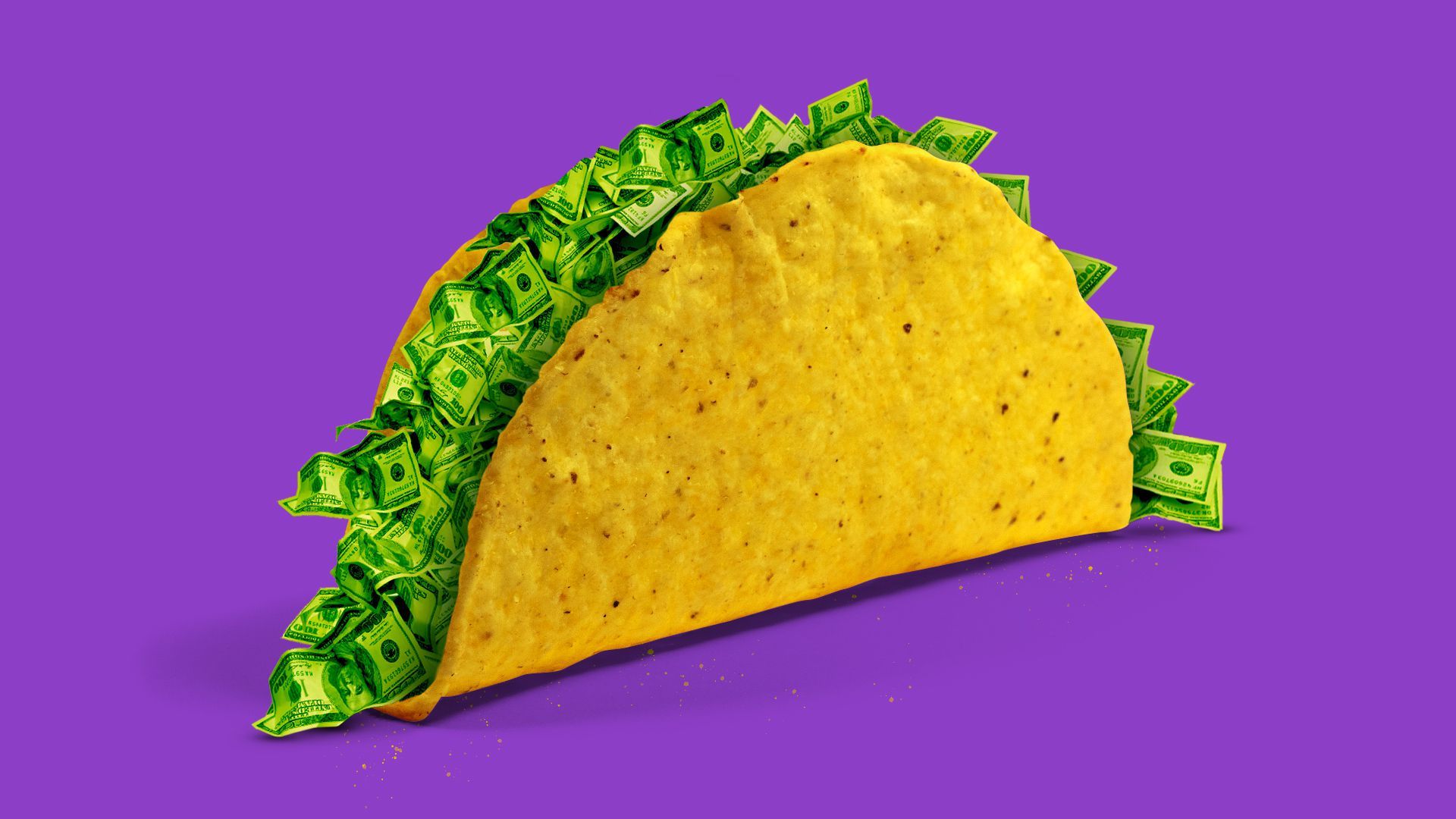
Taco Bell's temporary plant-based meat products have gotten “mixed reviews,” and customers shouldn't count on a national rollout anytime soon, CEO Mark King tells Axios.
Why it matters: The plant-based meat industry has encountered a series of setbacks in 2022, undermined by inflation, underwhelming restaurant test results and troubles at industry innovator Beyond Meat.
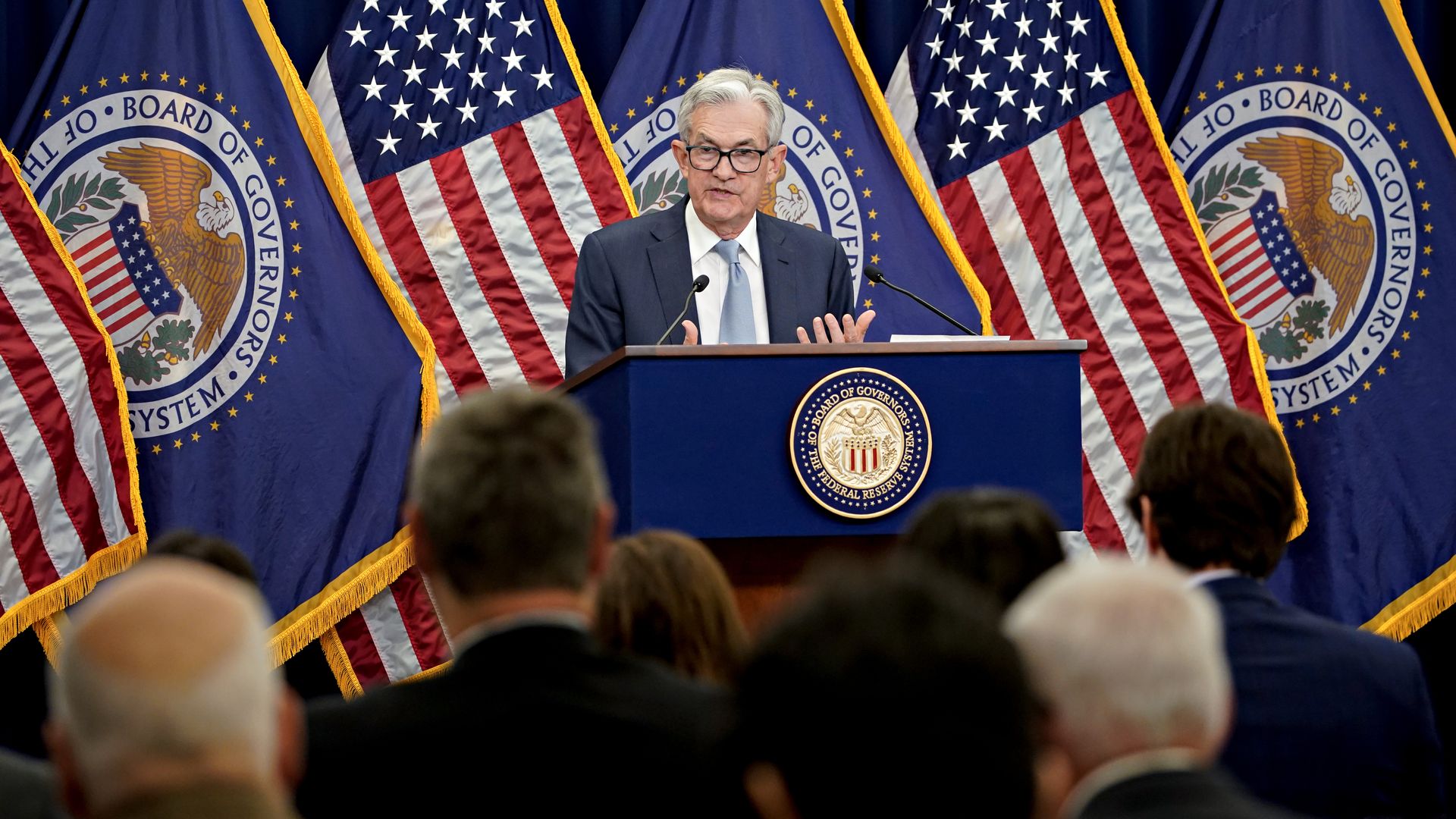
The Federal Reserve on Wednesday raised its target interest rate by half a percentage point, slowing from its breakneck pace of hikes from earlier in the year while signaling rates will likely climb higher from hereas the central bank expects a significant economic slowdown and rising unemployment.
Driving the news: The Fed's policy committee, following a two-day meeting, raised their federal funds rate target range to between 4.25% and 4.5%. In a statement announcing the move, the committee said it anticipates “ongoing increases in the target range will be appropriate” to bring down inflation.
The good news for private equity is that many institutional investors find it increasingly attractive, due to public market volatility.
The bad news for private equity is that many institutional investors expect to make fewer and smaller fund commitments, due to public market volatility.
Battery company Redwood Materials is investing $3.5 billion in a gigantic, new South Carolina recycling and manufacturing campus that will produce enough components to power a million electric vehicles.
Why it matters: It's the latest in a wave of huge investments across America's emerging "battery belt," spurred on by new government policies and tax credits designed to promote development of a domestic EV supply chain.
Former entrepreneur Zach Coelius raised a new $33.3 million early-stage venture fund in the first few weeks of 2022 — just in time for a year he now describes as "ice cold, like a deep freeze" for VC deals.
Why it matters: While 2022 put an end to free money and high valuations for just about any startup, Coelius argues that even the best companies held off on raising capital as the were able to stretch out their existing cash.
As the global economy roils from what feels like a relentless series of economic and geopolitical shocks — the era of the polycrisis — executives at some of the world's biggest companies are increasingly anxious.
Why it matters: Nervous business leaders are proceeding more cautiously. That often means taking fewer chances, pulling back on investment and hiring; the kinds of actions that could trigger the downturn they fear.
There's a tax headache ahead next year for millions of Americans who use apps like Venmo or Paypal regularly, part of a little-noticed change passed in March as part of the American Rescue Plan.
Why it matters: Anyone who was paid more than $600, for selling goods or services, using one of these third-party apps should get a 1099-K tax form detailing that money. It may get confusing.
This article originally appeared in Axios Finish Line, our nightly newsletter on life, leadership and wellness.Sign up here.
Even just 10 minutes to ourselves to recharge and relax can change the day.
Why it matters: We underestimate the effect of small and intentional breaks on our well-being.
What's happening: When we've been working at something for a while, our minds start to wander. That's when a well-timed and well-planned break can get us back on track — and actually boost productivity.
In one study, researchers at the University of Illinois asked participants to perform a 50-minute task on computers.
One group had to work without stopping, and another group got two short breaks. Sure enough, the group that worked nonstop saw performance decline by the end, while the group that paused did not.
Here are the top tips for planning breaks, based on research:
1. Make sure it's a real break. The most effective breaks are unrelated to work, per a recent analysis published in the journal PLOS ONE. That means pausing work to catch up on a few emails doesn't have the same benefit as stopping to take a short walk and get some air.
2. Time yourself. Microbreaks — lasting 10 minutes at most — work best when it comes to refocusing yourself on the task at hand. Go much longer and you'll lose momentum.
Bigger breaks — 15 or 20 minutes — are also important to fully refresh after a longer work session or between larger tasks.
3. Pay better attention. Short breaks are especially helpful when you're doing something repetitive or tedious, researchers have found. Creative work doesn't benefit as much from pauses.
The bottom line: Use breaks to boost your mental and physical health no matter what you're doing.
And if you're a manager, encourage your employees to take smart breaks! In the long run, they'll be more engaged and more creative.
Sam Bankman-Fried is escorted out of the Magistrate Court building in Nassau, Bahamas, on Tuesday. Photo: Dante Carrer/Reuters
Disgraced crypto kingpin Sam Bankman-Fried was charged Tuesday with illegally steering tens of millions of dollars to federal political campaigns — a key footnote in what prosecutors are calling "one of the biggest financial frauds in American history."
Why it matters: The campaign finance allegations have intensified the political shockwaves of FTX's collapse and Bankman-Fried's arrest, following his dramatic ascendance as one of the country's most prolific political donors.
Twitter has stopped paying the rent on some of its office leases and hasn't paid numerous other vendors since Elon Musk acquired the company in late October, Axios has learned from multiple sources.
Why it matters: One of the world's richest men isn't honoring financial obligations made to those with far fewer resources.