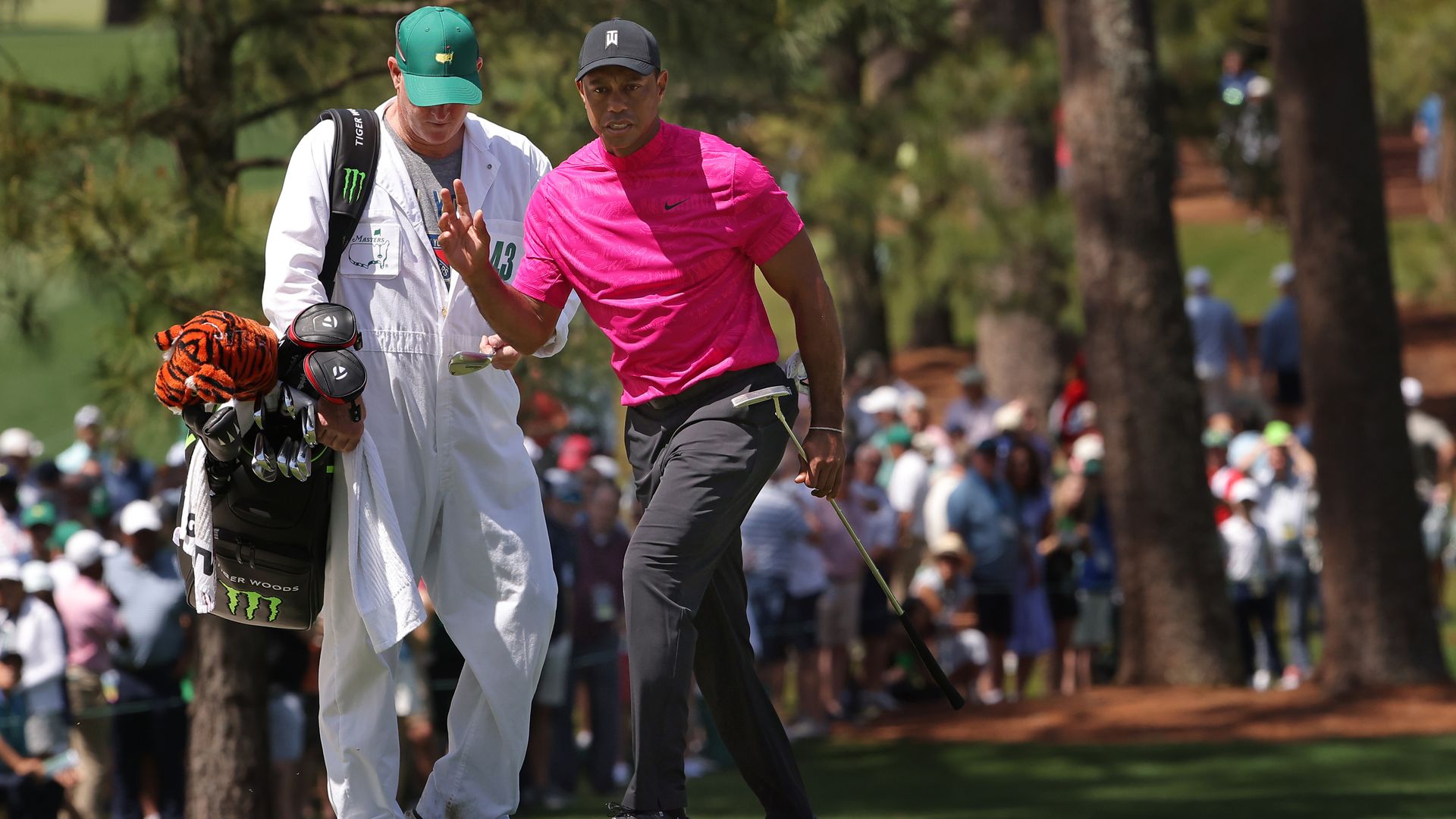
Oddsmakers will be biting their nails this weekend if Tiger Woods has a serious chance to win the Masters.
What’s happening: Bets have poured in on the golf legend to win the tournament in his dramatic return to golf after a devastating car crash in February last year.
American Airlines is about to start moving people at much lower altitudes.
Driving the news: The airline announced Thursday that it will offer bus connections to several smaller regional destinations from its Philadelphia hub.
New York Times executive editor Dean Baquet says he wants Times reporters to spend less time on Twitter.
Why it matters: Relying too much on Twitter is "especially harmful to our journalism when our feeds become echo chambers," Baquet said in a letter to staff Thursday obtained by Axios.
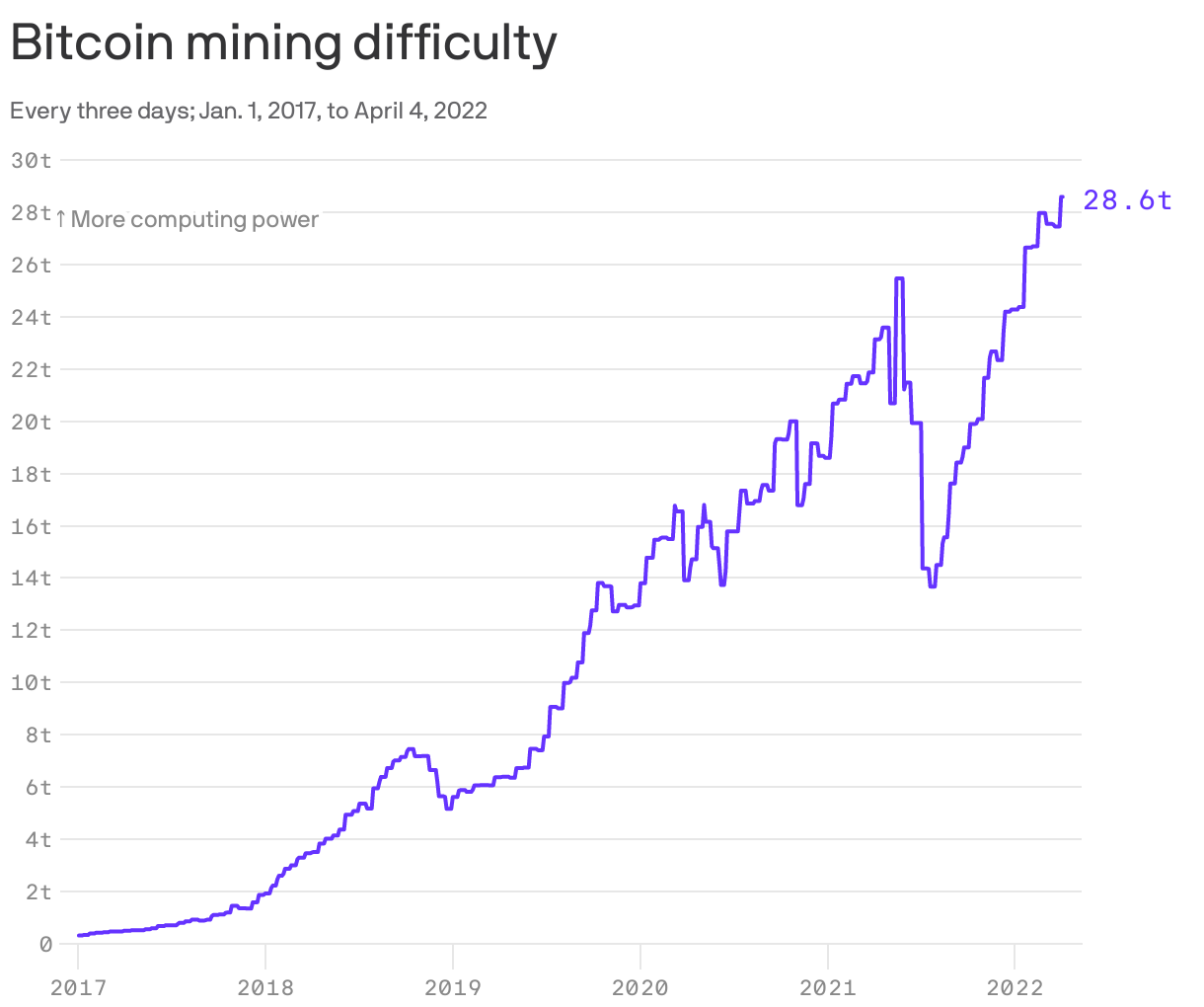
It has never been more difficult to mine bitcoin than it is now.
Context: Mining refers to bitcoin's consensus mechanism, proof-of-work. Miners need to solve a cryptographic puzzle to have the right to add a block to the ledger and earn some fresh bitcoin (currently the reward is 6.25 bitcoins worth roughly $275,000).
The "transparency" of blockchains is probably the most commonly cited pro in the case for cryptocurrencies. It partly enables "trustlessness," the ability to remove central administrators from the world of finance.
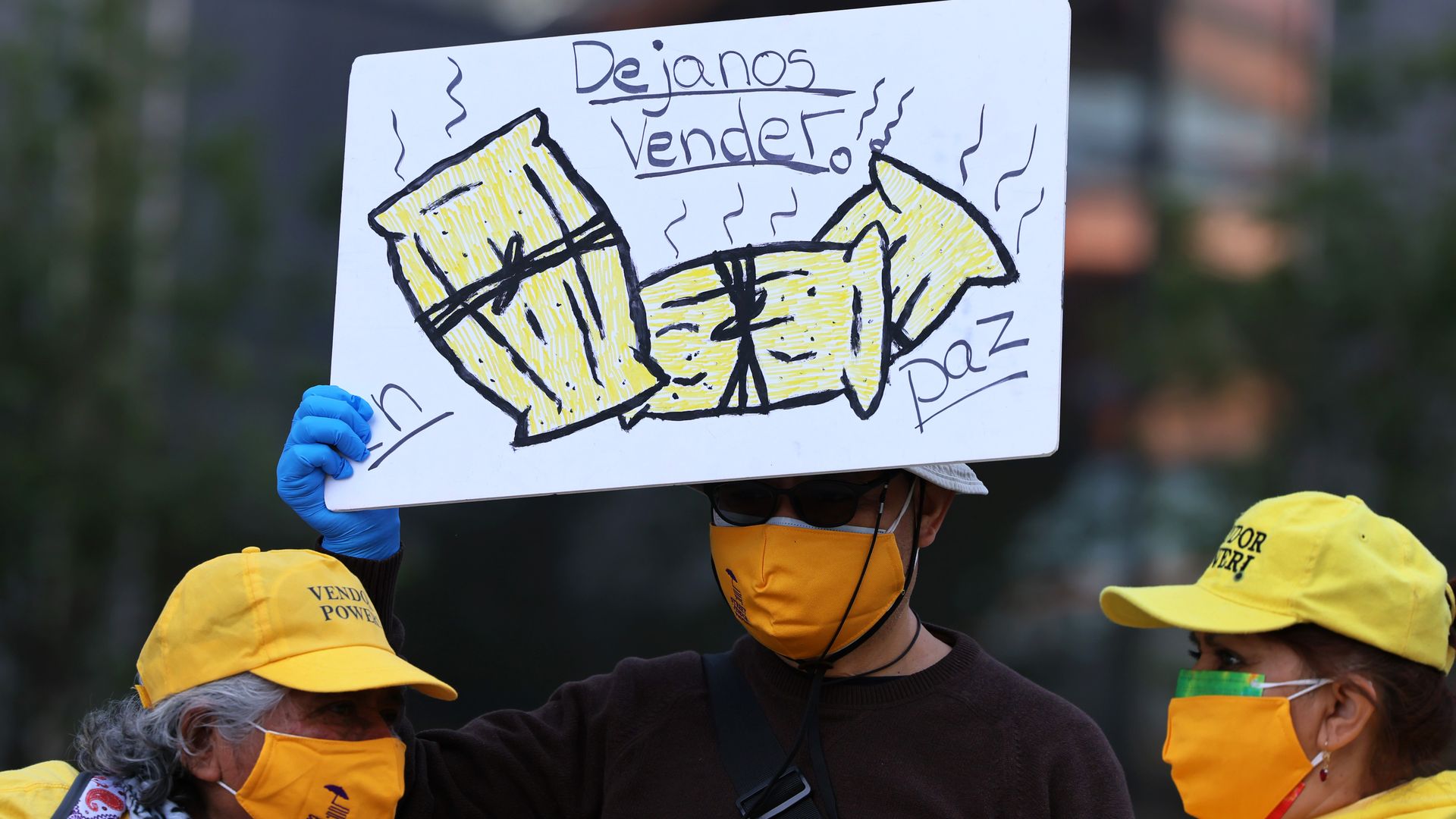
New York City street vendors, including many Latinos, are calling on officials to lift a cap on the permits they need to operate legally.
Driving the news: The city is home to up to 20,000 street vendors — many of whom are immigrants — who forced to work without permits or to pay exorbitant amounts to lease them because of the cap.
The art market is notorious for its opacity and confidentiality. That makes it effectively impossible to track artworks in a way that ensures their authenticity — and also creates insurmountable difficulties for anybody trying to get artists paid when their work goes up in value.
What we're watching: A new startup called Fairchain aims to change all that.
Discovery CEO David Zaslav on Thursday announced the leadership team for Warner Bros. Discovery, the new company that will be formed when Discovery and WarnerMedia officially merge in coming days. Zaslav will be the CEO of the newly-combined company.
Why it matters: The news comes the day after most of WarnerMedia's executive team announced their departures. Zaslav is elevating most of his own team to new roles, although a few key figures from WarnerMedia will stay on, including HBO content chief Casey Bloys and Warner Bros. chair Toby Emmerich.
Global Infrastructure Partners and Brookfield Infrastructure offered to buy Italian road and airport operator Atlantia (Milan: ATL), in partnership with Spanish construction mogul and Real Madrid owner Florentino Pérez, but the controlling Benetton family may instead work with Blackstone to take the company private.
Why it matters: This could be the year's largest global acquisition, topping current leader Microsoft/Activision, and one of the all-time richest infrastructure deals. It also could become one of the nastiest, were Pérez and his PE pals to go hostile.
Every week since January 1967, the Labor Department has published the number of Americans who filed a new claim for unemployment insurance benefits during the preceding week. That's 2,882 weeks in all.
Last week's total released Thursday, showing 166,000 new claims, was lower than all but one of those weeks.
Why it matters: The claims numbers are just the latest sign of an exceptionally tight U.S. labor market. Companies are not firing people if they can help it, and workers who do lose their jobs are finding new ones rapidly.
It comes exactly two years after the number of claims reached an all-time peak, with 6.1 million people filing for benefits the first week of April 2020, as the pandemic set in.
By the numbers: The record-holder for lowest weekly claims remains the week ending November 30, 1968, with 162,000 new jobless claims.
The 166,000 claims last week is seasonally adjusted using new techniques to account for the distortions caused by the pandemic two years ago. The unadjusted number of claims is higher, at 193,000 last week, though that is still low by any historical standard.
The four-week moving average of new claims also fell, which strips out some volatility of the weekly numbers, fell to 170,000. Continuing claims ticked up to 1.523 million, from 1.516 million.
Worth noting: The labor force is about twice as large as it was in the late 1960s, making the current low claims numbers that much more impressive.
State of play: This is an exceptionally tight U.S. job market, no two ways about it. The unemployment rate was 3.6% in March — and has been lower than that in only two months in the last 50 years.
Against that backdrop, it is hardly surprising that employers are trying their best to hang on to the workers they have.
That said, the labor force remains smaller than it was before the pandemic, so there could still be room for improvement as more potential workers return from the sidelines.
The bottom line: Any way you slice it, this is a moment in which workers are in the driver's seat of the job market.
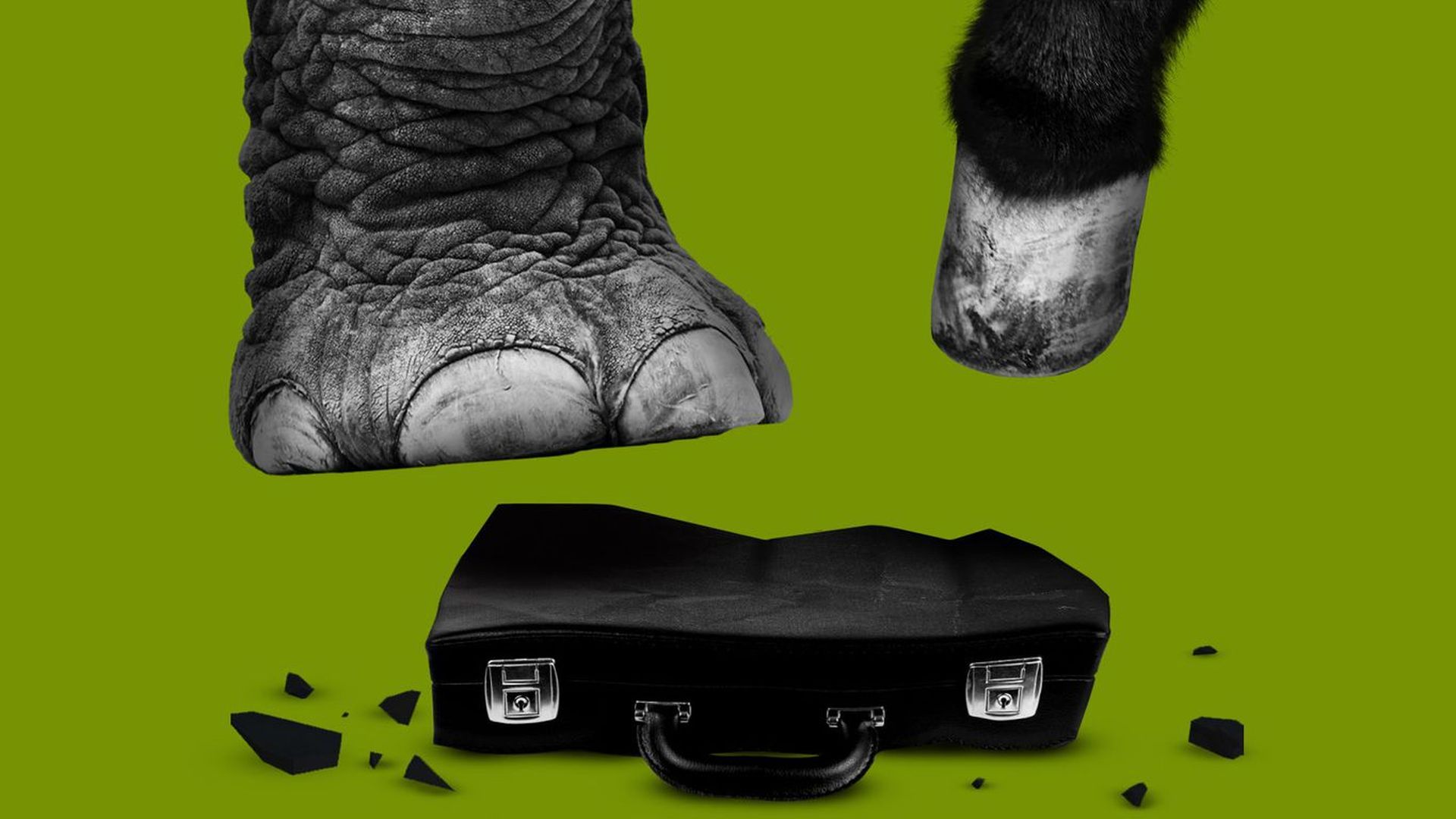
Most political pundits expect at least one house of Congress to switch hands this fall, and there could be more power shifts in 2024.
But one thing won't change, no matter which political party is in charge: antipathy toward big business, which often manifests as antitrust enforcement.
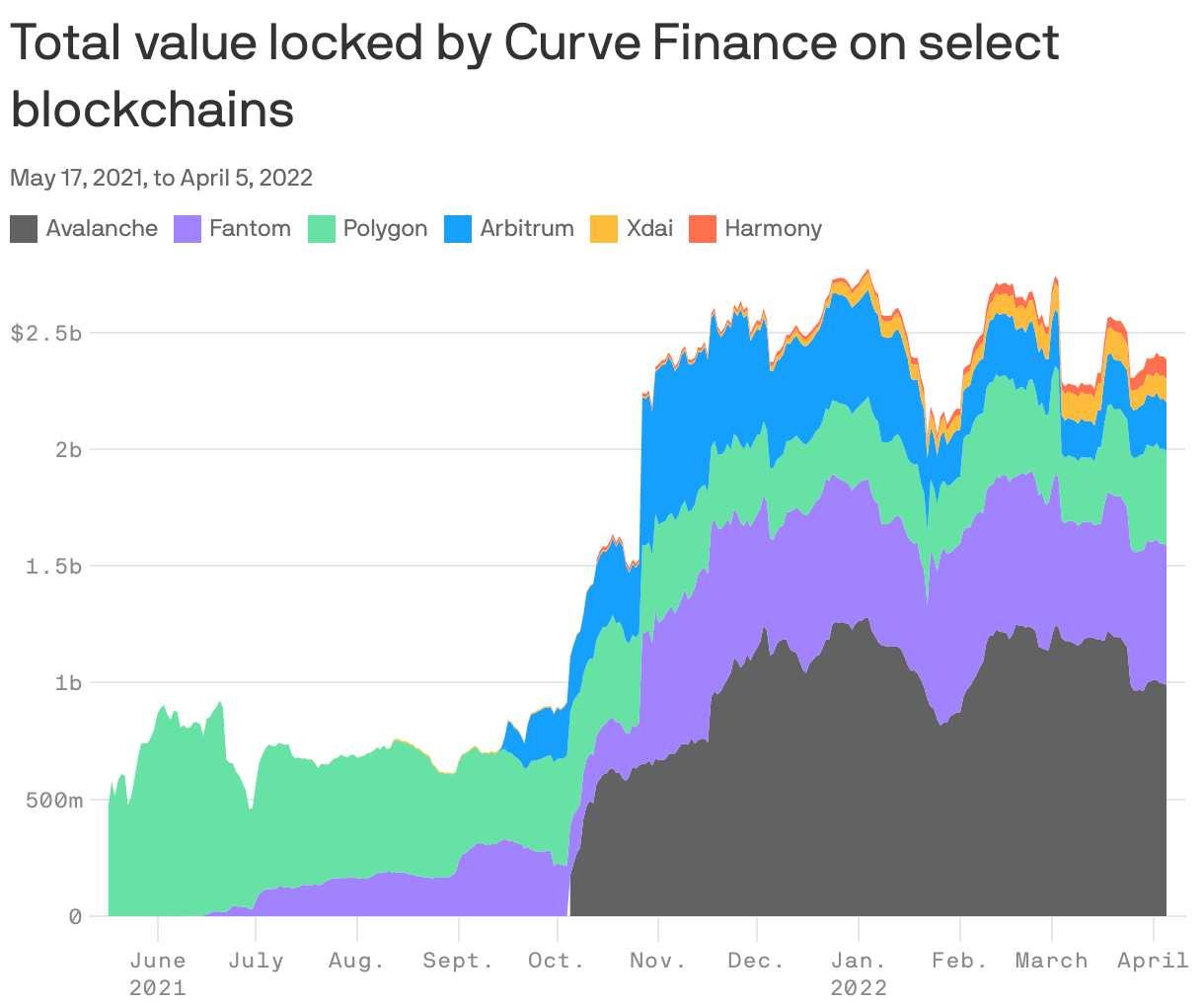
Data: DeFi Llama; Chart: Will Chase/Axios; (Optimism and Moonbeam were excluded due to their small sizes.)
The Curve Finance app has been way out ahead of most similar DeFi applications in launching on blockchains other than Ethereum.
Why it matters: It is diversifying its bets, figuring that other blockchains will blow up and host a lot of trading. Curve is positioned to take some of that market share.
When it comes to sanctions against Russia, the West is using an "everything but" strategy — doing all they can to cut the country off from the global economy, while still allowing it to make lucrative energy sales to Europe.
The big picture: Against that backdrop, a few of the steps the U.S. and Europe took this week are designed to — at least on the margins — blunt Russia's ability to plow energy revenues into funding its conquest of Ukraine.
Evernow, a telehealth company focused on perimenopause and menopause, collected $28.5m from a cadre of venture capital firms, tech executives and celebrity backers.
Why it matters: A ton of funding has gone toward fertility in recent months, but very few companies are focused on supporting women's health once they've passed that (completely optional!) stage.
After months of moving gingerly to withdraw monetary stimulus, the Federal Reserve's tightening campaign now looks set to enter a rapid new phase.
That's the conclusion to draw from new minutes the central bank released Wednesday that spell out the Fed's plans. It aims to shrink its $9 trillion balance sheet nearly twice as fast as it did the last time it undertook "quantitative tightening" — while simultaneously raising short-term interest rates more quickly.