New research charts out how improvements in aquaculture and sustainable fishing could significantly increase food production from the sea by midcentury.
Why it matters: Global demand for food and particularly protein is projected to rise in step with human population growth. With little new land available to be sustainably opened for farming, our best bet may be the oceans — provided we can better manage that resource.
Airbnb said Wednesday that it confidentially submitted paperwork to the Securities and Exchange Commission to go public.
Why it matters per Axios' Dan Primack: Airbnb had been widely expected to go public earlier in the year, but paused when the pandemic incapacitated global hospitality. What's still unknown is how much the company has rebounded since this spring and whether investors will effectively give the company a mulligan for 2020.
An entire sector of America's education workforce faces paycheck jeopardy in the coming weeks that moving to remote teaching can't easily fix.
Why it matters: Half of America’s education workforce isn't teachers, and they support students and school districts in many ways educators cannot — like counseling, feeding students, transportation and mental health.
Special purpose acquisition companies, or SPACs, are all the capital market rage right now, easily outpacing traditional IPOs. But, with great volume comes great pressure.
Why it matters: SPAC structures, which had remained stable for more than a decade, are quickly changing.
SpaceX, the aerospace company led by Elon Musk, raised $1.9 billion in new equity funding, per an SEC filing.
Why it matters: This reflects the immense costs of space travel, particularly when the ultimate destination is Mars. No new investors were disclosed. Bloomberg previously reported that the round, which could still grow, would value SpaceX at around $44 billion.
Apple on Wednesday became the first U.S. company to reach a $2 trillion valuation, AP reports.
The state of play: It comes only two years after it became the first to reach $1 trillion. Apple shares are up 60% this year despite factory shutdowns in China and slowed retail sales during the coronavirus pandemic, but its customer base remains fiercely loyal, allowing the company to drive major earnings.
A Morgan Stanley note Tuesday pegged the value of General Motor's nascent electric vehicle business at $20 billion, a tally well above the firm's assessment of GM's core gasoline-powered lines.
Why it matters: It signals analysts' view that revenues from electric vehicles and battery tech are going to be a big thing despite what's now a tiny market share, but it's unclear who the long-term winners will be.
A new study from the New York Fed finds that when amateurs drive a market bubbles develop.
Why it matters: Given the rising number of inexperienced retail traders who have taken to investing this year, the study's findings could have obvious implications for the current state of U.S. financial markets.
The S&P 500 closed at a new all-time high on Tuesday and has rallied by around 52% since hitting its low point on March 23 — the best run the index has ever had in such a short time.
The state of play: While the market has continued to rise for the past five months, most investors have been incredulous about the sustainability of gains.
Johnson & Johnson on Wednesday said that it will pay $6.5 billion in cash to buy Momenta Pharmaceuticals, representing a 70% premium to where the Massachusetts drugmaker closed trading yesterday.
Why it matters: Johnson & Johnson is seeking to expand its capacity in drugs to treat autoimmune diseases, including a muscle-weakening condition known as myasthenia gravis.
As the coronavirus pandemic pushes more and more universities to switch to remote learning — at least to start — 22% of college students across all four years are planning not to enroll this fall, according to a new College Reaction/Axios poll.
Why it matters: Scores of colleges were already approaching a financial cliff before the pandemic began. Steep drops in enrollment could push some over the edge.
The pandemic is striking directly at the heart of what has historically made America stronger than almost any other global economy — our awesome productivity.
Why it matters: Modern recessions, even the Great Recession of 2008-9, have tended to have little to no effect on how efficiently America produces goods and services. This recession is different. COVID-19 has hammered the potency of our companies and workers.
Tuesday's stock market record proves the definitive triumph of capital over labor in the era of COVID-19.
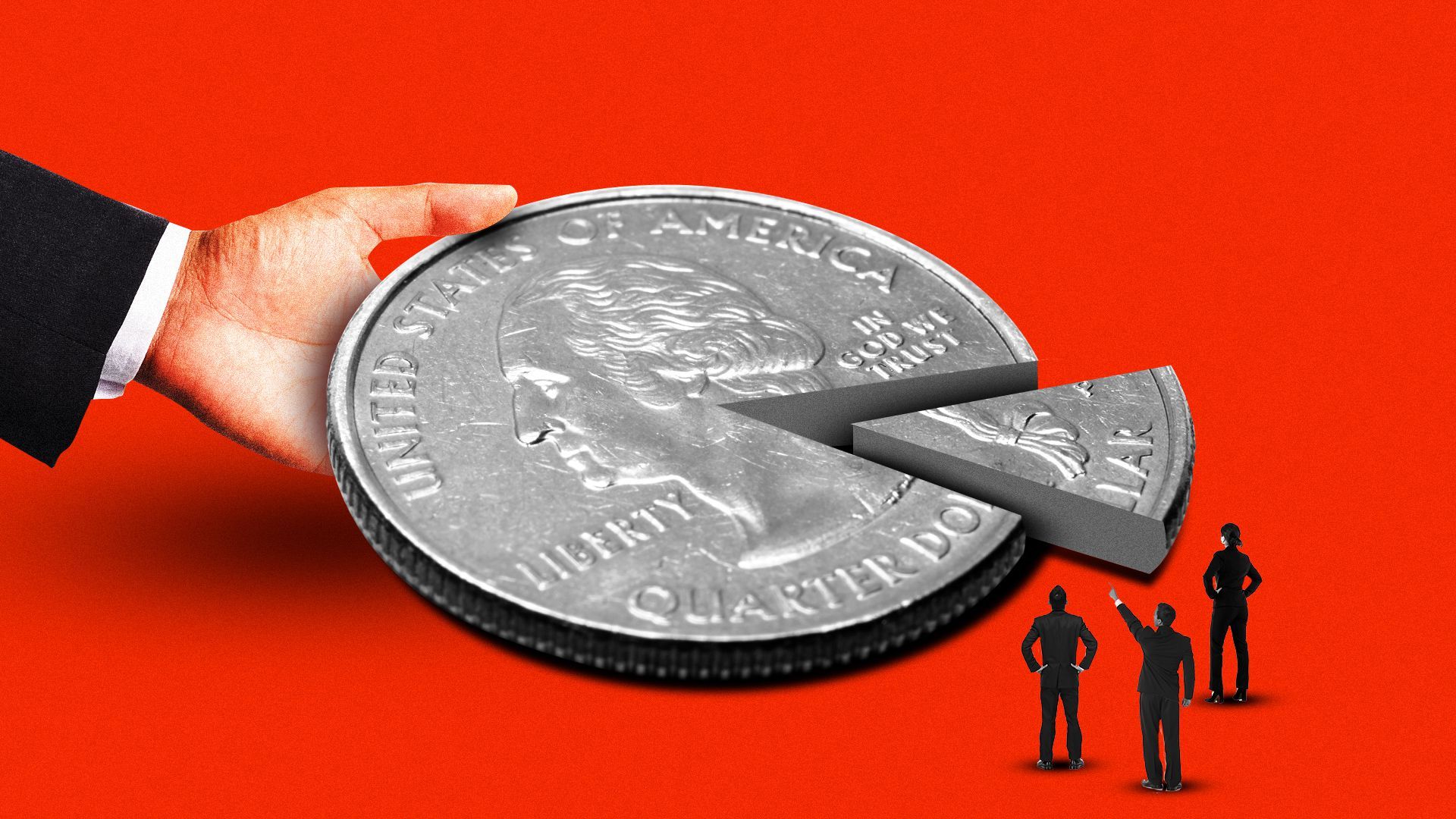
Why it matters: The recession has caused the size of the American economic pie to shrink substantially. But the share of that pie going to capital rather than labor has continued to rise.
Slowdowns in mail delivery could have serious consequences for the millions of Americans who get prescription drugs — in some cases, lifesaving treatments — through the mail.
Why it matters: Treatments for cancer, multiple sclerosis, rheumatoid arthritis and other complex diseases increasingly are sent in the mail. And the coronavirus pandemic has spurred more people to get their routine prescriptions mailed to their homes, as a safer alternative to visiting a pharmacy.