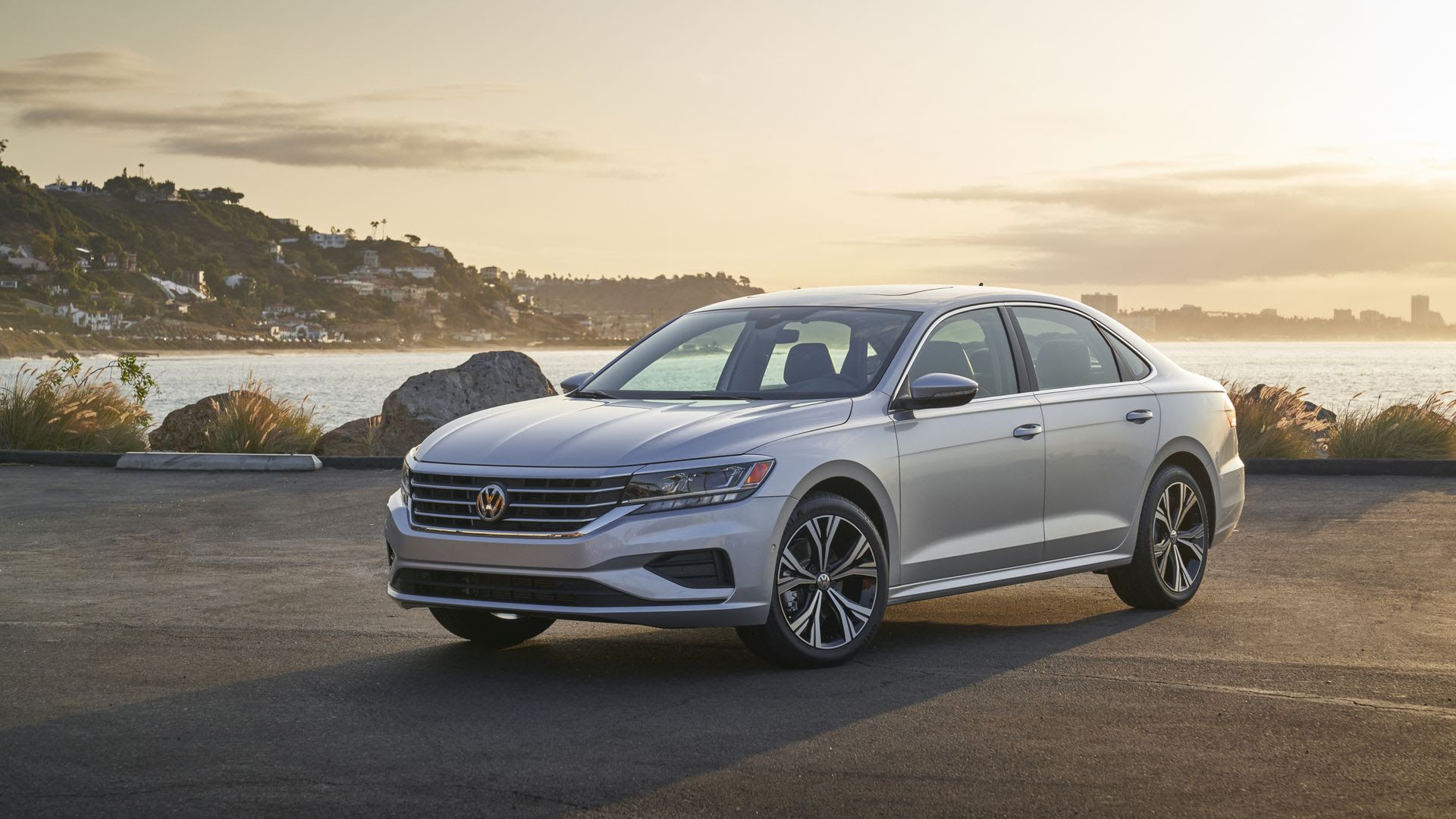
This week I'm driving the 2020 Volkswagen Passat 2.0T SEL, which sadly feels like a neglected child.
The big picture: In China and Europe, the Passat is built on VW's new MQB architecture, the automaker's modular new engineering platform. But the 2020 Passat sold in the U.S. still rides on a platform introduced in 2012.
Impossible Foods, a Silicon Valley company known for its plant-based meat alternatives, has raised $200 million in Series G funding led by Coatue, with XN, Mirae Asset Global Investments and Temasek also participating.
The big picture: The funding comes just months after the company raised $500 million in March. Prime Unicorn Index estimates the new valuation at about $4 billion.
Tesla CEO Elon Musk, who has spent more than a decade trying to disrupt the traditional auto industry, is sounding more and more like the man most closely associated with it: Henry Ford.
Why it matters: In his quest to build affordable electric cars for the masses, Musk is starting to embrace many of the ideas pioneered by Ford's founder — things like vertical supply chains and an obsession with manufacturing efficiency. A century ago that approach helped to popularize the American automobile by lowering the cost of the Model T.
The number of Americans filing for jobless benefits is finally coming down in a meaningful way and dropping across the board.
By the numbers:Claims for traditional initial jobless claims last week fell by more than 156,000 to 832,000 while initial claims for the Pandemic Unemployment Assistance program declined to below 500,000 for the first time since April 18.
The story of American businesses in the coronavirus pandemic is a tale of two markets — one made up of tech firms and online retailers as winners awash in capital, and another of brick-and-mortar mom-and-pop shops that is collapsing.
Why it matters: The coronavirus pandemic has created an environment where losing industries like traditional retail and hospitality as well as a sizable portion of firms owned by women, immigrants and people of color are wiped out and may be gone for good.
Younger Americans are increasingly concerned that Social Security won't be enough to wholly fall back on once they retire, according to a survey conducted by AARP — in honor of today's 85th anniversary of the program — given first to Axios.
Why it matters: Young people's concerns about financial insecurity once they're on a restricted income are rising — and that generation is worried the program, which currently pays out to 65 million beneficiaries, won't be enough to sustain them.
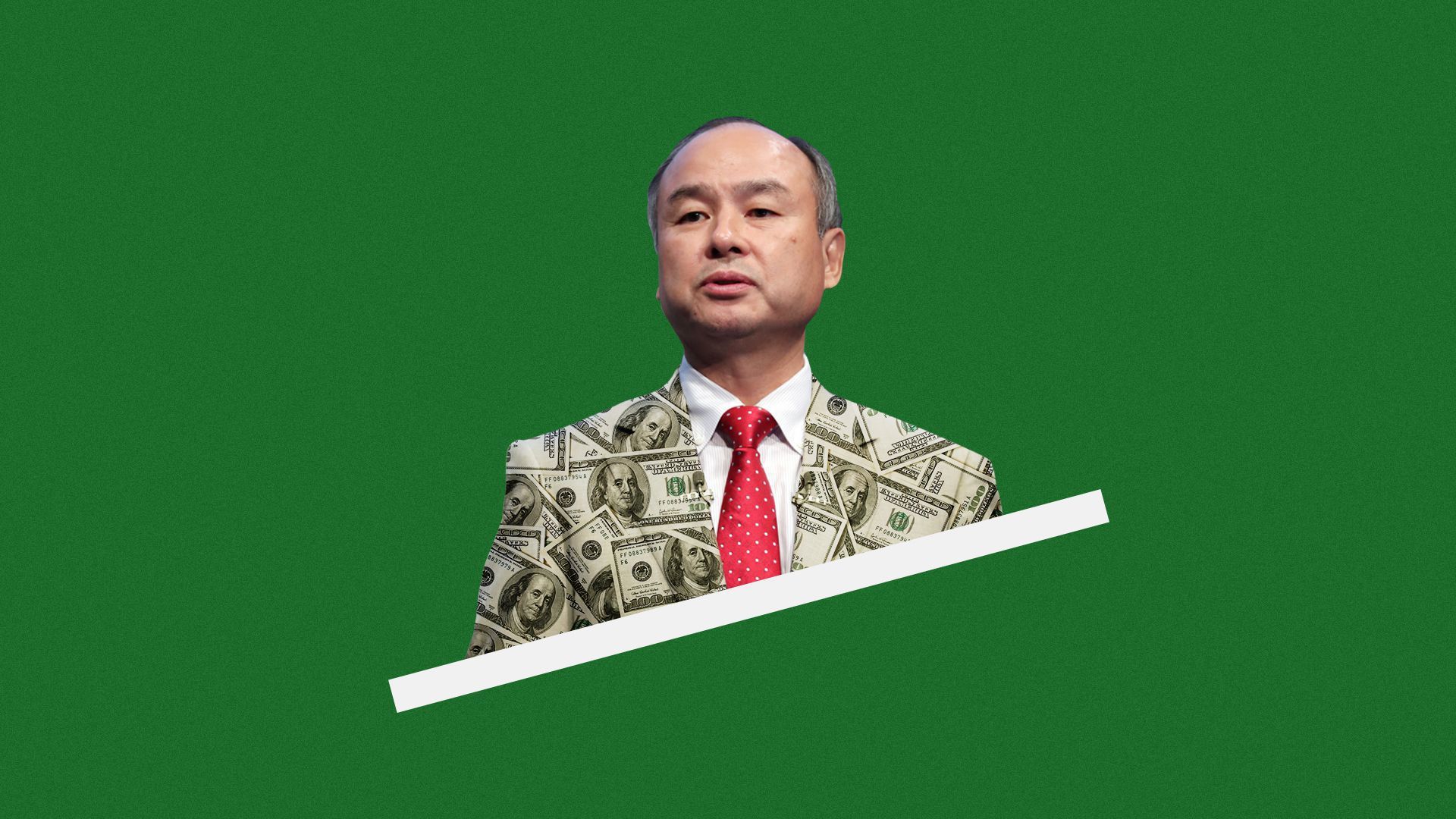
SoftBank and its Vision Fund made a comeback this past quarter. But chairman and CEO Masayoshi Son has already moved on to a new project: a $550 million vehicle for investing in blue-chip public tech stocks like Facebook, Amazon and Apple.
Why it matters: This is part of Son’s ongoing plan to transform SoftBank Group into an investment company.
Most companieswant to maximize profits. This year, a lot of them are more interested in maximizing losses.
How it works: As part of the CARES stimulus bill that passed in March, companies' 2020 losses can be "carried backwards" — that is, they can be deducted from previous years' profits, including years when profits were taxed at 35%. (The corporate tax rate now is only 21%.)
Next Digital is fighting for its life. One of the last truly independent media outlets in Hong Kong, its high-profile publisher, Jimmy Lai, was arrested this week as part of China's crackdown on pro-democracy activism.
Driving the news: Apple Daily,the company's flagship newspaper, is the most-read outlet in Hong Kong. Lai's arrest caused his company's stock to rise elevenfold in a single day, thanks to thousands of Hongkongers flocking to the market to bid up the shares.
If you don't know how broken something is, you're not going to be able to fix it. That's the crisis facing policymakers trying to repair a devastated economy without knowing the true degree to which the pandemic has hurt the country.
Why it matters: Some parts of what ails America, like the nascent mental-health crisis, are by their nature hard to measure. But other aspects of the recession, like the unemployment rate or national GDP, are foundational statistics upon which multi-trillion-dollar decisions are made.
Uber and Lyft are ratcheting up the fight with California’s state government over the classification of drivers with a move that would deprive Californians of their ride-hailing services (and halt driver income).
Driving the news: On Wednesday, bothcompanies said that if a court doesn’t overturn or further pause a new ruling forcing them to reclassify California drivers as employees, they’ll suspend their services in the state until November’s election, when voters could potentially exempt them by passing a ballot measure.
Palantir, the secretive data analysis software company best known for its contracts with government agencies, is reportedly planning to go public via direct listing in late September, according to Bloomberg.
Why it matters: This would be only the third company since 2018 to do a direct listing, after Spotify and Slack. The company is also in the process of raising $961 million, with $550 million of it already secured.
Chevron is making a Series A investment in the three-year-old nuclear fusion startup Zap Energy, marking the latest foray by an oil-and-gas giant into companies outside a core business.
Why it matters: It's the first nuclear power investment from Chevron Technology Ventures, the company's in-house VC arm that's spreading money around a range of energy technologies.
The jobs rebound in clean energy sectors, broadly defined, slowed greatly last month, per a newly released analysis.
The big picture: Clean energy industries added just 3,200 jobs last month, far fewer than in June, according to the BW Research Partnership's analysis of unemployment claims.
BodyArmor is making noise in the sports drink market, announcing seven new athlete partnerships last week, including Christian McCaffrey, Sabrina Ionescu and Ronald Acuña Jr.
Why it matters: It wants to market itself as a worthy challenger to the throne that Gatorade has occupied for nearly six decades.
The consumer price index rose 0.6% last month for the second straight time, with gasoline accounting for a quarter of the gain. Core CPI, which strips out food and energy prices, jumped by 0.6%, marking the biggest gain since January 1991.
Why it matters: The back-to-back CPI increases combined with Tuesday's bounce back producer price index reading, suggest inflation is far from dead.
The S&P 500 nearly closed at an all-time high on Wednesday and remains poised to go from peak to trough to peak in less than half a year.
By the numbers: Since hitting its low on March 23, the S&P has risen about 50%, with more than 40 of its members doubling, according to Bloomberg. The $12 trillion dollars of share value that vanished in late March has almost completely returned.
Facing enormous financial pressure and uncertainty around reopenings, media companies are giving up on their years-long building leases for more permanent work-from-home structures. Others are letting employees work remotely for the foreseeable future.
Why it matters: Real estate is often the most expensive asset that media companies own. And for companies that don't own their space, it's often the biggest expense.
With tax revenue in free-fall and expenditures dramatically rising, the coronavirus pandemic is on pace to hit cities' finances even harder than the Great Recession.
Why it matters: Almost all cities are required to balance their budgets, and at this rate they'll have no choice but to cut more services, layoff or furlough more workers and freeze capital projects.
If you don't know how broken something is, you're not going to be able to fix it.
That's the crisis facing policymakers trying to repair a devastated economy without knowing the true degree to which the pandemic has hurt the country.
It's not just emotional buying, real estate agents say: There are smart and strategic reasons that Americans of all ages, races and incomes are moving away from urban centers.
Why it matters: Bidding wars, frantic plays for a big suburbanhouse with a pool, buying a property sight unseen — they're all part of Americans' calculus that our lives and lifestyles have been permanently changed by coronavirus and that we'll need more space (indoors and out) for the long term.
The U.S. budget deficit ballooned to $2.81 trillion from last October through July — a record for the budgetary period, per a Treasury statement published Wednesday.
Details: $63 billion was added to the deficit last month. That was the lowest monthly figure since the pandemic began, amid a fall in government spending and as the tax filing deadline was extended to July 15.






/2020/08/14/1597406384268.gif?w=3840)