NBCUniversal unveiled parts of its new streaming service, Peacock, to investors in New York Thursday, promising a consumer-friendly advertising experience that would set it apart from its many competitors.
Why it matters: Unlike some of its entertainment rivals, NBCU plans to make its service mostly free to consumers, supporting it through advertising instead. Netflix and Disney, who are considered the two streaming titans to beat, are ad-free.
Sen. Martha McSally (R-Ariz.) called CNN's Manu Raju a "liberal hack" and refused to answer a question about whether the Senate should consider a trove of additional evidence as part of the pending impeachment trial of President Trump.
The newly inked "phase one" U.S.-China trade deal calls for China to boost purchases of U.S. energy products — including crude oil and liquified natural gas (LNG) — by $52.4 billion over the next two years.
Why it matters: China is the world's largest oil importer and second-largest LNG consumer.
Michael Calderone is joining Vanity Fair as senior editor of The Hive, a franchise within the company that focuses on covering business, technology and media from the lens of people in power, according to an internal memo obtained by Axios. Calderone comes from Politico, where he is currently senior media reporter.
The big picture: The move is part of a bigger executive announcement about new talent coming in to beef up Vanity Fair’s coverage ahead of the election.
More money flowed into bond funds last week than at any time in at least seven years, data from the Investment Company Institute released Wednesday showed.
Why it matters: The S&P 500 gained 30% last year and the stock market has delivered strong returns so far in 2020, but investors continue to buy safe-haven bonds and sell stocks.
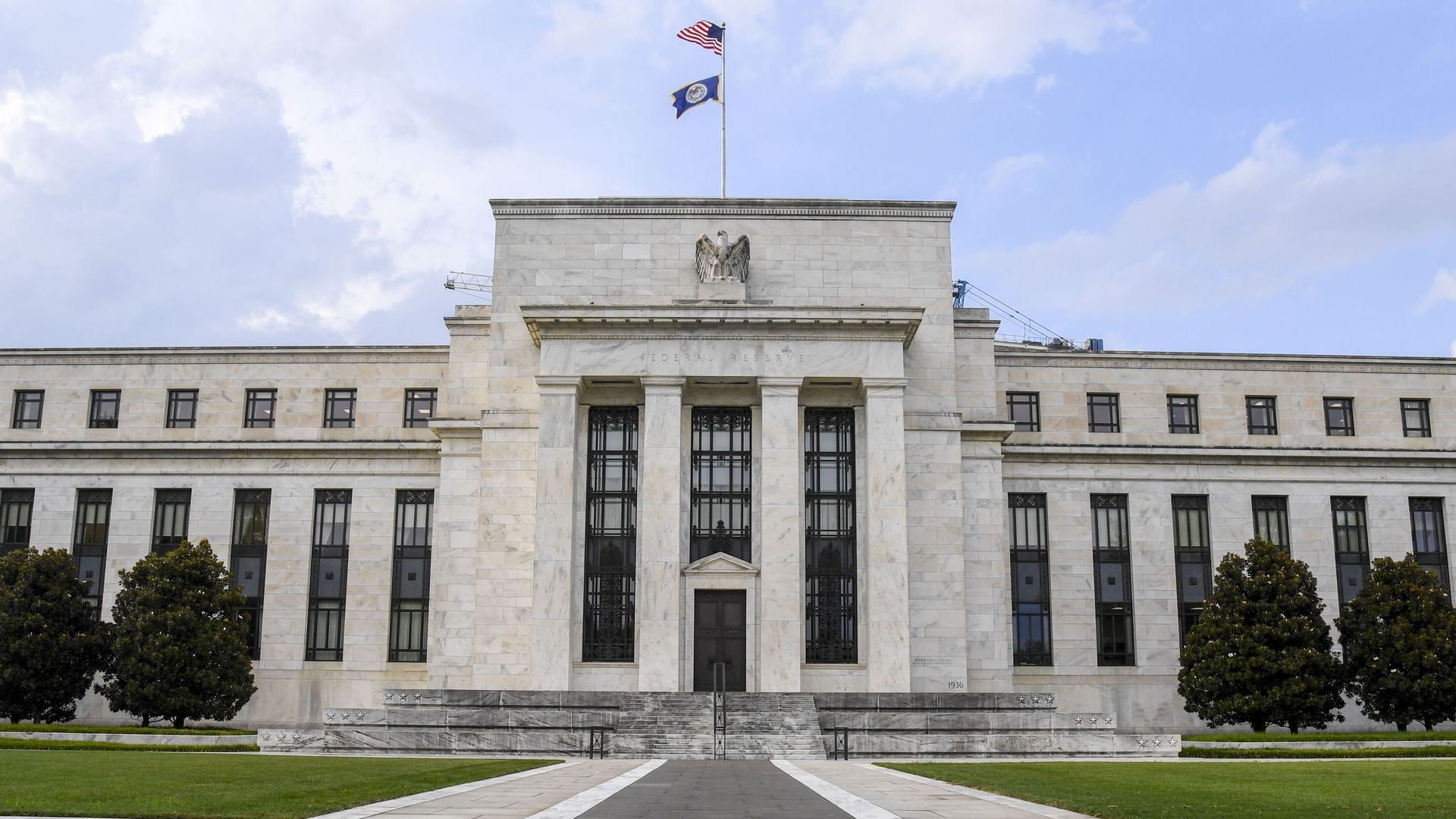
The Fed released its latest beige book on Wednesday and the biggest takeaway was that despite the excitement for the phase one trade deal, "tariffs and trade uncertainty continued to weigh on some businesses."
What it means: The beige book gathers anecdotal responses from businesses around the country to get an idea of how the economy is doing.
The bond-buying program the Fed began in September, which has added more than $400 billion to its balance sheet, is likely helping lift the stock market and other asset prices, not unlike its previous quantitative easing program, Dallas Fed president Robert Kaplan said Wednesday.
What he said: “My own view is it’s having some effect on risk assets,” Kaplan said in an interview with Bloomberg.
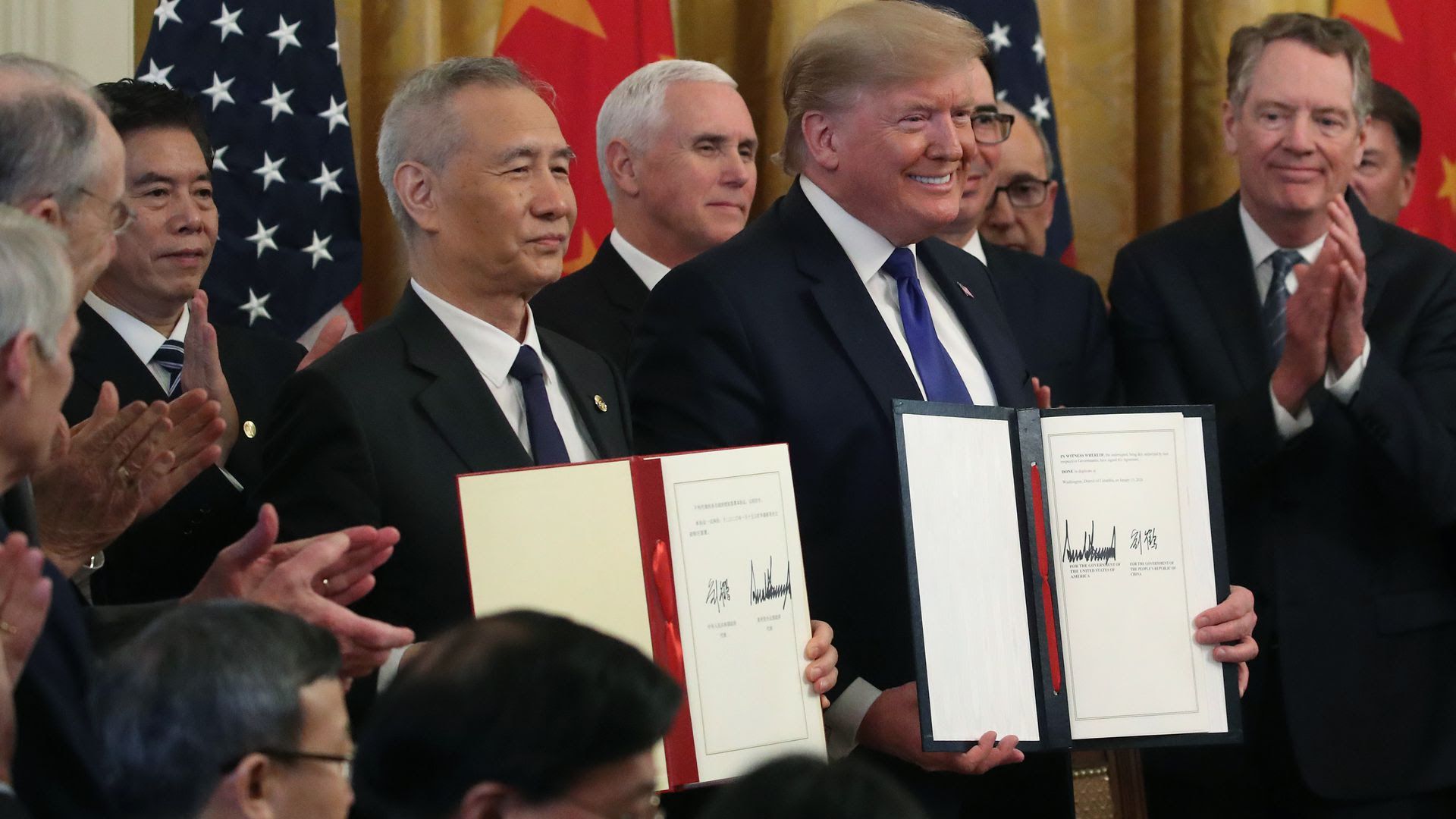
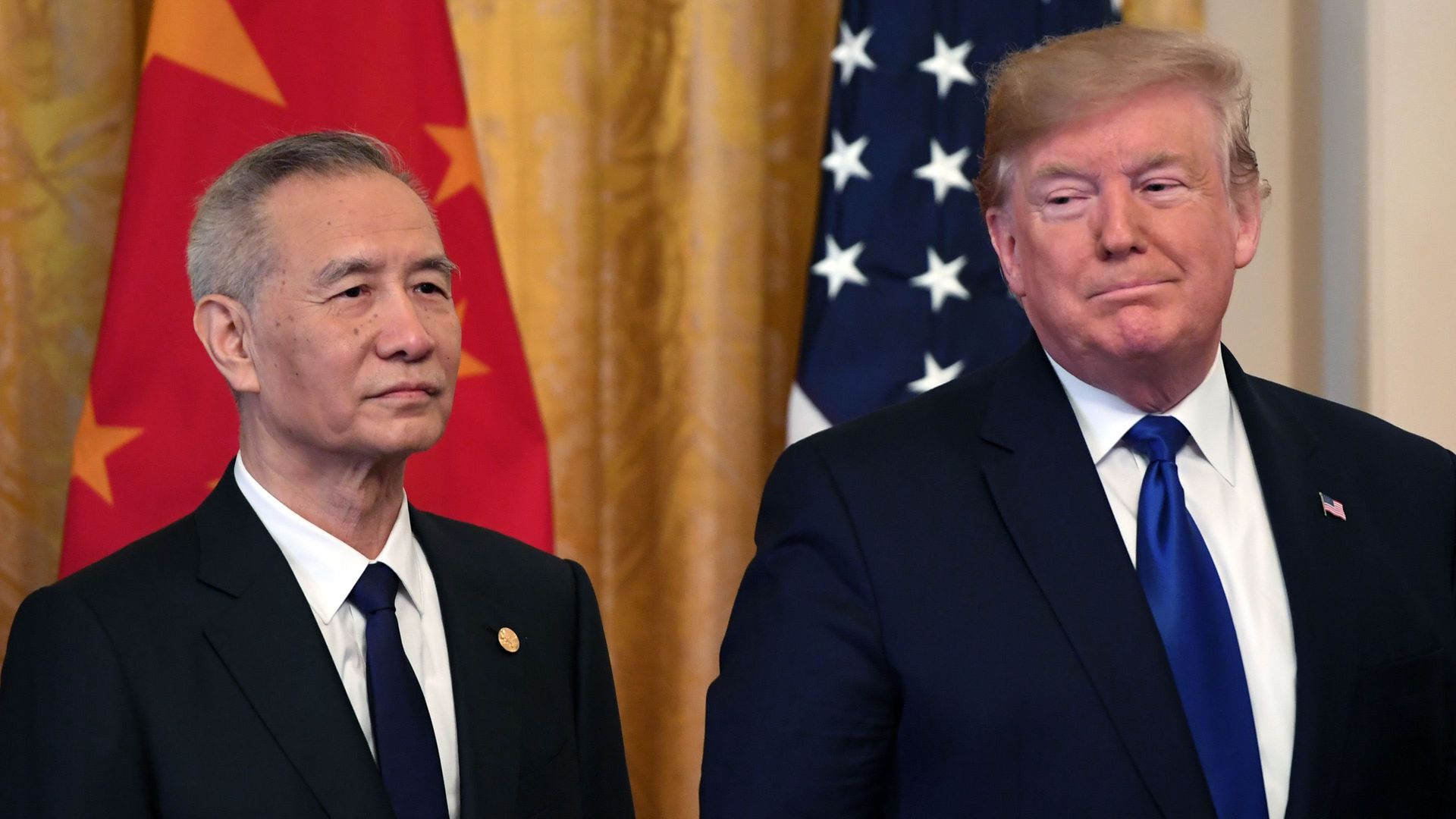
There was limited fanfare from the stock market after President Trump and Chinese Vice Premier Liu He signed the "phase one" trade deal yesterday.
What happened: The 94-page document will roll back some U.S. tariffs on Chinese goods and see China increase purchases of U.S. goods and services by $200 billion over two years, but it leaves more questions than answers, experts say.
One year ago, Microsoft announced it would invest $500 million to address the affordable housing crisis in Seattle. Today, it announced an additional $250 million in the form of a line of credit to the Washington State Housing Finance Commission.
Why it matters: The additional allocation brings Microsoft's total investment to $750 million, deepening its role in its hometown as part financier, part philanthropist in trying to lessen the low- and middle-wage housing shortage plaguing many tech hubs around the country.
U.S. commercial and industrial lending fell by $9 billion in December, the largest drop in nearly three years, and the total amount of C&I loans declined to levels last seen in May, data from the St. Louis Fed shows.
Why it matters: The decline in lending to commercial and industrial businesses is the latest sign that the recession in U.S. manufacturing and continued struggles in goods-producing sectors of the economy are spreading. The Commerce Department reported that U.S. business investment had contracted for six straight months as of the third quarter, and had the biggest drop since the end of 2015 in Q3.
Last year was one to forget for the world's manufacturers, as industry metrics declined to some of the lowest levels in years.
The state of play: Investors and industry insiders see the sector mounting a comeback in 2020 as the trade war and tariffs are expected to recede, global demand is expected to increase and companies begin to reroute their supply chains.











/2020/01/15/1579091855620.gif?w=3840)