One year ago, Microsoft announced it would invest $500 million to address the affordable housing crisis in Seattle. Today, it announced an additional $250 million in the form of a line of credit to the Washington State Housing Finance Commission.
Why it matters: The additional allocation brings Microsoft's total investment to $750 million, deepening its role in its hometown as part financier, part philanthropist in trying to lessen the low- and middle-wage housing shortage plaguing many tech hubs around the country.
U.S. commercial and industrial lending fell by $9 billion in December, the largest drop in nearly three years, and the total amount of C&I loans declined to levels last seen in May, data from the St. Louis Fed shows.
Why it matters: The decline in lending to commercial and industrial businesses is the latest sign that the recession in U.S. manufacturing and continued struggles in goods-producing sectors of the economy are spreading. The Commerce Department reported that U.S. business investment had contracted for six straight months as of the third quarter, and had the biggest drop since the end of 2015 in Q3.
Last year was one to forget for the world's manufacturers, as industry metrics declined to some of the lowest levels in years.
The state of play: Investors and industry insiders see the sector mounting a comeback in 2020 as the trade war and tariffs are expected to recede, global demand is expected to increase and companies begin to reroute their supply chains.
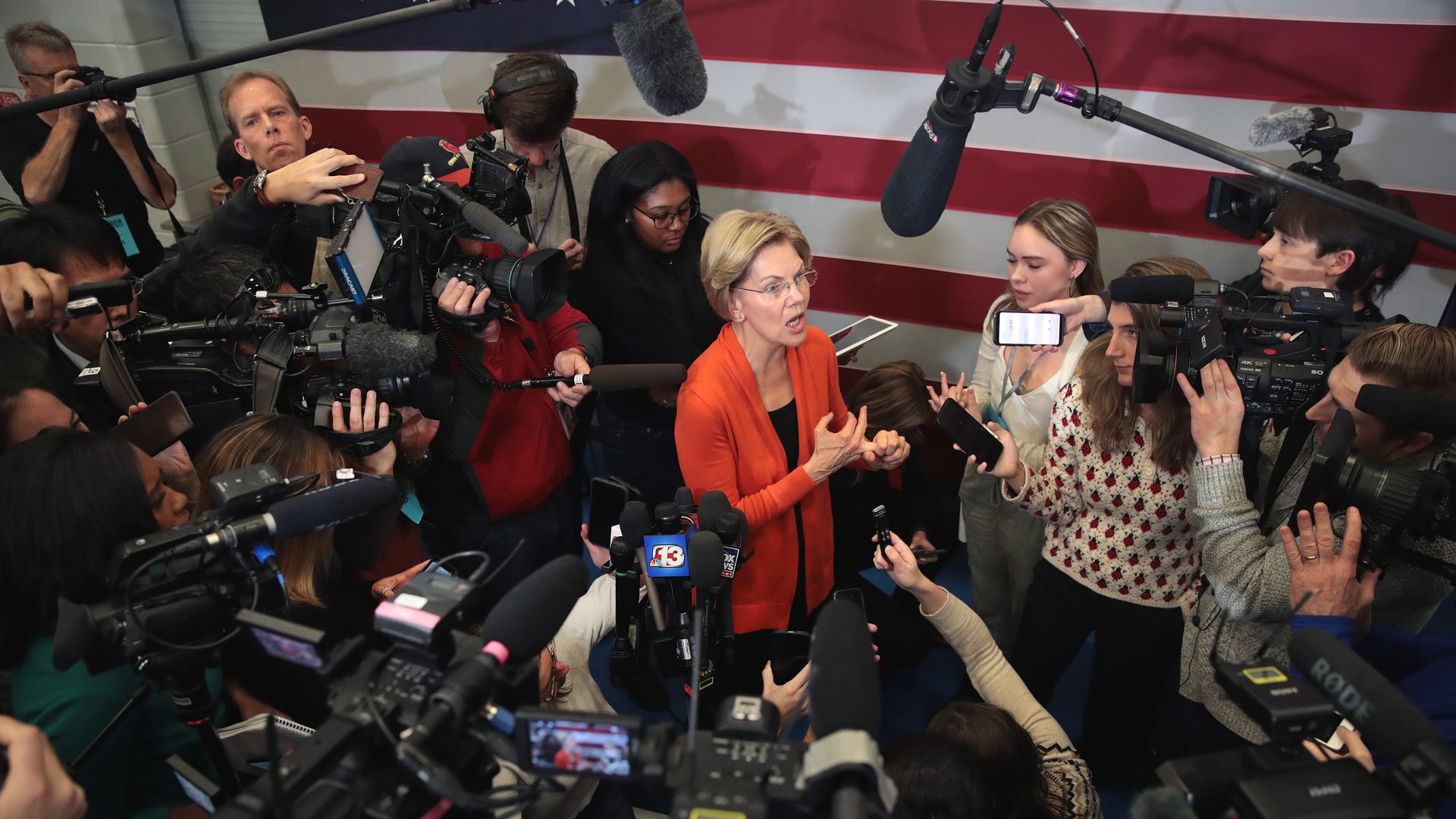
Sens. Elizabeth Warren (D-Mass.) and Chris Van Hollen (D-Md.) sent a letter to federal regulatory agencies on Monday asking them to investigate whether there was insider trading stemming from President Trump telling guests at his Mar-a-Lago club to expect a “big” response to Iran’s killing of an American contractor in Iraq, as The Daily Beast first reported.
Why it matters: The letter, sent to the Securities and Exchange Commission (SEC) and the Commodity Futures Trading Commission (CFTC), says the report "raises a number of troubling national security questions regarding President Trump's handling of classified and other sensitive national security information."
Over the last decade, transactional video on-demand (TVOD), which are services that sell or rent content on a one-time basis, have largely been challenged by the rise of subscription and advertising-based streaming services that allow users to access hundreds of titles for a monthly or yearly fee.
Case-in-point: Companies like Apple and Amazon, which still sell and rent content to users, have both invested heavily over the past year in building up their own subscription streaming platforms (SVODs).
A whopping 532 original scripted television series were created last year, according to the latest data from FX Networks Research, up 7% from the year before.
Why it matters: The new data suggests that "peak TV" hasn't happened yet.
The HBO Max team is looking at ways to make the streaming service more mobile-friendly than some of its subscription video competitors.
Why it matters: If AT&T can build an app that can successfully leans into mobile, it may be able to capture an audience that Netflix and Hulu have intentionally been less focused on, at least to date.
In the next 12–18 months, States Newsroom, a nonprofit company that supports a group of state capital-based, independent newsrooms, will expand to cover up to 20 more states, executives tell Axios.
Why it matters: Its efforts are the latest in a string of investments into revitalizing coverage of state governments across the country.





/2020/01/15/1579091855620.gif?w=3840)