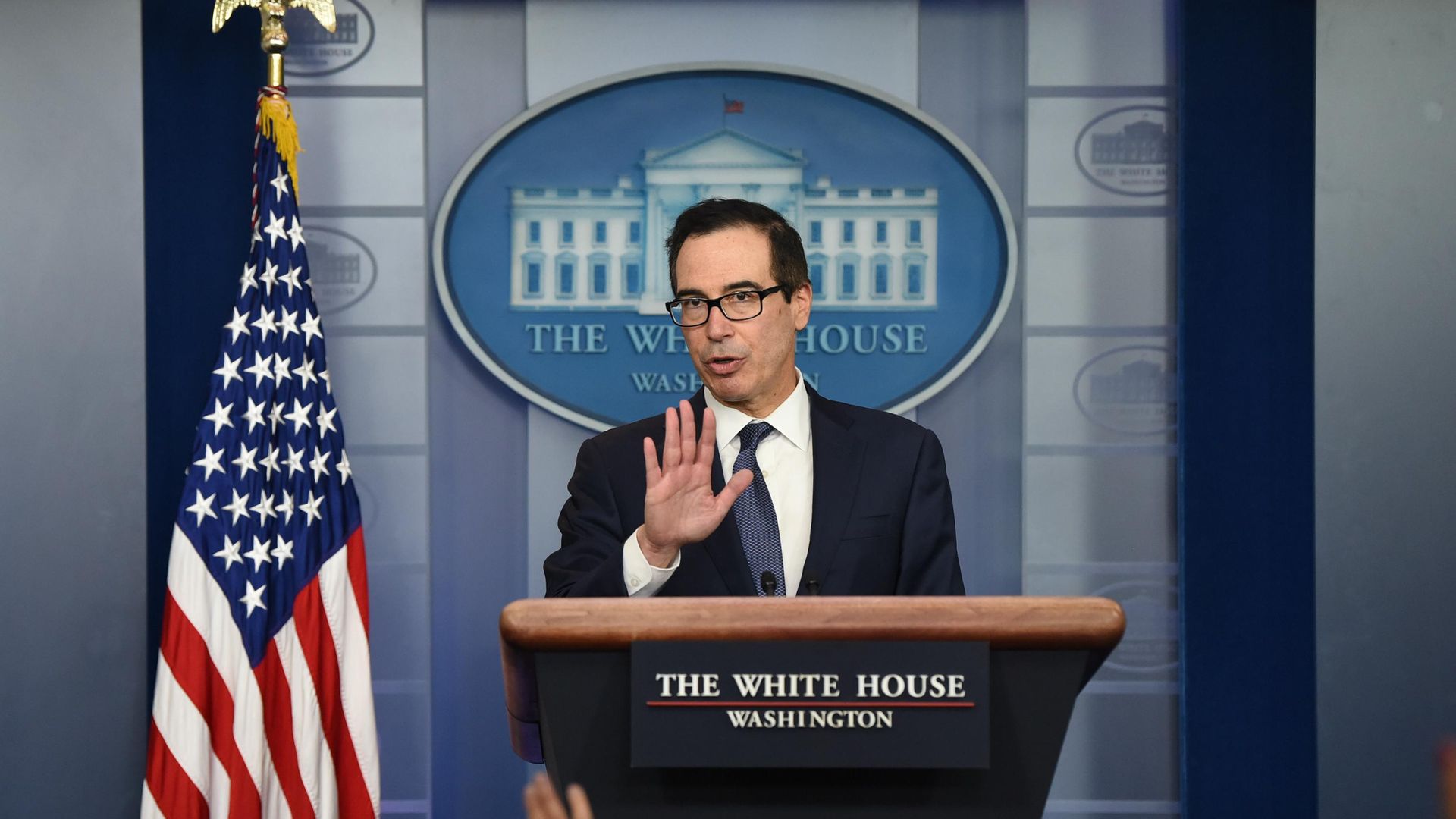
Why it matters, via Axios' Jonathan Swan: Trump's tweet is the most definitive sign yet that the U.S. and Chinese teams are committed to signing the "phase one" deal. Some senior administration officials — who have felt burned by China before — had privately been cautioning that it was still possible it could fall apart at the last minute.
The Agriculture Department projects that farm incomes will reach $88 billion in 2019 but nearly 40% of that — $33 billion — will come from trade aid, disaster assistance, the farm bill and insurance indemnities, according to a new report by the American Farm Bureau Federation (AFBF).
Why it matters: Farmers — a critical constituency for President Trump in the 2020 presidential election — are feeling the squeeze from China’s retaliatory tariffs, extreme weather and record-high farm debt that's driving farm bankruptcies.
The Treasury Department announced Wednesday that it was looking into releasing two new maturities — a 50-year and 20-year bond.
Why it matters: The new issues would help offset the increasing share of Treasuries that U.S. financial institutions have had to buy recently, largely as a result of decreasing foreign buyers and the Trump administration's increasing deficits.
Fed Chair Jerome Powell almost rocked the boat during the FOMC's October press conference on Wednesday after announcing a third straight cut to U.S. interest rates.
What happened: Powell initially said it would take a "material reassessment" in the outlook for the Fed to change its view that no further rate cuts were needed — but minutes later he reversed course, saying that holding rates at their current levels would be appropriate as long as the outlook stayed within the Fed’s expectations.
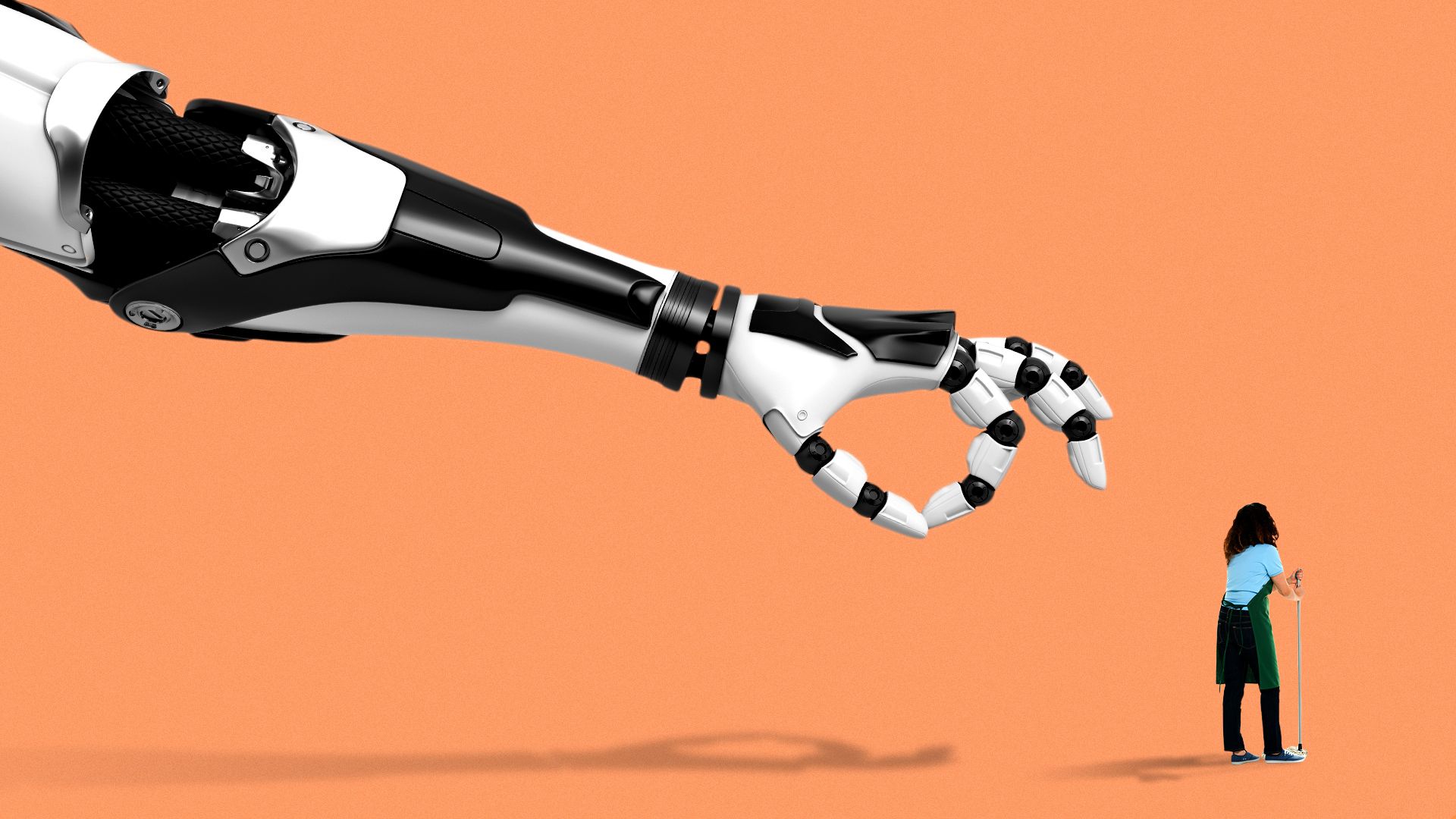
Headlines, white papers and studies say AI and robotics will trigger massive job losses in the future. But the technologies that we have today — from spreadsheets to smartphones — have already upended millions of jobs.
Why it matters: The jobs that have changed most dramatically over the last decade are lower-paying ones that are often located in economically distressed parts of the country. The disruption is adding pressure on Americans who are already struggling.
Fed chair Jerome Powell almost rocked the boat during the FOMC's October press conference on Wednesday after announcing a third straight cut to U.S. interest rates.
What happened: Powell initially said it would take a “material reassessment” in the outlook for the Fed to change its view that no further rate cuts were needed. But minutes later he reversed course, saying that holding rates at their current levels would be appropriate as long as the outlook stayed within the Fed’s expectations.
Chilean President Sebastián Piñera said Wednesday that the country will no longer host November's Asia-Pacific Economic Cooperation Summit and December's UN global climate summit due to ongoing protests, per AP.
Sony is shutting down Playstation Vue — its digital live-television service — next January, the company said in a blog post. It's the first digital live TV package to shutter after a slew of such services launched over the past five years.
Why it matters: Media companies and distribution networks are all trying to find new ways to package up content for streaming, but none of them has a magic formula. Increasingly, their over-the-top services resemble the cable bundles they sought to overtake.
The U.S. economy grew at a 1.9% annualized pace in the third quarter, the Commerce Department said on Wednesday —higher than the 1.6% economists expected.
Why it matters: The economy is still growing at a moderate clip, though the number marks a significant slowdown in growth from just the beginning of this year — when GDP jumped 3.1% — as the boost from President Trump's tax cuts fades and the U.S.-China trade war weighs on growth.
The Conference Board’s consumer confidence index dipped slightly in October, but showed a notable decline in the survey's future expectations component and a growing divergence between respondents' views of their current situation and their expectations for the future.
By the numbers: Expectations fell 0.9 points during the month and have dropped by 17.5 points from their 2019 peak in July, Pantheon Macroeconomics chief economist Ian Shepherdson says in a note.
Lower- and middle-income households in the U.S. are just starting to feel the benefits of the economic recovery as wage growth has picked up over the last year, but many are still struggling because the pace of wage gains has not kept up with expenses.
Why it matters: As a result, more Americans are taking on debt in the form of personal loans, which are now outpacing credit cards and auto loans as the fastest-growing debt category in the U.S., according to data from credit reporting firm Experian.