The leaders at some of the most prominent media and tech firms keep getting in trouble for anti-union comments made on Twitter.
Why it matters: Business leaders' long-standing anti-labor bias is coming back to bite those who should know better than to publicly discourage employees from unionizing.
Once upon a time, going public was a fun and joyous thing to do. In the late 1990s, young companies would raise money in an IPO, there would be an enormous first-day pop, everybody would start talking about you, and the combination of new money and free PR would turbocharge your business.
Flash forward: Today, it's hard to find anybody who's happy with way that companies transition from being private to being public. Even the institutional clients of the large investment banks, who can get significant allocations of coveted IPOs, are feeling the pain. Companies like Uber and Peloton have never traded above their IPO price.
CNN refused to air a Trump campaign ad that pushes misleading claims about Joe Biden's role in the ouster of a Ukrainian prosecutor and suggests the network's anchors are the Democrats' "media lapdogs," The Daily Beast reports. The Trump campaign said the ad is "factually accurate."
Why it matters: This isn't the first time CNN has determined that the Trump campaign crossed its red line on advertising political content. When CNN stopped running an ad that vilified immigrants in 2018, NBC and Fox later followed suit.
The U.S. stock market may be running low on liquidity, experts say, and that could very well weigh down prices and lead to further selling.
Why it matters: The dysfunction over the past few weeks in the repo market, which is where large financial institutions sell assets like Treasuries when they need quick cash, may have been the first signal of a wide-ranging liquidity shortage.
An index that tracks activity within the services industry fell to a 3-year low in September, while a gauge of hiring within the sector dropped to the lowest level since 2010, according to the ISM non-manufacturing activity survey.
Why it matters: It’s the latest indicator pointing to an economic slowdown in the shadow of a trade war between the world's 2 largest economies, following the 2nd straight month of contraction in the U.S. manufacturing sector. While the services industry is still growing, this is the first sign that the all-important services industry — which makes up a way bigger slice of the economy than manufacturing (about 70%) — is starting feeling the blow.
The Federal Reserve said Wednesday it would use its might to shed light on the downbeat conditions plaguing rural America.
Why it matters: It's another example of the sea change among monetary policymakers, who are starting to consider issues they haven't focused on before — like the plight of people in low-income communities and climate change — as they make huge decisions about the economy.
Tuesday's dramatic slide in U.S. manufacturing to the weakest level in 10 years generated jarring headlines and spooked the market, but there are signs the sector is improving on a global level.
Why it matters: Even in the U.S., things may not be as bad as the Institute for Supply Management's grim Tuesday report would suggest.
Stocks took a nosedive for the 2nd consecutive day on Wednesday and the Dow and S&P fell for the 4th time in 5 sessions. But the U.S. Treasury market experienced a far smaller move, as it has been factoring in manufacturing weakness and slowing job growth for months.
Why it matters: The bond market's limited movement in the face of historically weak manufacturing and deteriorating employment data suggests the worst may be over, analysts say.
Walmart is expanding its unique employee health benefit.
Why it matters: Walmart is the largest private-sector employer in the country, and it has taken a remarkably hands-on approach to seeking out quality in its health coverage — even when that comes at a considerable cost.
The Federal Trade Commission has warned 7 law firms and marketing companies that their TV ads alleging harm, and offering possible monetary relief, from certain prescription drugs "may be deceptive or unfair" and may prompt people to stop taking their medications.
Driving the news: Documents obtained by Axios under the Freedom of Information Act show the FTC was particularly concerned about personal injury ads against the diabetes drugs Invokana and Invokamet.
Twitter has started a video series called #HerStory that highlights the work and lives of women journalists.It's launching its Washington, D.C., series, which includes sit down interviews with USA Today's Susan Page, American Urban Radio Networks' April Ryan, PBS' Yamiche Alcindor, and the Washington Post's Ashley Parker and Seung Min Kim.
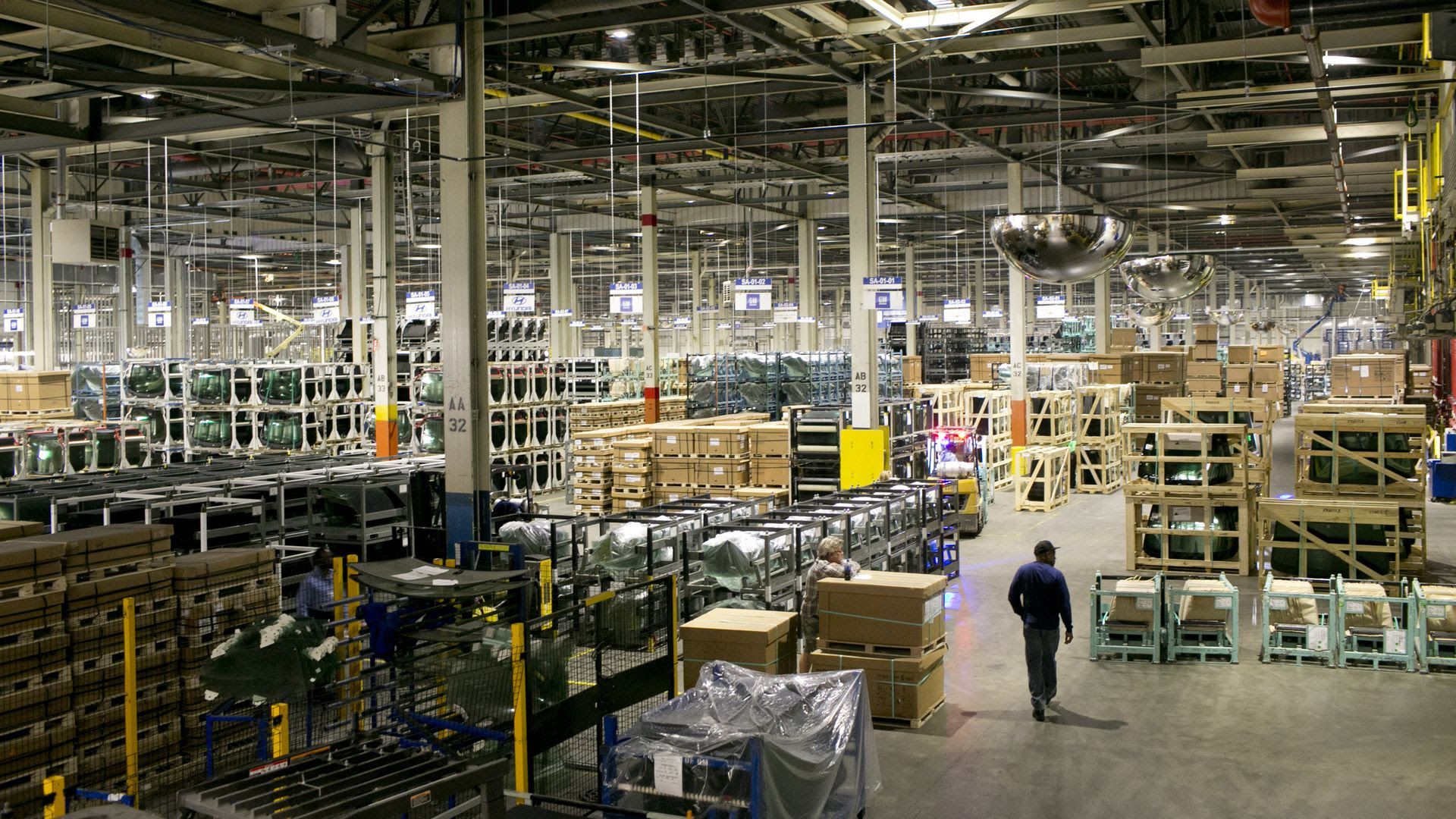
Automation and offshoring have destroyed millions of U.S. manufacturing jobs in the last 2 decades, but another, less-discussed threat to those jobs is the U.S.-China trade war.
The big picture: Almost a fifth of all manufacturing jobs in the U.S. are created by foreign companies that put their factories in American towns to get closer to the U.S. market, according to Brookings, and around a quarter of U.S. exports come from factories owned by foreign countries, reports the Washington Post.











/2019/10/03/1570104912577.gif?w=3840)