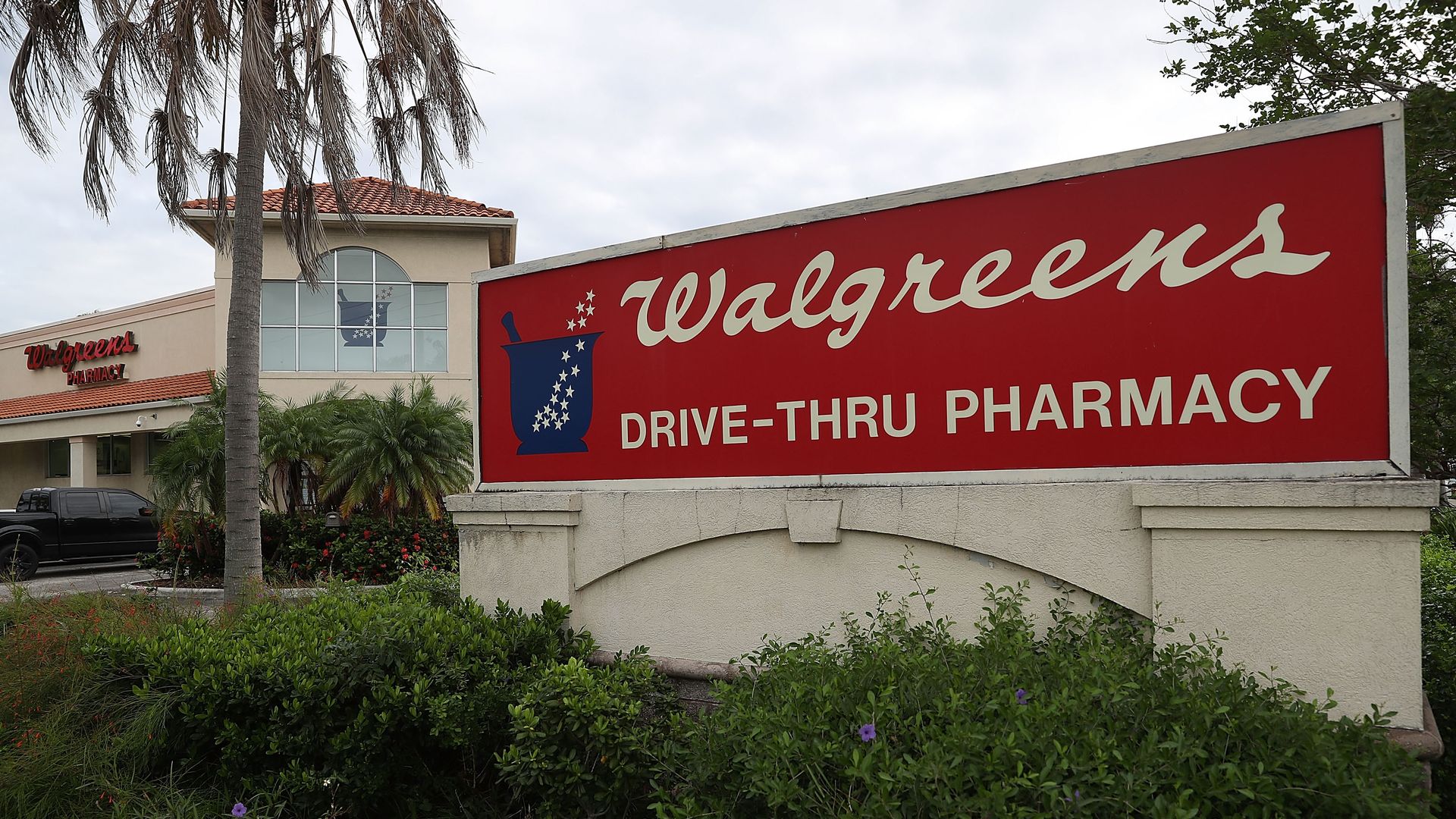
The stock price of Walgreens Boots Alliance plummeted more than 12% Tuesday after the pharmacy chain slashed profit estimates for the rest of the year and posted what it called "the most difficult quarter" since Walgreens and Boots Alliance merged in late 2014.
The big picture: Drug pricing middlemen are paying Walgreens' pharmacies less to dispense prescriptions. That "reimbursement pressure," combined with the overhang of drug price reform and Amazon's looming drug mailing presence, is rattling the entire retail pharmacy industry.
Demand for the final season of "Game of Thrones" is at a record high, according to Parrot Analytics, a data science company that measures and predicts global demand for content.
Data: Parrot Analytics and Axios research; Chart: Harry Stevens/Axios
A new study from the Conference Board predicts corporate profits will decline this year. The group's economists say companies most at risk of profit declines are those that employ many blue-collar workers, "an increasingly scarce yet high-in-demand group."
The intrigue: The study specifically highlights companies in the manufacturing, food service and transportation industries, which are expected to see labor costs eat into profits as blue-collar workers' labor costs are rising much faster than for their highly educated white-collar counterparts.
Surveys showed global manufacturing, the lifeblood of many of the world's economies, was flat in March — the first time it has not fallen since April 2018.
"The steady result was achieved in no small part thanks to a better performance from China. China led a regional divide, with northeast Asia generally improving. While in contrast, Central Europe was notably weak, and North American manufacturing, at least based off the PMIs, was also losing some growth momentum, most especially in Canada and Mexico."
— Alan Ruskin, chief international strategist at Deutsche Bank, wrote in a note to clients.
Comscore and Nielsen, two of the biggest providers of media measurement and analytics, have seen their stocks sink over the past week after separate reports of corporate drama.
The big picture: The media measurement market has gotten more complicated as the analog world reckons with digital, putting more pressure on companies to invest in innovation, which can be costly and controversial.
News outlets have for years struggled to gain leverage over tech companies for distributing their content, but in the past week, they've racked up some major wins.
Why it matters: The wins provide hope that news companies will one day be able to leverage their original content and trusted relationships with users online to sustain themselves — even in an environment where they have to rely on technology partners for much of their distribution.
New research published in Scientific American shows that when local newspapers shutter, citizens increasingly turn to national news sources for political information — which the report says "emphasize competition and conflict between the parties."
Why it matters: The findings underscore the roughly $1 billion being donated by philanthropists, corporate backers and tech companies to save local news, and puts more pressure on society to address the issue ahead of the 2020 election.
As once-thriving retailers like Gap, Victoria's Secret and JCPenney announce almost 5,000 store closings in just 2019, three retail startups have hit valuations of $1 billion or more — and entered the exclusive "unicorn" club.
Driving the news: In the past 10 days, Rent the Runway, Glossier and Casper have all topped $1 billion valuations. The success of the three charts the future of retail — a landscape peppered with tech-infused startups that begin online then go to Main Street.
CB Insights analyzed deals from 2010 through last month (weighted toward recent performance) and found these venture-capital winners, per the New York Times.
What to watch: A swarm of technology IPOs expected this year and next year are slated to have big returns for venture capitalists involved.