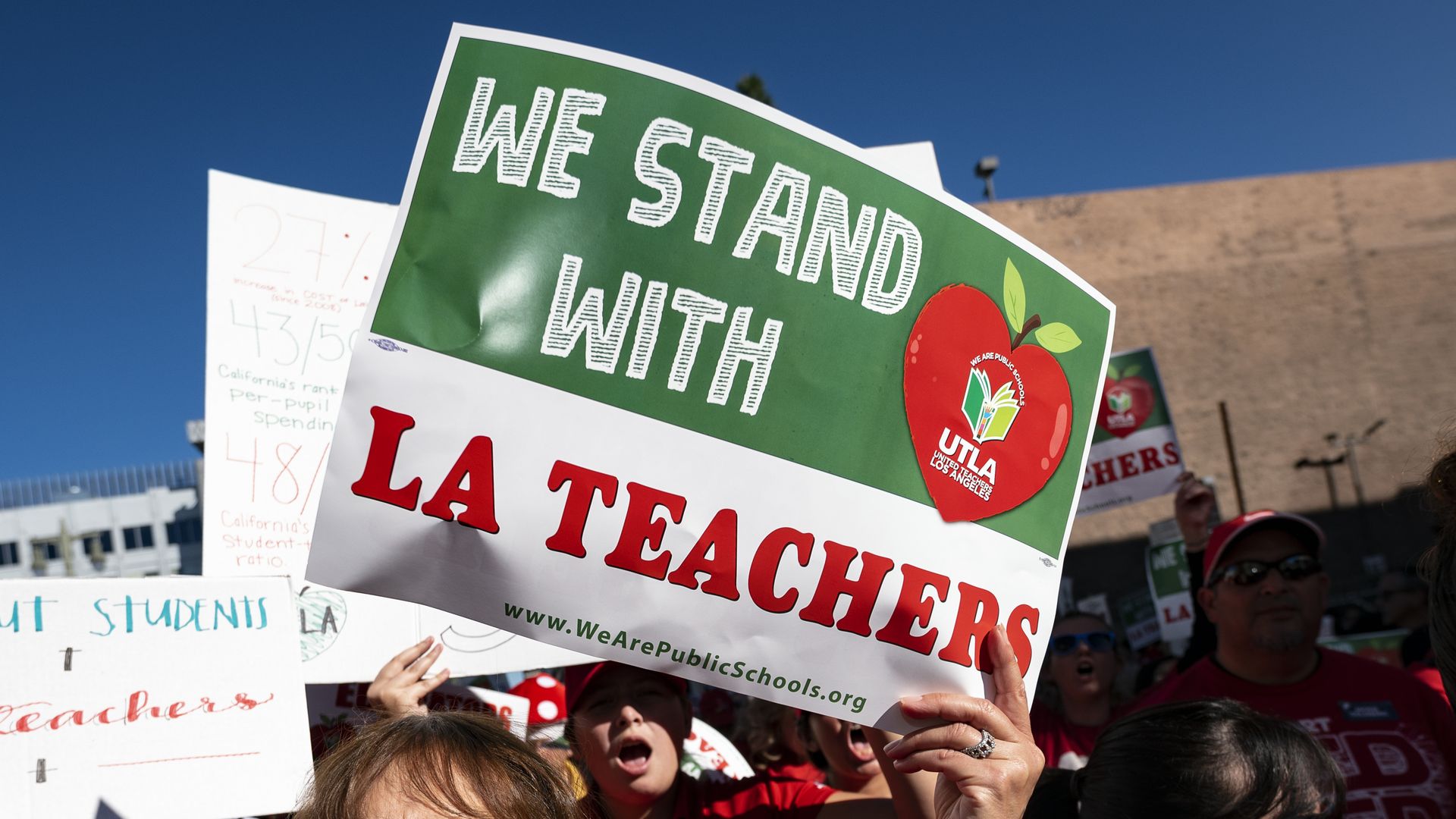
A union representing 31,000 teachers and school staff plans to strike on Jan. 10 following months of stalled negotiations, the Los Angeles Times reports.
The state of play: United Teachers Los Angeles and the Los Angeles Unified School District have agreed on an initial salary number, but they can't agree on a raise structure. The union wants a 6.5% raise retroactive to July 1, 2016, but the school district is only offering a 3% raise retroactive to July 1, 2017. A statement by the union's leader on Wednesday suggests it's very unlikely there will be a resolution in time for the deadline.
FedEx CEO Fred Smith signaled darker times ahead for the transportation industry during an earnings call on Tuesday, citing negative economic impact stemming from President Trump's trade war, Brexit and other global issues caused by "bad political choices."
Why it matters: FedEx, along with the rest of the transports sector, is considered a good gauge of economic health.
New York Attorney General Barbara Underwood announced a record $174.2 million consumer fraud settlement Tuesday with Charter Communications and Spectrum Management Holding Company for defrauding internet subscribers.
Details: 700,000 consumers will receive direct refunds totaling $62.5 million, believed to be the largest single payout by an internet service provider in U.S. history. Approximately 2.2 million subscribers will also receive free streaming services and premium channels at a retail value of more than $100 million.
Dan and Axios media reporter Sara Fischer discuss CBS's decision to deny a $120 million golden parachute to former CEO Les Moonves, who had been accused by multiple women of sexual misconduct.
U.S. adults spend 10 hours and 24 minutes per day connected to media, according to Nielsen's latest Total Audience Report.
Details: What's more shocking than the crazy amount of time we spend consuming content is the amount that older people consume compared to younger generations. While adults aged 50–64 spend more time per day on media than any other age group, adults aged 18–34 spend more time on digital than TV and TV-connected devices.
When digital media site Mic went bust earlier this month, it sparked an inferno of postmortems. Not only for Mic itself, but for digital media startups as a whole. Everything from “pivot to video” snark to “VC is the original sin for such startups” to finger-pointing at Facebook and Google for being bad partners.
The big picture: Sure it was coverage overkill, but this wasn’t some software or biotech startup that had raised over $60 million and was then sold for scrap. Mic was a media company — these were our people! — so of course we rushed to navel-gaze with a microscope. But the reality is that plenty of VC-backed digital media companies are very much alive and kicking.
The transition to streaming, the legalization of sports betting and the rise of esports have created new dynamics for the sports industry that will continue to play out next year.
The big picture: Sports betting is driving a new content industry. Betting on a sports event increases the likelihood of watching it on TV, according to a new telecommunications, media and technology report from Deloitte.
One of the biggest takeaways from 2018 is that streaming is here to stay, and for pay-TV providers hemorrhaging traditional TV subscribers, buying media has become an expensive way to potentially make up for those losses.
The most notable example of this was AT&T's $85 billion takeover of Time Warner this year. The acquisition is being used primarily to create streaming properties that customers can specially access with network subscriptions.
For the first time, the United States is one of the world’s deadliest countries for journalists after six reporters were killed in the line of duty in 2018, according to Reporters Without Borders' annual report.
The big picture: The report states there is an "unprecedented" level of worldwide hostility against members of the media, highlighting that the number of journalists killed while doing their jobs spiked 8% to 80 in 2018. In addition, 348 journalists are currently in prison across the globe, and 60 are being held hostage.
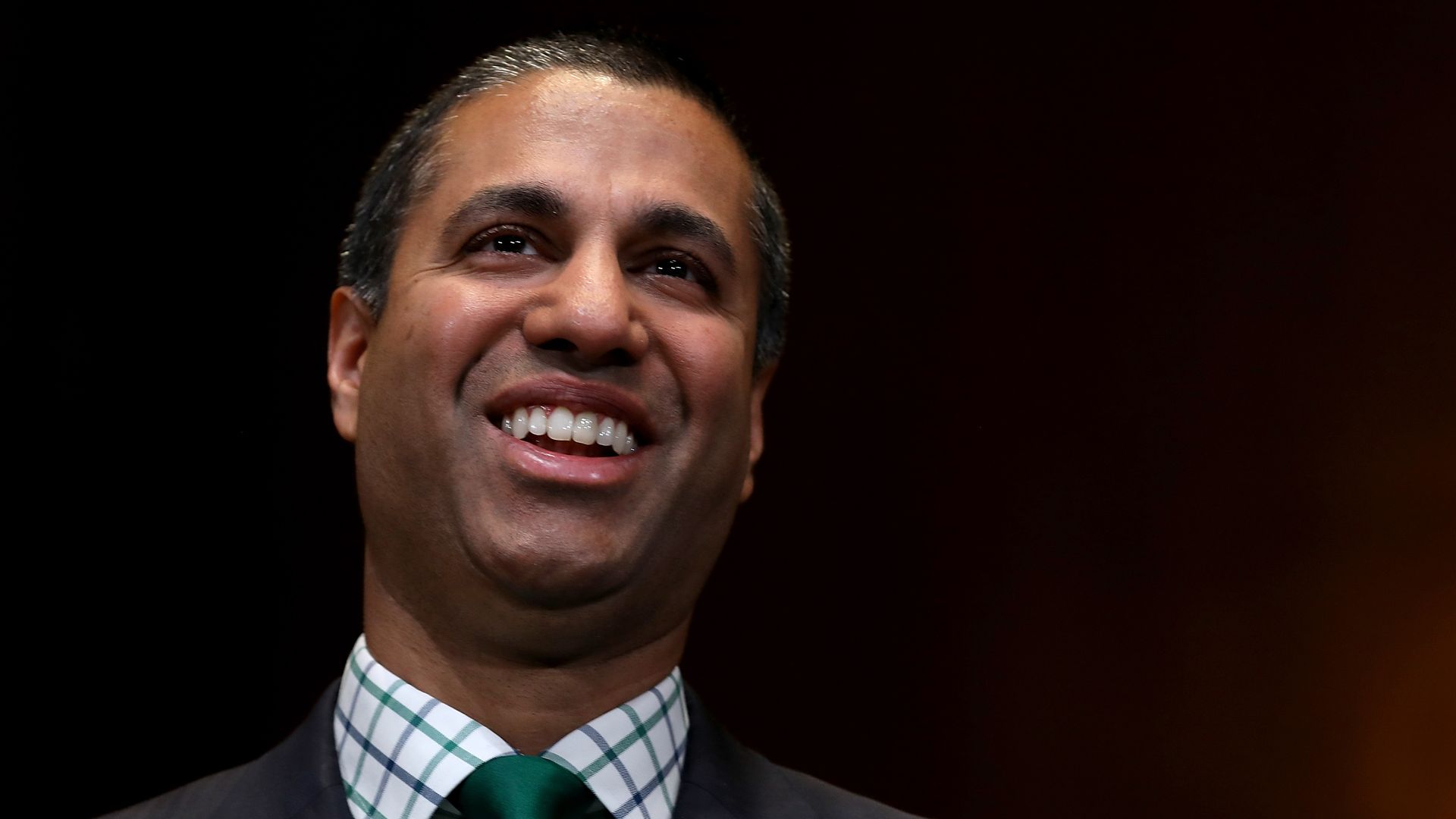
The Federal Communications Commission is fueling the war over media consolidation by opening the door to another deregulatory spree targeting rules that stop local broadcasters from merging.
Why it matters: The FCC may have killed the Sinclair-Tribune deal, but the overall trend is towards fewer owners for local news outlets — which are still vital sources of information for many Americans.
New studies suggest that efforts to bring transparency to media — including attempts by journalists to publicly defend their work, media literacy campaigns, more transparent funding and improved fact-checking partnerships — have helped the media recover a bit of trust with the public after hitting an all-time low in 2016.
The big picture: Transparency works. Even in areas where journalists and media companies never thought they needed to be so explicit, an effort to more clearly explain how their companies operate is helping.