The Correspondent, the English version of the Dutch journalism platform, De Correspondent, is launching a campaign to raise $2.5 million to fund in-depth journalism that's driven by feedback from readers.
The bigger picture: If it meets its fundraising goal by December 14th, The Correspondent will launch a website next year that's focused on in-depth coverage of complex topics, not breaking news.
EU Trade Commissioner Cecilia Malmström told reporters Wednesday that the EU has "not received any assurances" that the Trump administration won't implement auto tariffs, but said she is under the assumption that there will not be any new tariffs from either side — a commitment President Trump and European Commission President Jean-Claude Juncker agreed to in July.
The big picture: Malmström, who met with U.S. Trade Representative Robert Lighthizer in Washington, D.C., today, said she believes auto tariffs would be harmful to both the U.S. and European economies, but added that the EU has a draft list of retaliatory tariffs that it's prepared to process if necessary. As Axios' Jonathan Swan reported, Trump views the threat of auto tariffs as his best leverage over negotiating partners. He has privately told aides that the threat of auto tariffs helped him get a better trade deal with Canada, and that the same could apply to the EU.
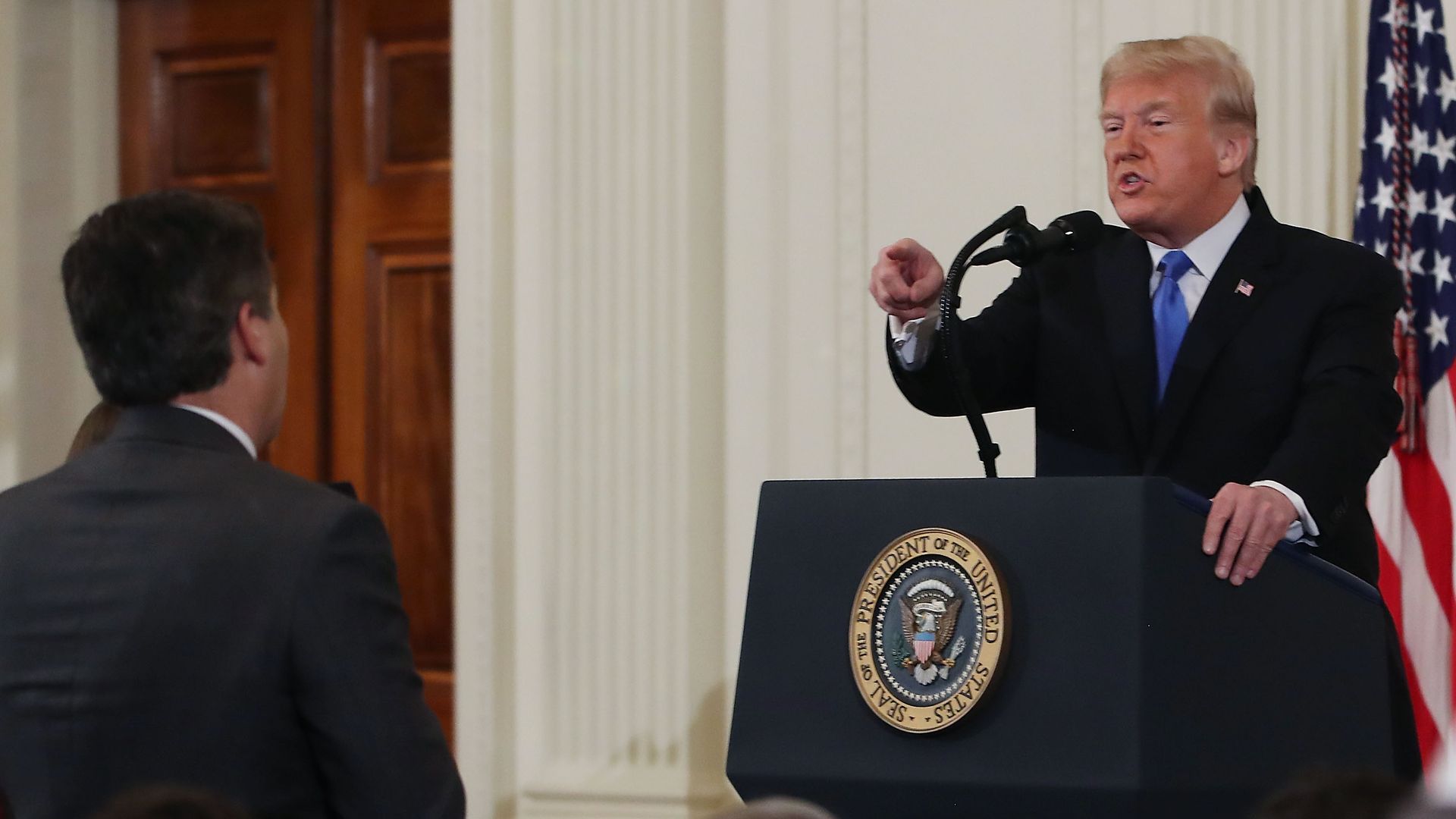
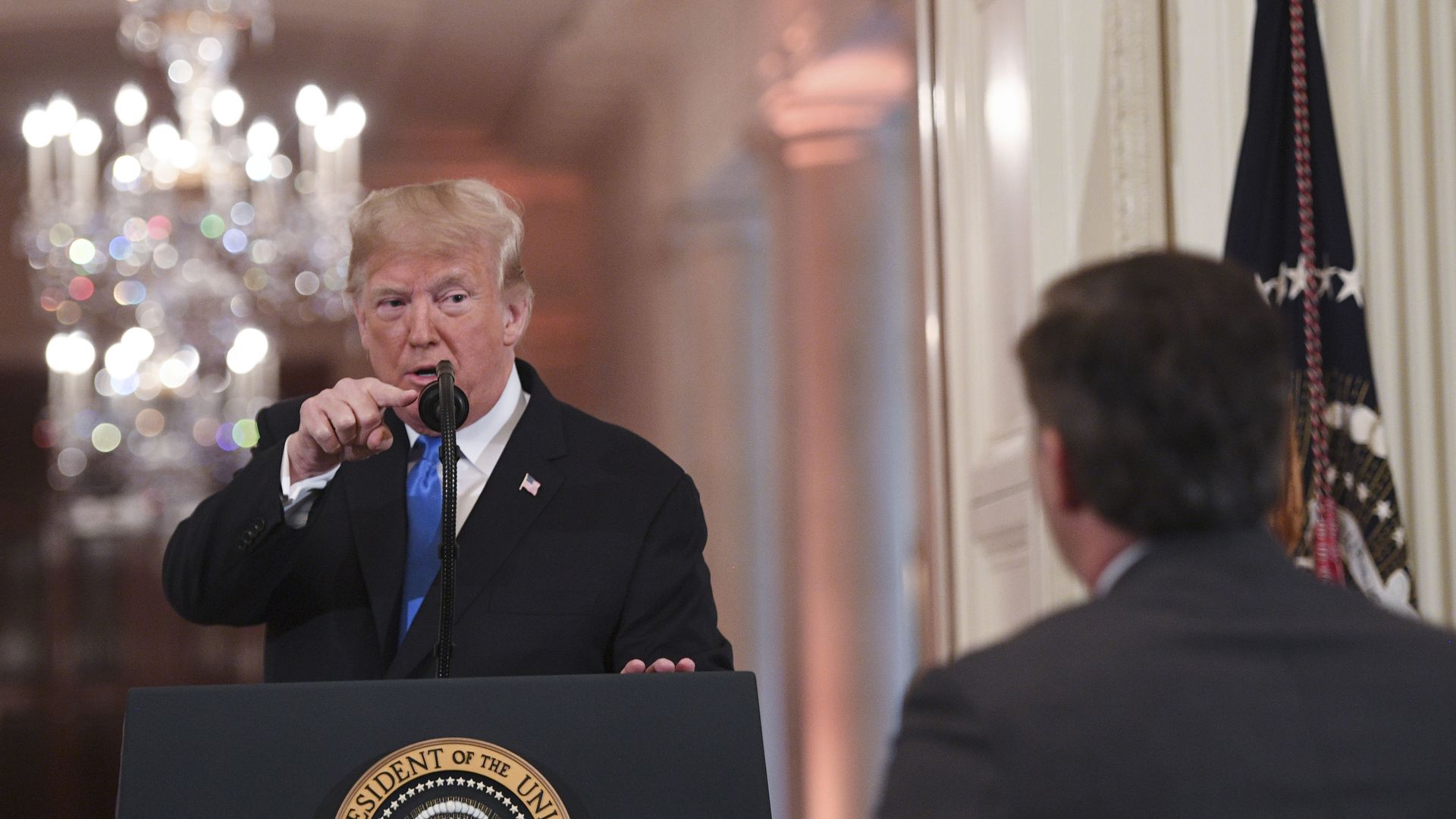
Fox News is supporting CNN's lawsuit against the Trump administration over the White House's revocation of Jim Acosta's press pass and plans to file an amicus brief in the case, according to a statement from the network's president Jay Wallace.
"FOX News supports CNN in its legal effort to regain its White House reporter’s press credential. We intend to file an amicus brief with the U.S. District Court. Secret Service passes for working White House journalists should never be weaponized. While we don’t condone the growing antagonistic tone by both the President and the press at recent media avails, we do support a free press, access and open exchanges for the American people."
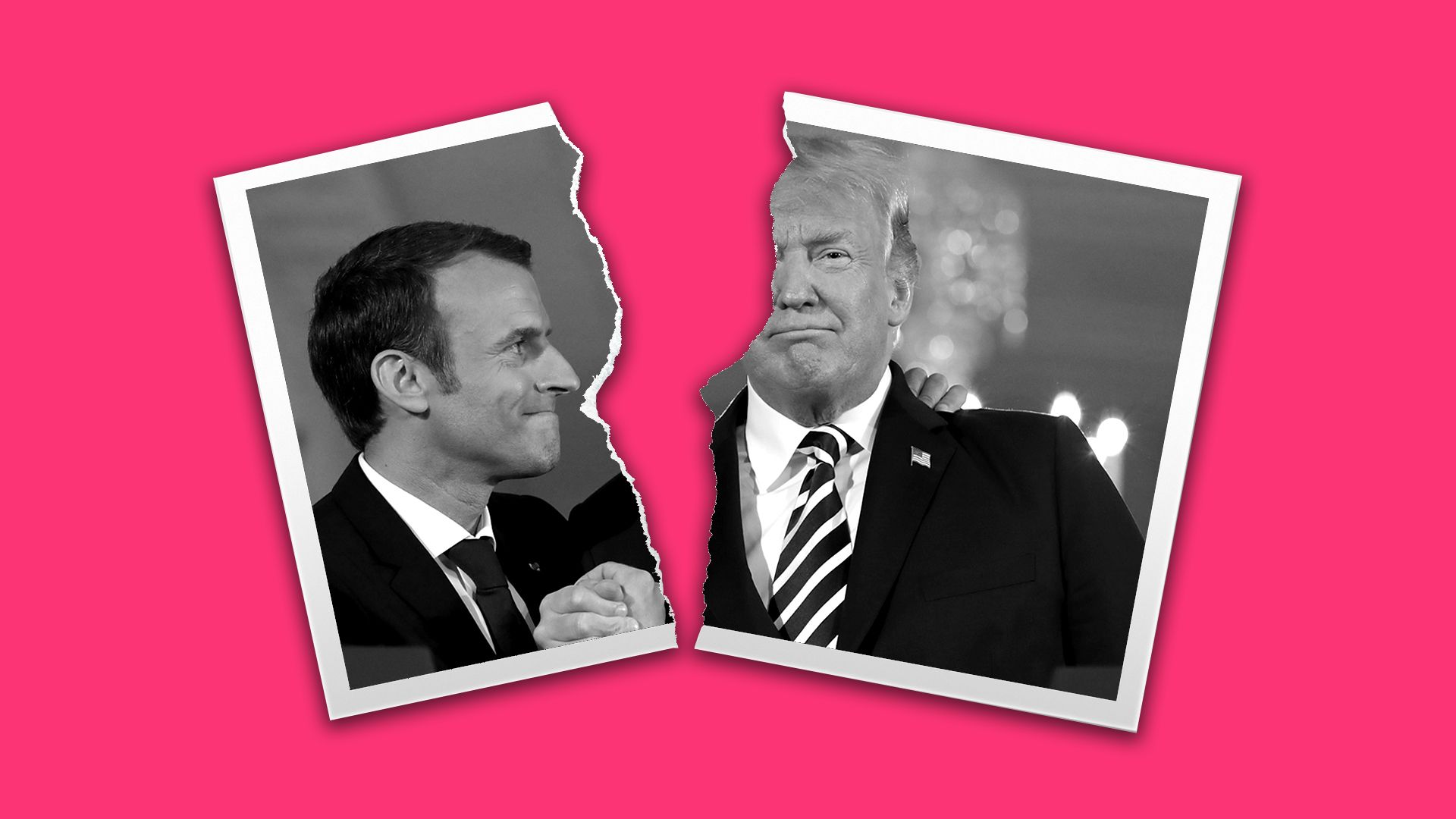
The unlikely bond between President Trump and French President Emmanuel Macron — once dubbed Le Bromance by the New York Times — appears to have taken a turn for the worse following Trump's weekend visit to France.
Driving the news: Trump kicked off the trip by tweeting his frustration with Macron's proposal for a "true European army," calling the idea "very insulting." On Sunday, with Trump sitting nearby, Macron gave a speech slamming nationalism as "a betrayal of patriotism." Trump responded in a Tuesday morning tweet storm, pointing out Macron's low approval rating and claiming "there is no country more [n]ationalist than France."
Why it matters: If CNN comes out victorious, it will reinforce a legal precedent that says government officials, even as powerful as the president, can't remove a member of the press corps' credentials for arbitrary reasons. If it doesn't, the precedent will be set that government officials can restrict access to journalists they dislike.
Amazon has pulled off one of the most successful public relations coups in memory, creating more than a year of wild public suspense and — among cities — deep longing to host its next headquarters.
But now comes the hard part: finding 50,000 engineers, computer scientists and other skilled workers to staff complexes in two of the largest cities in the U.S. amid the tightest job market in five decades.
CNN is suing President Trump and "several of his aides" over the White House's revocation of Jim Acosta's press pass, per CNN.
Details: The lawsuit is being filed Tuesday morning, and alleges that CNN and Acosta's First and Fifth Amendment rights are being violated. The defendants in the lawsuit include press secretary Sarah Sanders, chief of staff John Kelly, Secret Service director Joseph Clancy, deputy chief of staff for communications Bill Shine, President Trump, and the Secret Service officer who took Acosta's pass last week.
President Trump, during his Tuesday morning Twitter tirade against France and its president, Emmanuel Macron, called out the country for charging tariffs on U.S. wine.
"On Trade, France makes excellent wine, but so does the U.S. The problem is that France makes it very hard for the U.S. to sell its wines into France, and charges big Tariffs, whereas the U.S. makes it easy for French wines, and charges very small Tariffs. Not fair, must change!"
The big picture: The European Union's import tariff on U.S. wine ranges from $0.11 to $0.29 per 750mL bottle, according to the California-based Wine Institute. The U.S., meanwhile, charges, between $0.05 and $0.14. Trump has long been critical of the EU's trade policies, and views potential auto tariffs as his best leverage in getting a fair trade deal.
Days after returning from a trip to France, President Trump tweeted his frustrations with French President Emmanuel Macron over his calls for the EU to create its own army, belittling France's defeat at the hands of Germany during WWII in the process, and his comments labeling nationalism as "a betrayal of patriotism."
"Emmanuel Macron suggests building its own army to protect Europe against the U.S., China and Russia. But it was Germany in World Wars One & Two - How did that work out for France? They were starting to learn German in Paris before the U.S. came along. Pay for NATO or not! ... The problem is that Emmanuel suffers from a very low Approval Rating in France, 26%, and an unemployment rate of almost 10%. He was just trying to get onto another subject. By the way, there is no country more Nationalist than France, very proud people-and rightfully so! MAKE FRANCE GREAT AGAIN!"
News verticals that once brought in big subscription dollars and advertiser interest, like auto and arts, are being replaced by new-age topics that are relevant to understanding the world today, like space, the future of work, artificial intelligence, the future of transportation, blockchain and misinformation.
Why it matters: Before newsrooms began to invest heavily on covering these topics, experts typically resorted to Medium or LinkedIn to post about industry advancements and news. Now, news publications have a wider audience for these types of stories, as technology becomes a bigger part of everyday life.
Mergers are central to media companies' strategies for competing with tech giants like Google and Netflix, but the merger review process has suddenly become a political football between President Trump and congressional Democrats.
Why it matters: Trump continues to comment on antitrust matters related to media companies he doesn't like, and experts worry the resulting political fray could hinder the Justice Department's ability to independently evaluate mergers.Media companies looking to merge amid an already difficult economic climate now have to consider this reality as a part of their business decisions.
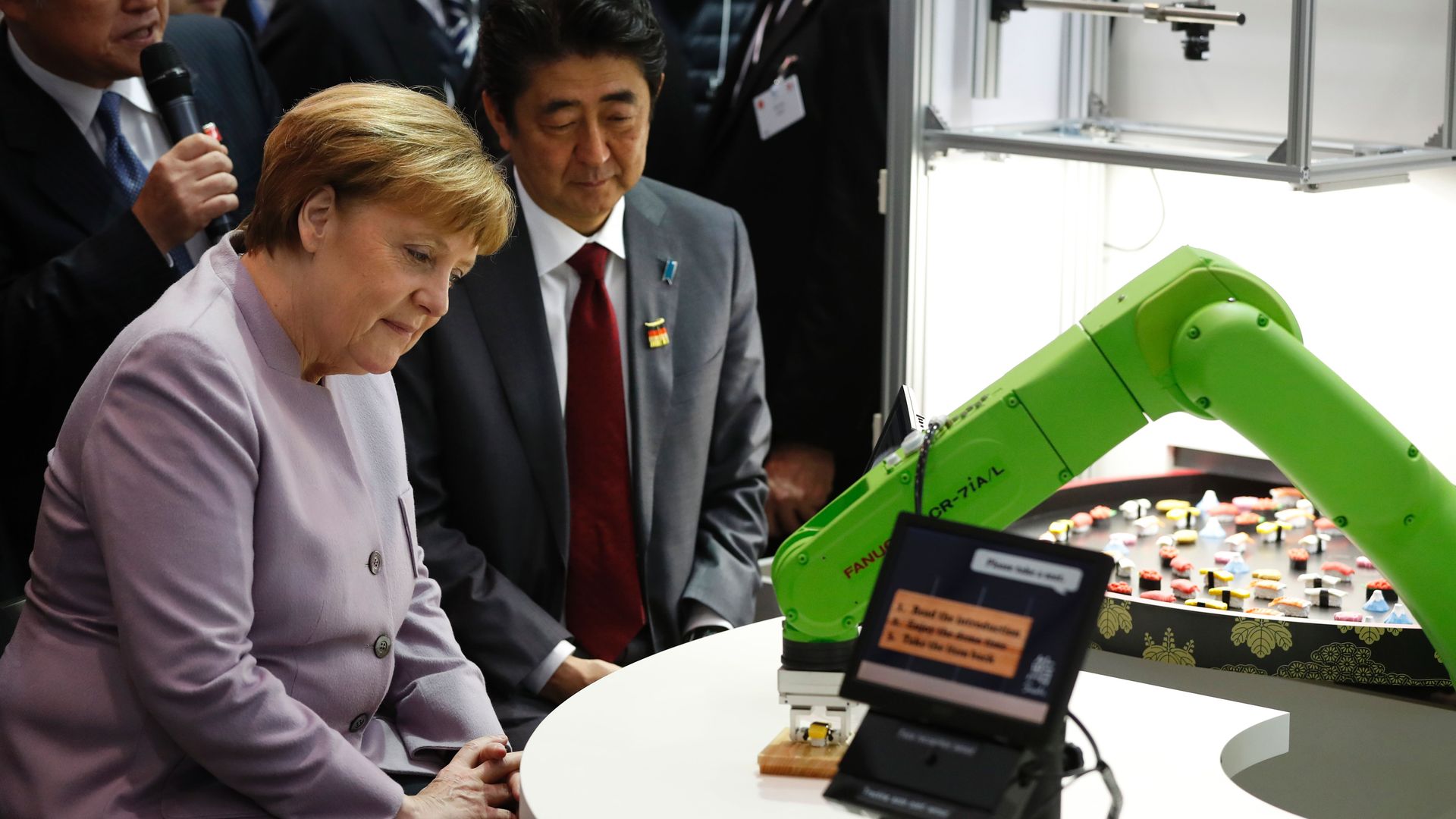
People in Japan believe robots are coming for their jobs and will yield a more unequal society where it's harder to find work, according to a Pew survey.
By the numbers: 89% believe robots will do "much of the work" humans do today within 50 years. 83% think that will widen the gap between rich and poor, 74% think unemployment will grow and just 35% believe robots will create "new, better-paying jobs."