Saturday's economy & business stories
Amazon to start collecting sales tax in all states that have one
Amazon plans on April 1 to start collecting sales tax in Hawaii, Idaho, Maine and New Mexico, according to CNBC. Those are the last four states in which Amazon had yet to collect applicable state sales tax.
Retailers had long complained that Amazon and other online retailers maintained an unfair advantage by not adding sales tax to purchases. Many states were also unhappy ,, saying that they were missing out on $23 billion in lost revenue, as of 2012, due to online and catalog retailers not demanding sales tax.
Tax still won't be collected in Alaska, Delaware, Oregon, Montana and New Hampshire, but that's only because those states don't have a sales tax.

Stocks whipsaw after Trumpcare fail
Markets took a turn for the worse Friday afternoon after it became increasingly clear that the House would not pass healthcare legislation. Late in trading, however, markets recovered most of those losses. The Dow closed down 0.28%, while the S&P 500 ended the day falling 0.08%.
Why it matters: Some investors are concerned that the lack of Republican unity on display will imperil policy— like tax cuts and infrastructure spending—that is especially important to corporate profits.

Tech giants fight for NFL streaming rights
Amazon, Twitter, Facebook and YouTube have all submitted bids to stream Thursday night NFL games next season, Recode reports. Other companies likely also submitted bids, as groups like Yahoo and Verizon both competed for the contract last year. Here's where each company stands:
- Twitter won the coveted deal to stream 10 games last year for 10 million dollars, a drop in the bucket compared to the streaming rights major networks have to pay. But it seems the investment only somewhat paid off for Twitter. While each game last year drew an average of 3.5 million unique viewers, Twitter's revenue and monthly active user base both only increased by less than 1% during the quarter.
- Amazon reportedly outbid Twitter by $5 million last year, but they still lost the deal.
- Facebook is pushing to win the sports live streaming business, and announced a partnership to stream MLB games earlier this month.
- YouTube should be best positioned to win the deal, since it has the largest streaming audience and a pre-existing Google VR partnership with the NFL, but the company is currently going through a bit of an advertising and branding crisis that could make the NFL wary of doing business with them
Why it matters: Social and streaming companies are brokering content deals to win over TV audiences, in an attempt to eat at the $72 million U.S. TV ad market. They're going after sports deals for their live-streaming platforms because unlike most TV content, sports are still viewed live. (Per comScore, 90% of sports games are watched live, as opposed to 71% of dramas.)
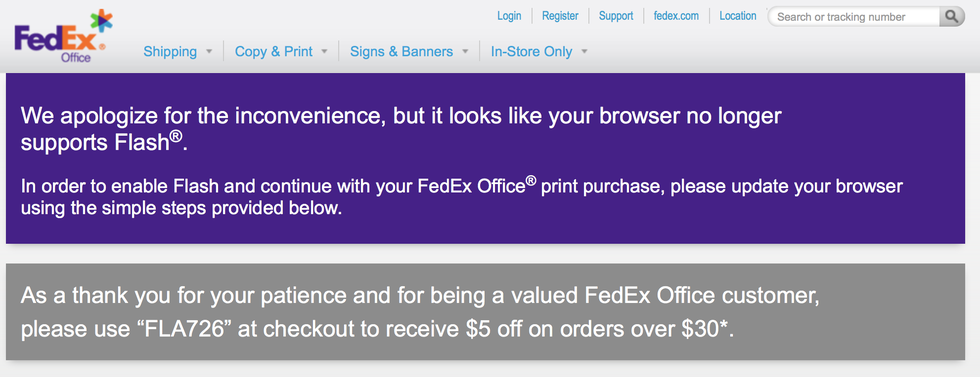
FedEx offers customers $5 for the inconvenience of requiring Adobe Flash

Adobe Flash has been on the ropes since Steve Jobs went on his famous tirade 7 years ago, but that doesn't mean some sites don't still require it.
For its part, FedEx is apologizing to customers and offering $5 discount for the fact that printing labels online still requires the browser plug-in.
Trump claims credit for 2016 Charter jobs pledge
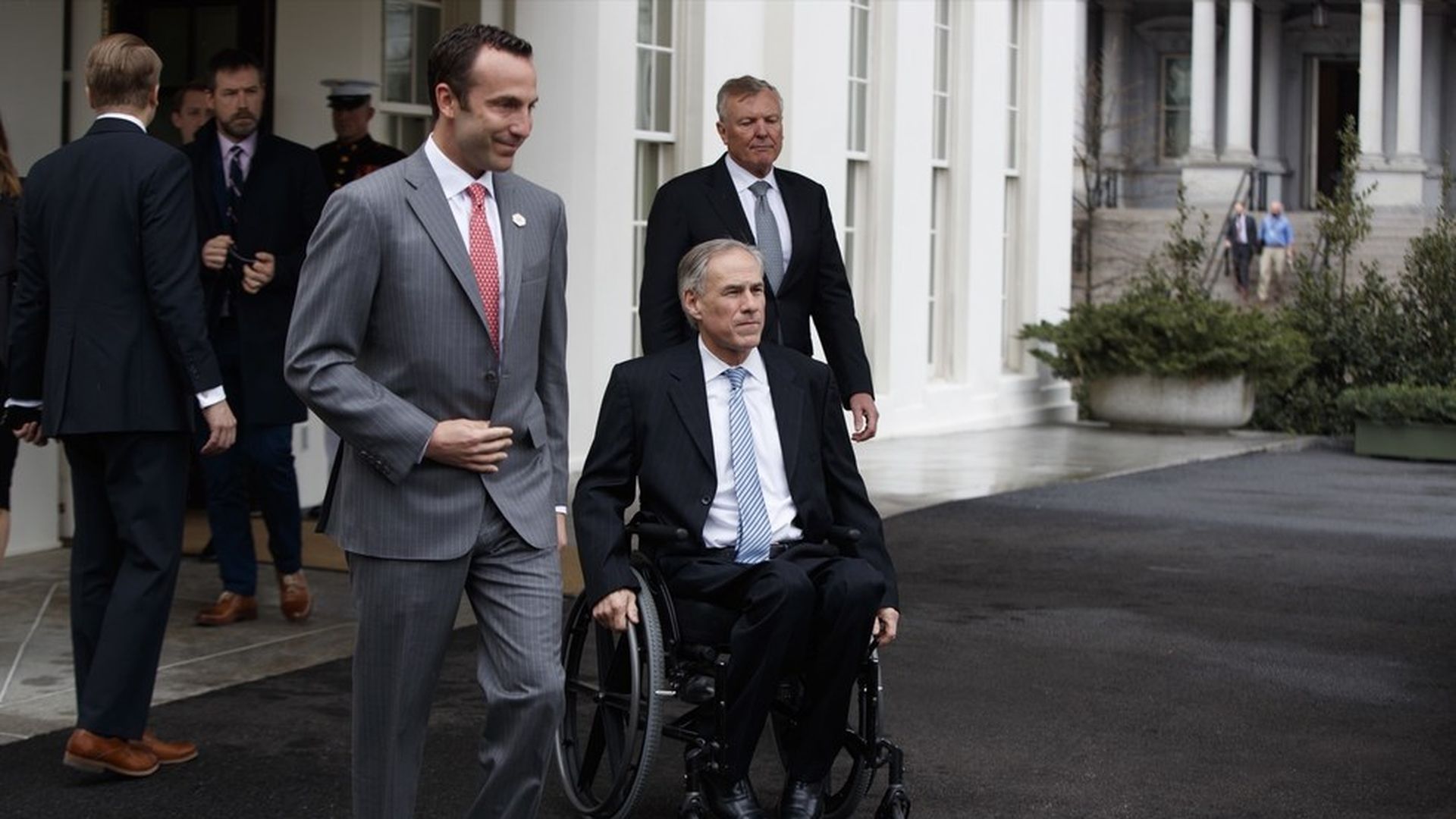
President Trump hosted Charter Communications CEO Thomas Rutledge at the White House Friday to tout the company's plan to invest $25 billion in the United States and hire 20,000 call workers over four years. The only hitch: Charter announced its intention to insource those workers back in October.
Why it matters: This isn't the first time the president has taken credit for jobs pledges that had already been announced, and there's no reason to believe that the strategy won't continue to pay off. Corporate America has been happy to engage in PR for a president as committed to reducing regulations and taxes as he.

How health care stocks could change with the Trumpcare vote
Wall Street is closely following the House vote on the American Health Care Act. Health care stocks are almost guaranteed to move in one way or the other next week, depending what happens this afternoon.
But the House vote is just the beginning. "Wall Street seems to understand that the House bill is not the final product, and some of the draconian measures that are most negative to the group almost certainly will be removed to get the bill through the Senate," Spencer Perlman and Sumesh Sood of investment research firm Veda Partners said in a research note Friday.
Here's what could happen to health care stocks in the short term.

The bank lending slowdown is bad news for U.S. economy
In a research note to clients, UBS Strategist Stephen Caprio argues that investor confidence — evidenced by high stock market valuations — may may be misplaced, given a recent slowdown in bank lending.
U.S. bank loan growth by domestic banks is falling in nearly almost category, most especially "commercial and industrial" loans. Caprio points out that this decline is not being made up by higher growth in corporate bond issuance, and is being driven mostly by a lack of demand for borrowing.
Why it matters: Companies are issuing less debt due to a mix of uncertainty regarding tax and spending policy, already high debt levels in the U.S. corporate sector, and the threat of higher interest rates. Investors are counting on stronger global growth to help U.S. companies overcome these headwinds, but they may be discounting the chances that some sort of shock — like the 2014 oil price collapse — constrains growth and triggers a stock market pullback or correction.