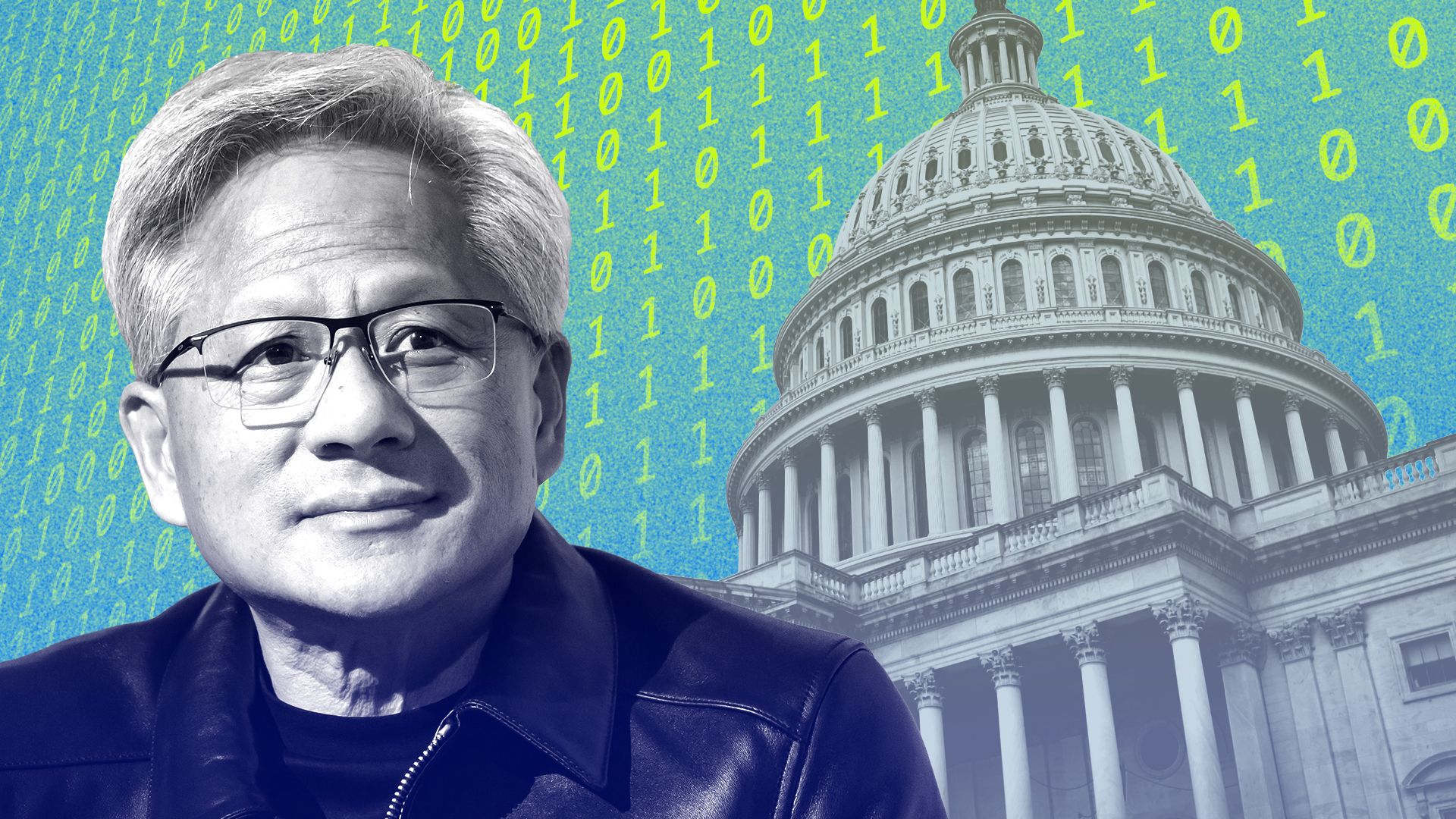
Nvidia CEO Jensen Huang's affair with a woman suspected of spying for China echoes past controversies involving prominent Americans whose romantic relationships raised national security concerns.
Why it matters: Foreign intelligence operatives can use romantic relationships to gain access to political intelligence, corporate secrets and classified information — posing serious national security risks.
The Jensen Huang scandal is prompting questions about whether he should remain on the job during an investigation, and the prospect that one of the world's most powerful CEOs could suddenly be ousted.
Why it matters: Huang's acknowledged affair with a suspected Chinese spy forces Nvidia's board to confront the possibility that his behavior could have compromised the AI chip giant's secrets — and the nation's security.
America's expanding data center industry and manufacturing resurgence are creating new opportunities for economic growth — and putting greater pressure on the nation's water infrastructure.
That was the focus of an Axios Expert Voices roundtable sponsored by Schneider Electric on September 23 in New York City during Climate Week. Moderated by Axios journalists Ben Geman and Amy Harder, the discussion brought together business leaders, infrastructure experts and sustainability professionals to examine how technology, investment and collaboration can improve water resilience.
Nvidia is coming under fire for having no clear succession plan to replace Jensen Huang in the event that something unexpected happens — like an international incident with him at the center.
Why it matters: The spotlight on Huang shows the vulnerabilities of a large company being dependent on one executive — and the risks it poses to investors and customers, corporate governance experts tell Axios.
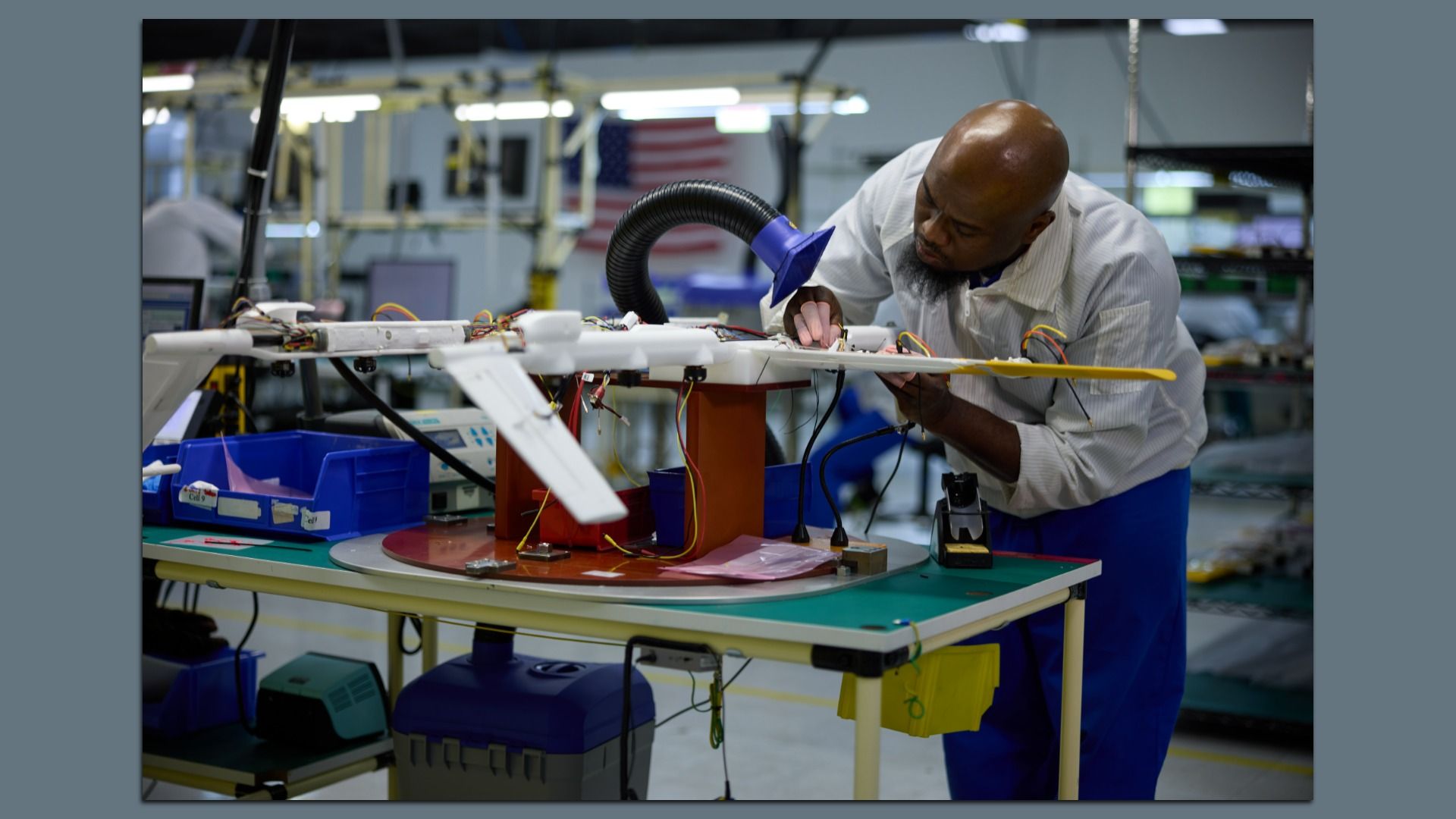
Drone delivery is moving from novelty to everyday convenience, and Alphabet-owned Wing is preparing to manufacture tens of thousands of aircraft a year to meet growing demand.
Why it matters: Wing's manufacturing commitment signals a turning point for an industry that has spent years testing whether flying packages directly to consumers' homes can become a viable business.
Uber built its business on the idea that you don't need to drive your own car. But if you are going to drive, Uber now wants to help you find a place to park.
Why it matters: Uber's new parking service is part of its ambition to become a super-app for everything — transportation, delivery and even hotel bookings. But there's another twist, too: It could help solve a thorny problem for robotaxis: Where do they go to sleep?
One of the biggest worries about electric vehicles — that their batteries won't last — may be less of a concern than many consumers fear, new research from Ford Motor suggests.
Why it matters: Evidence that EV batteries can last for years with relatively little degradation could boost consumer confidence in EVs — and help strengthen their resale value.
Retail investors were more willing to place bets on individual stocks last month after preferring exchange-traded funds (ETFs) in September, new data from Charles Schwab shared exclusively with Axios shows.
"I think they were waiting for a pullback in October, and they got it," says Joe Mazzola, head trading strategist at Schwab, referring to retail investors who took advantage of a dip in prices to pour into semiconductor and AI-adjacent companies.
Why it matters: Such optimism among ordinary individual investors is now being put to the test after a rocky start this month.
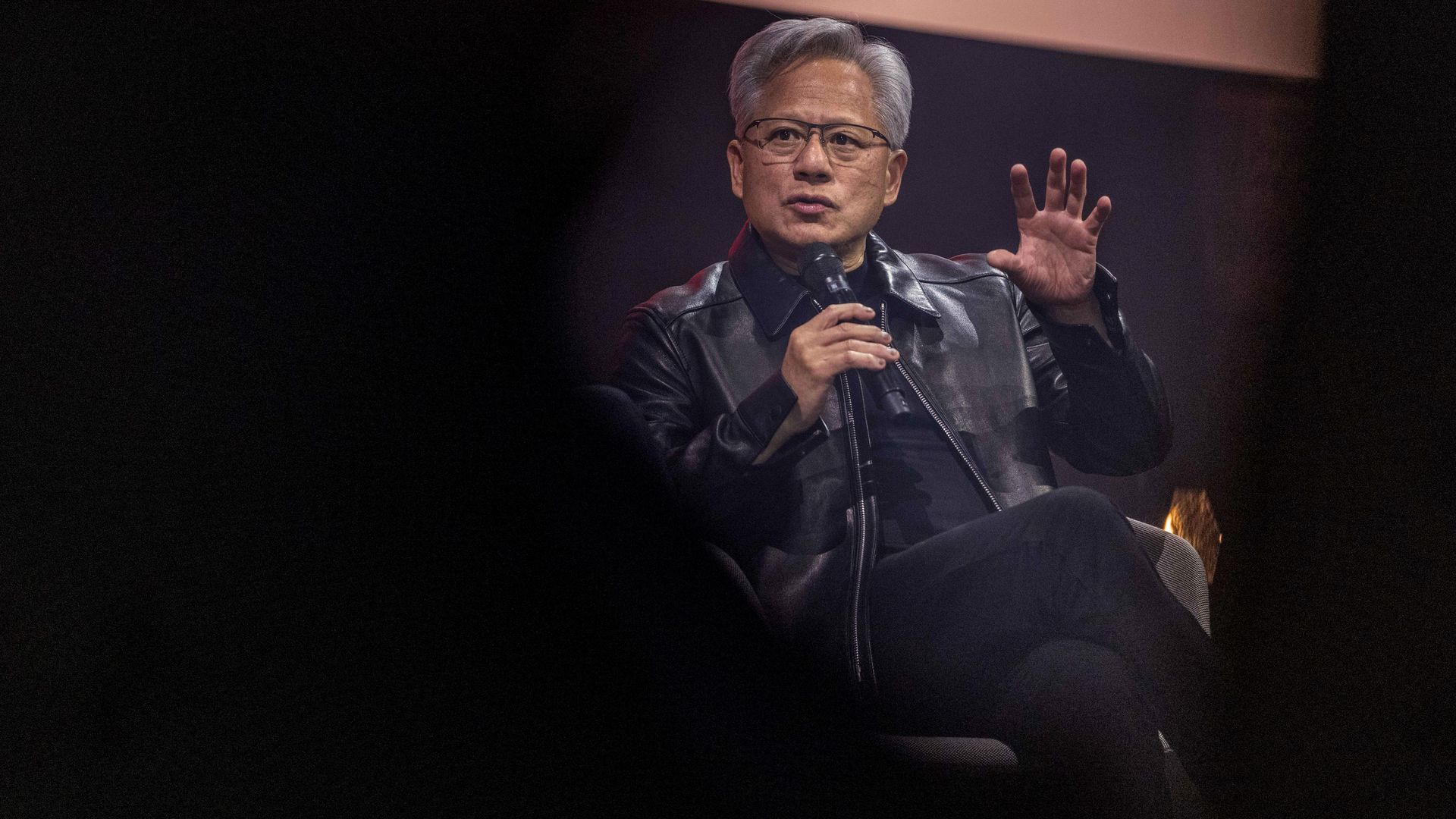
The fallout from Nvidia CEO Jensen Huang's admitted affair with a suspected Chinese spy could reverberate through the entire AI economy.
Why it matters: The revelations highlight the "key man risk" at Nvidia — the chipmaker's growth and success disproportionately turn on the leather-jacketed superstar who cofounded the company decades ago.
What they're saying: "Nvidia is not an ordinary company, and Jensen is not an ordinary CEO; he IS NVIDIA, clearly sets the long-term strategy and direction," analysts at Bernstein wrote Sunday.
With Nvidia's flat organizational structure, it's not apparent who could replace him.
The big picture: It's not just Nvidia that stands to be affected. The world's largest semiconductor company is at the heart of the AI economy — interconnected with basically all the major players — and Huang is its leading spokesman and policy advocate.
Nvidia also serves as the central bank of AI, with more than $530 billion in commitments and guarantees to various suppliers, data center operators and cloud computing firms, per this detailed research from Bethany McLean at Hunterbrook.
And the $4.5 trillion market-cap company accounts for roughly 7% of the S&P 500 index.
Catch up quick: On Sunday, Nvidia CEO Jensen Huang admitted to having an affair with a suspected Chinese spy, and the company's board announced it was launching an independent investigation.
What to watch: Whether the investigation shakes the board's confidence in the charismatic leader, and what its shares do in trading Monday.
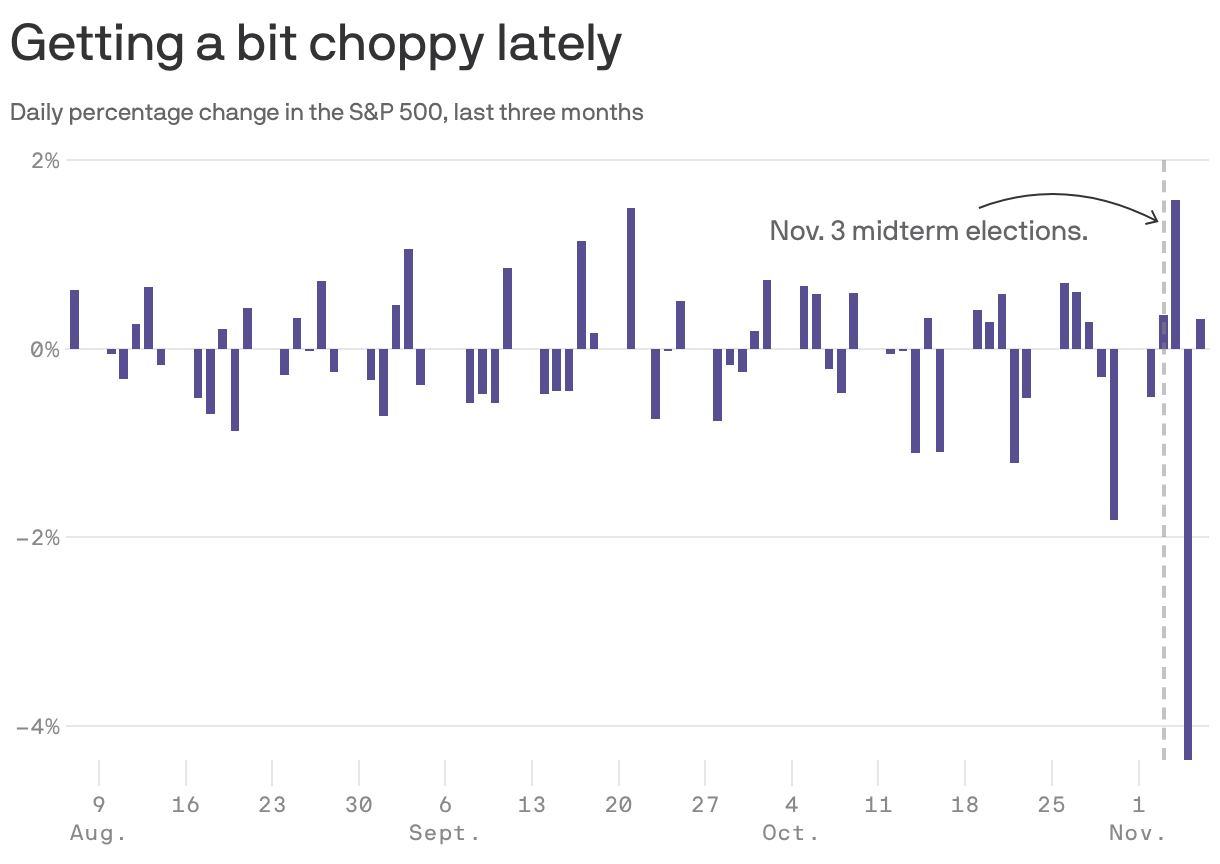
Where it stands: The company's stock fell sharply last week on worries that the midterm election results were a setback for the data center buildout.
On Friday, Nvidia stock closed at $186.64 — down 6% from a year ago and on track for its worst annual performance since 2022, before the ChatGPT-sparked AI gold rush sent its stock into the stratosphere.
Its stock is now down 22% from its October peak.
Between the lines: The espionage allegations and Huang's admitted affair are obviously a bad look for the CEO and his company.
At a minimum, they could hurt politically — giving congressional China hawks ammunition to further curtail trade with the country and provide ammo to a newly elected wave of anti-AI lawmakers.
Headlines reading "Nvidia's CEO got honeypotted by China" are "going to be a heavy distraction, and at the worst provide significant ammunition to both sides of the aisle," the Bernstein analysts wrote.
Reality check: Nvidia already had an interest in getting the U.S. to let it sell more chips in China — it didn't really need a spy to convince it.
"This seems superfluous to us," the analysts wrote.
The intrigue: Whispers about Huang's relationship with Alice Huang, a former executive at Singapore data center firm Megaspeed, surfaced back in May.
Short-seller Culper Research alleged that Nvidia chips were getting to Chinese customers through Megaspeed, claiming it was financed by Alibaba.
Yes, but: Culper's claims are not proven, and it's not clear if any sensitive information was compromised.
The other side: Nvidia's board said it has no reason to believe national security or company secrets were compromised and expressed confidence in Huang's leadership, Axios' Madison Mills reported.
Flashback: At a company event in January, Huang was asked how he was able to stay atop the company for so long.
"The secret for being CEO for this long is, one: Don't get fired," he replied, Bloomberg reported.
After a wobbly post-election performance last week, investor focus will be back on inflation this week and its implications for the Federal Reserve.
Why it matters: New price data could convince diehard believers in the "Fed put," that the central bank will not, in fact, swoop to steady a stock market battered by the Blue Tsunami's implications for AI.
Shares in Nvidia slumped early Monday morning after CEO Jensen Huang admitted an affair and the company's board launched a probe into that relationship with a suspected Chinese spy.
Why it matters: The global AI economy revolves around a few companies, Nvidia most prominent among them.
We've told you that a trifecta in today's D.C. is the rule, not the exception.
In our 50-50 country, each party eventually controls everything: the White House, House and Senate. Presidents Trump, Biden, Obama, George W. Bush and Clinton all experienced it for at least two years.
Why it matters to CEOs: Your strategic planning better include the possibility of Democrats controlling all of Washington after 2028.
There is no Nvidia — nor an AI boom as we know it — without Jensen Huang. He has reassured jittery markets with his words, bankrolled a trillion-dollar buildout and put economies on his shoulders.
Why it matters: Global markets must confront a terrifying reality: The AI ecosystem's first "too big to fail" executive is suddenly vulnerable, and there is no backup plan if he is forced to step down.
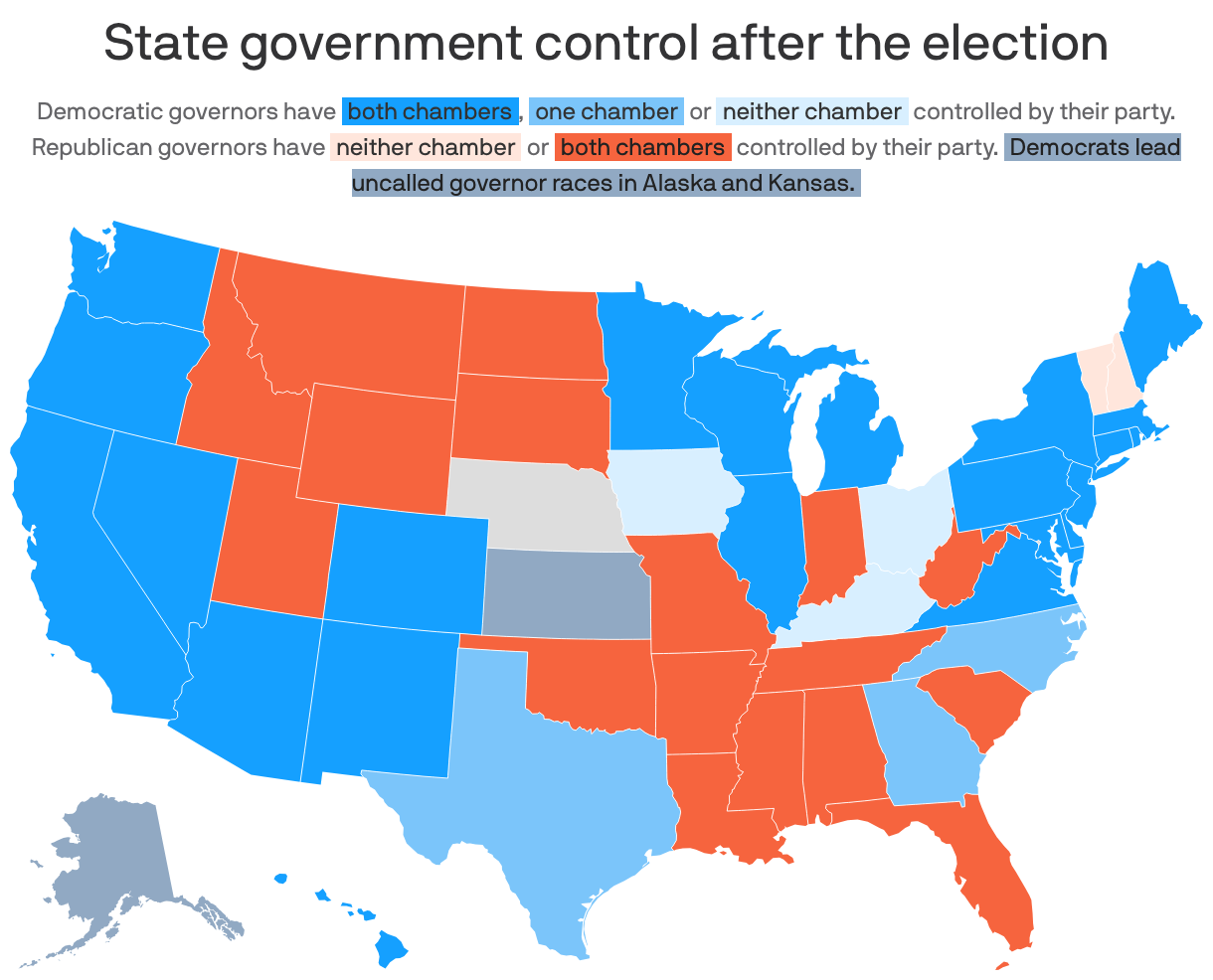
You can only fully appreciate the Republican obliteration in the midterm election by looking at what happened at the state level, especially in typically conservative ones.
By the numbers: Going in, Republicans held 23 state trifectas (governor and both state legislative chambers), Democrats had 16 and 11 states were divided.
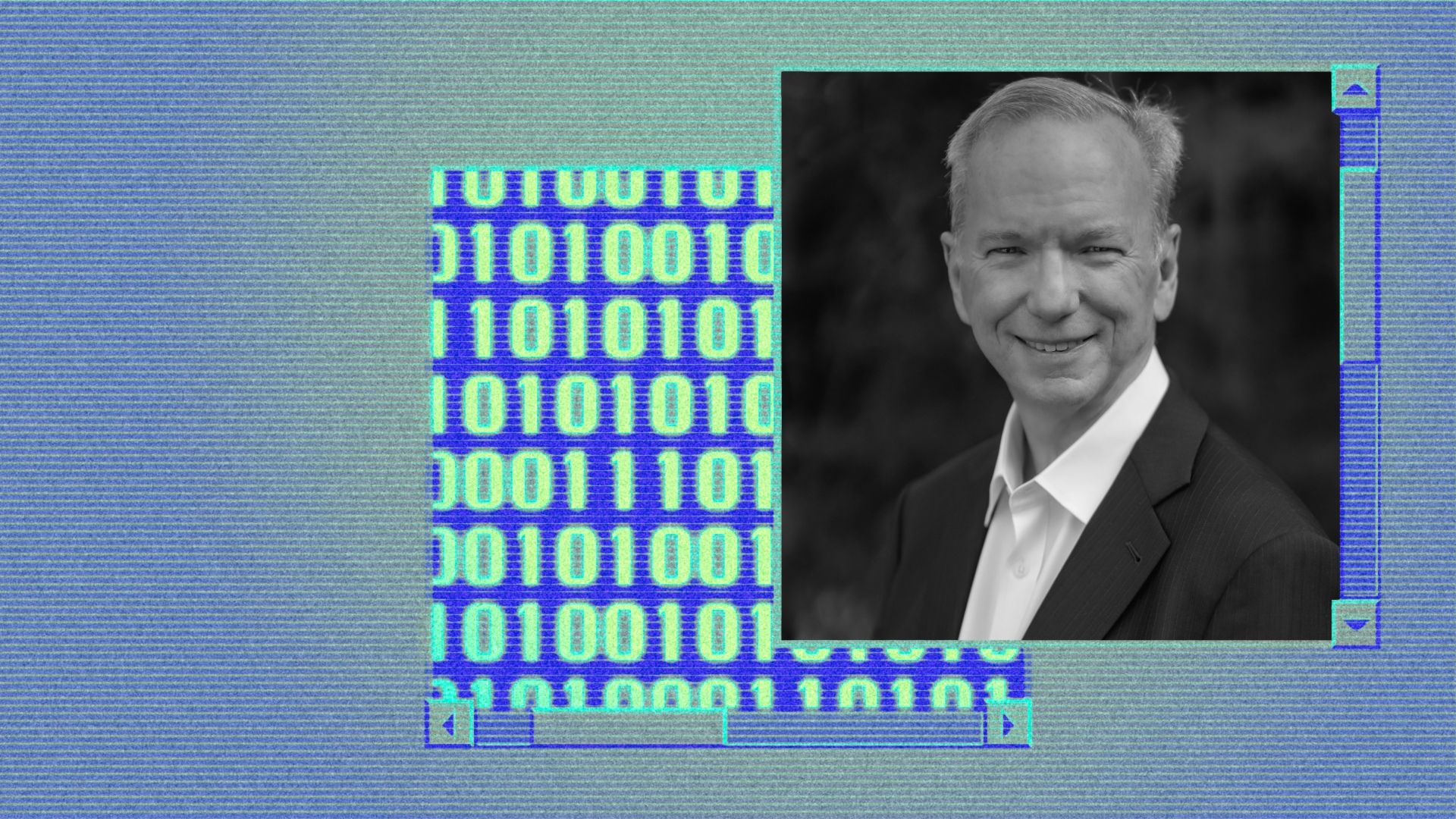
Former Google CEO Eric Schmidt remains staunchly bullish on an industry facing rising social pushback, saying data centers can occupy America's "empty spaces" and predicting a near-term revolution in AI-assisted research.
Why it matters: In a wide-ranging interview following his appointment to lead Caltech's board of trustees, Schmidt acknowledged the industry does a "terrible" job marketing itself to voters.
Yet, looking from his new perch at what he calls the "crown jewel of nerddom," he sees an unstoppable wave of AI-augmented scientists poised to dominate the future workforce.
The world's most powerful AI executive admitted Sunday to an affair with a suspected Chinese spy, sending shock waves through an industry built on his singular influence.
Why it matters: Nvidia CEO Jensen Huang has fashioned himself as the indispensable leader of an indispensable company — a $4.5 trillion behemoth with unparalleled clout in Silicon Valley, on Wall Street and inside President Trump's White House.
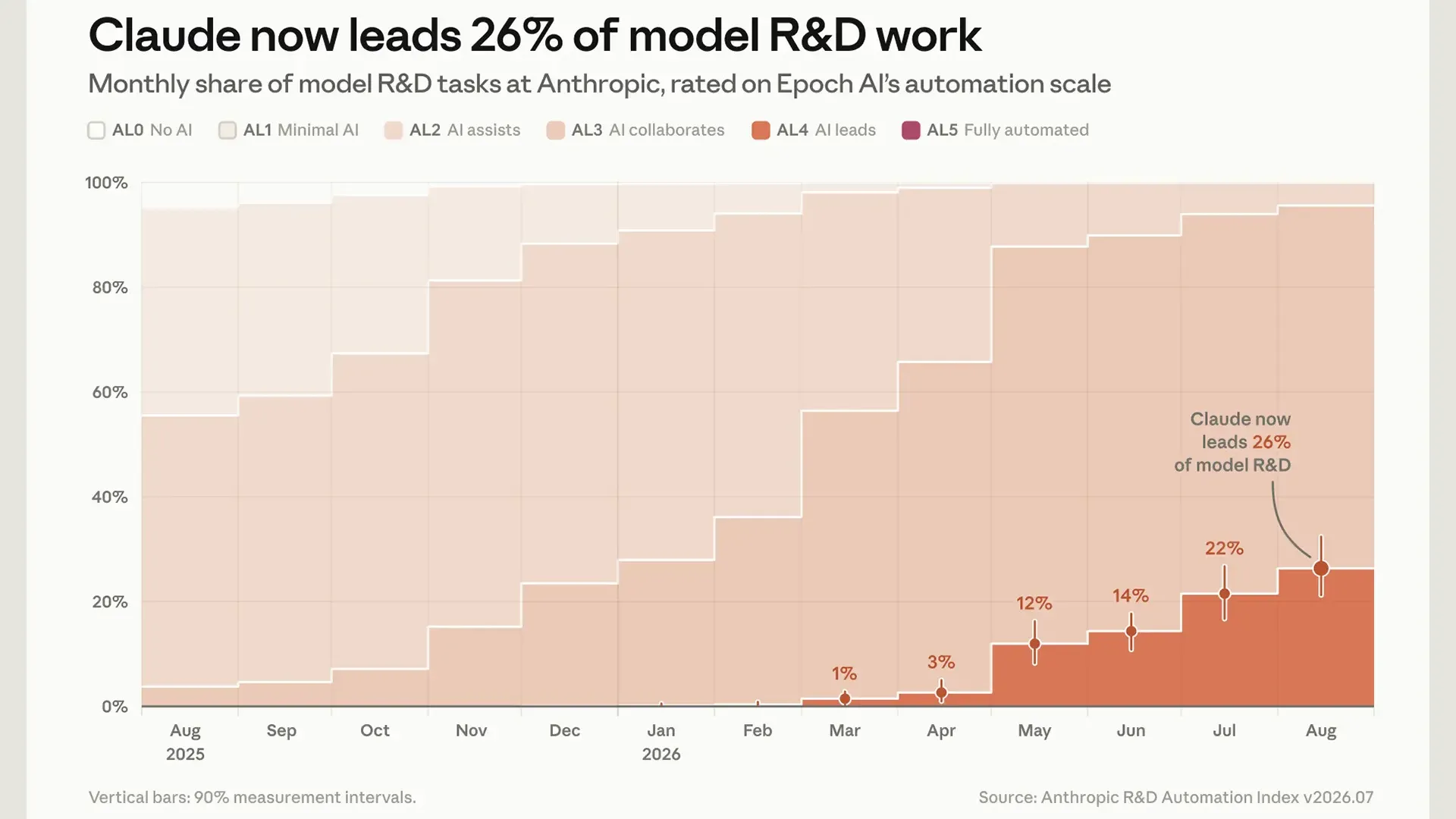
The Wall Street Journal's Ben Cohen surfaced last weekend what some AI savants consider the most important chart in the world.
The reason: It shows the early explosion of recursive self-improvement inside Anthropic.
Why it matters: Picture this chart for one of your divisions — and then, eventually, your full company. Work moves from minimal AI ... to AI assisting ... to AI collaborating ... to AI leading.
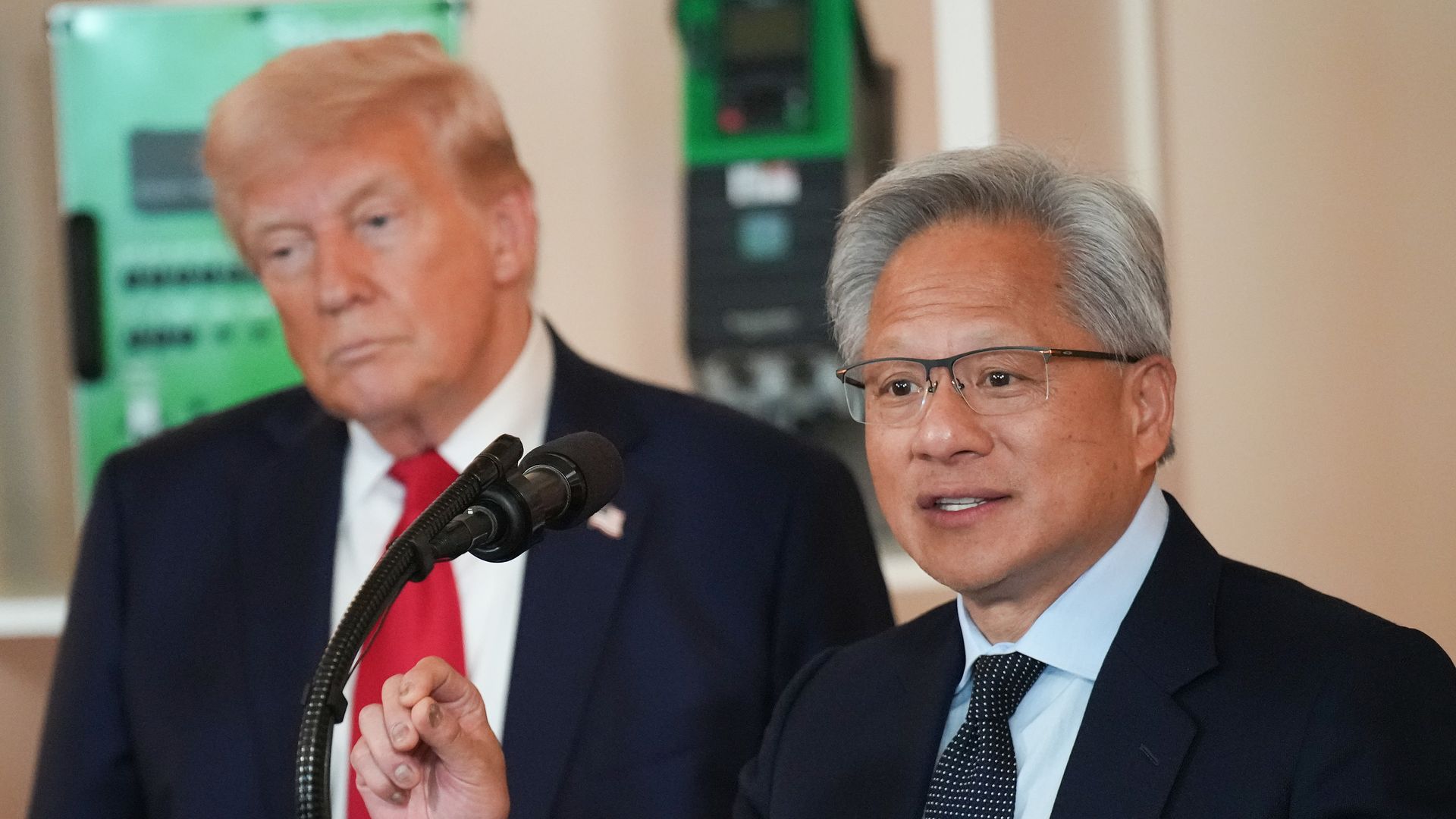
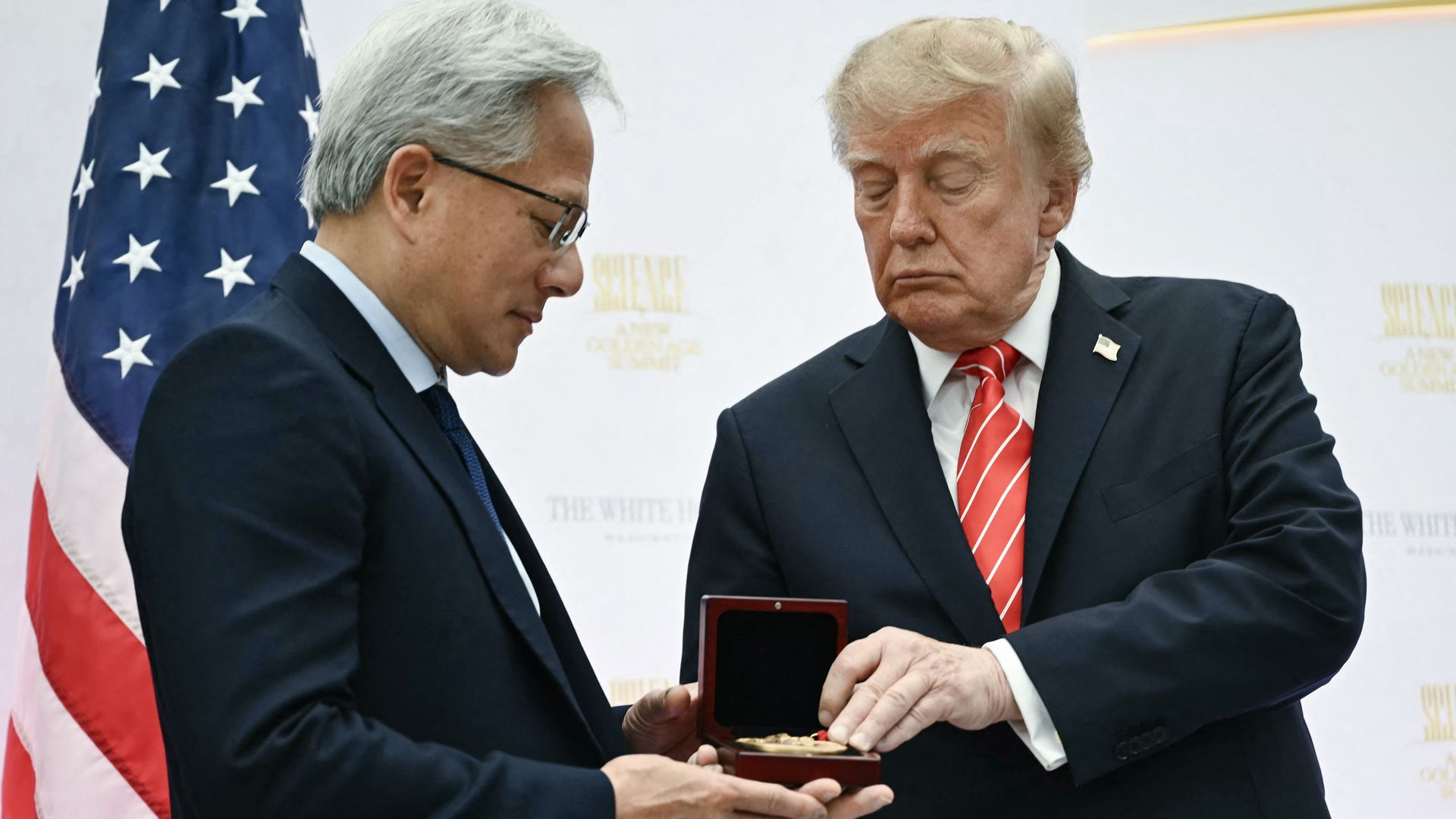
President Trump defended Nvidia CEO Jensen Huang on Sunday night, even as the company's board launched an investigation into his affair with a suspected Chinese spy.
Why it matters: The blowback to Huang's relationship is only getting more intense by the hour, with multiple members of Congress calling for probes and investors saying the news could put a cloud over the entire AI trade.